
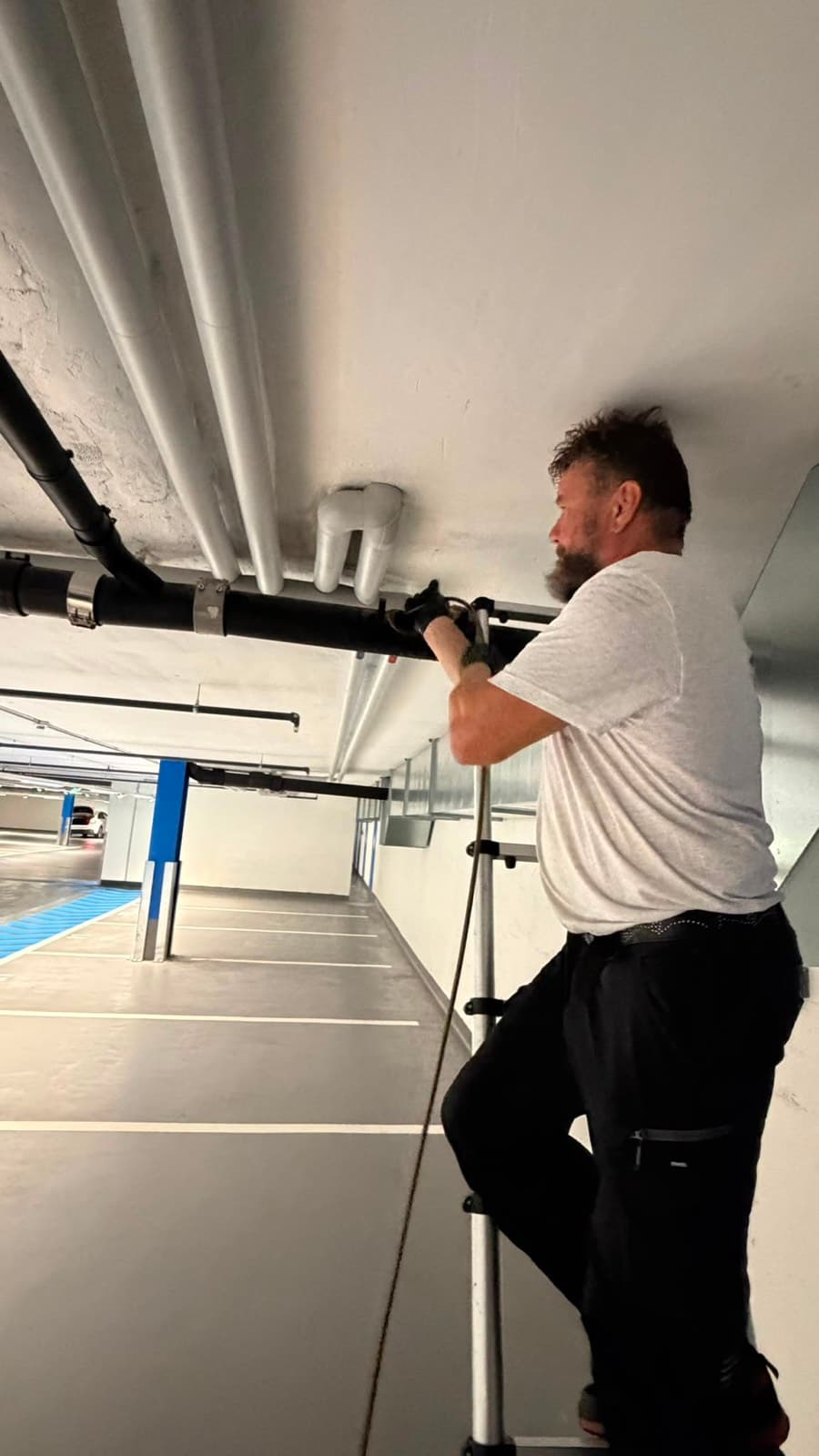
How does backflow occur?
Backflow occurs when the water level in the sewer rises higher than the lowest outlet in the building. The water then takes the path of least resistance and comes back out through floor drains, toilets or basement drains.
Common causes are blockages in the underground drain, an overloaded public sewer during heavy rain or a faulty wastewater pump. Rooms below the so-called backflow level, usually the top edge of the road, are particularly at risk.
What damage does backflow cause?
Escaping wastewater floods basement rooms, damages floors, walls, furniture and equipment and leaves behind contamination that is problematic in terms of hygiene. The consequential costs of drying and restoration are often considerable.
Since this is contaminated wastewater, thorough cleaning and disinfection are also necessary. Backflow damage is among the most common and most expensive types of water damage to buildings.
How can you protect yourself against backflow?
The most effective protection is backflow valves or lifting stations, which prevent water from being pushed back from the sewer into the building. Backflow valves are installed in the pipe and close automatically when backflow occurs.
Equally important is preventing blockages through regular drain cleaning and checks of the underground drain. A CCTV drain survey reveals whether deposits or damage are obstructing the flow.
What to do in the event of acute backflow?
In the event of acute backflow, no more water should be discharged – so do not flush toilets or run the washing machine. Affected areas should be avoided, as the wastewater is contaminated.
A specialist company should then be called immediately to locate and remove the cause. An emergency service can clear the blockage quickly and prevent further damage.
After a heavy summer thunderstorm in Zurich, wastewater is pushed back up through the basement drain of a single-family home and floods the hobby room. The emergency service finds that the overloaded underground drain was also narrowed by roots. After cleaning, a backflow valve is recommended and installed for protection.