What is a lifting station?
A lifting station consists of a sealed collection tank, one or more pumps, a control unit with level sensing and a rising main. When wastewater flows in, the water level in the tank rises. When it reaches the switch-on level, the pump starts and conveys the water upwards into a pipe that runs with a gradient to the sewer system.
The backflow loop is crucial: the rising main is taken above the backflow level before it joins the underground drain. If the public sewer system backs up, the water therefore cannot flow back into the cellar. The lifting station thus drains reliably even when a simple backflow valve would have to stay closed.
In short, a lifting station replaces the missing gradient with pump power. Where a normal wastewater pipe simply lets the water flow down into the underground drain, in the basement it first has to be collected and then lifted. That is why it is also called a wastewater lifting station: it lifts the wastewater to a level from which it can flow on by itself again.
When is a lifting station needed?
A lifting station is always needed when wastewater arises below the backflow level and cannot be safely discharged by gravity. Typical cases are toilets and showers in the basement, laundry rooms, granny flats on a hillside lower floor, floor drains in underground car parks and buildings whose sewer connection is higher than the cellar.
For new buildings, the question is settled as part of the property drainage to SN 592 000. In conversions, for example when a cellar is turned into a living space or hobby room, it is often overlooked. Anyone planning new sanitary fittings in the basement should therefore check early on whether a lifting station is required.
Types of lifting station
The SN EN 12050 series of standards distinguishes, among other things, between sewage lifting stations for wastewater from toilets and installations for wastewater free of faeces, for example from washing machines, showers or floor drains. Sewage lifting stations have more robust pumps with a cutting mechanism or a large free passage, so that solids do not cause blockages.
There are also compact lifting units, which are fitted directly behind a single toilet or washbasin, and large outdoor pump chambers that drain whole buildings or underground car parks. Larger properties often have twin-pump installations: if one pump fails, the second one takes over.
Pump chamber: design and maintenance
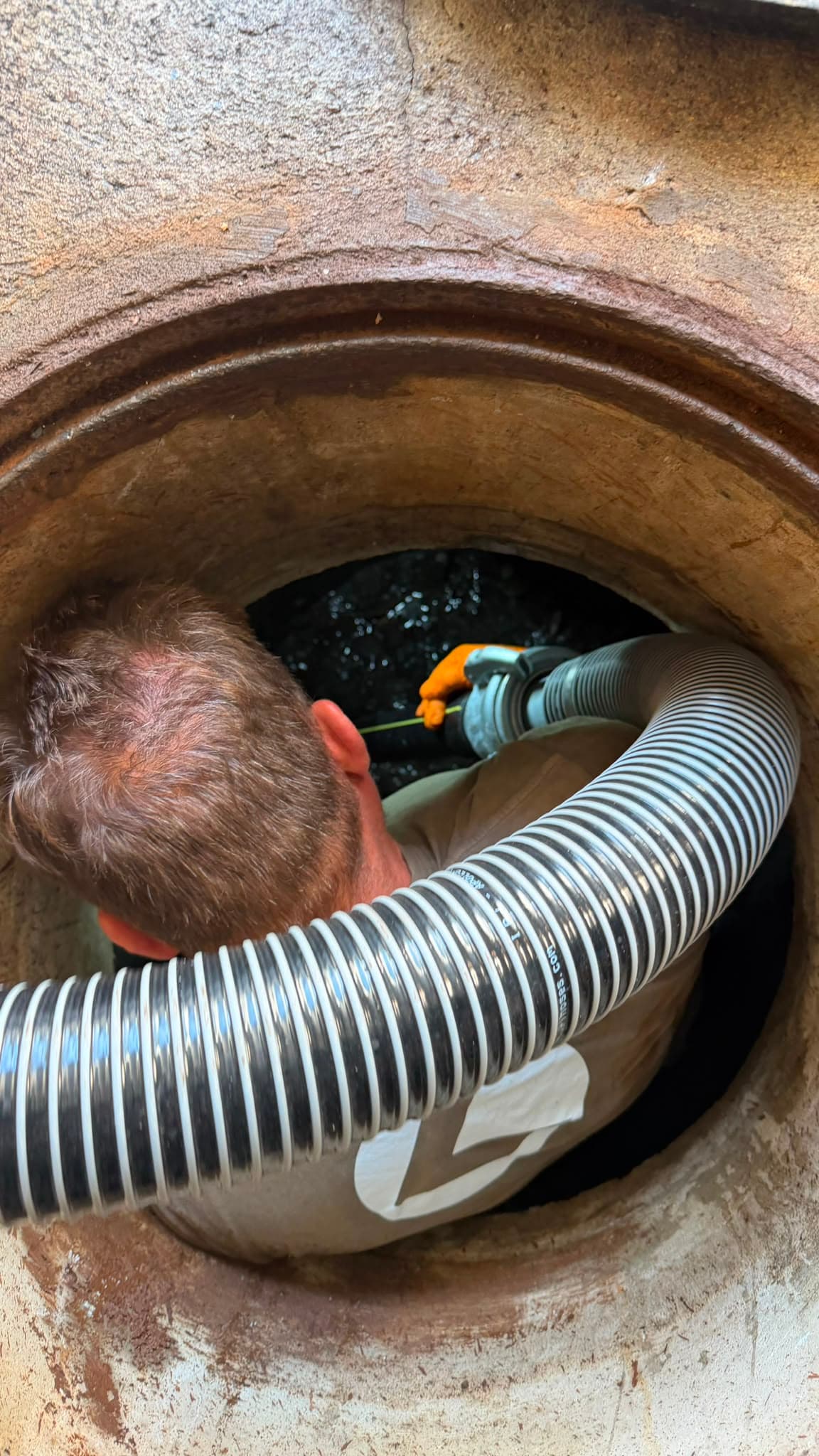
A pump chamber is a chamber, usually made of concrete rings or plastic, in which one or more submersible pumps stand. It lies in the floor of the basement or outside the building and takes in wastewater from floor drains, light wells, drainage channels on ramps or entire basement floors. Unlike a closed plastic tank, a pump chamber is accessible through a cover: you can look inside, suck it out and lift the pumps out.
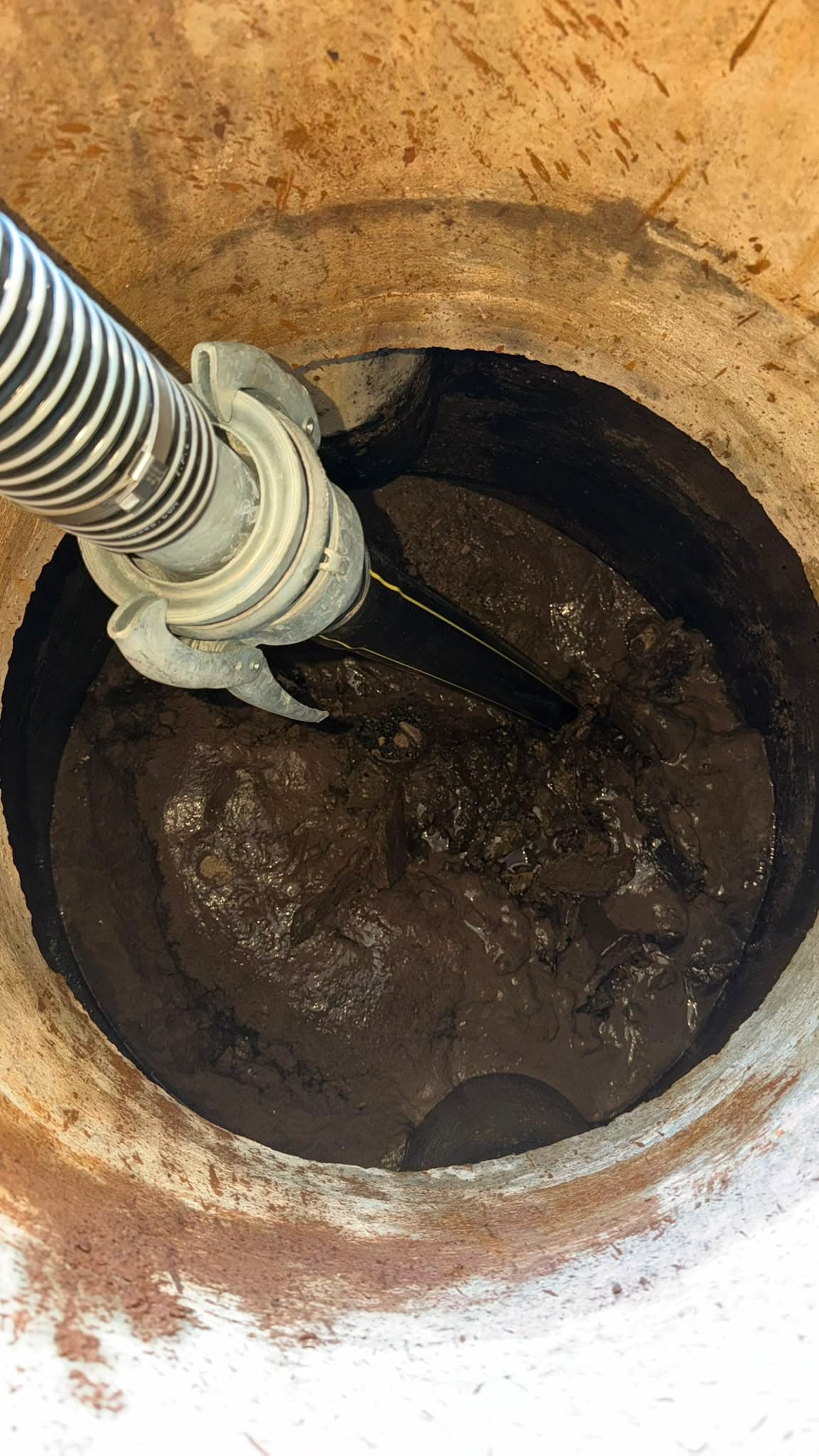
The lowest part of the chamber is the pump sump. This is where the water collects until the float switch or level sensor switches the pump on. Because the pump never sucks right down to the bottom, a residue always remains – and with it everything that is heavier than water: sand, grit, leaves, sludge. Grease and fibres, on the other hand, float to the top and over time form a floating layer.
Maintaining a pump chamber therefore involves two things that are often confused: regularly sucking out and cleaning the chamber, and the technical servicing of the pumps, switches and fittings. The first is the job of a drain cleaning company, the second that of the pump manufacturer or a plumber. Ideally, both appointments are coordinated so that the service technician finds a clean installation.
Pump chamber for rainwater and seepage water
Many pump chambers do not carry domestic wastewater but stormwater and seepage water, for example from underground car park ramps, light wells or drainage systems. Here, the deposits come mainly from sand, gritting chippings and leaves. After the winter and after heavy rain, it is worth taking a look into the chamber.
Pump chamber for foul water
If the chamber takes foul water from the laundry room, showers or toilets, grease, soap residue and fibrous material are added. Such chambers start to smell sooner, encrust more heavily and need shorter cleaning intervals than a pure rainwater chamber.
Compact lifting unit in the bathroom or cellar
A compact lifting unit is a compact device fitted directly behind or next to a single sanitary fitting – typically behind a toilet in a cellar bathroom, under a washbasin in the laundry room or next to a shower retrofitted in the basement. It consists of a small tank with an integrated pump, often with a cutting mechanism that shreds faeces and paper before they are pumped through a thin rising main.
Compact lifting units are practical because they can be retrofitted without major building work. However, they are intended for a limited number of users. According to SN EN 12056-4, compact lifting units for faecal wastewater should only be used if another toilet is available in the building above the backflow level – so that if the unit fails, one toilet can still be used.
Compact lifting units in particular are sensitive to anything that does not belong in the toilet. Wet wipes, cotton buds, sanitary towels or dental floss block the cutting mechanism or wrap around the shaft. A unit that hums but does not pump out, or keeps running on, is usually already blocked. The only thing that helps then is to switch it off and have it cleaned before the toilet overflows.
Servicing: how often and by whom?
For the installation to work when it matters, it must be serviced regularly; SN EN 12056-4 contains recommendations on this, with shorter intervals for commercial use than for a single-family home. During servicing, the pumps, switches, non-return valve, seals and alarm are checked.
As a guideline, SN EN 12056-4 specifies servicing every three months for installations in commercial businesses, every six months for installations in apartment buildings and every year for installations in single-family homes. Anyone who puts heavy demands on the installation, for example in a restaurant with grease in the wastewater or in an underground car park with a lot of gritting chippings, should plan shorter intervals. The information in the manufacturer’s operating instructions also applies to each individual installation.
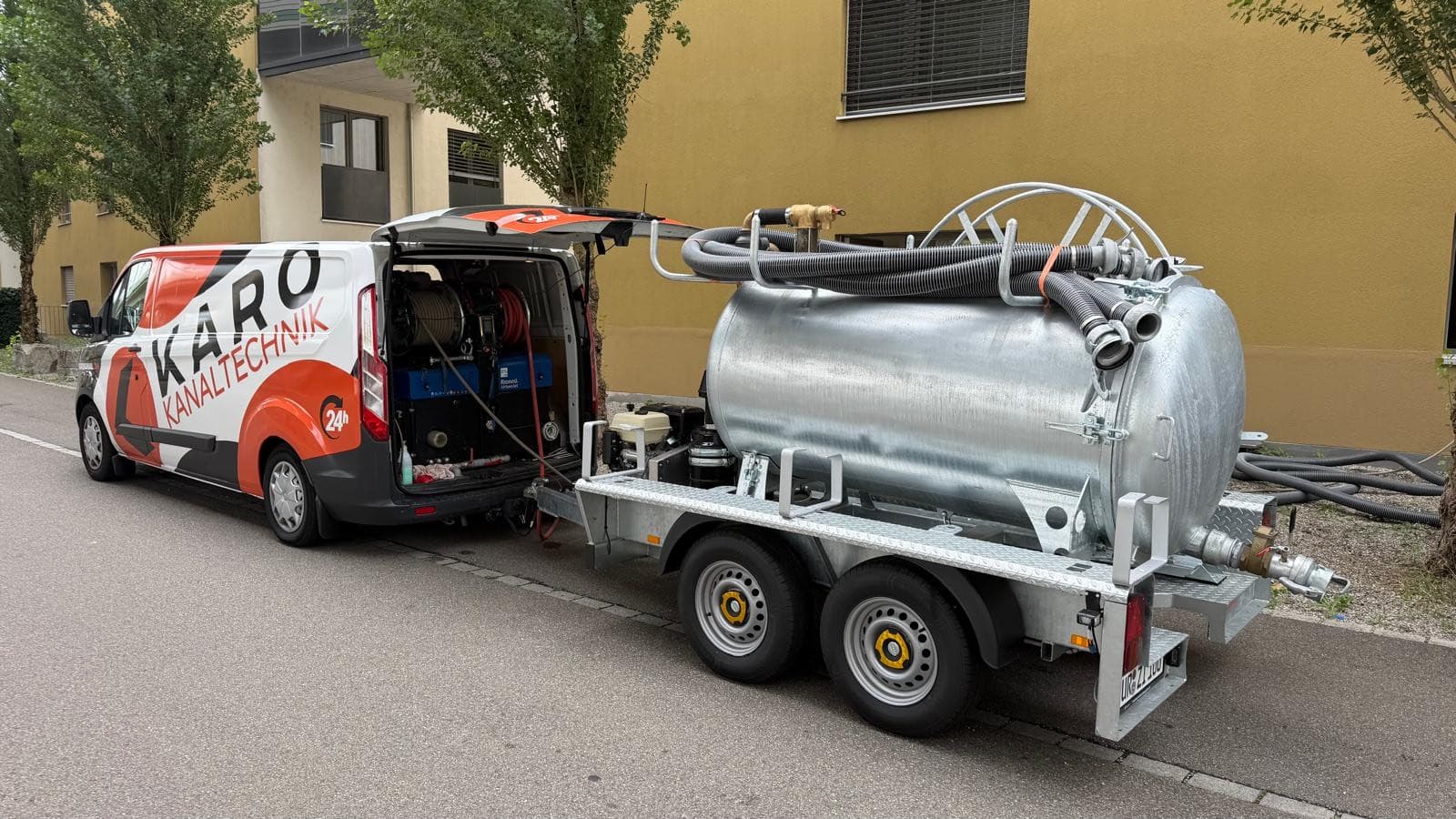
The work is split between two trades. The manufacturer or a plumber checks and services the technical equipment: pumps, floats or level sensors, non-return valve, gate valves, seals, controls and alarm. A drain cleaning company such as Karo takes care of the cleaning: sucking out the collection tank or pump chamber, loosening deposits with high-pressure water and jetting the inlet pipes. Repairs to pumps and controls are not part of our services; however, we tell you what we have seen so that the service technician can address it in a targeted way.
| Use | Servicing interval according to SN EN 12056-4 |
|---|---|
| Commercial businesses | Every three months |
| Apartment buildings | Every six months |
| Single-family homes | Every year |
Typical faults: wet wipes, grease, float switches
The most common cause of failures is substances that do not belong in wastewater: wet wipes, hygiene products, grease and textile fibres wrap around impellers or gum up float switches. Sand and sludge that settle on the bottom of the tank also impair level sensing and cause incorrect switching.
Other causes are faulty non-return valves in the rising main, blocked vents and power cuts. Many installations therefore have an alarm that warns of a high water level in the tank. If it goes off, no more water should be discharged and a specialist company should be called in before the tank overflows.
Wet wipes are particularly insidious. They look like toilet paper but do not break down in water; instead, they twist into tough braids that block impellers and overload cutting mechanisms. Grease from the kitchen and laundry room cools in the tank, floats to the top and sticks to walls, cables and floats. A float switch stuck in a crust of grease either constantly signals ‘full’ – and the pump runs dry – or never does, and then the tank overflows.
Warning signs to take seriously: the pump switches on more often than it used to, runs on for a long time, makes unusual noises, there is a sewer smell in the cellar, or the alarm goes off sporadically and then stops again. All of this points to deposits or a sticking switch, long before the installation fails completely.
Cleaning the pump sump
Cleaning is usually carried out by a drain cleaning company: the tank or pump chamber is sucked out, deposits and grease crusts are removed with high-pressure water and the inlet pipes are jetted. Afterwards, the technical equipment can be assessed much better. A clean installation runs more quietly, switches more reliably and lasts longer.
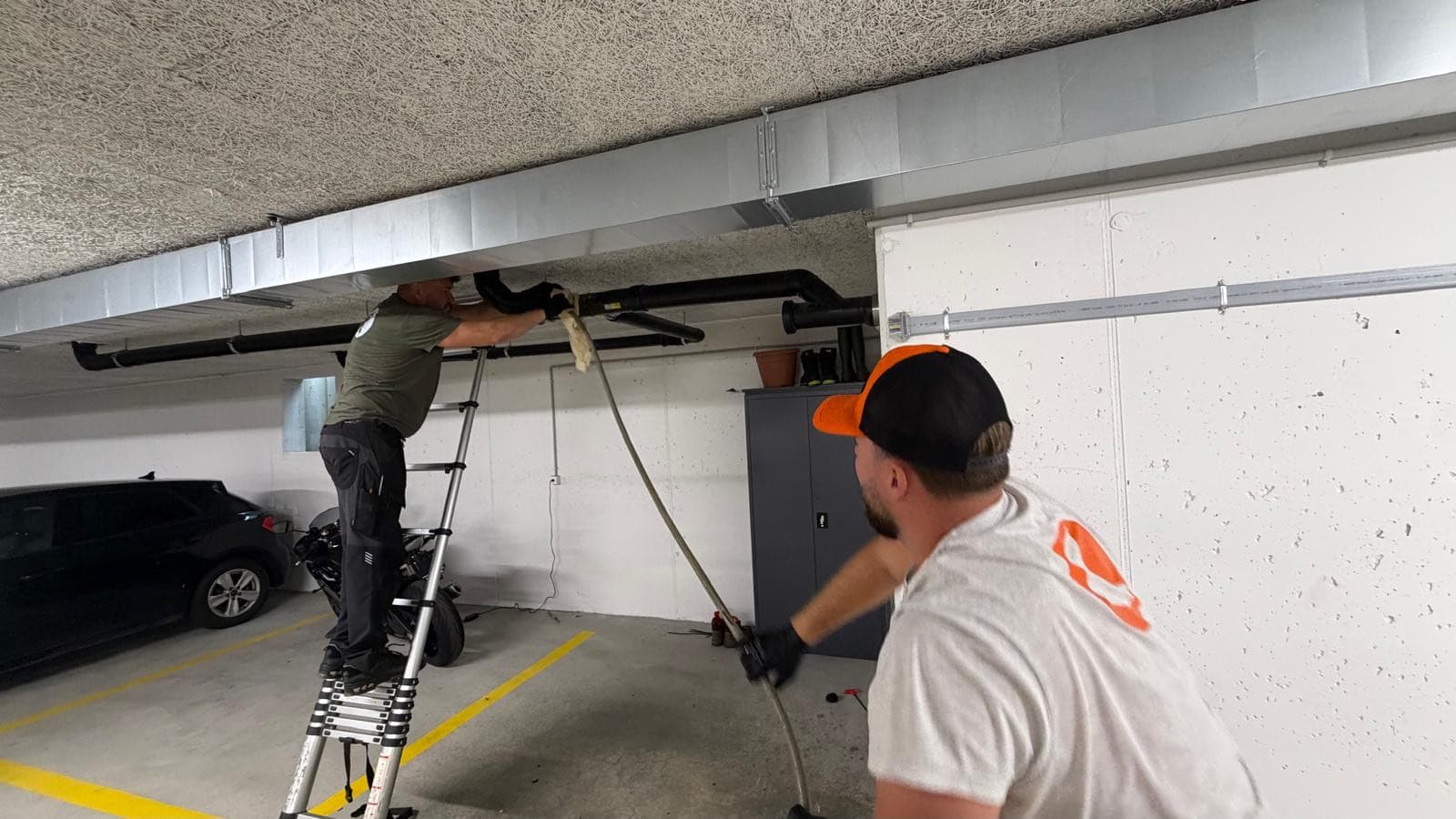
In practice, cleaning works like this: first, the installation is taken out of service and secured against being switched back on. We then suck the pump sump empty with the suction hose, including the floating layer and the sediment. The walls, pumps and floats are hosed down at high pressure; we work chemical-free with water at up to 200 bar. We then jet the inlet pipes, floor drains or channels, so that the next lot of sludge does not slide straight in.
Finally, the installation is put back into operation and a pumping cycle is observed: does the pump switch on and off at the right level? Does the water drain away through the rising main? If anything technical stands out, such as a non-return valve that does not close, we record it. If the inlet pipes cannot be jetted clear, a CCTV drain survey can show where the obstruction is.
Example: a lifting station in a basement flat
A typical case, as often found on hillsides: a granny flat in the basement of a single-family home has a shower, washbasin and toilet that drain via a sewage lifting station in the plant room. For years everything runs smoothly and nobody thinks about the installation. Then, one Sunday, the pump sounds the alarm and the water rises in the shower.
The right reaction: stop discharging water, including on the floor above if its pipes also run via the installation, check the installation’s fuse and call the emergency service. On site, the tank is sucked out; this often reveals a bundle of wet wipes around the impeller or a float stuck in grease. After cleaning, the installation usually works again. If the pump itself is damaged, the service technician is needed afterwards.
The lesson from such cases: anyone who has a lifting station should include it in a fixed servicing plan and point out to all occupants – including tenants of the basement flat – that wet wipes, hygiene products and grease do not belong down the drain.
Costs of cleaning a lifting station
At Karo, cleaning is charged by time spent: CHF 160 per hour plus a CHF 60 call-out fee, both excl. VAT. One hour of work including the call-out therefore costs CHF 220 excl. VAT or CHF 237.82 incl. 8.1% VAT. A job in a single-family home usually costs between CHF 150 and CHF 400 at Karo. If a CCTV drain survey of the inlet pipes is needed, there is a surcharge from CHF 50.
How long cleaning takes depends on the size of the tank or chamber, the amount of deposits and the accessibility. A compact lifting unit or a small pump sump is done more quickly than a deep pump chamber in an underground car park. With larger quantities of sludge, disposal costs may be added; ask about this when you make your enquiry.
These prices do not include technical servicing and repair of the pump. The manufacturer or plumber charges for this separately. Coordinating both appointments saves time: the service technician can check the cleaned installation directly, without having to empty it first.
A property management company in Winterthur reported that the lifting station in an underground car park kept setting off its alarm. On site, the pump chamber turned out to be full of sand, leaves and grease residue; the float switch was stuck. Karo sucked the chamber empty, cleaned the walls and pumps with high-pressure water and jetted the channels in the underground garage. A service technician then replaced the worn non-return valve. Since then, the installation has been on an annual servicing plan, and the false alarms have stopped.