
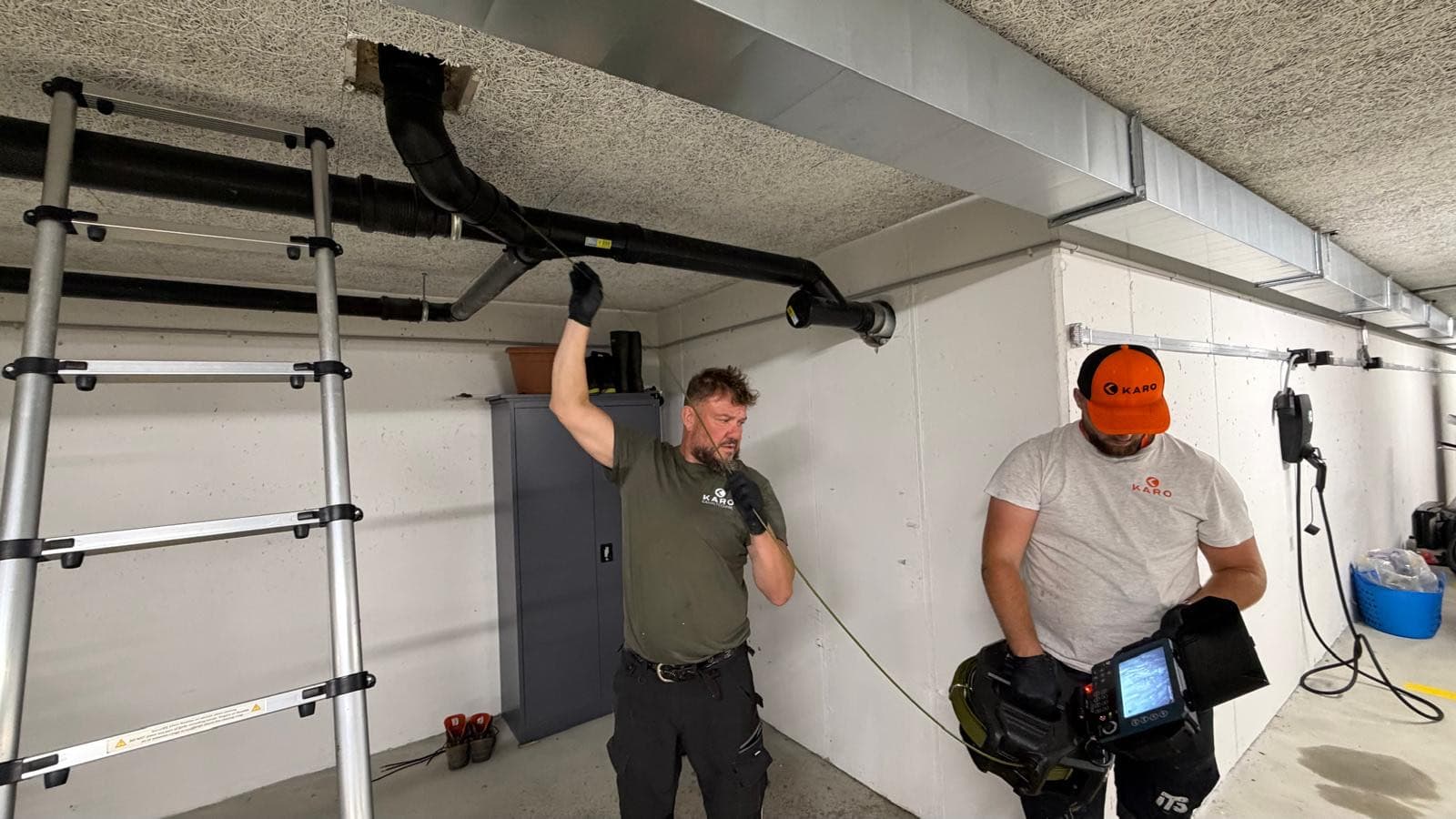
What a condition assessment covers
In a condition assessment, all the defects found are recorded, classified and evaluated. These include cracks, fragmentation, root ingress, deposits, corrosion, displaced joints and leaks. Each finding is documented using a standardised code system and given its position.
In Switzerland, the evaluation is based on the guidelines of the VSA (the Swiss association of wastewater and water protection professionals) and on the European standard EN 13508-2. The result is an objective, comparable assessment of the network's condition that will stand up in court.
When a condition assessment is needed
Municipalities and the canton require periodic condition surveys of public and private wastewater installations. For property owners, a condition assessment becomes due in the event of recurring blockages, odour problems, backflow, or before major renovations and property sales.
After drain rehabilitation, too, the condition assessment serves as an acceptance document, proving that the measures carried out comply with the standards.
Process and result
First the drain is cleaned, then surveyed with a drain camera. The footage is evaluated and summarised in a condition report with defect grades, images and recommendations. The report prioritises the measures from urgent to monitor.
On this basis, rehabilitation can be planned in a targeted way and budgets calculated realistically. Instead of renewing everything across the board, only the sections that are actually damaged are treated.
Cost of a condition assessment
The costs are made up of preliminary cleaning, the CCTV drain survey and the evaluation. The CCTV drain survey starts from CHF 50 per section, cleaning is charged at around CHF 160 per hour, plus the call-out fee of CHF 60. The evaluation report is calculated separately depending on its scope.
A community of owners in Winterthur reports recurring backflow of water in the basement. Karo Kanaltechnik cleans the pipe, surveys it with the camera and draws up a condition assessment. The result shows two cracked joints over a length of 14 metres, which are rehabilitated in a targeted way with a Pointliner instead of digging up the entire pipe.