
What rehabilitation methods are there?
A distinction is made between trenchless and open methods. Trenchless methods include the CIPP liner (cured-in-place pipe) for entire pipe sections, the Pointliner for localised damage, and the spray lining method, in which a coating is applied.
Only when the pipe is no longer structurally sound or has collapsed completely is open-cut construction used and the damaged section replaced. Trenchless methods are usually faster and cheaper and spare gardens, paving and traffic.
When is drain rehabilitation needed?
Rehabilitation is needed where there are cracks, collapsed pipes, leaking joints, root ingress, corrosion or displacements. Damage of this kind causes wastewater to escape into the ground or groundwater to enter the pipe – both of which are problematic, ecologically and legally.
Every rehabilitation decision is based on a CCTV drain survey with a condition assessment. Only once the type, location and extent of the damage are known can the right method be chosen in a way that makes economic and technical sense.
How trenchless rehabilitation works
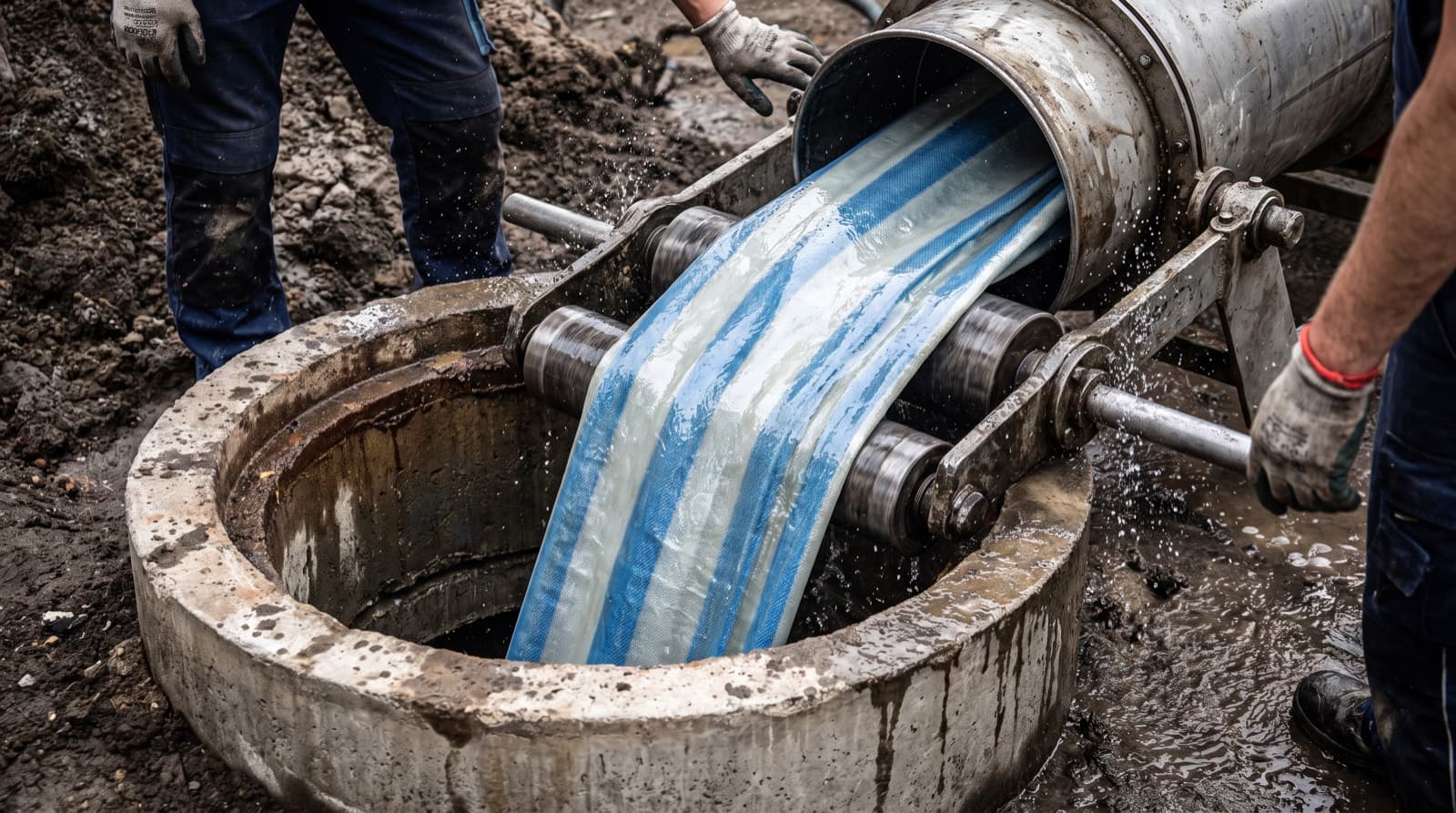
First, the drain is thoroughly cleaned and inspected with a camera. The chosen rehabilitation system – for example a resin-impregnated CIPP liner – is then inserted into the pipe and pressed against the pipe wall.
Once the material has cured, a new, watertight pipe is formed inside the old one. A final camera check and, if required, a leak-tightness test confirm that the rehabilitation has been successful.
Advantages of trenchless drain rehabilitation
Trenchless rehabilitation does not require large-scale excavation. This saves time and money, avoids damage to gardens, roads and paving, and considerably reduces the impact on residents and the environment.
In addition, the materials used are durable and resistant to wastewater, roots and chemicals. A professionally installed liner achieves a service life of several decades.
At a property in Aarau, groundwater enters the underground drain through a cracked joint and overloads the treatment plant. Instead of tearing up the forecourt, a CIPP liner is pulled in and cured. After one day, the pipe is watertight again – the paving and planting remain untouched.