
How a grease separator works
The grease separator uses the physical principle of differing densities. The wastewater calms down in the separator, causing heavy solids to settle at the bottom and lighter fats and oils to float to the surface. Only the pre-treated water flows on into the sewer system.
Fats must not enter the sewer network, because they solidify as they cool, build up on the pipe walls and narrow the bore. This leads to blockages, odours and expensive operational disruptions.
When grease separator cleaning is mandatory
In Switzerland, businesses with greasy wastewater – restaurants, butchers, canteens, bakeries, snack bars – are obliged to operate a grease separator and empty it regularly. The SN EN 1825 standard and municipal wastewater regulations form the basis.
Complete emptying and cleaning at least once a month is customary, or more often depending on the size and utilisation of the business. If maintenance is neglected, backflow, odours and complaints from the authorities are the result.
How the cleaning works
The separator is completely emptied, and the grease and sludge are vacuumed out with the suction tanker and disposed of properly. The tank walls are then cleaned, and the separator is refilled with fresh water and made ready for operation.
Karo Kanaltechnik documents every emptying, so that the business can prove proper maintenance to the authorities at any time.
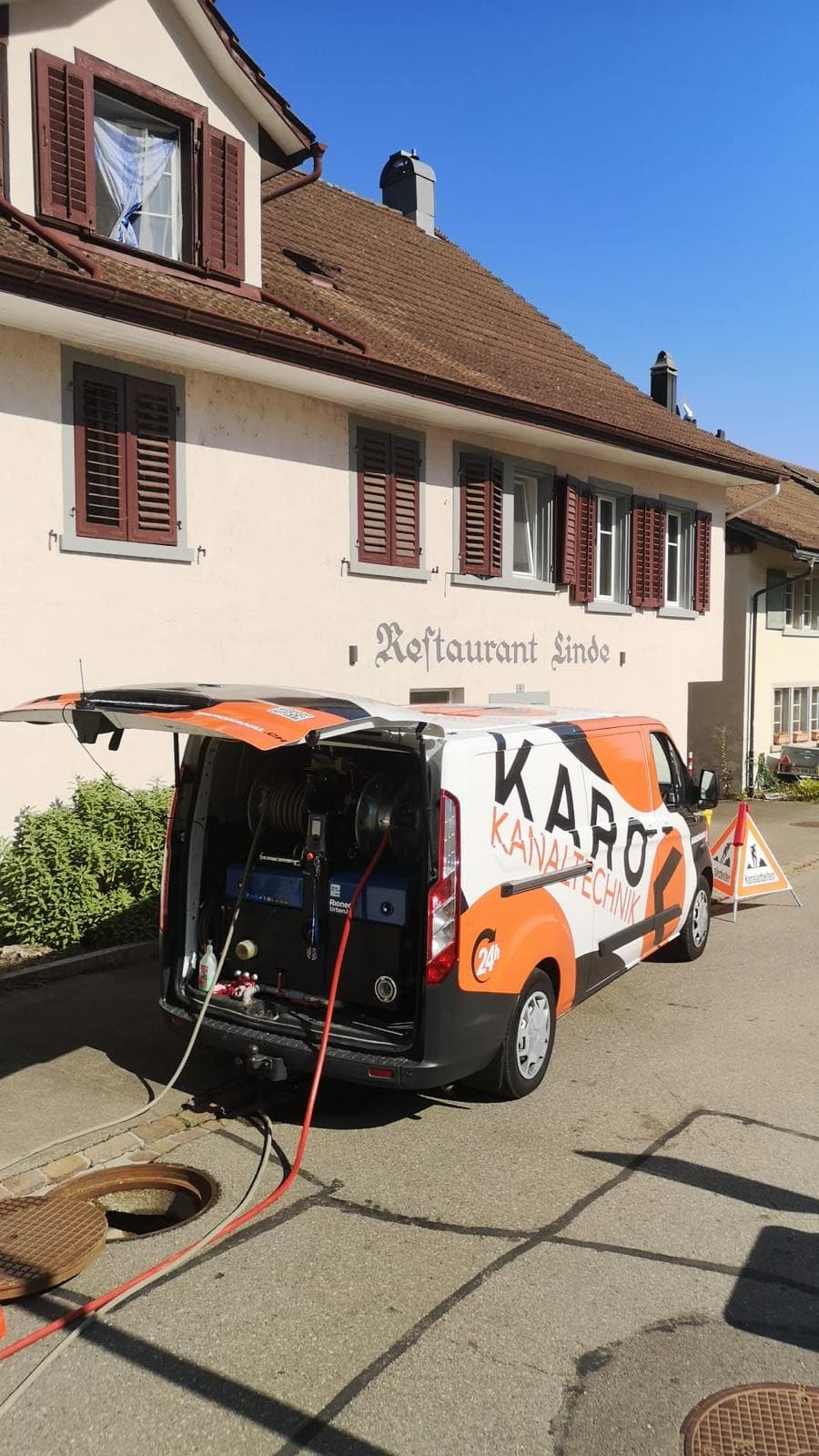
A restaurant in Uster has its 2000-litre grease separator emptied by Karo Kanaltechnik every month. The suction tanker arrives, vacuums off the grease layer and settled sludge, cleans the tank and issues a disposal certificate. This keeps the kitchen ready for operation and the municipality's requirements are met.