
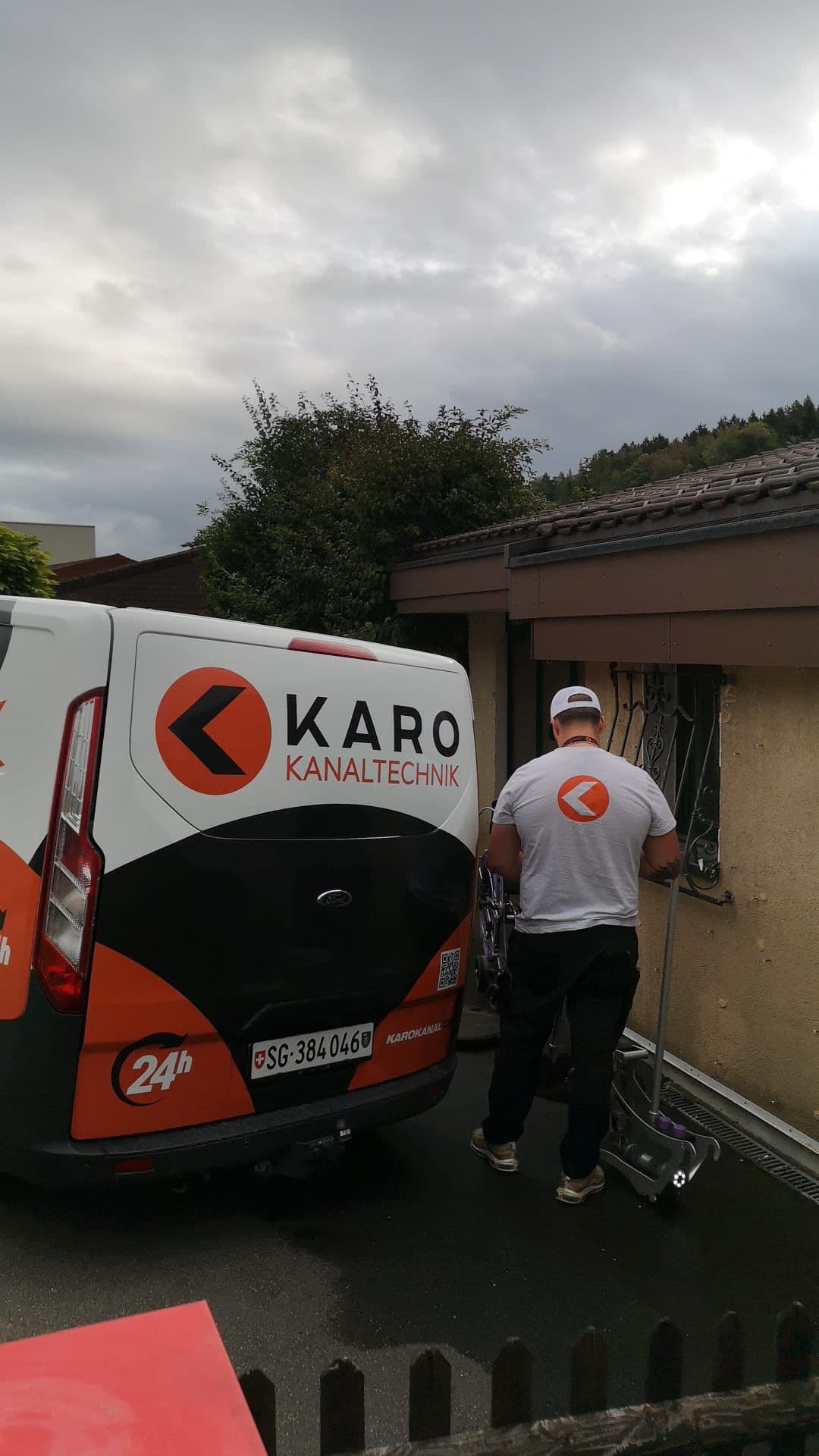
How does pipe cleaning work?
Different methods are used depending on the pipe diameter and the type of blockage. For smaller outlets such as washbasins, showers or toilets, an electric drain snake is used to break up the blockage mechanically or pull it out.
For larger pipes and underground drains, the hydrodynamic high-pressure method is preferred. A high-pressure water jet loosens the deposits and flushes them towards the sewer. The two methods can be combined to reliably clear stubborn blockages.
Common causes of blocked pipes
In the kitchen, congealed grease and food scraps are the most common cause. In the bathroom, hair, soap residue and limescale lead to deposits. In the toilet, wet wipes, hygiene products and excessive paper block the pipe.
Outside the building, it is often root ingress, deposited sand or a collapsed pipe that obstructs the flow. In such cases, a CCTV drain survey establishes the exact cause and location of the problem.
Pipe cleaning or drain cleaning?
The term pipe cleaning is mostly used for pipes inside the building and for smaller diameters down to the underground drain. Drain cleaning refers to cleaning the larger, buried wastewater drains outside the house.
In practice, the two merge into one another: a blocked floor drain pipe in the basement may have its cause in the underground drain or in the public sewer. That is why it pays to look at the drainage system as a whole.
Prevention instead of blockage
Disposing of grease, oil and food scraps with the rubbish rather than down the sink is an effective way to prevent blockages. Only toilet paper and normal human waste belong in the toilet – never wet wipes.
If problems keep recurring, preventive cleaning combined with a condition check is recommended. This allows structural causes such as pipe displacement or root ingress to be detected and remedied at an early stage.
In an old apartment in Zurich, water builds up in the shower and slowly rises. Using an electric drain snake, a dense plug of hair and soap residue is cleared from the waste stack. Within half an hour, the shower drains freely again, without any digging.