What is manhole cleaning?
Manhole cleaning is the complete emptying and cleaning of a manhole in a property or road drainage system: sludge, sand, leaves, grease and solids are vacuumed out, walls and channels are rinsed with water and the extracted material is disposed of properly. The aim is for the manhole to fulfil its function again – to convey water, hold back dirt, let water soak away or pump it.
Manholes are the access and collection points of every drainage system. Everything the water brings with it and cannot carry any further settles in them. Without regular cleaning, this layer grows until the flow stalls, water overflows or a pump runs dry. Manhole cleaning is therefore part of the operational maintenance of a drainage installation, just like cleaning the pipes themselves.
Manhole emptying, manhole cleaning, manhole flushing: the same job?
In everyday use, the terms are often used interchangeably. «Manhole emptying» describes the first and most important step: the manhole is vacuumed out with the suction hose until the bottom is visible. With silt traps, gully pots and separators in particular, emptying is the actual job, because material is meant to collect there.
«Manhole cleaning» is the broader term: in addition to emptying, the walls, step irons and channel are rinsed with high-pressure water so that no encrustation remains, and there is usually a visual check of the condition. Anyone who orders «manhole flushing» generally means the same thing. What counts for the quote is not the word but which manholes, how many and how full they are.
How does manhole cleaning work?
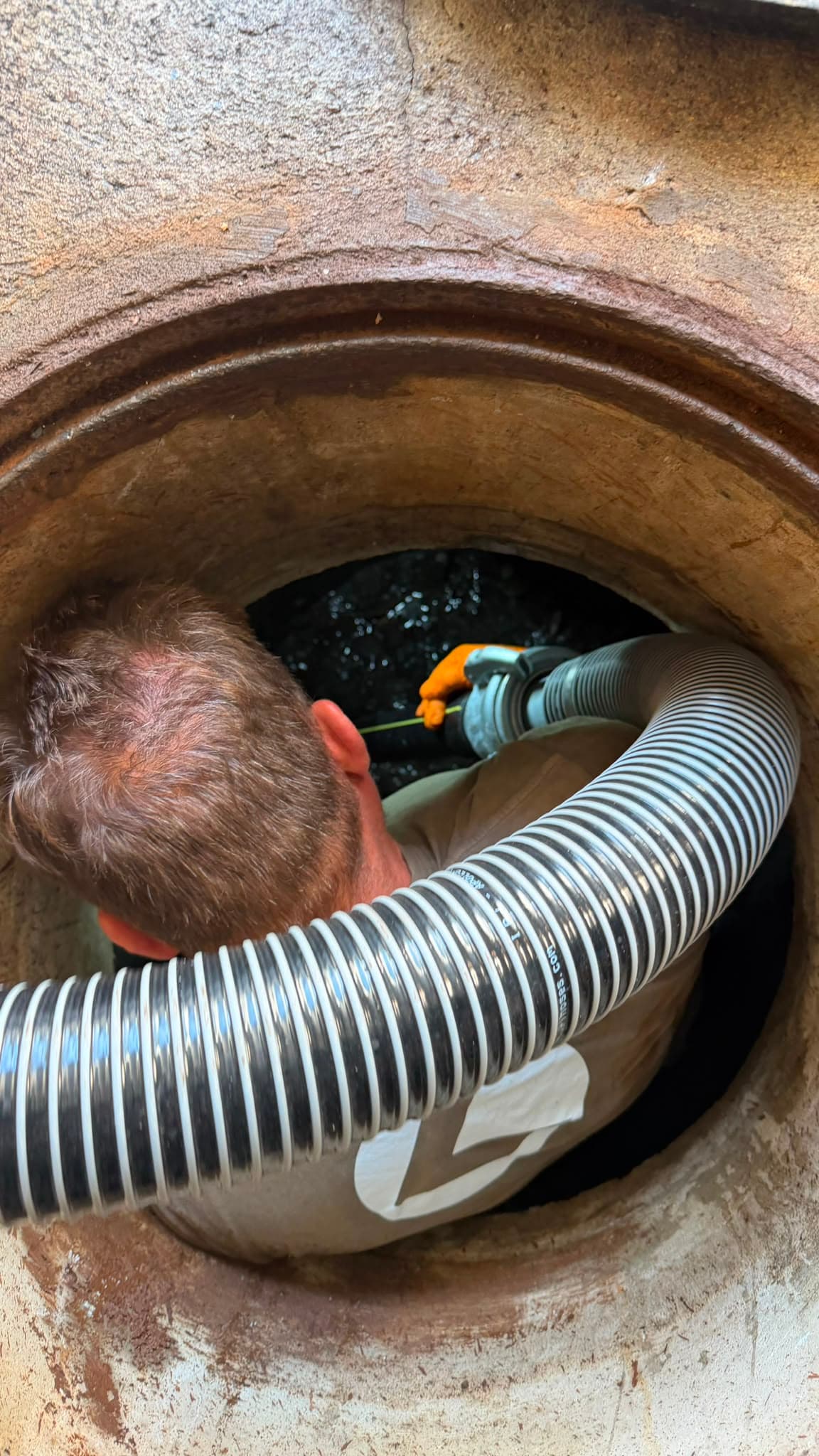
First the manhole is opened and the fill level is assessed. The deposited material – usually sludge, sand and solids – is then vacuumed out with a powerful suction vehicle.
Encrustation on manhole walls and drainage channels is loosened with high-pressure water and also vacuumed out. This keeps the manhole clear, and the subsequent visual check gives a clear picture of its structural condition.
1. Securing and opening
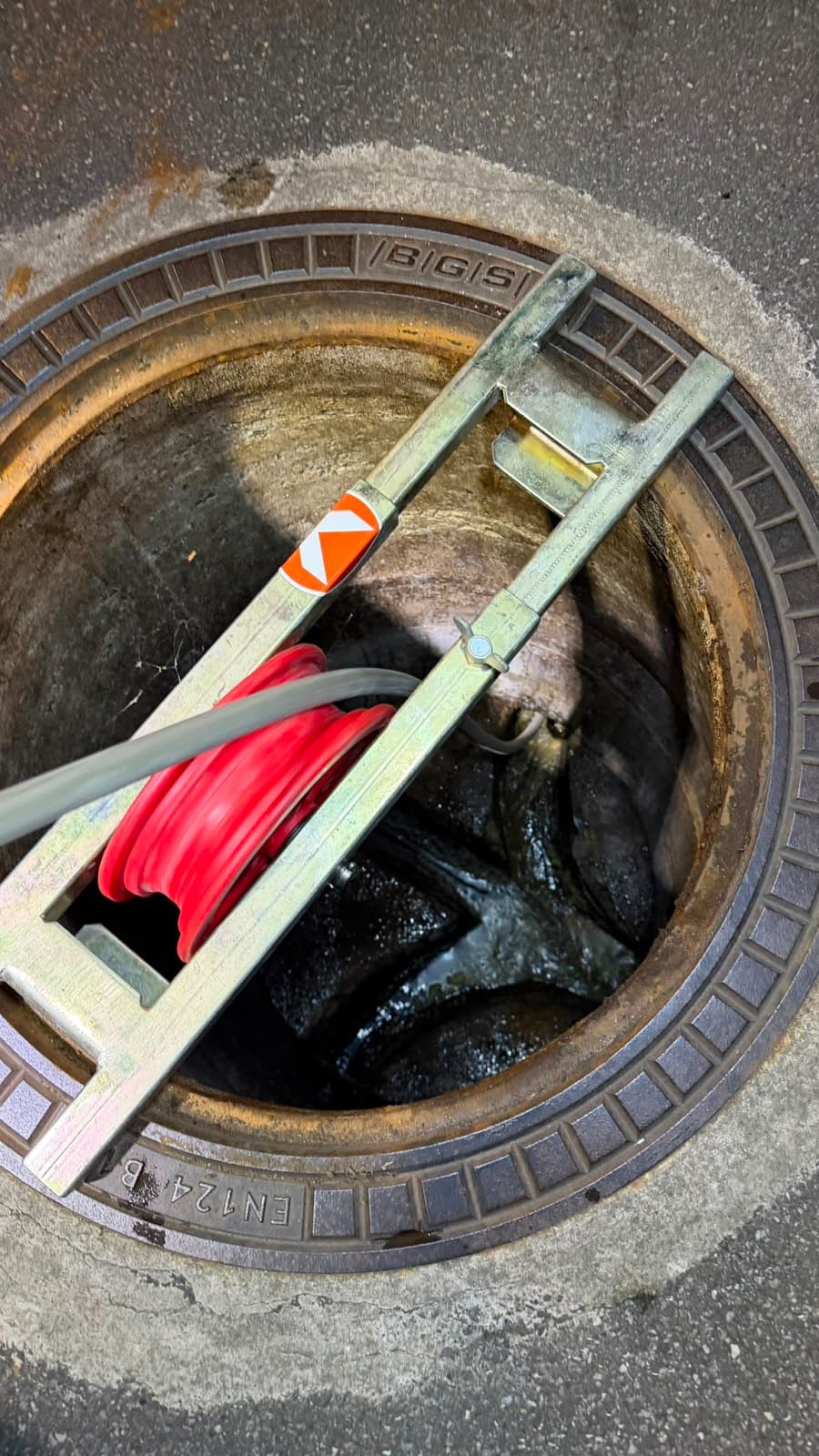
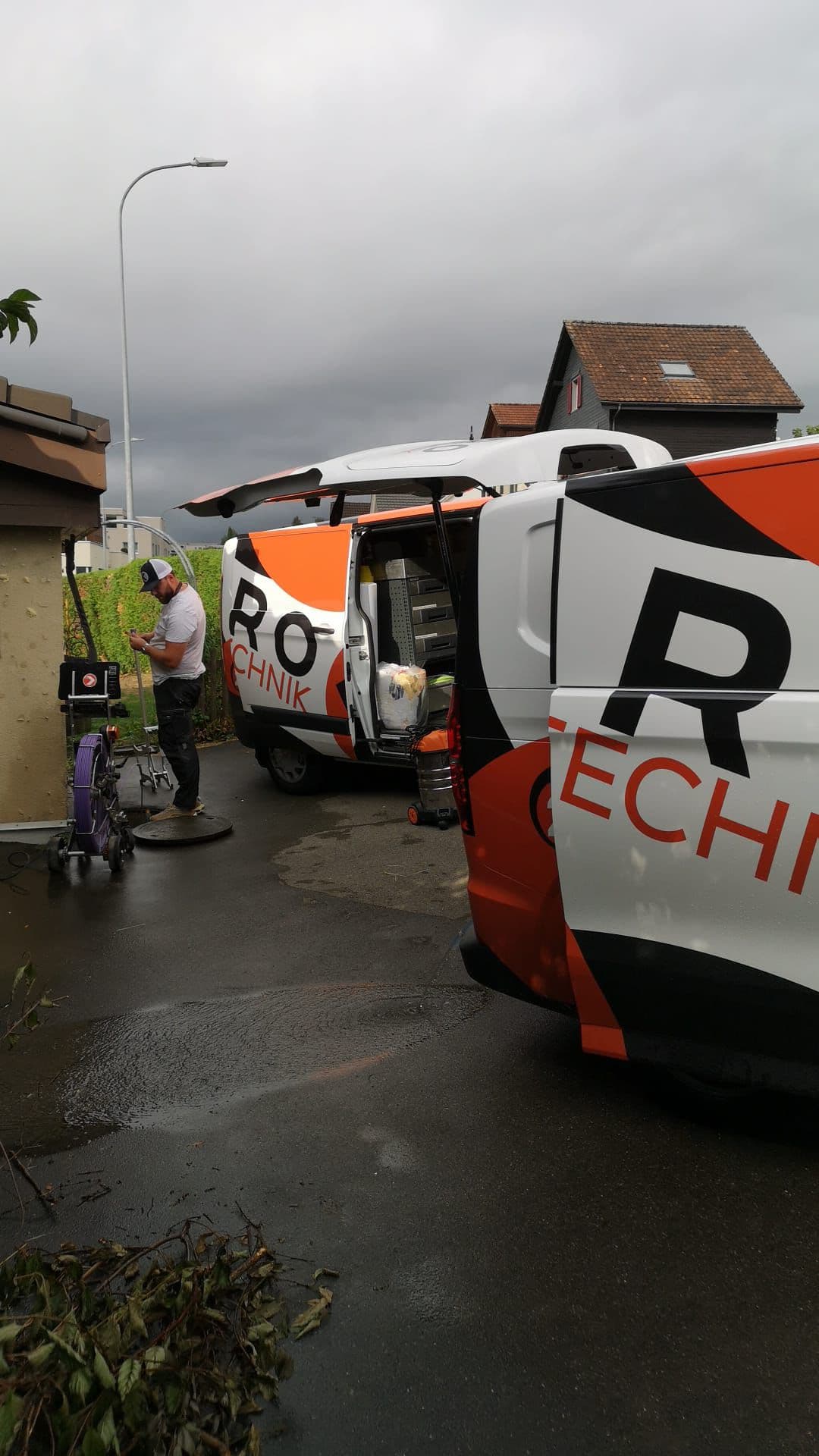
If the manhole is on a driveway, a pavement or a road, the site is first signposted. The cover is then lifted and we check how high the water and sludge are and whether inlets are running freely or backing up.
2. Vacuuming
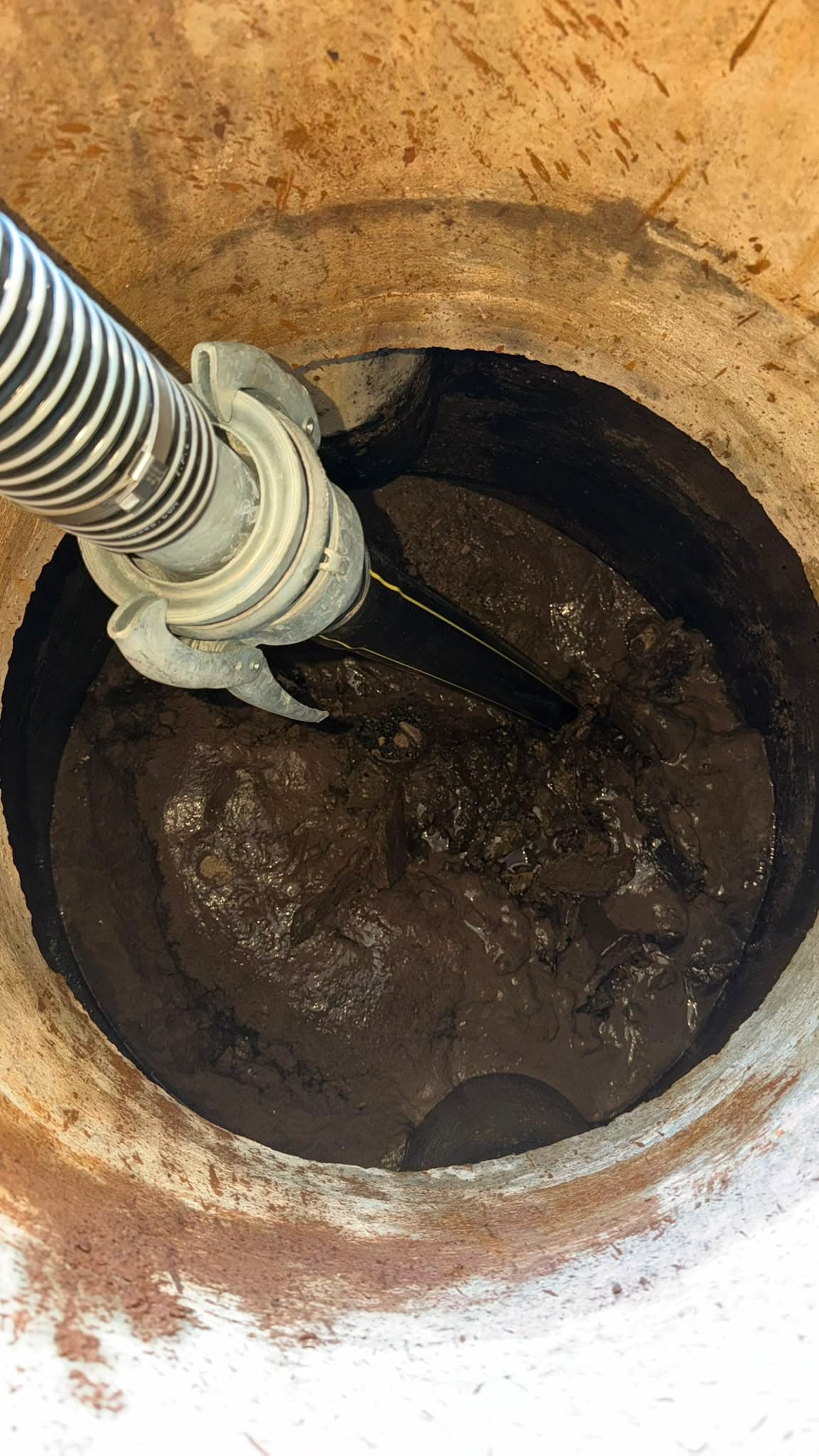
The suction hose removes water, sludge, sand and leaves from the manhole. Compacted material at the bottom is loosened until the manhole floor and the inlets are clear.
3. Rinsing walls, channel and connections
Grease and limescale crusts on the walls and in the channel are loosened with high-pressure water. Karo works chemical-free at up to 200 bar, matching the pressure to the material and condition. If necessary, the adjoining pipe sections are also jetted so that loosened material does not end up straight away in the next manhole.
4. Inspection and documentation
In the empty, clean manhole, cracks, leaking joints, loose step irons and corrosion are easy to see. If anything is noticed, the connected pipe can be surveyed by camera; the findings are coded to SN EN 13508-2. Finally, the cover is properly refitted.
Which manholes need to be cleaned?
Inspection and access chambers, soakaway chambers, pump chambers, gully pots as well as silt traps and oil separators need to be cleaned regularly. Settling and collecting chambers in particular fill up with sediment over time.
Neglected manholes lose their function: gully pots overflow, soakaway chambers no longer drain and pump chambers fail. Regular cleaning maintains the operational reliability of the entire drainage system.
The following overview shows what builds up in the most common types of manhole and what the cleaning focuses on.
| Type of manhole | Function | Typical deposits | Cleaning focus |
|---|---|---|---|
| Inspection chamber (access chamber) | Access to underground drain and house connection, changes of direction and gradient | Sand, grease, toilet paper, solids in the channel | Rinse channel and inlets, check condition |
| Soakaway chamber | Lets rainwater or clean water soak into the ground | Fine sludge that seals the bottom and walls | Vacuum down to the base, assess infiltration capacity |
| Pump chamber | Collects wastewater below the backflow level and pumps it up | Sludge, grease, fibres, floating layer | Empty the chamber, free the pump and float |
| Inlet chamber (gully, Dole) | Takes in water from yards, roads or driveways | Leaves, sand, grit, tyre abrasion | Empty the sludge compartment, clear the grate and outlet |
| Silt trap | Holds back sand and sludge before the pipe | Sand, gravel, leaves, sludge | Empty regularly before the sludge compartment is full |
| Oil and grease separator | Separates light liquids or grease from the wastewater | Oil or grease layer, sludge | Empty as per maintenance specification, document disposal |
How often is manhole cleaning needed?
The interval depends on use and surroundings. Gully pots and silt traps at sites with heavy traffic or lots of leaves should be emptied once or twice a year. Inspection chambers are cleaned every few years, depending on how much accumulates.
For inspection chambers in residential properties, Karo Kanaltechnik recommends cleaning every 2 to 3 years. For restaurants and industrial plants, annual cleaning can make sense, because grease and process residues build up faster.
Oil separators and silt traps are often subject to specific maintenance requirements and must be emptied properly and documented. A regular maintenance plan prevents costly emergencies.
Besides the calendar, warning signs count: water remains standing on the yard after rain, a manhole smells, the level in the pump chamber rises unusually high or the pump starts more often. In that case, you should not wait until the next scheduled date.
Manhole cleaning or manhole rehabilitation: the difference
The two terms are often confused, but they concern different problems. Manhole cleaning removes what has built up in the manhole – the manhole itself is intact, just full or dirty. Manhole rehabilitation repairs the manhole as a structure: leaking joints, cracks, corroded concrete, a washed-out channel or loose climbing aids.
In practice, the two are linked. Only a cleaned manhole shows whether it is tight and structurally sound. If cleaning reveals that groundwater is entering through joints or the concrete is sanding off, manhole rehabilitation follows with grouting, coating or lining. Conversely, every rehabilitation starts with thorough cleaning, because coatings only adhere to a clean substrate.
In short: if the manhole is full, it needs cleaning. If it is leaking or damaged, it needs rehabilitation. Both can be planned in a single job.
How much does manhole cleaning cost?
Karo Kanaltechnik charges by time: CHF 160 per working hour plus CHF 60 call-out, excl. VAT. One hour including call-out therefore comes to CHF 220 excl. VAT or CHF 237.82 incl. 8.1% VAT. If the connected pipe is also checked with the camera, a CCTV surcharge from CHF 50 is added.
How long it takes depends on the number of manholes, their depth, the fill level and accessibility. Cleaning several manholes on the same property in one job saves call-outs. You can calculate a guide price for your situation online via the enquiry form.
Advantages of regular manhole cleaning
Regularly cleaned manholes ensure free flow and prevent backflow, flooding and odour problems. At the same time, structural damage can be identified early during cleaning.
Proper disposal of the extracted material relieves the burden on the environment and operators. This keeps the installation legally compliant and ready for operation, and costly consequential damage is avoided.
For property management companies and municipalities, there is an organisational advantage too: having the manholes cleaned on a fixed cycle makes it possible to budget for maintenance and provides an up-to-date condition record with every job, instead of only finding out how the installation is doing in an emergency.
On a company site in St. Gallen, water overflows from the car park's gully pots after every heavy rainfall. During manhole cleaning, the vehicle vacuums several hundred litres of sludge and leaves out of the gully pots and the silt trap. After that, the rainwater flows into the sewer system again without any problems. A subsequent look into the empty inspection chamber shows that the channel is intact and no rehabilitation is needed. To prevent this happening again, the gully pots and silt trap will in future be emptied after the leaves fall in autumn, and the inspection chamber every two to three years.