
How is tightness tested?
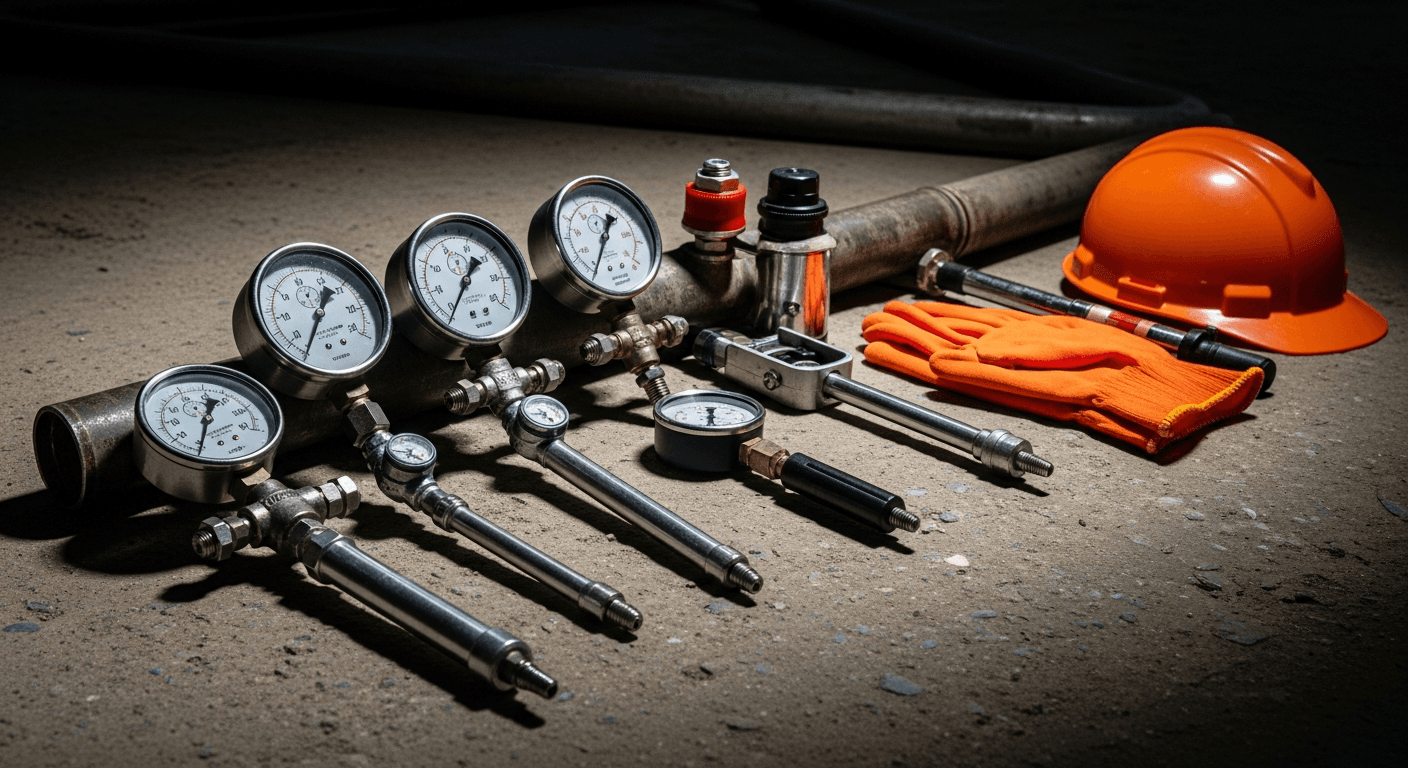
The test is usually carried out with water or air. In the water test, the sealed-off section of pipe is filled and observed to see whether and how much water is lost over a defined period. In the air test, a test pressure is built up and the drop in pressure is measured.
If the water level or the pressure remains stable within the permissible limit values, the pipe is considered tight. The results are recorded and serve as official proof for the authorities and owners.
When is a leak-tightness test required?
A test is customary for new buildings and after rehabilitation to prove that the work has been carried out properly. Depending on cantonal and municipal regulations, existing pipes must also be checked periodically for tightness.
Protecting groundwater is a high priority in Switzerland. Owners are obliged to keep their private wastewater pipes in proper condition – the leak-tightness test provides the proof.
How the test is carried out
Before the test, the pipe is cleaned and often checked visually with a CCTV drain survey. This allows obvious damage to be identified in advance.
The test section is then sealed off with pipe plugs and the water or air test is carried out. The test report records pressure, time and loss and documents the result in a traceable way.
What happens if the result is negative?
If a pipe turns out to be leaking, the cause is first located – for example with a camera or leak detection. Depending on the damage, targeted rehabilitation follows with a Pointliner, a CIPP liner or by open-cut construction.
After the rehabilitation, the leak-tightness test is repeated. Only a passed follow-up report confirms that the pipe meets the requirements again.
After an underground drain has been rehabilitated in Zug, the municipality requires proof of tightness. The specialist company fits pipe plugs, fills the section with water and measures no relevant loss over the prescribed time. The report confirms tightness and is submitted to the municipality.