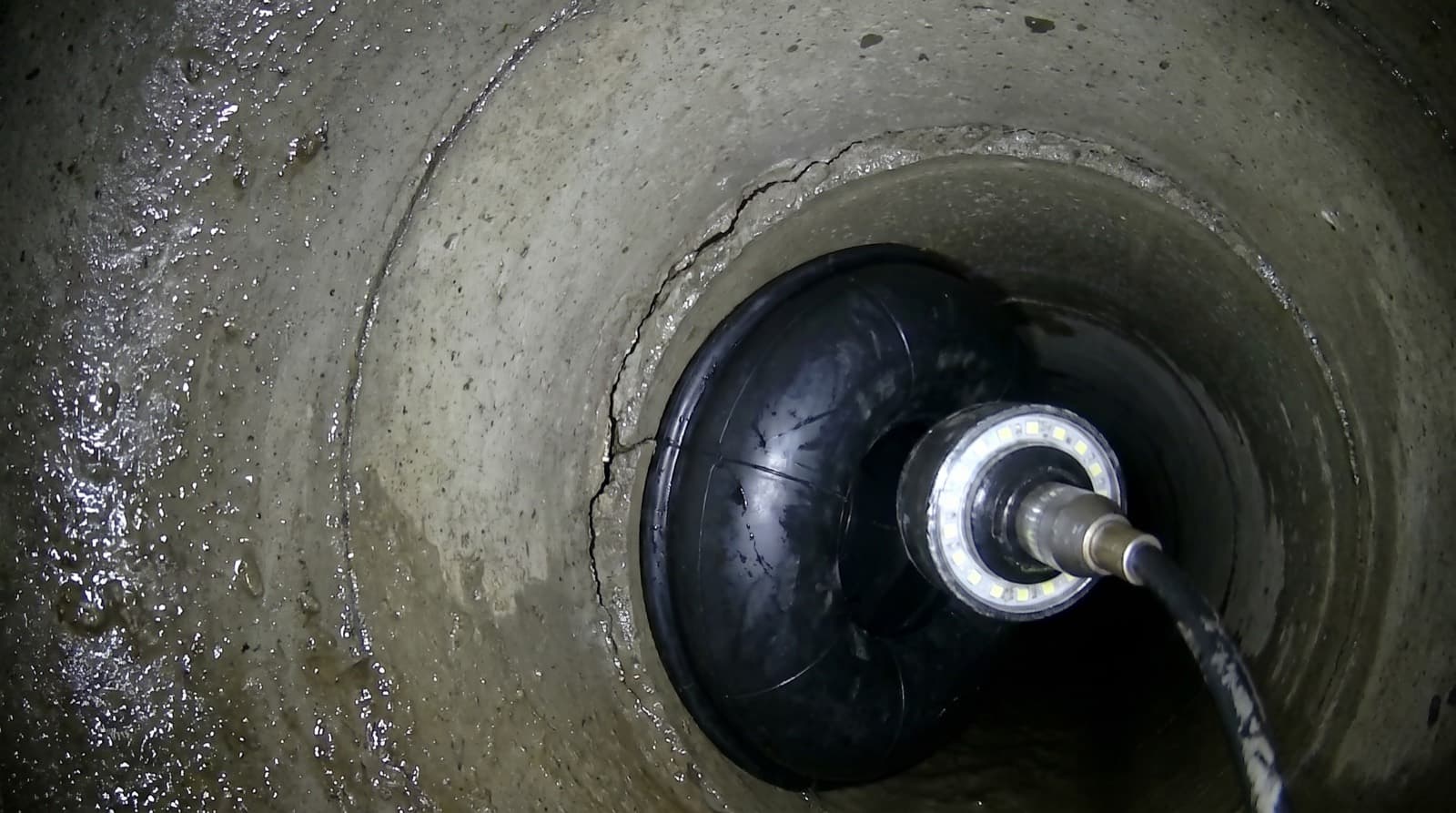
What is a patch liner?
A patch liner is a localised repair from the inside: a short piece of carrier material is impregnated with resin, moved precisely to the damaged spot, pressed against the pipe wall there and cured. What remains is a firm, tight sleeve that covers only the damaged section. The rest of the pipe stays as it is.
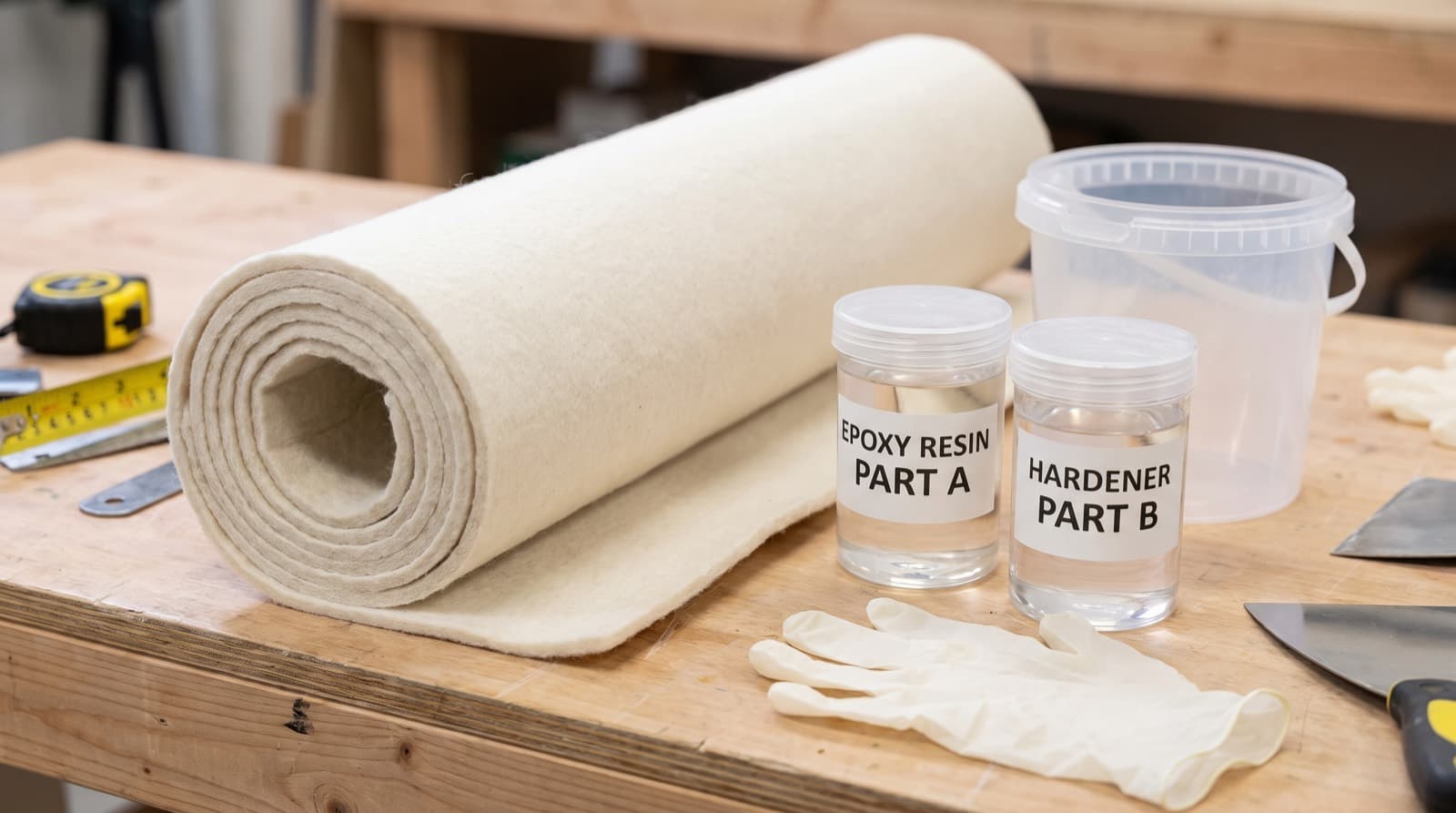
Only a short section around the damaged spot is treated, with some overlap into the intact area before and after it. The carrier is usually glass fibre or needle felt, impregnated with a two-component resin. Karo Kanaltechnik uses glass-fibre-reinforced patch liners that cure with UV light or warm water depending on the situation, in pipes from DN 100 to DN 600 – from the house connection to the collecting pipe.
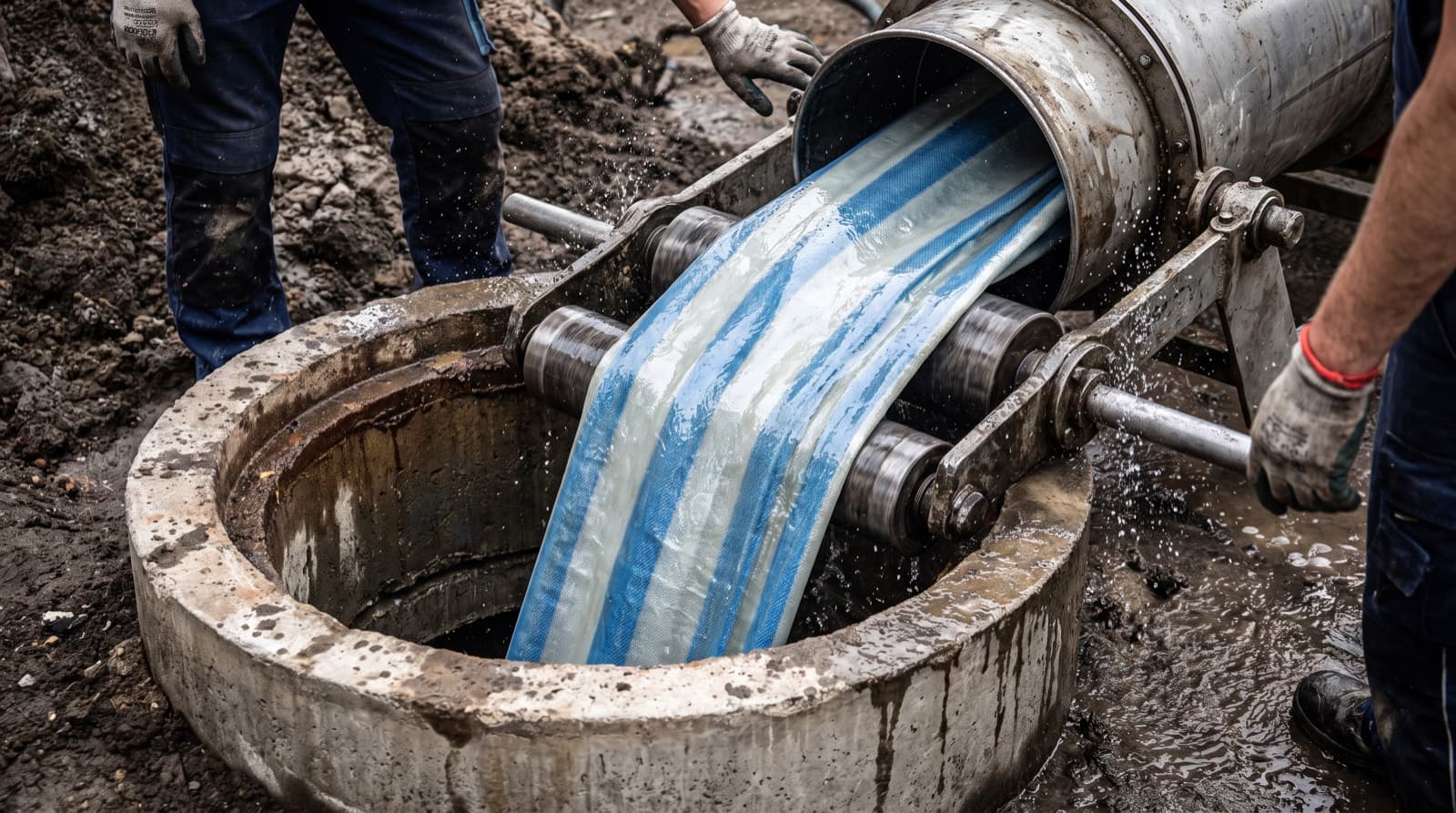
The patch liner is one of the trenchless rehabilitation methods. It is inserted via existing manholes or rodding eyes; the forecourt, garden, basement floor or road does not have to be opened up.
How does a Pointliner work?
The resin-impregnated patch liner is wrapped around an inflatable packer and moved precisely to the damaged spot with the help of a camera. There the packer is inflated and presses the liner firmly against the pipe wall.
Once the resin has cured, the packer is removed. What remains is a tight, firm sleeve that covers only the damaged area. A final camera check confirms that it is sealed tight.
Patch liner, Pointliner, part liner – the same idea
The terms patch liner, Pointliner and part liner essentially describe the same principle: the localised, trenchless repair of a damaged spot confined to one place. Length, material and curing method differ depending on the manufacturer and system – the resin cures cold, with heat or with UV light.
Quotes and technical texts also use terms such as patch liner repair, point liner, sleeve repair or «repair with materials cured on site». What is always meant is a repair that covers only one spot – unlike the CIPP liner, which lines an entire pipe run from manhole to manhole.
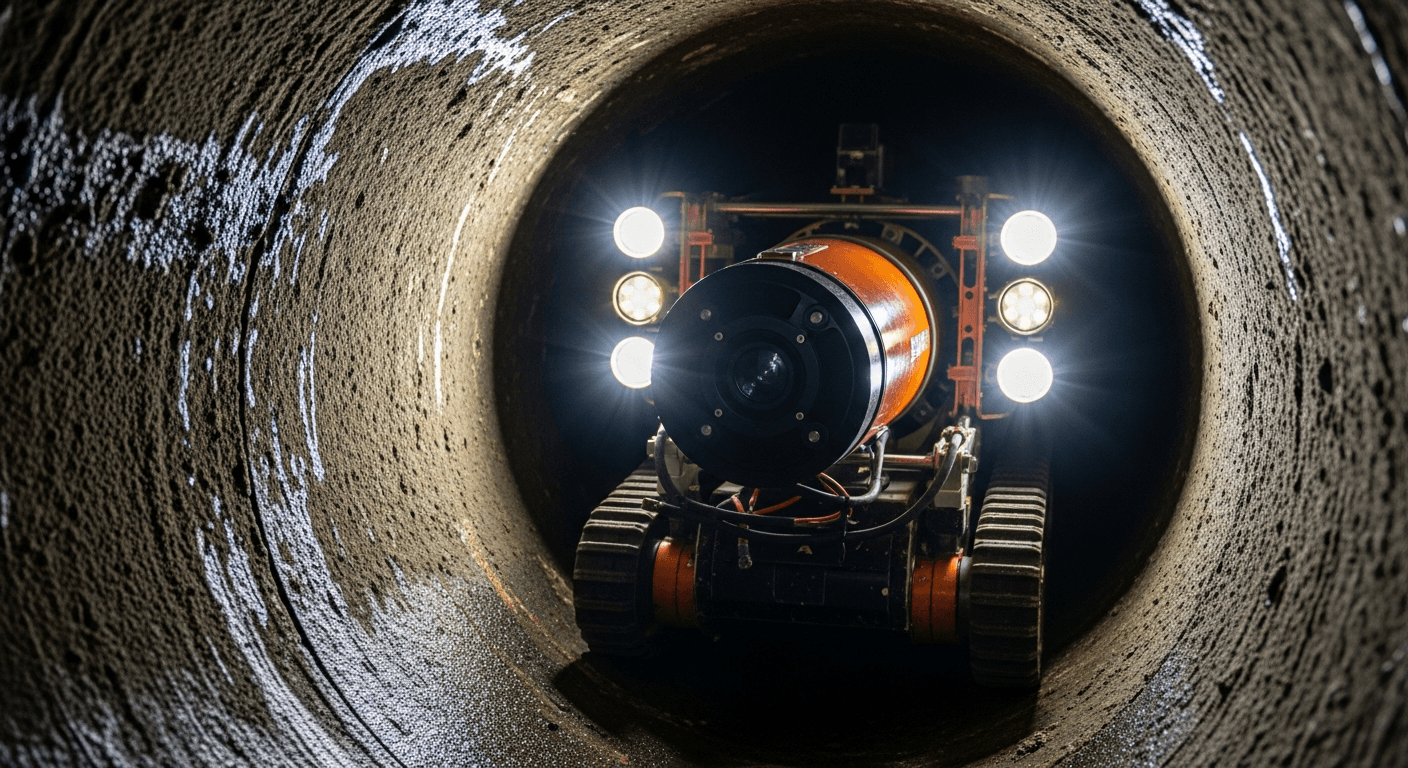
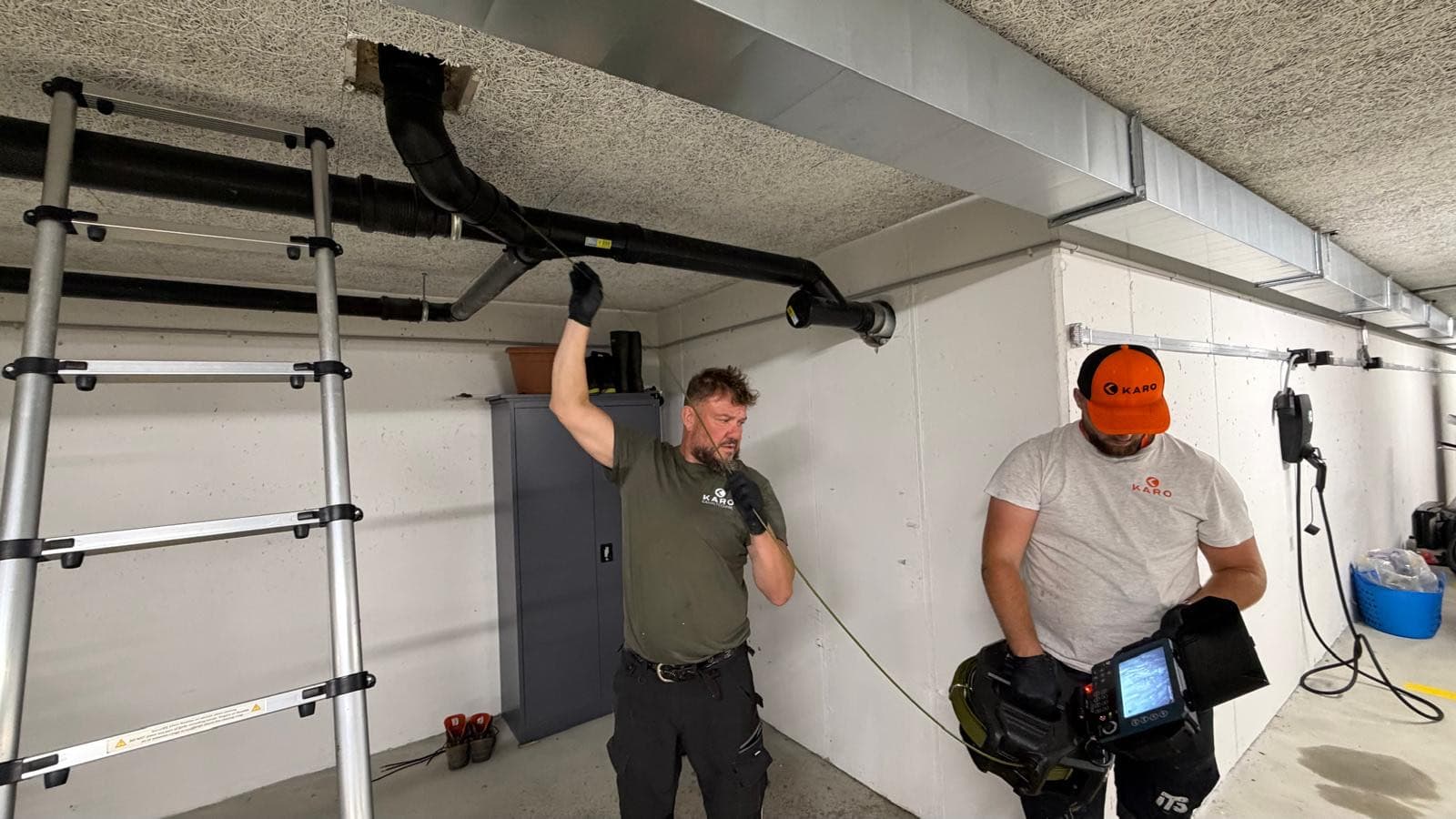
An accurate diagnosis beforehand is crucial: only when the location and extent of the damage are clear from the CCTV survey can the liner be placed precisely. A documented CCTV survey before and after the rehabilitation proves that the installation was carried out properly and serves as evidence of tightness.
When is a Pointliner the right choice?
The Pointliner is ideal for individual, localised defects such as a crack, a leaking joint or minor root ingress. The rest of the pipe is intact and does not need rehabilitation.
If several defects are spread over a longer section, a continuous CIPP liner is usually more economical. The CCTV drain survey shows which method is cheaper and more sensible in the specific case.
Typical defects for the patch liner
Longitudinal and circumferential cracks, a leaking or slightly shifted joint (displaced joint), local fragmentation, a small hole or a localised collapse through which soil or roots get in. The spot is also often sealed with a patch liner after a protruding connection has been cut away.
Leaking inlet stubs and lateral connections need a different shape: a top-hat profile is used there, which seals the transition from the main pipe into the connection. Patch liners and top-hat profiles are frequently combined in the same job.
When a patch liner is no longer enough
If the pipe is cracked over long stretches, badly deformed, collapsed or corroded throughout, a single sleeve can no longer save it. A CIPP liner over the entire pipe run is then the more sustainable solution or, if the pipe is no longer load-bearing, replacement by open-cut construction. The deciding factor is the condition assessment from the CCTV survey.
Patch liners and root ingress
Roots almost always grow into the pipe through leaking joints or fine cracks – they follow the moisture and the nutrients in the wastewater. Inside the pipe they thicken, catch paper and grease and cause recurring blockages. If the pipe is only cleaned, they grow back through the same opening.
This is exactly where the patch liner comes in: first the roots are completely removed from the pipe with the robotic cutter or high-pressure jetting. The liner is then placed over the leaking joint and closes the point of entry. The roots outside the pipe remain in the soil, but can no longer find a way in at this point. The cured material is resistant to root ingress.
It is important to look at the whole pipe: if the camera shows roots at several joints, it is worth comparing with a continuous CIPP liner. If trees or hedges stand directly above the pipe, it makes sense to include the remaining joints in the survey at the next inspection.
How Pointliner rehabilitation works
First the drain is cleaned and the damaged spot is precisely located and measured with a camera. The appropriate patch liner is then prepared, impregnated with resin and moved into the right position with the packer.
After a curing time of usually less than an hour, the repair is complete. The final camera check documents the result for your records.
Step 1: CCTV survey and measurement
The CCTV drain survey shows the type, location and length of the damage as well as the pipe diameter. This determines the length of the liner, the liner system and whether a patch liner is the right choice at all.
Step 2: Cleaning and preparation
The section is cleaned with high pressure. Roots, deposits or protruding parts are removed with a robotic cutter if necessary, so that the liner sits flush against the pipe wall.
Step 3: Impregnating and positioning the liner
The carrier material is impregnated with resin, wrapped around the packer and moved precisely over the damaged spot under camera observation – with overlap into the intact area before and after it.
Step 4: Pressing and curing
The packer is inflated and presses the liner against the pipe wall. Depending on the system, the resin cures with UV light or warm water. The packer is then deflated and pulled out.
Step 5: Final check and documentation
A second CCTV survey shows how the liner sits, the transitions and the tightness. Findings and results are documented to SN EN 13508-2 and sent to you as proof.
Diameter: does a patch liner make the pipe narrower?
Hardly. The cured patch liner is only a few millimetres thick and fits tightly against the pipe wall. The pipe cross-section is almost completely preserved, and because the inner surface is smooth, wastewater often flows better at the repaired spot than it did before at the rough crack or the displaced joint.
With small diameters such as DN 100, every millimetre matters more than in a collecting pipe. That is why the wall thickness of the liner is matched to the diameter and the load. For even smaller pipes in the house – such as soil stacks from DN 50 – spray lining is often the more suitable solution.
Service life and guarantee
A patch liner is not a temporary repair. The materials used are designed for a service life of at least 50 years; the cured liner can withstand mechanical loads and is resistant to wastewater, root ingress and abrasion. This requires professional installation on a properly prepared pipe wall.
Karo Kanaltechnik provides a warranty of up to 10 years on rehabilitation work, depending on the method and scope. Please note: the service life refers to the repaired spot. The rest of the pipe continues to age – which is why it should go back in front of the camera at the next periodic inspection of the property drainage.
Quality evidence by camera
Whether a patch liner fits well can only be assessed from the inside. That is why every patch liner repair includes a survey before and after. The footage shows whether the liner lies without folds or voids, whether it completely covers the damaged spot and whether the transitions to the old pipe are clean.
The documentation to SN EN 13508-2 can also be read by third parties: the property management, the insurer, the municipality or a future buyer. Where required, the rehabilitated pipe is also signed off with a leak-tightness test.
Patch liner or CIPP liner? The comparison
Both methods use resin-impregnated carrier material that cures inside the pipe. The difference lies in the scope: the patch liner repairs one spot, while the CIPP liner renews the entire pipe run as a pipe within a pipe. For an isolated damaged spot, the patch liner is considerably cheaper because less material and time are needed. With many defects, the total cost of several patch liners approaches the price of a continuous liner.
| Criterion | Patch liner (Pointliner) | CIPP liner |
|---|---|---|
| Scope | One damaged spot, short section with overlap | Entire pipe run from manhole to manhole |
| Typical finding | Single crack, leaking joint, localised root ingress | Many defects along the length, pipe aged throughout |
| Range at Karo | DN 100 to DN 600 | Depending on the liner system, also for longer lengths |
| Duration | Often 1 to 2 hours per damaged spot | Usually within one day |
| Inlets | Remain untouched unless they lie within the liner area | Reopened with the robotic cutter after curing |
| Structural strength | Reinforces the damaged spot | New, load-bearing pipe over the entire length |
| Costs | Inexpensive for individual spots | More economical for many scattered defects |
| Service life | Designed for at least 50 years | Designed for at least 50 years |
How much does a patch liner cost?
The price of a patch liner depends on the diameter, the length of the damaged spot, the liner system, access via manholes and the effort required for preparation – for example if roots have to be cut out first. A reliable figure is therefore only possible after the CCTV survey, once the location and extent of the damage are known. You then receive a binding quote.
The work surrounding the liner can be costed clearly. If several damaged spots are rehabilitated in the same job, the call-out and set-up time are only charged once and the price per spot falls. Compared with rehabilitating the entire pipe or digging, the patch liner is as a rule the cheapest solution for a single spot.
| Item | Karo Kanaltechnik rate (excl. VAT) |
|---|---|
| Cleaning and preparatory work | CHF 160 per hour |
| Call-out | CHF 60 flat rate |
| Camera inspection (CCTV) | Surcharge from CHF 50 |
| Patch liner per damaged spot | As quoted, depending on diameter, length and system |
Advantages of the patch liner
The Pointliner is fast, precise and cost-effective, because only the spot that is actually damaged is treated. Nothing has to be dug up, and the pipe can usually be used again the same day.
As only a small amount of material is used and the work is confined to one place, the method is well suited to localised repairs on otherwise intact pipes – an economical alternative to full rehabilitation.
Patch liners in commerce, industry and municipalities
Because the patch liner is used from DN 100 to DN 600, it is found not only in single-family homes but also in the underground drains of commercial properties and in collecting pipes. The advantage there: operations only have to be restricted for a short time, and access roads and car parks remain open.
For industrial wastewater, the resin and liner system are matched to the composition of the wastewater. During installation, the section concerned must be free of wastewater; this is solved with pipe plugs or a short bypass and agreed with the business beforehand.
What remains after the repair
The cured sleeve is tight and smooth, the pipe cross-section is almost completely preserved, and the wastewater drains away again immediately. Because the spot is sealed seamlessly, ingrown roots can no longer find a new way into the pipe there.
A typical use is a single leaking joint in an otherwise intact underground drain through which roots are getting in: instead of rehabilitating the whole pipe, only this spot is covered. Because installation takes place via existing manholes, forecourts, floors and gardens remain untouched.
Karo Kanaltechnik repairs localised damage with patch liners in Zurich, Winterthur, Thurgau, St. Gallen and the rest of German-speaking Switzerland.
A CCTV survey in Lucerne reveals a fine crack at a single joint through which roots are getting in. Instead of rehabilitating the entire section, a Pointliner is placed precisely over the joint. Within two hours the damage is permanently repaired, without digging. Beforehand the roots are removed with the robotic cutter; afterwards a second survey documents the tight fit – the footage goes to the owners and serves as evidence for the property management and the insurer.