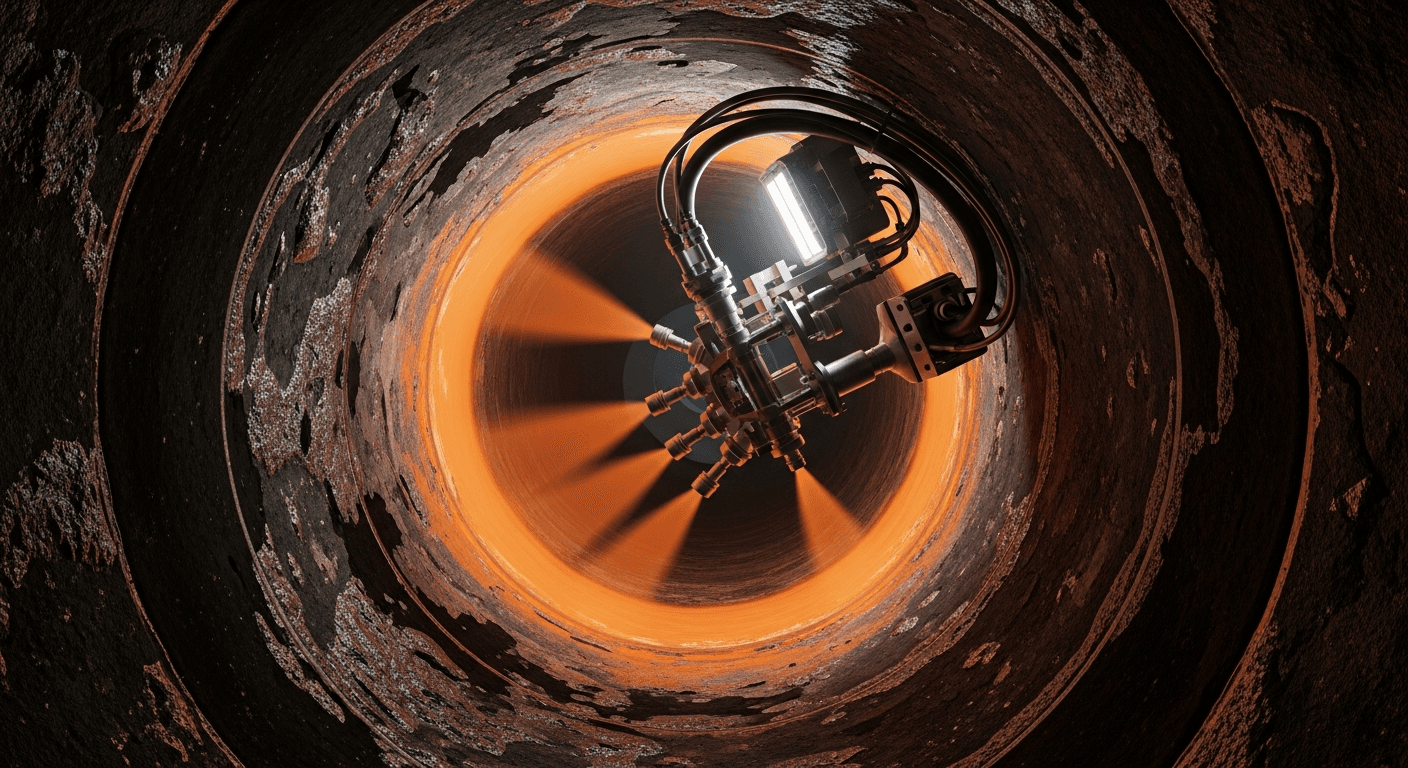
What is spray lining?
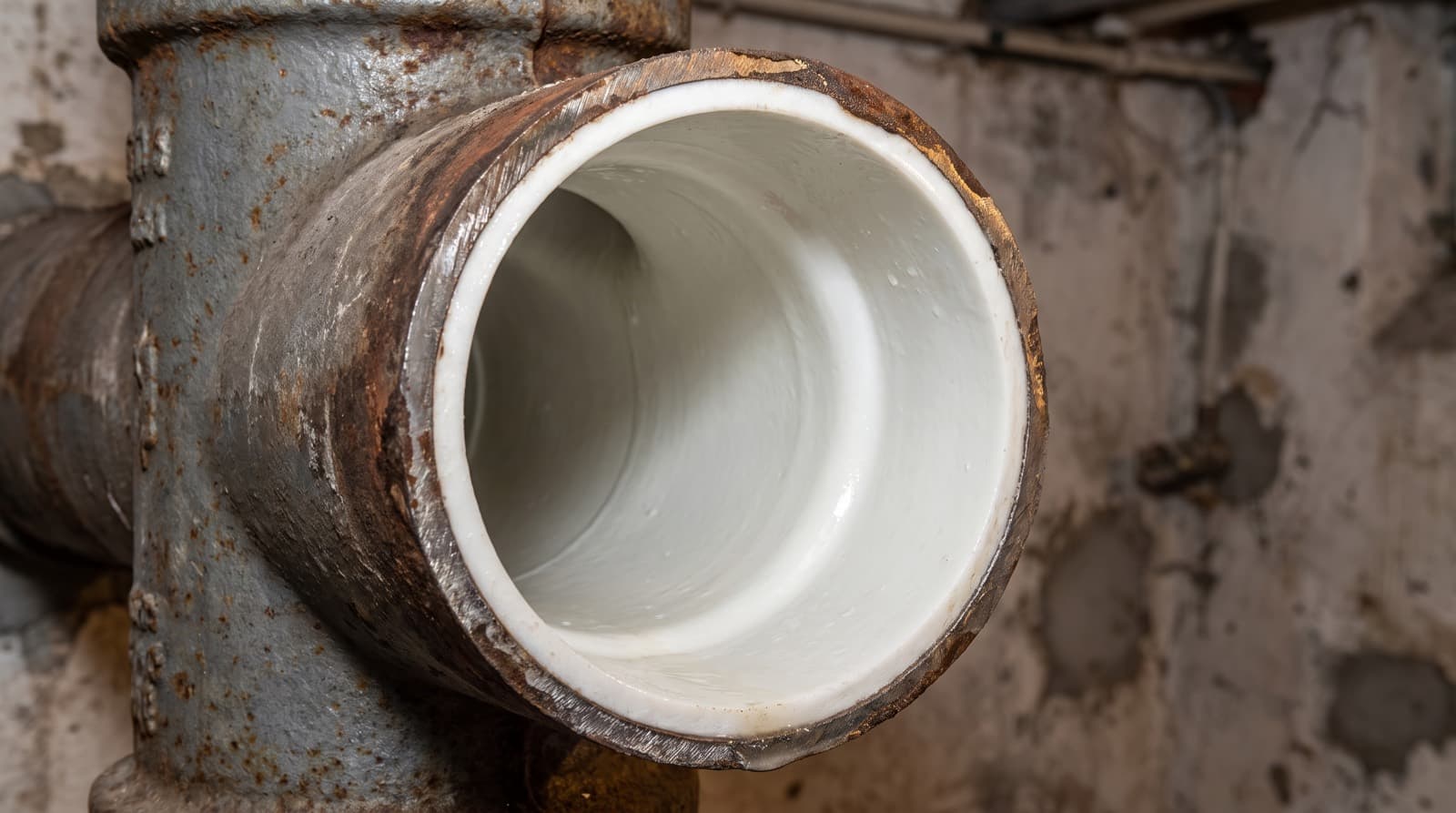
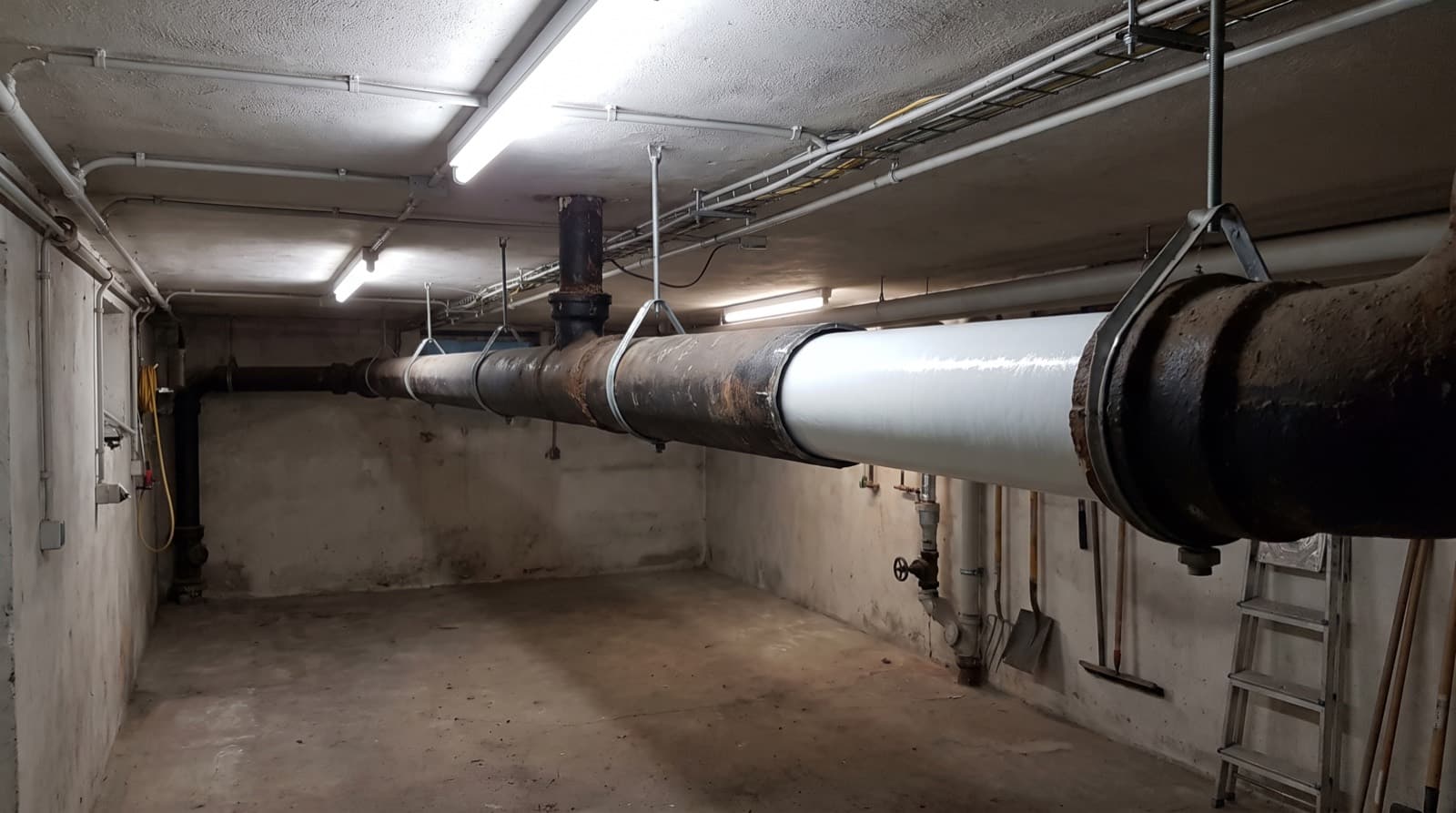
Spray lining is a coating that is formed directly inside the pipe: a spray head applies liquid resin from the inside to the cleaned pipe wall, where it cures into a seamless, tight layer. Because no liner tube is pulled in, the coating follows every bend, every branch and every change in cross-section.
At Karo Kanaltechnik, the material is a high-strength epoxy resin coating. It closes cracks, seals joints and forms a seamless «pipe within a pipe». Pipes from DN 50 can be rehabilitated – including small house connections and soil stacks inside the building that conventional lining methods could not reach.
Spray lining adheres to the common pipe materials: clay, concrete, cast iron, PVC and PE. Typical applications are foul water, rainwater and combined pipes, underground drains below buildings, and downpipes and risers in apartment buildings.
How does the spray lining method work?
After the pipe has been thoroughly cleaned and dried, a self-propelled robot with a rotating spray head travels through the pipe. It applies the coating material – usually a two-component resin or a polyurea coating – evenly to the inside wall of the pipe.
The spray head distributes the material centrifugally at a constant layer thickness. Once cured, the result is a seamless, tight internal coating that lines and protects the old pipe. Depending on the damage, several layers are applied.
Spray lining rehabilitation in five steps
Depending on its scope, spray lining rehabilitation is often completed within a day. Larger buildings with several stacks or difficult access take correspondingly longer. The process is always the same:
1. CCTV survey and assessment
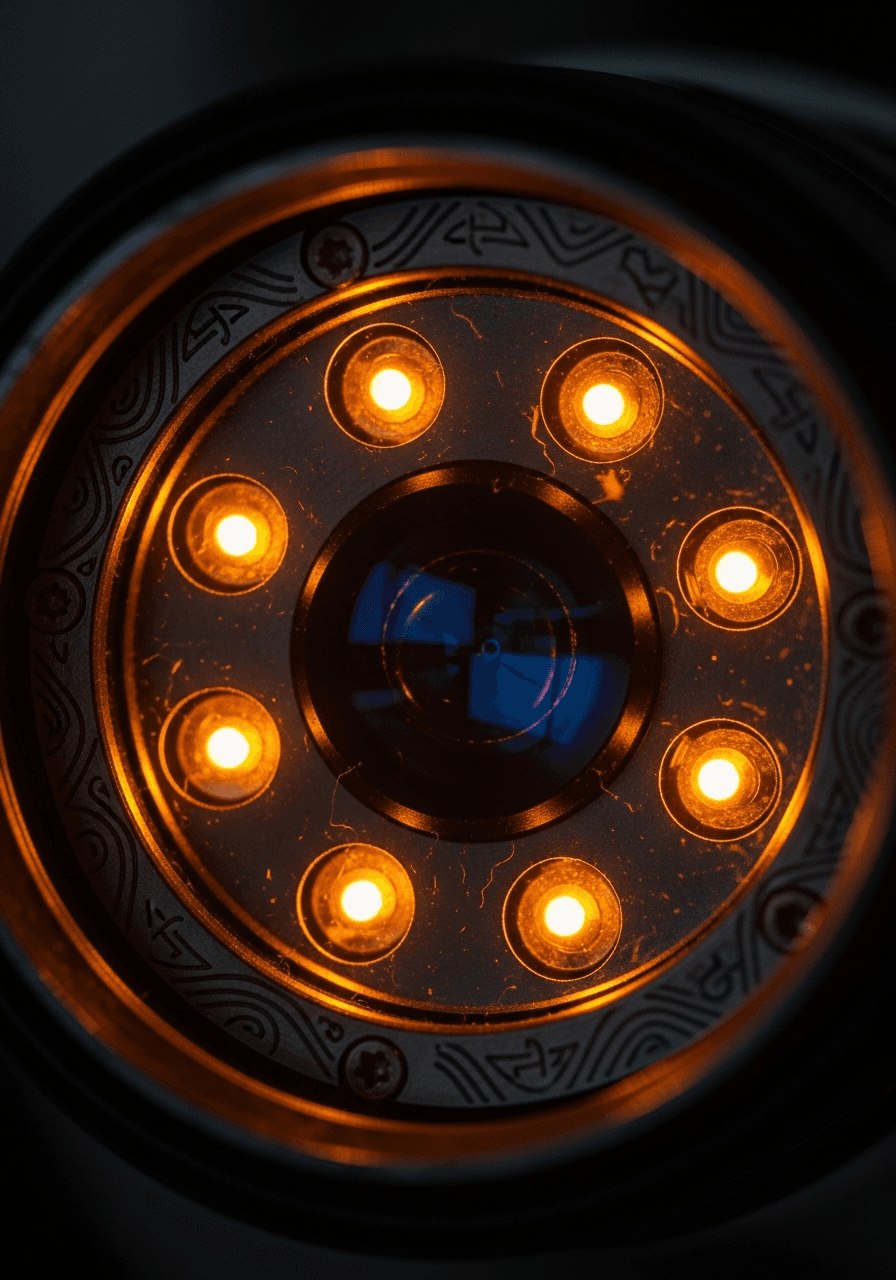
The CCTV drain survey shows the diameter, material, route and damage of the pipe. From this it follows whether a coating is sufficient or whether the pipe needs a structural CIPP liner or replacement. The findings are documented to SN EN 13508-2.
2. Cleaning and cutting
The pipe is cleaned with high pressure; encrustation, roots or displacements are removed with robotic cutters if required. The resin only adheres reliably to a clean surface.
3. Drying and securing connections
The pipe must be largely dry. Depending on the system, lateral connections are temporarily closed off so that no material runs into them, and use of the affected outlets is suspended for the duration of the work.
4. Coating
The rotating spray head is pulled through the pipe and applies the epoxy resin evenly – in one or more layers as required, including through bends and past branches.
5. Curing, reopening, inspection
Once the coating has cured, the connections are reopened and a final camera inspection documents the coating and its tightness for your records.
Epoxy resin and layer thickness
The coating material is a two-component epoxy resin: resin and hardener react with each other and, once cured, form a hard, chemically resistant and abrasion-resistant layer. It is resistant to wastewater, moisture and root ingress. Besides epoxy resin, polyurea coatings are also common on the market.
The coating is only a few millimetres thick. Its thickness is controlled by the number of layers: a thinner layer is sufficient for pure corrosion protection, while several layers are built up to close cracks and leaking joints. This does not noticeably reduce the flow – in fact, the smooth surface usually improves the flow characteristics.
What diameters is spray lining suitable for?
Karo uses spray lining to rehabilitate pipes from DN 50, which corresponds to an internal diameter of 50 millimetres. This means even the smallest pipes in the house can be reached: connections from the kitchen and bathroom, downpipes, house connections and hard-to-reach underground drains below the floor slab.
The method plays to its strengths in the small diameter range with many bends, where a rigid CIPP liner reaches its limits. For larger dimensions and long, straight pipe runs, the lining method with a CIPP liner is often used; individual damaged spots in pipes from DN 100 are repaired with a patch liner.
Rehabilitating downpipes and pipes inside the house
Downpipes and risers run through shafts, behind walls and under floors. Replacing them means opening up bathrooms, kitchens and stairwells – a major disruption for everyone in an occupied apartment building. Spray lining rehabilitates these pipes from the inside, without opening walls and without major restrictions for residents.
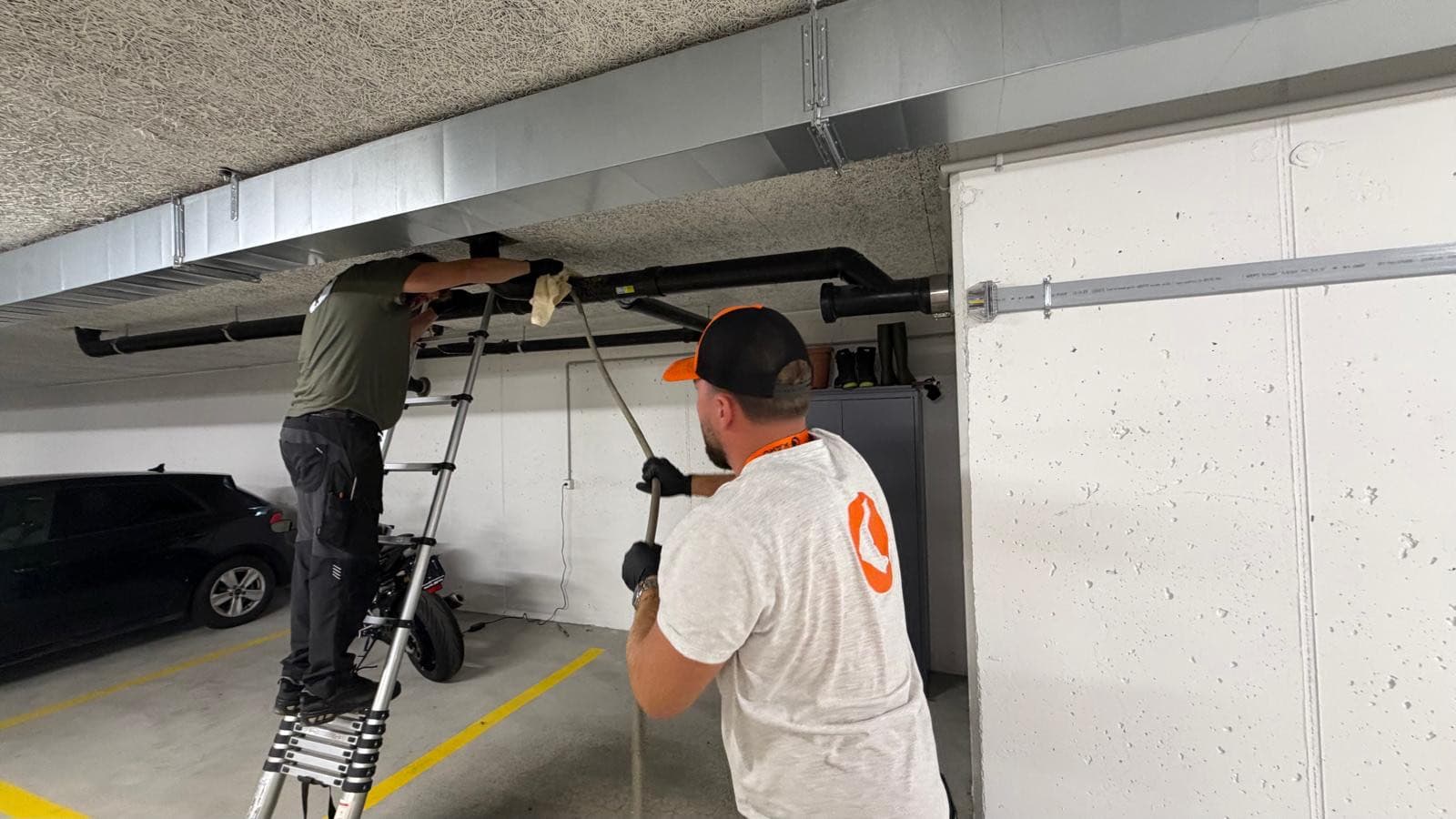
Depending on the pipe, access is via rodding eyes or outlets. The connected outlets must not be used during coating and curing; this is agreed in advance with the property management and the residents. Typical findings in older properties are corroded cast-iron downpipes, encrustation and leaking joints, which become tight and smooth again with a coating.
When is spray lining suitable?
The method is particularly suitable for pipes with many branches, bends or changing cross-sections, where a rigid CIPP liner reaches its limits. The coating is also well suited to sealing fine cracks and protecting against corrosion.
For pipes that are structurally badly damaged or have collapsed, a coating alone is not enough. In such cases, self-supporting methods such as the CIPP liner or open-cut construction are used.
Advantages of spray lining
Spray lining adapts flexibly to complex pipe geometries and keeps branches largely open. It is trenchless, quick to deploy and reduces noise, dirt and costs compared with open-cut construction.
The seamless coating provides reliable protection against corrosion and seals fine leaks. In addition, the smooth surface improves the flow and makes it harder for new deposits to form.
Limitations of the method
A spray coating is primarily a sealing and protective measure, not a load-bearing structure. It only partially replaces the structural strength of the pipe and is therefore not suitable for serious structural damage.
A good result requires a clean, dry and largely dimensionally stable pipe. That is why coating is always preceded by thorough cleaning and a camera inspection.
When built up in several layers, the epoxy resin forms its own continuous pipe wall within the old pipe. But if whole fragments are missing, or the pipe is badly deformed or has already collapsed, there is no substrate for the layer to adhere to. In that case, a structural CIPP liner or replacement is the right way forward – the CCTV survey shows this before the quote.
Service life and guarantee
When carried out professionally, spray lining rehabilitation has a service life of at least 50 years. The epoxy resins used are chemically resistant, abrasion-resistant and resistant to root ingress. The preparatory work is decisive for durability: the layer only adheres permanently to a clean, dry pipe wall.
Karo Kanaltechnik provides a warranty of up to 10 years on rehabilitation work, depending on the method and scope. Every rehabilitation is documented with a camera inspection before and after, so you can see the quality of the work for yourself.
Spray lining, patch liner or CIPP liner?
All three methods rehabilitate trenchless from the inside. Which one is right depends on the damage, the diameter and the route of the pipe. The overview shows the main differences; the guide «CIPP liner vs. patch liner vs. spray lining» compares them in detail.
| Criterion | Spray lining | Patch liner | CIPP liner |
|---|---|---|---|
| Principle | Resin is sprayed onto the pipe wall | Resin-impregnated sleeve at one point | Resin-impregnated liner tube over the entire pipe run |
| Strength | Bends, branches, small diameters | Single damaged spot in an intact pipe | Many defects along the length |
| Diameter at Karo | From DN 50 | DN 100 to DN 600 | Depending on the liner system |
| Structural strength | Sealing, reinforcing when multi-layered | Reinforces the damaged spot | New, load-bearing pipe |
| Typical location | Downpipes, house connection, branched pipes inside the building | Underground drain, house connection, collecting pipe | Underground drain, drain between two manholes |
| Service life | Designed for at least 50 years | Designed for at least 50 years | Designed for at least 50 years |
How much does spray lining cost?
The costs depend on the length and diameter of the pipe, the number of bends and branches, the number of layers and the effort required for cleaning, cutting and access. A downpipe across several storeys has to be calculated differently from a short house connection. That is why Karo prepares the binding quote after the CCTV survey, once the condition and route are known.
Compared with replacing a pipe inside the house, spray lining avoids opening walls and floors, as well as the masonry, tiling and painting work that a conventional replacement also entails.
| Item | Karo Kanaltechnik rate (excl. VAT) |
|---|---|
| Cleaning and preparatory work | CHF 160 per hour |
| Call-out | CHF 60 flat rate |
| Camera inspection (CCTV) | Surcharge from CHF 50 |
| Coating | As quoted, depending on length, diameter and layer build-up |
Spray lining in Zurich, Thurgau and Eastern Switzerland
Karo Kanaltechnik carries out spray lining rehabilitation in the city of Zurich, in Winterthur and throughout the canton of Zurich, as well as in Frauenfeld and Thurgau, in St. Gallen, in Schaffhausen and in the rest of German-speaking Switzerland. The method is particularly suitable in densely built-up Zurich neighbourhoods with old buildings, because downpipes and house connections there are often only accessible with considerable effort.
Whether a single-family home, a managed apartment building or a commercial property: first the pipe is surveyed and its condition documented. You then receive a recommendation as to whether spray lining, a patch liner or a CIPP liner is the right solution – and a quote based precisely on that.
In a commercial building in Basel, a rainwater pipe with many branches is slightly corroded and leaking. A CIPP liner would be unsuitable because of the geometry. Instead, the pipe is coated with spray lining, which keeps all branches open and makes the pipe watertight again. The CCTV survey before the work shows corrosion and leaking joints, the final survey a closed, smooth inner layer – both go to the property management company as documentation.