Backflow in the basement occurs when the public sewer system has to take more water than it can carry away, so that the wastewater is pushed back into the building's pipes. It then escapes into the basement through low-lying drains such as floor drains, toilets or washbasins on the lower floor. Especially during heavy rain, the water level in the sewer rises up to the so-called backflow level, which is usually at street level. Everything below it is at risk. Only professionally installed backflow protection provides effective protection. As heavy rain events are becoming more frequent and more intense in Switzerland, preventive protection against backflow is becoming increasingly important for homeowners.
How does backflow occur?
The most common cause is heavy rain. If a great deal of rain falls in a short time, the sewer system becomes overloaded, the water rises and is pushed back into the connected house connections. Blockages in the public sewer or in your own underground drain can also trigger backflow. Other triggers are snowmelt, a defect at pumping stations or an undersized sewer network. What all cases have in common is that the water takes the path of least resistance, and that means the lowest drainage points in the building.
It is important to distinguish between backflow from the public network and a blockage inside the building. With genuine backflow, the water is pushed back from outside, whereas a blockage in your own pipe means that the wastewater produced can no longer drain away. In both cases, water can escape into the basement, but the countermeasures differ. A CCTV drain survey and cleaning of the underground drain reliably establish where the cause lies.
What is the backflow level?
The backflow level is the height up to which wastewater can rise during backflow. As a rule, it corresponds to the top edge of the street at the connection point, unless the municipality specifies otherwise. All drainage points below this level, typically in the basement or lower ground floor, are at risk of backflow and must be protected. Drainage points above the backflow level, on the other hand, are not at risk, because the water cannot rise up to them. This distinction is the basis of all protection planning.
What damage does backflow cause?
Backflow brings not only water into the basement but also dirt and faeces with the wastewater. The consequences range from soaked floors and walls and damaged furniture, heating and building services to mould growth and long-term structural damage. What makes it particularly insidious is that contaminated wastewater is a hygiene hazard and affected rooms often have to be disinfected at great effort. Cleaning and restoration after backflow are correspondingly laborious and expensive, and the rooms are often unusable for weeks while they dry out. In addition, insurers often pay only in part or not at all if there was no backflow protection in line with the regulations. Prevention is therefore considerably cheaper than repairing the damage.
What types of backflow protection are there?
There are basically two systems. A backflow stop, also known as a backflow valve, closes the pipe mechanically as soon as water is pushed back. It is suitable for drainage points that do not necessarily have to be used during backflow, such as a floor drain. The more reliable but more elaborate solution is a lifting station, which pumps the wastewater produced above the backflow level and thus discharges it regardless of the level in the sewer.
Which system makes sense depends on how the basement rooms are used, the type of drainage points and local regulations. Wastewater containing faeces from a basement toilet generally requires a lifting station, whereas a backflow valve is often sufficient for pure rainwater or grey water. The correct design should always be carried out by a specialist firm.
How is the right protection chosen?
Choosing the right backflow protection follows a clear logic. First, it is checked which drainage points lie below the backflow level and what kind of wastewater is produced there. Wastewater containing faeces, for example from a basement toilet or shower, which must be able to drain away during backflow, generally requires a lifting station. This pumps the wastewater safely above the backflow level and is therefore independent of the water level in the sewer.
For drainage points that do not have to be used temporarily in an emergency and only carry water free of faeces, such as a basement floor drain or a laundry room, a backflow valve is often sufficient. The exact design, sizing and correct installation belong in the hands of a specialist firm, because planning mistakes mean that the protection fails at the crucial moment. The local regulations of the municipality must also be taken into account.
Why is maintenance so important?
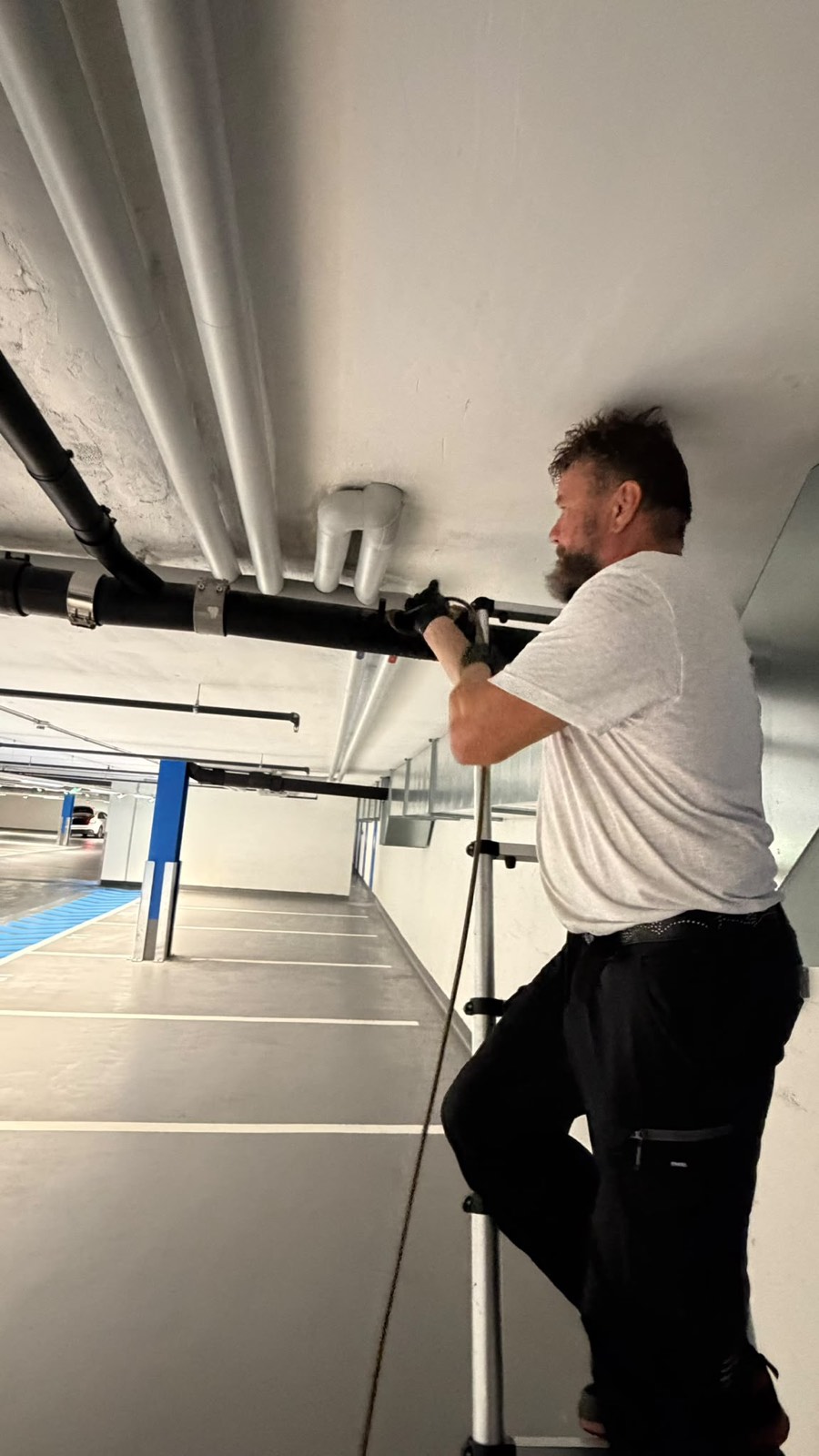
Backflow protection only protects if it works. Backflow valves can become stuck due to deposits, dirt or grease, so that they no longer close properly in an emergency. Lifting stations need working pumps and clean float switches. That is why backflow protection must be checked, cleaned and maintained regularly. Accompanying drain cleaning of the inflow pipes ensures that no blockage undermines the protection. Only a well-maintained system provides the expected protection in the event of backflow.
Who is responsible for backflow protection?
In principle, protection against backflow is the responsibility of the property owner. The public sewer system may fill up to the backflow level within its design capacity without the municipality being liable. It is up to the owner to protect all drainage points below this level with suitable protection. This responsibility is often underestimated, but it is becoming increasingly important in view of more frequent heavy rain events.
From an insurance point of view, responsibility is also clearly regulated: if there is no backflow protection in line with the regulations and in working order, the insurer can reduce or refuse its payment in the event of a claim. If you install protection and have it maintained regularly, you document your diligence and are in a better position if something happens. It is therefore worth having your own situation checked by a specialist firm early on, instead of only reacting after damage has occurred.
What can homeowners do themselves?
Owners should check which drainage points lie below the backflow level and have them professionally protected. When heavy rain is forecast, it helps not to run any water-intensive appliances and to store valuable items in the basement off the floor. It is also important to have the protection devices serviced annually and the underground drains cleaned regularly. This keeps the risk of water damage manageable.
Is there already water in your basement, or would you like effective protection? Karo Kanaltechnik checks your pipes, cleans them and advises you on the right backflow protection. In the event of acute backflow, our 24/7 emergency service is there for you immediately, around the clock, on +41 43 588 12 08.