What is a trap (water seal)?
A trap is a component that forms a water barrier between the drain and the wastewater pipe. The water left in the bend after each use acts like a plug: air and gases from the sewer system cannot pass through, but wastewater drains away freely with every use and renews the seal at the same time.
In Switzerland people usually call it a siphon (Siphon). Technically, various designs are distinguished, all based on the same principle. What matters is the seal depth – that is, how high the water stands in the bend. If it is too low, the seal can fail even with small pressure fluctuations in the pipe.
The trap is part of the building installation and therefore belongs to the property, not to the public sewer network. The owner is responsible for its condition; in a tenancy, small cleaning jobs such as emptying the trap bowl are usually part of the normal upkeep of the flat.
Types of trap: tubular, bottle, bell and floor traps
The tubular trap is a U- or S-shaped bent pipe. Because the water flows through without a bowl or deflection chamber, it flushes itself well and collects less dirt. However, it needs more height and is harder to clean, because it often has to be unscrewed completely to do so.
The bottle trap is the most common type under washbasins. The water flows through a dip pipe into a bowl and rises again at the side to the wall connection. The bowl can be unscrewed by hand, which makes it easy to clean – but this is exactly where hair, soap residue and toothpaste collect. Space-saving versions (compact or furniture traps) run the pipe flat to the wall so that there is room for a drawer under the washbasin.
The bell trap, also called a cup trap, is found in showers, floor drains and many shower channels. An inverted cup or bell dips into a pot of water and so forms the seal. If you remove the cover grille, the insert can usually be pulled out. It is low in height but quickly becomes blocked with hair and soap residue.
The floor trap – more precisely the floor drain with a water seal – drains basement floors, laundry rooms, garages and level-access showers. Because many floor drains only rarely receive water, they dry out particularly often. For such locations there are inserts with an additional membrane or flap that are designed to seal even without water. Finally, WCs have the water seal already built into the ceramic; it cannot be unscrewed.
Traps on washbasins, in the kitchen and in the shower
Under a washbasin there is almost always a bottle or tubular trap made of plastic or chrome-plated brass, connected to the waste valve and the wall connection. Typical problems are hair, soap residue and toothpaste in the bowl. Slow drainage and a smell of rotten eggs are usually the first sign that the trap should be cleaned.
The kitchen trap is larger and often has one or two side connections for the dishwasher and washing machine. With double sinks, both bowls lead via a connecting pipe into a shared trap. Here grease is the main enemy: it cools in the bend, solidifies and binds food scraps. A kitchen trap therefore often becomes blocked gradually, and the actual narrow point is quite often already in the connecting pipe behind it.
Showers and baths have low-profile traps, because there is little space under the bath or in the floor. With a bath, the waste is also connected to the overflow. Shower traps are reached via the cover grille or the channel; hair in particular collects there. Because the installation height is limited, such traps often hold less seal water than one under a washbasin – so they react more sensitively to drying out and negative pressure.
The trap smells: drying out, siphonage, ventilation
The most common cause of a drain smell from a drain is a dried-out trap. In guest bathrooms, basement drains or holiday flats that go unused for weeks, the seal water slowly evaporates. The remedy is simple: regularly top up with a little water or install a floor drain with a dry seal.
A second reason is siphonage. When a lot of water flows down a soil stack, for example when a WC is flushed on an upper floor, negative pressure is created that pulls the water out of the traps below. This happens above all when the vent pipe is missing, blocked or undersized. A typical sign is a gurgling noise in the washbasin when someone flushes upstairs. Conversely, positive pressure in a partly blocked pipe can also push the seal water out.
Rarer, but persistent, are three other causes: a single hair or thread hanging over the edge of the trap can draw off the water like a wick. A leaking seal at the wall connection lets sewer air past the trap into the room. And deposits in the trap itself can rot and smell even though the seal water is in place. If it smells of sewage despite a full, clean and tight trap, the problem usually lies in the ventilation or the pipe – in which case it is worth looking at the terms drain vent pipe and drain smell further below.
Blocked trap: the most common narrow point
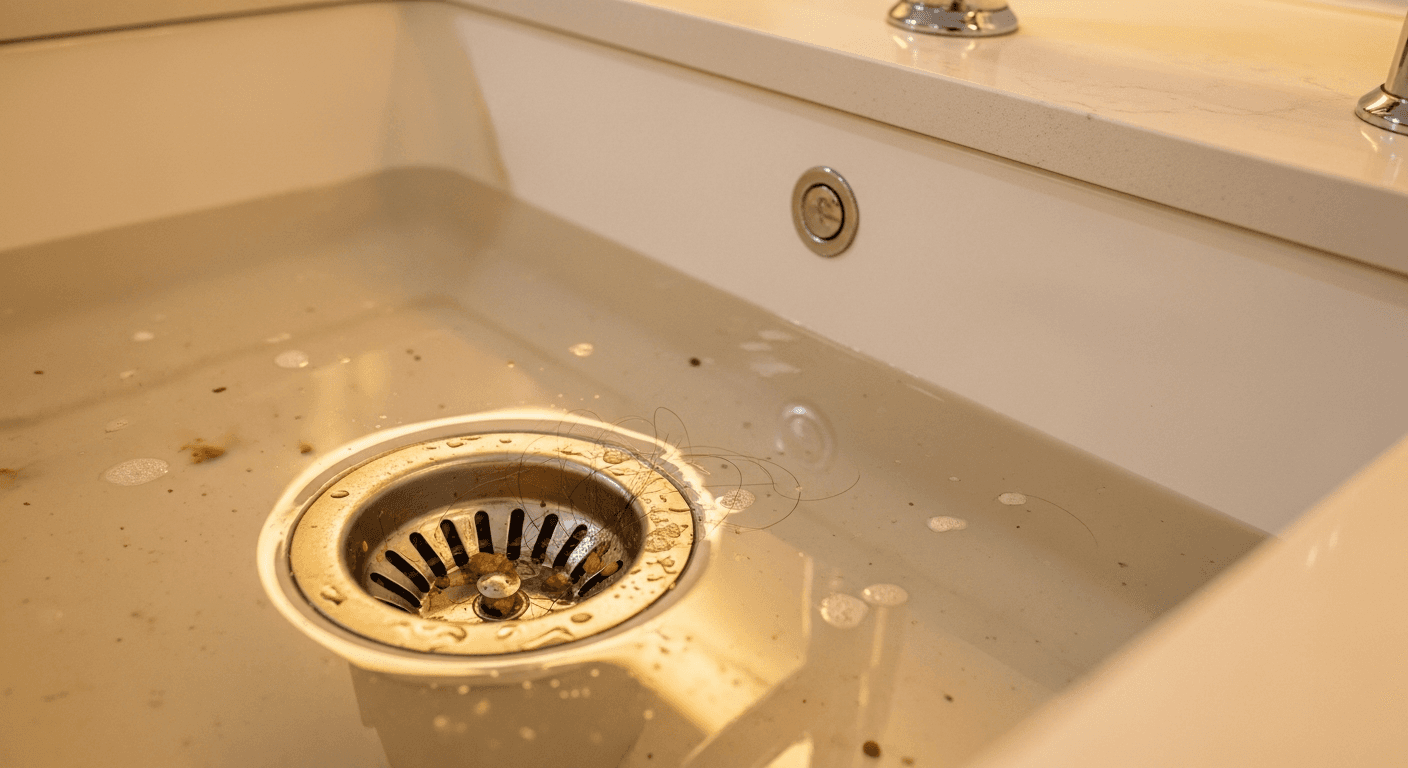
Because water flows more slowly in the bend, hair, soap residue, toothpaste, grease and limescale settle there. If water drains poorly or stands in the basin, the trap is often blocked. With bottle traps, you can unscrew and clean the bowl; a bucket underneath prevents flooding. Step-by-step instructions for washbasins, kitchens and showers can be found in our guide ‘Cleaning a trap’.
If the water still drains poorly after the trap has been cleaned, the blockage lies further down in the branch or collecting pipe. A specialist with a drain snake or high-pressure jetting will then help. Chemical drain cleaners are not a good idea: they attack seals and pipes and rarely dissolve deeper deposits.
A clear sign of a blockage beyond the trap: several drains are slow at the same time, water rises in the shower when the washing machine pumps out, or another drain gurgles. In that case the problem affects a shared pipe, and cleaning an individual trap will not help.
Standards and correct installation
The requirements for traps and their ventilation in buildings are governed by the SN EN 12056 series of standards, supplemented in Switzerland by SN 592000. These include a sufficient seal depth and a pipe system that is ventilated in such a way that the seals are neither sucked empty nor pushed out.
Mistakes are common during conversions: two traps in series slow the flow, overly long branch pipes without ventilation suck the seal empty, and appliances added later are connected without their own trap. Anyone changing the sanitary installation should always consider the trap as well.
When replacing a trap, what matters most is that the dip pipe reaches far enough into the bowl, all seals are seated correctly and the outlet to the wall connection falls slightly. A trap that drips or smells after installation has almost always been assembled incorrectly and is not defective.
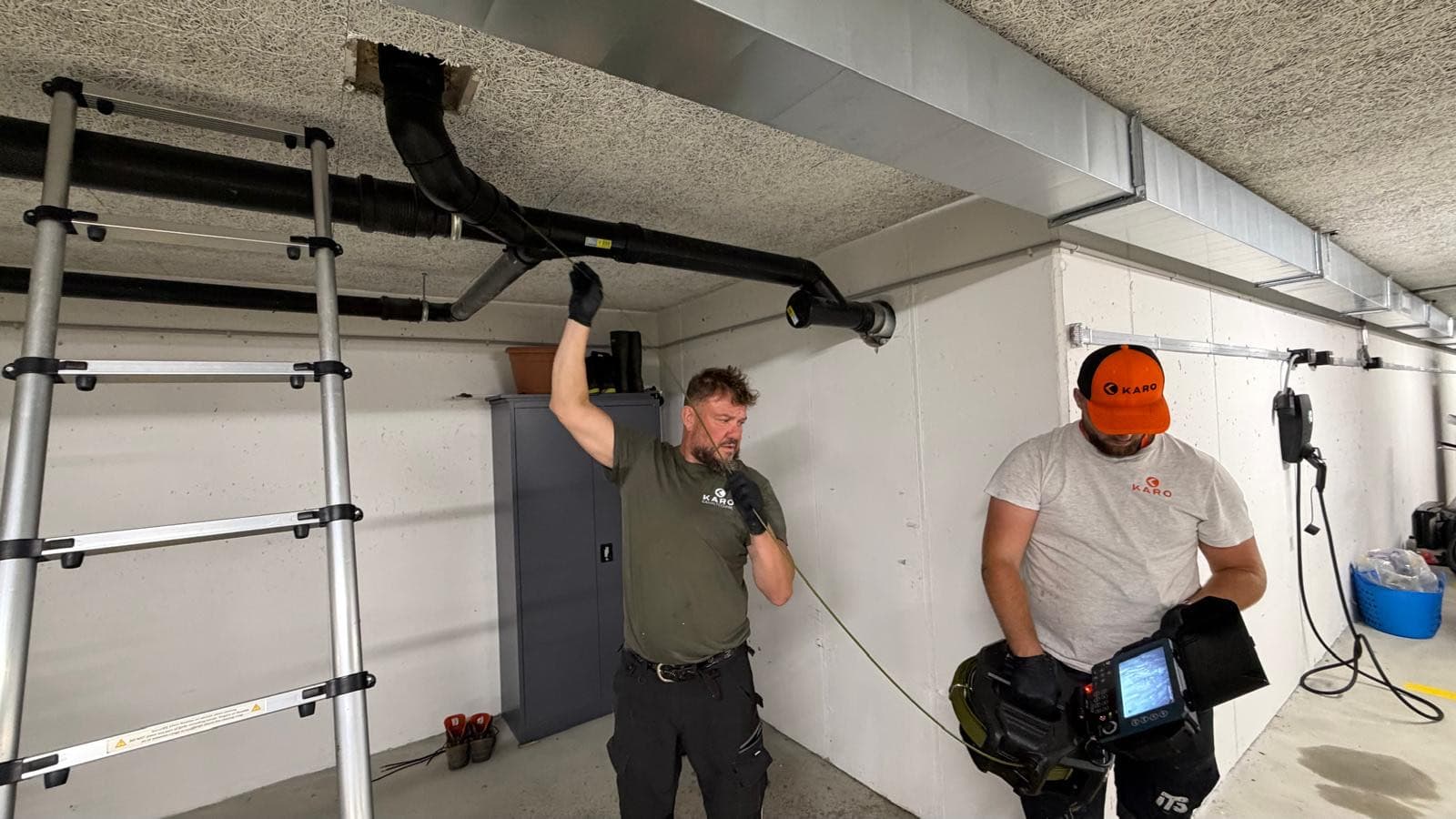
In an old building in Lucerne, the bathroom always smelt of sewage in the evening but hardly during the day. The trap under the washbasin was full, clean and tight. Only careful observation brought the solution: when the neighbours upstairs showered and flushed the WC in the evening, the washbasin gurgled. The camera survey showed that the stack’s vent pipe above the roof was blocked with a bird’s nest and leaves. After the vent was cleaned, the seal water stayed in place and the smell was gone.