
GlossaryDrainage technical term

Root cutting

Root cutting refers to the mechanical removal of ingrown roots from drains and pipes using a rotating cutter. Cutting work also removes hard deposits, concrete and mortar residue and protruding connections.

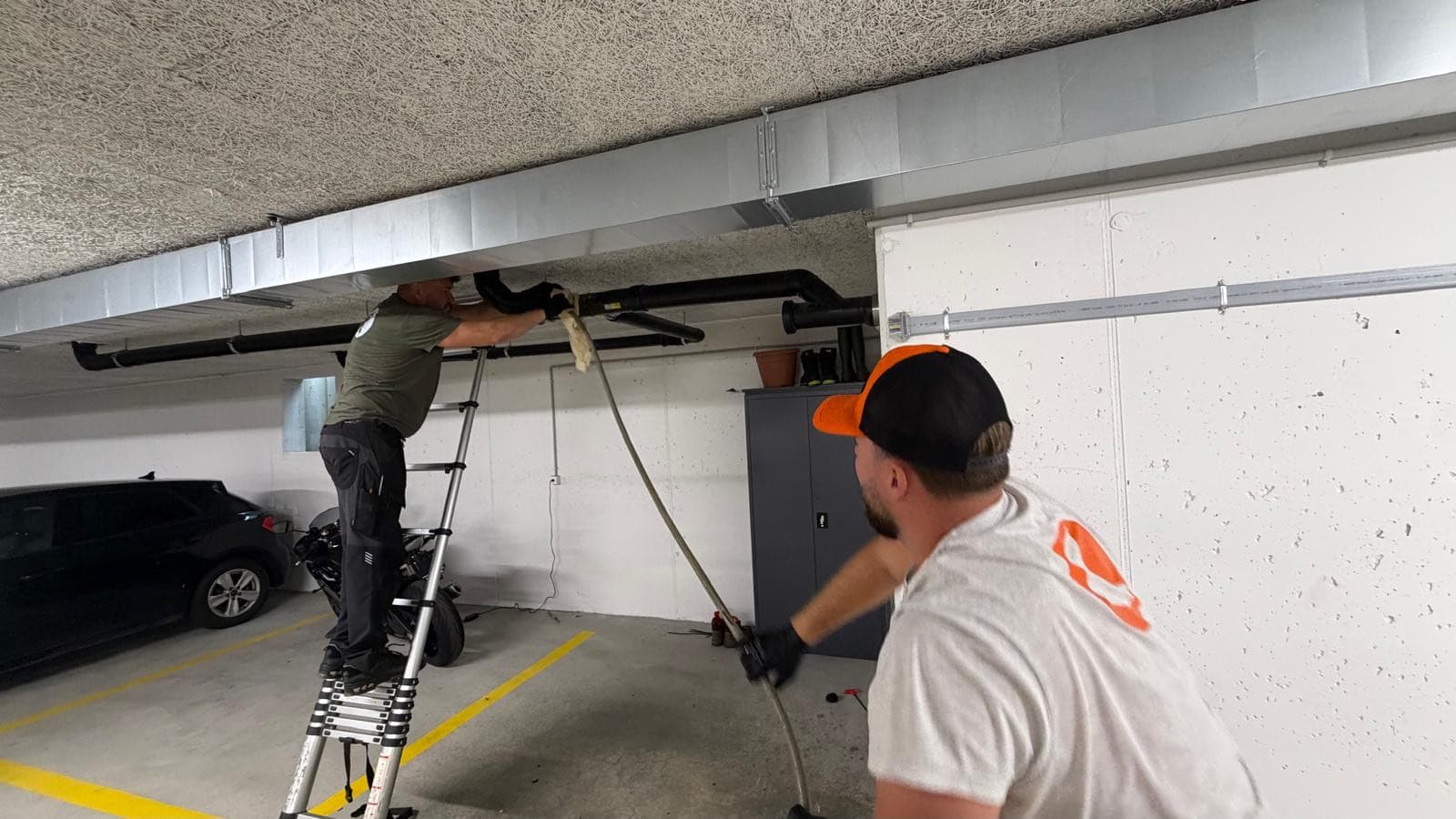
Team pipe cleaning – jetting a pipe in an underground car park

In brief

Root cutting is the mechanical removal of ingrown roots from drains and pipes using a rotating cutter. Cutting work also removes hard deposits, concrete and mortar residue and protruding connections. The drain is then cleaned with high-pressure water jetting and checked by camera; to stop roots growing back, the leaking point is sealed, for example with a Pointliner.

Why roots grow into drains

Tree and shrub roots look for water and nutrients. At leaking joints and cracks, fine roots get into the pipe and form dense root balls in the damp, nutrient-rich pipe. These catch solids and lead to blockages and backflow.

If left untreated, the roots widen the damaged point over time and can burst the pipe. That is why root ingress should be removed early.

How root cutting works

A rotating cutter head is guided through the pipe and removes roots and hard deposits without damaging sound pipe walls. The cutter head is matched to the pipe diameter and material.

After cutting, the drain is cleaned with high-pressure water jetting and the result is checked by camera. This ensures that the pipe is clear again and that the cause is identified.

A lasting solution after cutting

Cutting removes the root ingress, but not the leaking point through which the roots got in. Without rehabilitation, they usually grow back.

That is why trenchless sealing of the damaged point is recommended after cutting, for example with a Pointliner or a CIPP liner, so that no new roots can get in.

Practical example

In an older single-family home in Illnau, the underground drain keeps getting blocked. A camera inspection shows heavy root ingress at a joint. Karo Kanaltechnik cuts out the roots and then seals the joint with a Pointliner, so that no more roots grow back.

Matching services from Karo Kanaltechnik

Root cutting: frequently asked questions

Do roots grow back after cutting?+

Yes, if the leaking point is not sealed. That is why we recommend trenchless rehabilitation of the damaged point after cutting.

Does the cutter damage the pipe?+

No, the cutter head is matched to the diameter and material and removes only roots and deposits, without attacking sound pipe walls.

How can I tell if there is root ingress?+

Typical signs are recurring blockages and slow drainage. A camera inspection gives you certainty.

Root cutting in your region?

We are there for you across German-speaking Switzerland – fast, clean, with a 24/7 emergency service.