
Pointliner / patch liner repair
We repair localised defects such as cracks, displaced joints or leaking connections in a targeted way with patch liners – without having to renew the whole pipe.
In brief
A Pointliner (patch liner, short liner) is a short, glass-fibre reinforced liner that seals only a single defect, such as a crack, displaced joint or leaking connection, instead of rehabilitating the whole pipe. It pays off for localised defects. Karo Kanaltechnik installs them robotically from DN 100 to DN 600 and cures them with UV light or hot water.
Targeted repair instead of complete rehabilitation
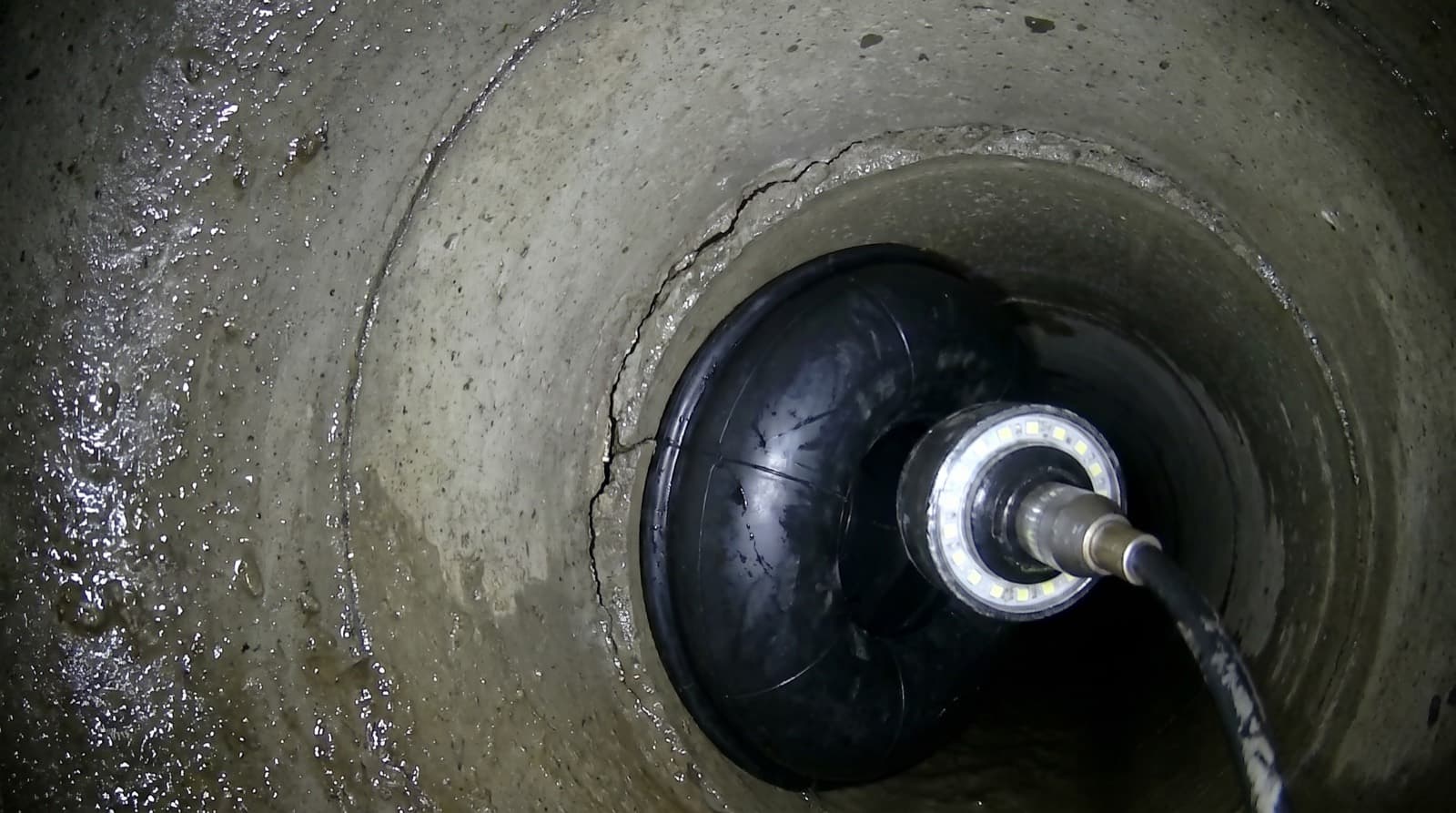
A Pointliner – also known as a patch liner or part liner – is a short, resin-impregnated repair section made of glass-fibre fabric that seals a single defect in a wastewater pipe from the inside. Only the defective section is treated, typically from a few decimetres to around one metre long. The rest of the pipe stays as it is, and nothing is dug up.
Not every defect calls for rehabilitating the whole pipe. Where there are only individual defects – such as a crack, fragmentation, a displaced joint, a leaking joint with root ingress or a leaking connection – Pointliner repair is the most economical solution. The CCTV drain survey shows whether a patch liner is enough or a continuous CIPP liner is needed.
How it works: the impregnated patch liner is pulled onto an inflatable packer, moved precisely to the defect under camera view and pressed against the pipe wall there. Both UV-curing and hot-water-curing systems are available, so we choose the right method for every situation. After curing, the packer is removed – what remains is a mechanically resilient, watertight sleeve designed for a service life of at least 50 years.
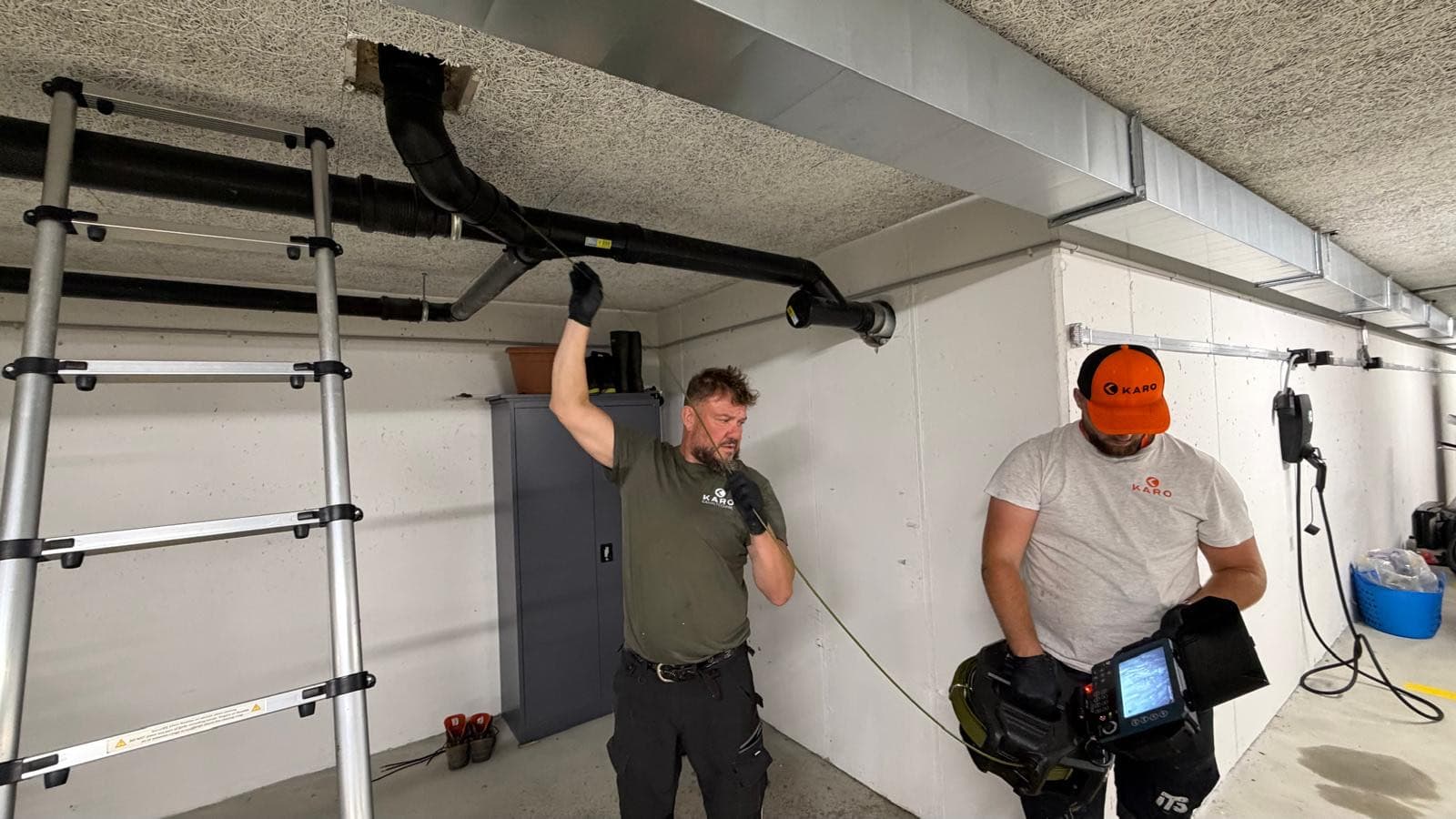
Our specialists prepare the defect robotically, for example by cutting away roots, protruding connections or deposits. Before and after the repair, we survey the pipe with the camera and document the findings to SN EN 13508-2. This lets you see in black and white where the defect was and that the repaired point is leak-tight.
We install patch liners in Zurich, Winterthur, St. Gallen, Frauenfeld and throughout German-speaking Switzerland – for single-family homes, property management companies, businesses and municipalities.
Our services at a glance
- Patch liner repair for localised defects
- UV-curing and hot-water-curing liner systems
- Use in sizes from DN 100 to DN 600
- Repair of displaced joints, cracks and fractures
- Sealing of leaking joints after root cutting
- Sealing of inlet connections and junctions
- Top-hat profile liners for branches and connections
- Robotic cutting and preparation work
- CCTV drain survey before and after rehabilitation, findings to SN EN 13508-2
- Can be combined with CIPP lining and spray lining
Pricing
- per hour
- CHF 160
- call-out
- CHF 60
- CCTV survey
- from CHF 50
Guide prices for cleaning and camera survey, excl. VAT. We quote the rehabilitation itself based on the findings.
We give a binding quote per defect after the CCTV drain survey – only then are the position, size and effort known. Preparatory work at guide prices excl. VAT: CCTV camera check as a surcharge from CHF 50, cleaning CHF 160 per hour plus CHF 60 call-out. Several defects in the same visit save call-out and set-up time.
Areas of application
- House connections
- Underground drains below buildings
- Collecting and main drains up to DN 600
- Connections and branches (top-hat profile)
- Leaking joints after root ingress
On site in your region
With six locations – three of them in Zurich – we reach you quickly:
- Zurich
- Winterthur
- St. Gallen
- Frauenfeld
- Thurgau
- Aargau
- Schaffhausen
- all of German-speaking Switzerland
24/7 emergency service
You can reach us around the clock – including weekends and public holidays.
+41 43 588 12 08How it works
From enquiry to completion – transparent and structured.
Locating the defect
A camera inspection pinpoints the defect, measures it and determines the right liner system.
Cleaning & preparation
The pipe is jetted, and if necessary the robotic cutter clears roots or protruding parts from the defect.
Liner installation
The patch liner is positioned precisely at the defect on the packer, pressed into place and cured with UV light or hot water.
Inspection & sign-off
A final camera survey for quality assurance. The repaired point is documented and handed over with the survey report.
Why Karo Kanaltechnik?
Pinpoint repair
Only the actual defect is rehabilitated – no unnecessary costs for intact sections of pipe.
Fast & efficient
Installing a Pointliner often takes only 1 to 2 hours per defect – including preparation and finishing work.
Connections too
With top-hat profile liners, inlet connections and branches can also be sealed reliably.
DN 100 to DN 600
A wide range of applications – from the house connection to the collecting drain.
Frequently asked questions
A Pointliner is used when there are individual defects in an otherwise intact pipe. Typical applications are cracks, displaced joints, leaking connections, roots grown in at a joint or small collapses. If, on the other hand, the whole pipe run is affected, continuous rehabilitation with a CIPP liner or spray lining is the better choice. The CCTV drain survey decides.
A professionally installed patch liner is designed for a service life of at least 50 years and can withstand mechanical loads like a new section of pipe. The glass-fibre reinforced liner is cured with UV light or hot water and bonds firmly to the pipe wall in the process. After installation we check the spot with a camera and document the result in accordance with SN EN 13508-2.
Our warranty on rehabilitation work also applies to patch liners: depending on the method and scope, up to 10 years. It is based on the camera footage of the defect before installation and the final check afterwards, which you receive with the report. This way you, the property management company or a later buyer can always see which spot was repaired, when and how.
A patch liner is enough when there are a few clearly limited defects in an otherwise sound pipe, such as a crack, a displaced joint or root ingress. If the damage extends over the whole pipe run or the pipe is weakened by age, a CIPP liner over the full length is the better solution. The decision is based on the CCTV drain survey, which we carry out beforehand.
Before the repair we survey the pipe with a camera and document the defect in accordance with SN EN 13508-2. After curing, a second camera survey shows that the patch liner sits without wrinkles and seals the spot tightly. You receive both recordings with the survey report so that you can prove the repair to your property management company, insurer or a later buyer.
If the defect is in a private pipe on the property, the property owner bears the cost, which in rented properties means the landlord. Where the private pipe ends and the public sewer begins is set out in the municipality's drainage regulations. Because only individual spots are repaired, a Pointliner is usually considerably cheaper than rehabilitating the whole pipe.
Yes, special top-hat profile liners can also reliably seal inlet connections and lateral junctions. The top-hat liner is placed into the connection from the main pipe and seals the transition point, where roots most often penetrate or water escapes. It is installed robotically under camera control, with no digging.
In principle there is no limit. In practice we can repair several defects in one day, as long as they are in the same pipe and can be reached by the packer and camera. If there are a great many defects close together, we tend to recommend continuous rehabilitation for economic reasons. The CCTV drain survey shows which solution is worthwhile for your pipe.
Yes. The Pointliner is not a temporary repair but a permanent rehabilitation that complies with the standards and is designed for a service life of at least 50 years. It seals the defect completely, prevents root ingress and restores the load-bearing capacity of the pipe at that point. The rest of the pipe is left untouched, provided it is in good condition.
Enquire without obligation
Fill in the form – we will get back to you within 24 hours.
Need help fast?
Our emergency team is ready around the clock – including Sundays and public holidays.
When is a patch liner enough, and when do you need a CIPP liner?
A patch liner is enough if there are one or a few clearly defined defects in an otherwise sound pipe. If the defects are spread across the whole pipe run or the pipe as a whole is weakened by age, a continuous CIPP liner is the more sustainable solution. We do not decide by gut feeling, but on the basis of the CCTV drain survey.
| Criterion | Patch liner (Pointliner) | CIPP liner (lining) |
|---|---|---|
| Scope | Only the defect, from a few decimetres to around 1 metre | The whole pipe run from manhole to manhole – a new pipe inside the old one |
| Typical defects | Single crack, displaced joint, leaking joint, local fragmentation, leaking connection | Many defects along the whole length, pipe leaking throughout or weakened by age |
| Condition of the rest of the pipe | Must be sound and largely intact | May be damaged along its whole length, but must be passable and dimensionally stable for installation |
| Branches and connections | Remain untouched; a top-hat profile seals leaking connections | Are reopened with the robotic cutter after installation |
| Duration | Often 1 to 2 hours per defect | Many rehabilitation jobs are completed within one day |
| Billing | Per defect; several points in the same visit save call-out and set-up time | By the running metre and size |
A patch liner is enough if …
- The camera shows one or a few clearly defined defects.
- The pipe in between is sound, leak-tight and properly aligned.
- Roots have grown in at a single joint and can be cut away.
- A connection is leaking, but the main pipe is in order.
A CIPP liner is better if …
- Cracks, displacements or leaking joints occur one after another along the whole length.
- The pipe is leaking or porous throughout because of its age.
- Several patch liners together would cost almost as much as a continuous liner.
If a section has collapsed or is badly displaced, neither liner is enough; we then look at a repair using open-cut construction. For bends, angled pipes and manholes, spray lining is another option. All methods compared: CIPP liner vs. patch liner vs. spray lining and our overview of trenchless drain rehabilitation.
Which defects a patch liner repairs
The patch liner is made for single defects that show up in the CCTV drain survey as a clearly defined point. These are the four types of damage we repair with it most often:
Displaced joint
Two pipes are offset against each other at the joint. The patch liner bridges the offset and seals the joint.
Term explainedRoot ingress
Roots force their way in through a leaking joint. First we cut them out, then the patch liner seals the point permanently.
Term explainedCracks and fragmentation
Longitudinal or circumferential cracks, up to and including locally broken pieces of pipe. As long as the pipe keeps its shape, the patch liner stabilises the point.
Term explainedLeaking connection (top-hat profile)
Where a lateral pipe joins the main pipe, a top-hat profile seals the connection including the transition.
Term explained
CCTV drain survey before and after the repair
You cannot see from the outside whether a repair has worked. That is why we survey the pipe twice with the camera and record both surveys – you get the proof, not just our word.
Before: locate and classify the defect
Position of the defect from the manhole, pipe size and type of damage, coded to SN EN 13508-2. This produces the recommendation (patch liner, CIPP liner or spray lining) and the binding quote.
After: check fit and leak-tightness
The final survey shows that the liner sits in the right place, fits snugly and that the transitions to the old pipe are leak-tight.
Documentation for your records
You receive both sets of findings with the survey report – useful for the property management company, insurance or a later sale of the property.
How much does a Pointliner cost?
A patch liner is quoted per defect. The price depends on the pipe size, how accessible the manholes are, the length of the defect and the preparation effort – for example, whether roots or protruding connections must first be cut away. That is why we only give a binding figure after the CCTV drain survey.
Fixed guide prices excl. VAT apply to the preparatory work: CHF 160 per hour for cleaning, CHF 60 call-out and the CCTV camera check as a surcharge from CHF 50. If there are several defects in the same pipe, we repair them in the same visit – call-out and set-up time are then charged only once.
When one continuous liner pays off instead of several patch liners is explained in our guide Patch liner (Pointliner): localised drain rehabilitation explained.
Warranty and service life
The Pointliner is not a temporary fix but a permanent rehabilitation: the materials used are designed for a service life of at least 50 years and are resistant to wastewater, abrasion and root ingress.
We give up to 10 years' warranty on our rehabilitation work. We set out in writing in the quote which warranty applies to your repair.
Technical terms for the patch liner
- Patch liner / Pointliner
- CIPP drain liner
- Spray lining
- Robotic cutter
- CCTV drain survey
- Condition grades (VSA)
- SN EN 13508-2
- Drain repair
Goes well with the Pointliner
CCTV drain survey
The basis of every repair: a camera survey with findings to SN EN 13508-2 – before and after the patch liner.
Learn moreDrain rehabilitation
All trenchless methods at a glance: CIPP liners for whole pipe runs, spray lining and patch liners for single defects.
Learn morePipe relining
Rehabilitating building pipes from the inside – including where bends and branches rule out a patch liner.
Learn moreDrain cleaning
High-pressure water jetting up to 200 bar without chemicals – a clean pipe is essential for the liner to bond.
Learn morePatch liners and drain rehabilitation in your region
We carry out rehabilitation throughout German-speaking Switzerland. You will find regional specifics, the process and permit questions on the pages for your region.