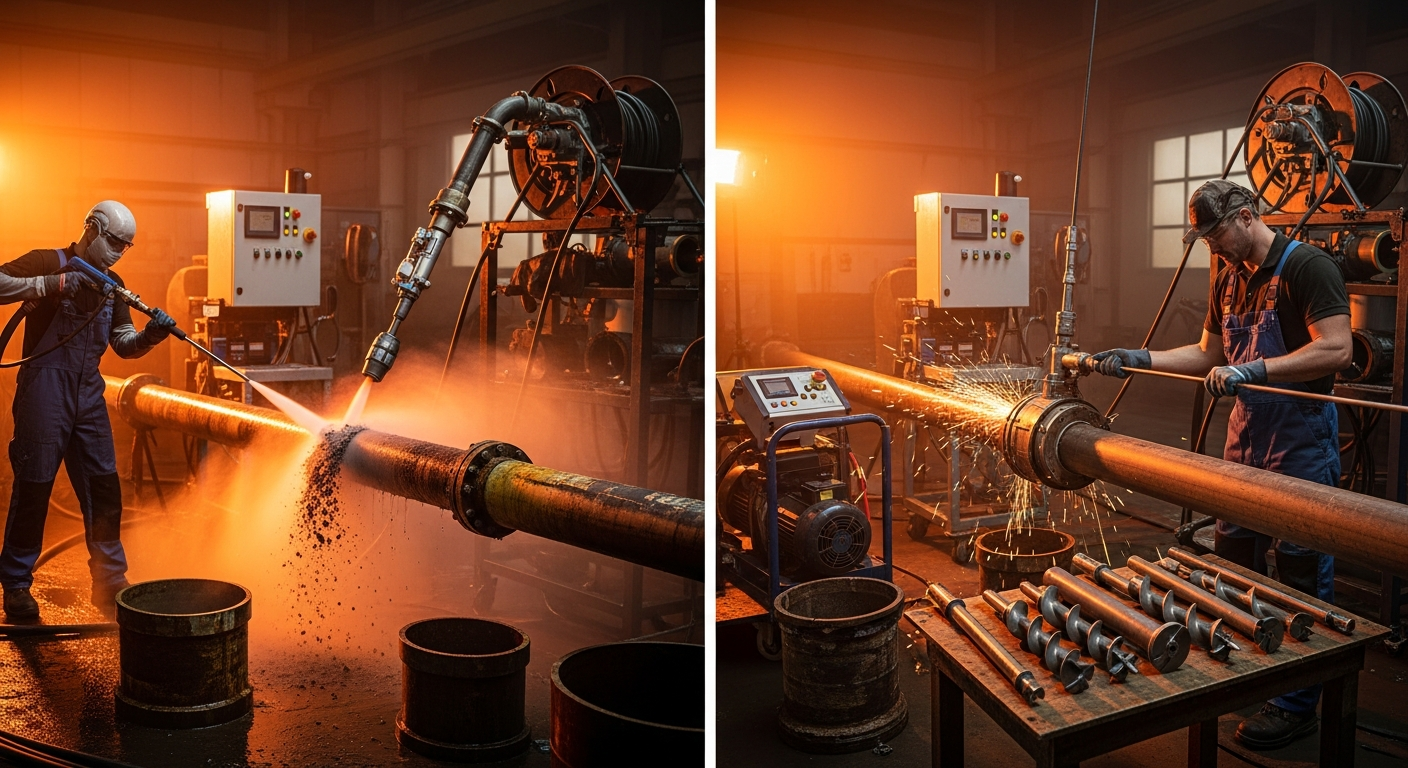
Professional pipe cleaning essentially uses two methods: high-pressure jetting and mechanical cleaning. Both methods have their specific strengths and are suited to different situations.
High-pressure jetting: the power of water
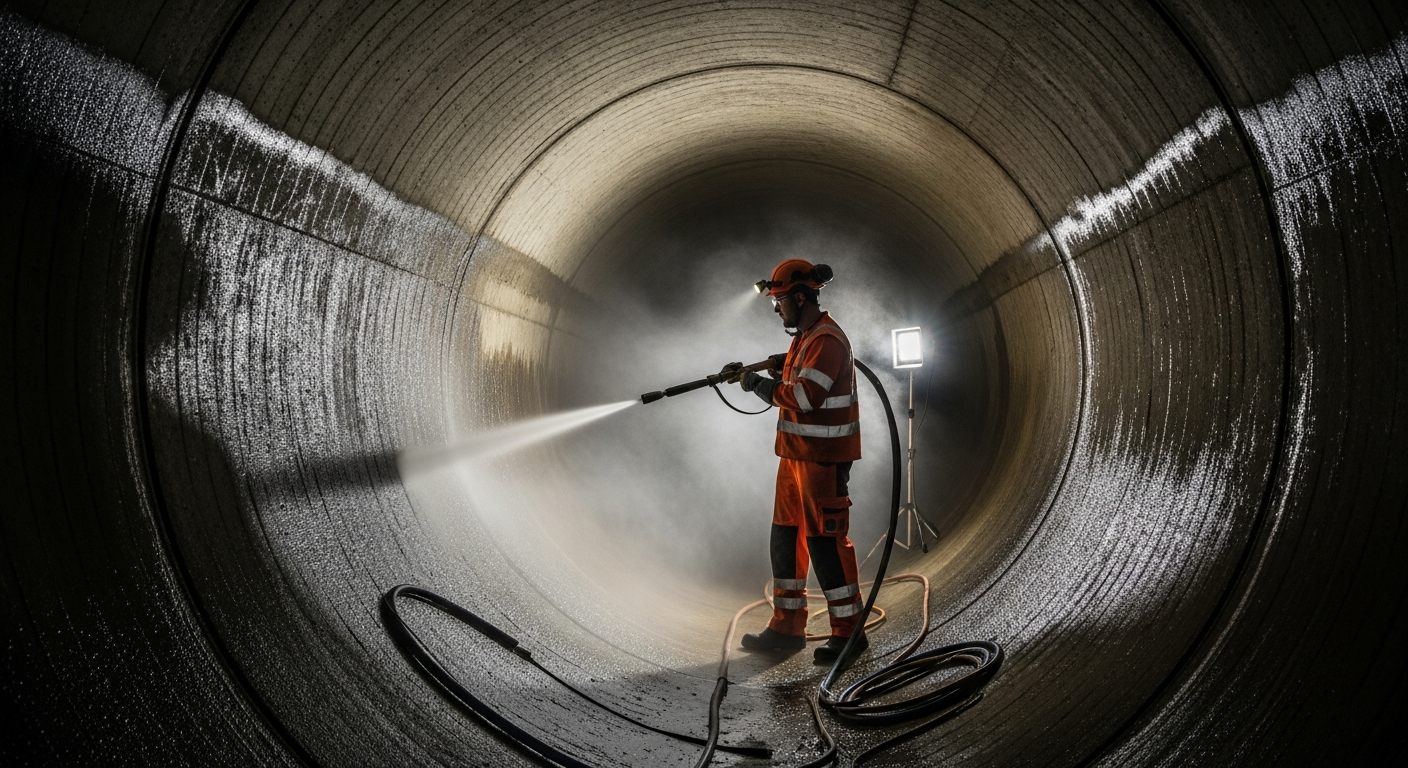
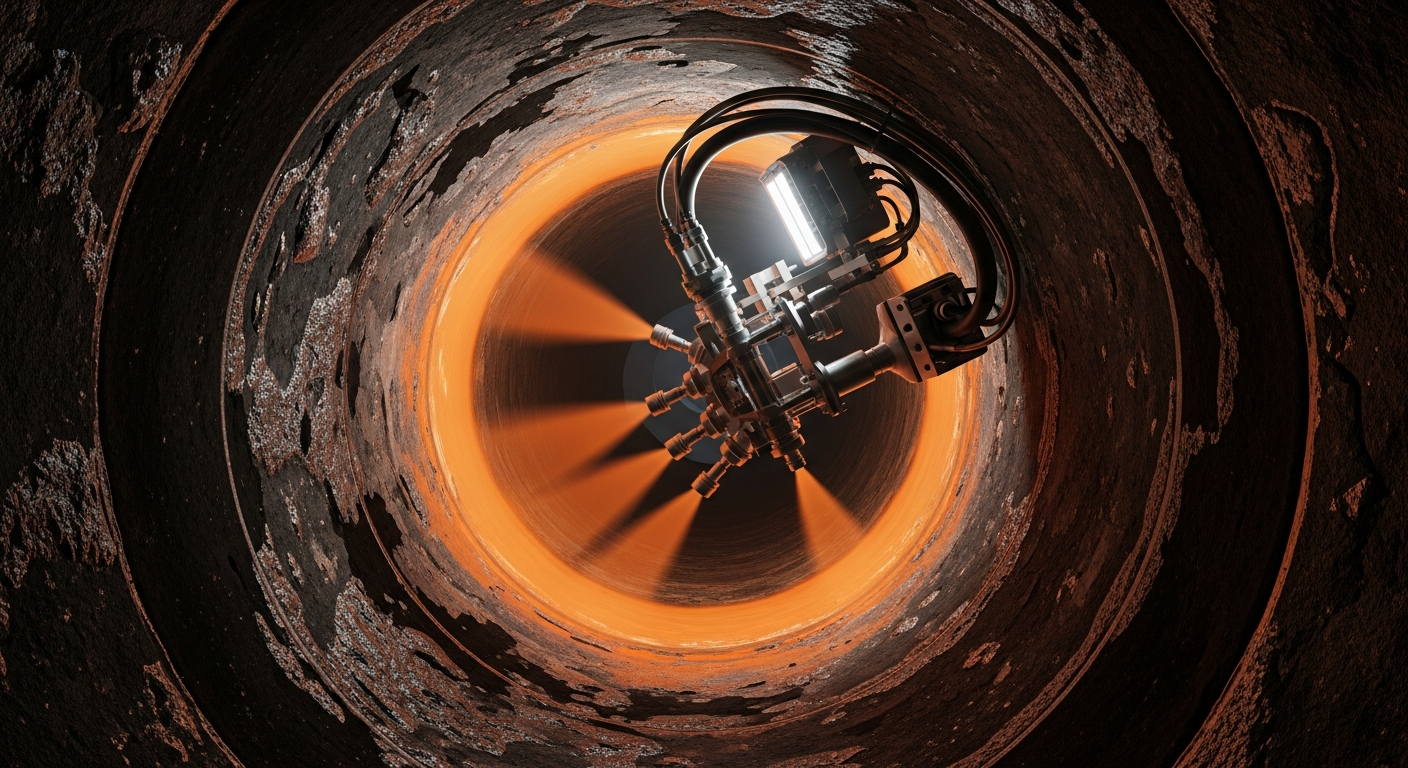
In high-pressure jetting, water is fed into the pipe at a pressure of up to 300 bar through special nozzles. The high pressure loosens even stubborn deposits, grease and encrustations from the pipe wall. The method is particularly suitable for drains from DN 100, for heavy grease and limescale deposits and for removing root ingress.
Advantages of high-pressure jetting
High-pressure jetting offers several decisive advantages: it cleans the entire inner pipe wall evenly, removes even stubborn deposits completely, is particularly effective over long stretches of pipe and, when used correctly, is gentle on the pipe material. In addition, all loosened material is carried away in the direction of flow.
Mechanical cleaning: precise and targeted
Mechanical cleaning is carried out with drain snakes, chain flail heads or cutting tools, such as those also used for root cutting. A rotating tool is inserted into the pipe and works its way through the blockage. This method is particularly suitable for household pipes with small diameters (DN 50–150), localised blockages and sensitive or damaged pipes.
Advantages of mechanical cleaning
Mechanical methods score points with targeted work directly at the blockage, lower water consumption, the ability to be used on small pipe diameters and rapid effect on acute blockages. Inside buildings in particular, the mechanical method is often the first choice.
Which method when? Our recommendation
In practice, we often use a combination of both methods: first the blockage is cleared mechanically, then the pipe is flushed with high pressure. This is how we achieve the best result. As a rule of thumb: for acute blockages inside the building we recommend the mechanical method, for preventive cleaning of the external network high-pressure water jetting as part of drain cleaning.