Defective pipes used to have to be laboriously exposed and replaced — an expensive and time-consuming process. Spray lining technology puts an end to that: it allows complete rehabilitation of pipes from the inside, without turning a single spadeful of earth.
What is spray lining technology?
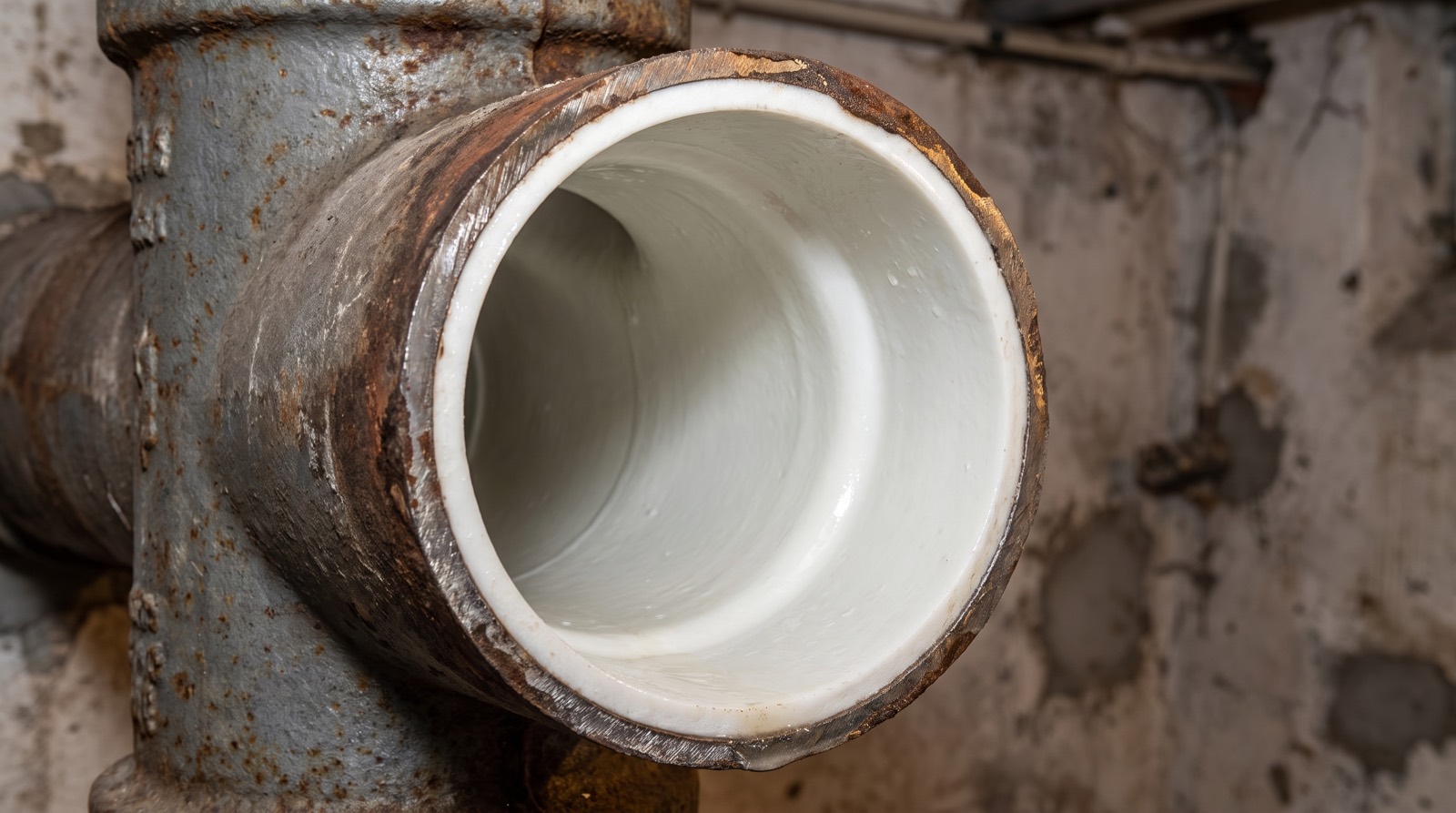
In the spray lining method, a special epoxy resin coating is applied to the pipe wall from the inside. A rotating spray head applies the material evenly and forms a seamless, watertight pipe-in-pipe system. The coating cures within a few hours and forms a new, smooth inner pipe wall.
How the method works
The process is divided into five steps: first, the pipe is cleaned at high pressure and inspected by camera. Second, all connections are temporarily sealed. Third, the spray head is inserted and the epoxy resin is applied evenly — in one or more layers, depending on requirements. Fourth, the coating cures at room temperature or with warm air. Fifth, the connections are reopened by robot and the rehabilitation is checked by camera.
Which pipes is spray lining suitable for?
Spray lining technology is suitable for pipe diameters from DN 50 to DN 300 and therefore for most household pipes and underground drains. It works with different pipe materials — whether cast iron, clay, concrete or plastic. The method really comes into its own with branched pipe systems inside buildings.
Advantages over conventional rehabilitation
The advantages are compelling: no need to dig up floors, gardens or roads. The rehabilitation is usually completed in one day. The costs are 30 to 50 per cent lower than conventional rehabilitation. The new inner coating is completely watertight and corrosion-resistant. And the service life of the rehabilitated pipe is proven to be at least 50 years.
Costs and cost-effectiveness
The costs of spray lining rehabilitation vary depending on pipe length and diameter. As a guide: for a single-family home, the costs are typically between CHF 3'000 and CHF 8'000. By comparison, a conventional pipe replacement with excavation work can easily cost CHF 15'000 to CHF 30'000. Trenchless rehabilitation is therefore not only faster, but also considerably more economical.