
Professional manhole cleaning
Inspection, inlet, pump and soakaway chambers are the junctions of your drainage system. We suck them empty, flush them out without chemicals and dispose of the material with proof of disposal.
In brief
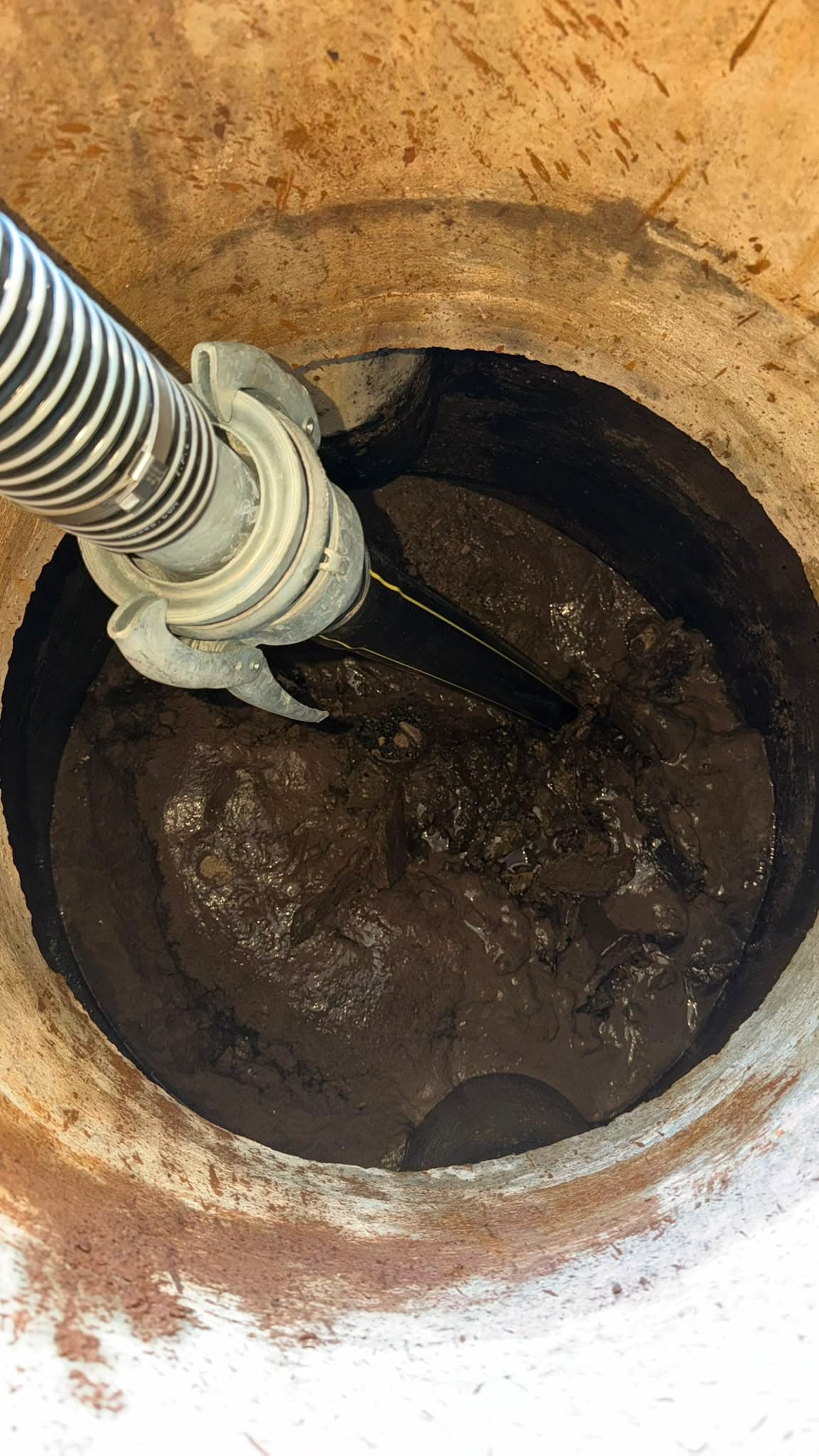
Manhole cleaning is the removal of sediment, grease, sand, leaves and sludge from inspection, inlet and pump chambers to prevent backflow and flooding. It makes sense as a one-off job or at a fixed interval. Karo Kanaltechnik works with combined jetting and suction vehicles, then checks the structural condition and disposes of the material with proof of disposal.
Manhole cleaning and emptying – what it involves
Manhole cleaning – often also called manhole emptying – means sucking out and flushing away sludge, sand, leaves, grease and other solids from the manholes of your property drainage. Pipes meet in the manholes, and this is where whatever the water carries settles. If it stays there, the flow narrows until heavy rain brings backflow, foul smells or a wet basement.
Every manhole has a different job and gets dirty in a different way. The inspection chamber is the access point to the underground drain, with a continuous channel. Inlet chambers and gullies take rainwater from yards, driveways and roads; their silt trap deliberately holds back sand and leaves and must therefore be emptied regularly. In the pump chamber, the lifting station collects wastewater produced below the backflow level. The soakaway chamber releases rainwater into the ground and loses capacity as soon as its base silts up. And the light well in front of the basement window has its own drain, which is quickly blocked by leaves.
Then there are separators: grease separators in kitchens and restaurants, and oil separators at garages, wash bays and workshops. They are subject to their own standards and usually also to municipal rules on emptying and documentation.
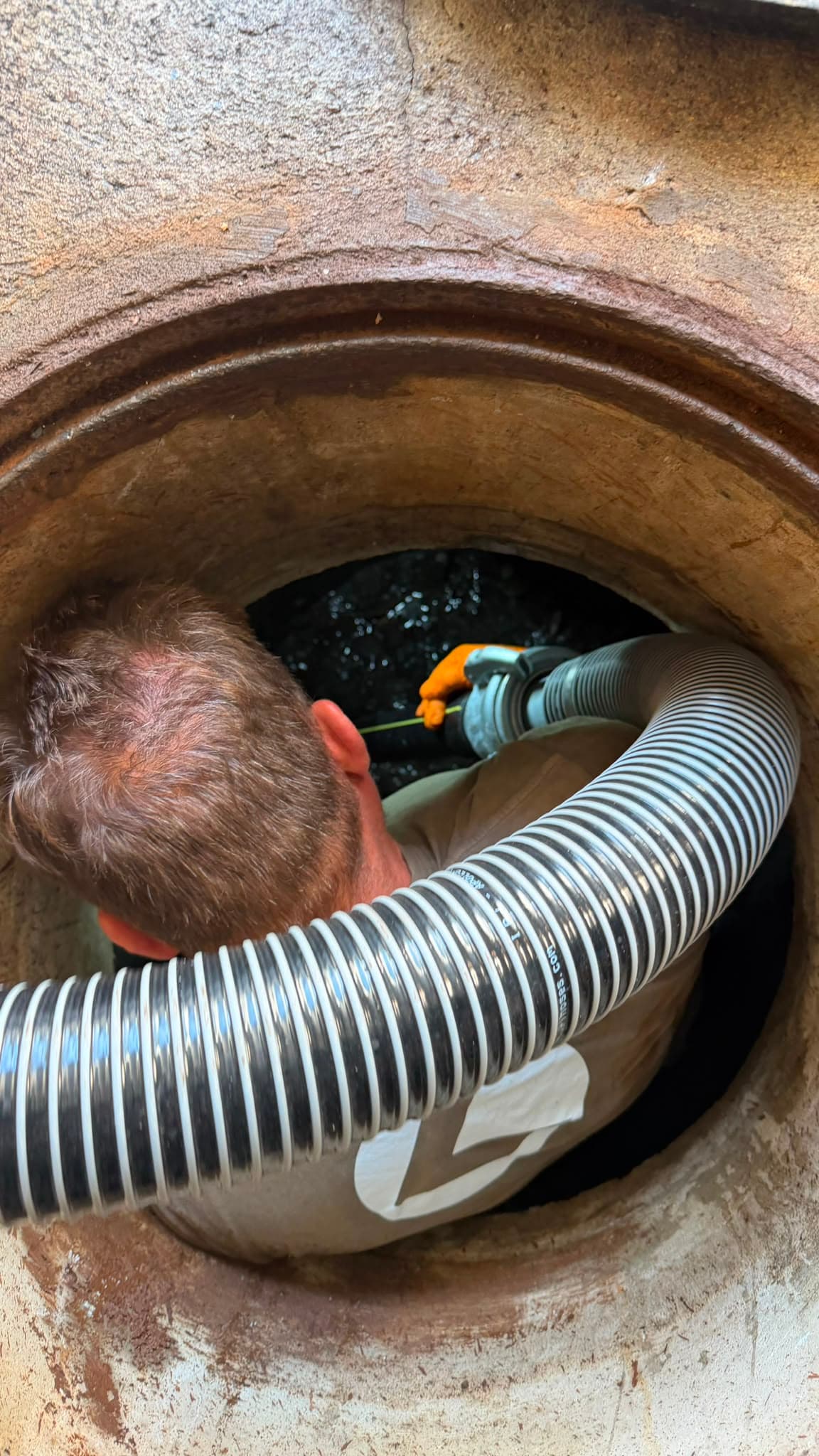
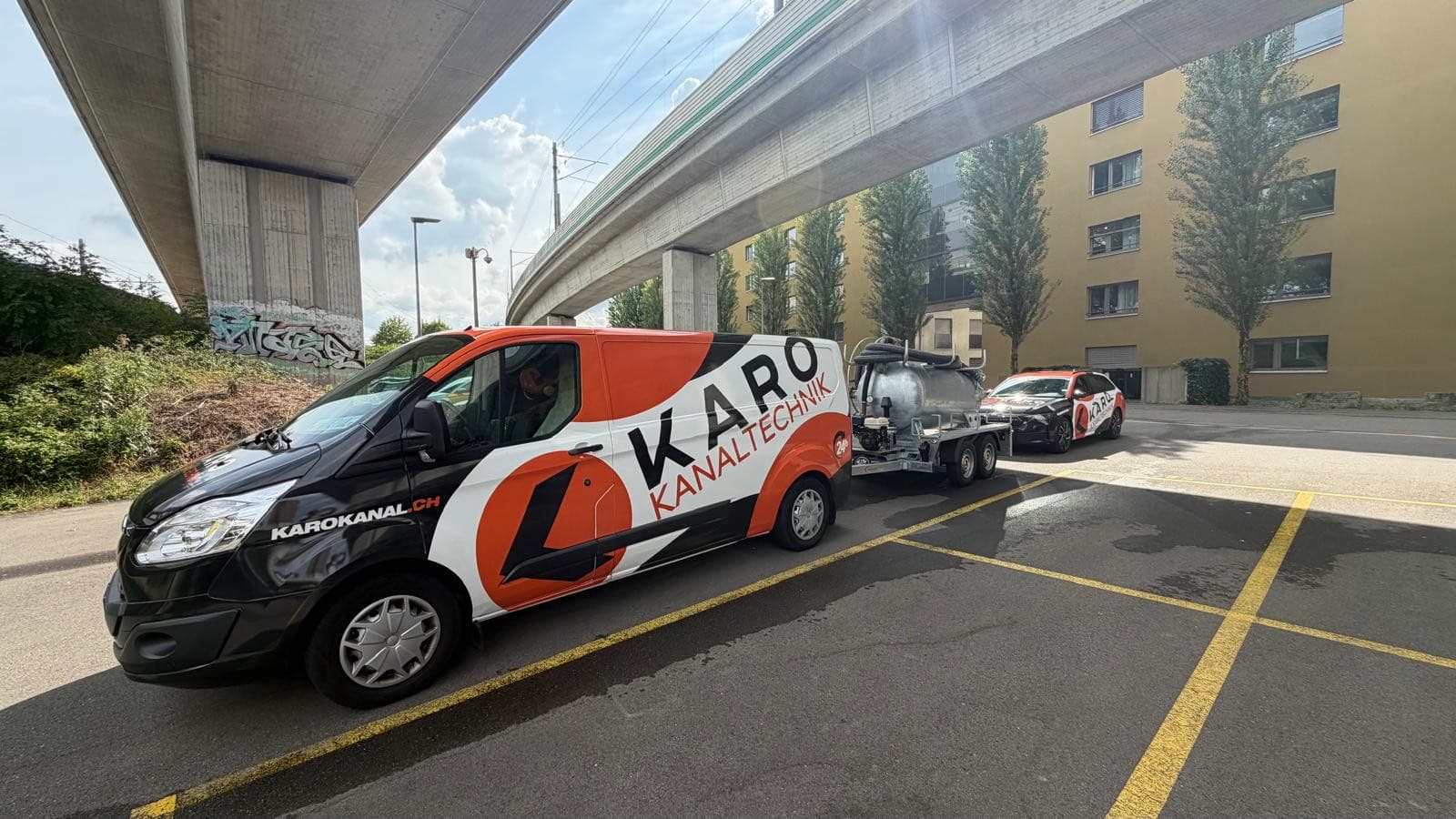
We work with combined suction and jetting vehicles: we suck the manhole empty, flush it out chemical-free with high pressure up to 200 bar and, where needed, flush the inlet and outlet pipes clear to the next manhole. We then check the cover, manhole wall, channel and connections and report any damage to you. We dispose of the extracted material properly, and you receive proof of disposal.
We take on one-off jobs as well as regular maintenance for property management companies, municipalities and businesses.
Our services at a glance
- Cleaning of inspection chambers and inlet chambers
- Emptying silt traps, gullies and road gully pots
- Cleaning soakaway chambers and infiltration systems
- Clearing light wells and their drains
- Cleaning pump chambers and lifting stations
- Emptying and cleaning grease separators and oil separators
- High-pressure water jetting up to 200 bar and vacuum suction
- Flushing inlet and outlet pipes clear to the next manhole
- Condition check and damage report after cleaning
- Environmentally sound disposal of the extracted material with proof of disposal
- Maintenance contracts with flexible intervals
Pricing
- per hour
- CHF 160
- call-out
- CHF 60
- CCTV survey
- from CHF 50
Guide prices, excl. VAT.
Guide prices excl. VAT: CHF 160 per working hour plus a CHF 60 call-out fee. We charge for the actual work – it depends on the number, depth and fill level of the manholes. Worked example further down.
Areas of application
- Inspection and inlet chambers
- Silt traps, gullies and road drains
- Soakaway chambers and infiltration systems
- Light wells, pump chambers and lifting stations
- Grease separators and oil separators
- Retention basins
24/7 emergency service
You can reach us around the clock – including weekends and public holidays.
+41 43 588 12 08How it works
From enquiry to completion – transparent and structured.
Enquiry and appointment
You tell us the type and number of manholes. We agree on an appointment that fits your schedule – at short notice too.
Suction and jetting
With the combined suction and jetting vehicle, the manhole is sucked empty, flushed out with high pressure and, where needed, the connected pipe is flushed clear.
Visual check
After cleaning we check the cover, manhole wall, channel and connections and record any damage.
Disposal and report
The extracted material is disposed of in an environmentally sound way. You receive a cleaning report with proof of disposal.
Why Karo Kanaltechnik?
Thorough cleaning
A combination of high pressure and vacuum to remove all deposits completely – without chemicals.
Environmentally sound
Proper disposal with proof – we work with certified partners.
Maintenance contracts
Predictable costs through fixed cleaning intervals – tailored to your property.
Powerful equipment
Combined suction and jetting vehicles for manholes of any size and depth.
Frequently asked questions
We recommend cleaning every 2 to 3 years. For restaurants, industrial plants or plots with a lot of leaves and sand, annual cleaning can make sense. Agreeing a fixed interval prevents sediment from narrowing the flow and causing backflow during heavy rain. For property management companies and municipalities we are happy to include the cleaning in a maintenance plan.
Yes, we clean all types of manholes and drains, from small inlet gratings and rainwater inlets through silt traps and inspection chambers to large pump chambers. For private properties, property management companies and municipalities we use combined jetting and suction vehicles that loosen deposits with high pressure and suck them up at the same time. We then check the structural condition and report any damage.
The material sucked out of manholes, silt traps and grease separators is disposed of properly via approved disposal routes and is not returned to the sewer system. You receive proof of disposal, which you can present to the municipality, the property management company or food safety inspectors if required. This documents when cleaning took place and where the material went.
Yes, cleaning grease separators is part of our standard service. We empty the separator completely by suction, clean the tank and inlets with high-pressure jetting, check the condition and document the emptying with proof of disposal. The intervals depend on the municipality's requirements and the size of the business; we also take on the cleaning at a fixed interval.
For properties we charge by time and effort: CHF 160 per working hour plus a CHF 60 call-out fee, excl. VAT. A camera check of the adjoining pipe costs a surcharge from CHF 50. How long the cleaning takes depends on the number of manholes, the amount of material to be removed and access. For grease separators, several properties or municipalities you receive a quote including disposal.
Sand, leaves, grease and sludge collect in manholes. Once they are full, the material enters the pipes, narrows the flow and leads to backflow or flooding during heavy rain. Regularly cleaned manholes can also be checked: with every cleaning we spot cracks, leaking connections or corroded step irons early, before they turn into expensive rehabilitation.
Enquire without obligation
Fill in the form – we will get back to you within 24 hours.
Need help fast?
Our emergency team is ready around the clock – including Sundays and public holidays.
How much does manhole cleaning cost?
We charge for the actual work, with fixed guide prices: CHF 160 per working hour plus a CHF 60 call-out fee, excl. VAT. If the connected pipes are then to be checked with a camera, there is a surcharge from CHF 50.
How long emptying a manhole takes depends on the number and depth of the manholes, the fill level, the type of deposit and the access for the suction vehicle. If you have several manholes cleaned in the same job, the call-out fee is charged only once. For grease and oil separators, the volume and the disposal of the contents also determine the price – for these we will prepare a quote for you.
For comparison: drain cleaning in a single-family home usually costs CHF 150 to 400.
Worked example
One hour of manhole cleaning with the suction and jetting vehicle, including call-out.
Guide price. We charge for the actual work; camera check as a surcharge from CHF 50, any materials extra.
Which manhole how often?
Not every manhole needs the same schedule. A silt trap under trees fills faster than an inspection chamber in the garden, and separators have their own rules. The guidelines below are a starting point – we set the right interval with you after the first job.
- Inspection chamberevery 2–3 yearsFor residential properties together with flushing the pipes. For restaurants and industry, annual cleaning can make sense.
- Silt trap, gully, gully pot1–2× per yearCheck at least once a year, ideally after the leaves fall in autumn. Empty once or twice a year in places with lots of leaves or heavy traffic.
- Soakaway chamber, soakaway pitcheck every 1–3 yearsSuck out sludge and flush the soakaway surfaces clear as needed. How often depends on sand, leaves and sediment – so the base does not silt up and the system does not overflow.
- Pump chamber, lifting stationserviced regularlySN EN 12056-4 recommends shorter intervals for commercial use than in a single-family home. The chamber is sucked out and flushed as needed.
- Grease separatorat least monthlyThe exact frequency depends on the size of the business, the amount of grease and the municipality's rules. Every emptying is documented.
- Oil separatorby fill levelWhat counts is the sludge trap and the oil layer: once they reach the permitted level, the separator is emptied. Regular checks show the right interval.
Light well
In the light well in front of the basement window, leaves and dirt collect directly on the drain. Check it after the leaves have fallen at the latest – if the drain is blocked, water quickly builds up at the window in heavy rain. More under light well drainage.
Do not wait
- Standing water in the manhole, or it drains away only slowly
- Rotten smell from a manhole, gully or floor drain
- The lifting station alarm goes off
- Water backs up on the yard or driveway when it rains
Guidelines. What counts is use, surroundings and the rules of your municipality. More in our guide: How often is cleaning really necessary?
Manhole cleaning or manhole rehabilitation?
Cleaning removes whatever has settled in the manhole. Rehabilitation repairs damage to the manhole itself. One often follows the other: only in a clean manhole can you see whether joints are leaking or walls are damaged.
Manhole cleaning
- Problem: sludge, sand, leaves, grease or solids in the manhole
- Result: restricted flow, backflow, smells, overflowing manholes
- Solution: suction, flushing out with high pressure, disposal of the material
- Frequency: recurring, depending on the manhole and its use
Manhole rehabilitation
- Problem: cracks, leaking joints, corrosion, groundwater ingress
- Result: infiltration water in the sewer, wastewater in the ground, loss of material
- Solution: coating with epoxy resin or polymer mortar, usually without digging
- Warranty: up to 10 years depending on the method
If we find damage during cleaning, we report it to you with the job report. Whether and how it needs rehabilitating is explained in our guide Manhole rehabilitation: methods and when it is needed. A CCTV drain survey shows the condition of the connected pipes.
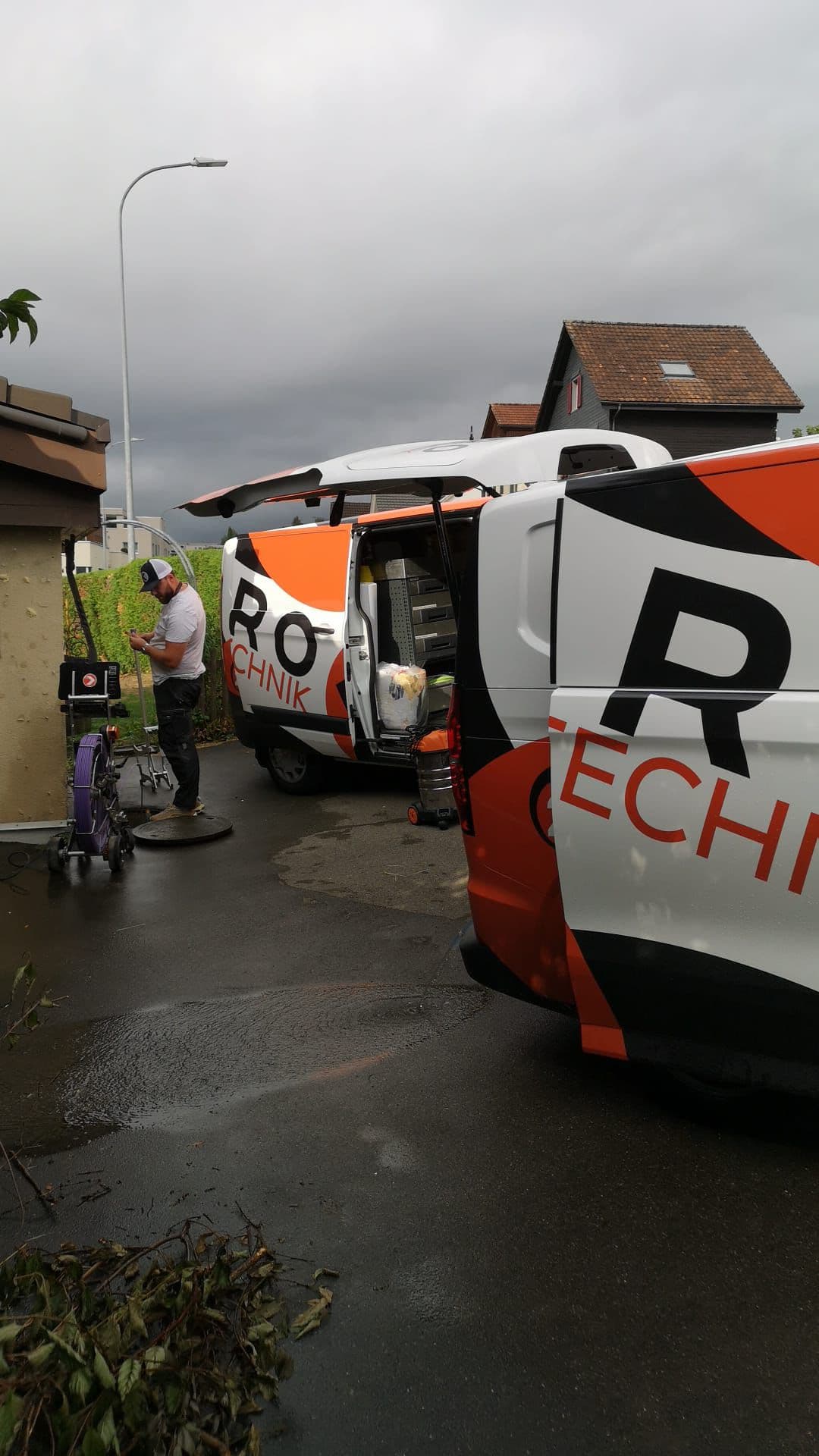
Manhole cleaning in practice
Have manholes cleaned on a fixed schedule
With a maintenance contract we clean your manholes, silt traps and separators on a fixed schedule – tailored to the property, its use and its condition. After every job you receive a report with proof of disposal for your records.
Property management companies
Inspection chambers, gullies and soakaway chambers of several properties in one plan – predictable costs, fewer emergencies.
Learn moreBusinesses and restaurants
Emptying and cleaning grease and oil separators and documenting every emptying – as proof for the municipality.
Learn moreMunicipalities
Cleaning road drains, inlet chambers and silt traps in public spaces and reporting their condition.
Learn moreManhole-related terms
- Manhole cleaningThe term explained: which manholes there are and how they are cleaned.
- Inspection chamberAccess point to the underground drain with a continuous channel.
- Silt trap (gully pot)Inlet chamber with a deepened base in which sand, leaves and sludge settle.
- Gully (inlet chamber)Swiss word (Dole) for an inlet chamber or road drain that takes in rainwater.
- Lifting stationPumps wastewater produced below the backflow level into the sewer.
- Grease separatorSeparates grease from kitchen wastewater, governed by SN EN 1825.
- Oil separatorHolds back petrol, diesel and engine oil, governed by SN EN 858.
- Soakaway (soakaway pit)Lets rainwater or lightly polluted water soak away into the ground.
- Manhole coverThe cover of the manhole – also checked every time it is cleaned.
- Light well drainageThe drain in the light well in front of the basement window and why it blocks.
Guidance on manholes and separators
- Cleaning and maintaining a soakaway pit: guide and intervals
- Commercial drain cleaning and grease separators: duties and costs
- Drain cleaning: how often is it really necessary?
- Cleaning stormwater and rainwater pipes: why and how
- Manhole rehabilitation: methods and when it is needed
Goes well with manhole cleaning
Manhole rehabilitation
Restoring leaking or corroded manholes with an epoxy resin or polymer mortar coating – usually without digging.
Learn moreDrain cleaning
Flushing underground drains, rainwater pipes and land drains between the manholes chemical-free at up to 200 bar.
Learn moreCCTV drain survey
Camera inspection of the connected pipes, findings documented to SN EN 13508-2.
Learn more24/7 emergency service
Overflowing manhole or backflow in the basement? Available around the clock 365 days a year.
Learn moreDrain and manhole cleaning in your region
- Drain cleaning Frauenfeld
- Drain cleaning Kreuzlingen
- Drain cleaning Arbon
- Drain cleaning Weinfelden
- Drain cleaning Amriswil
- Drain cleaning Romanshorn
- Drain cleaning Aadorf
- Drain cleaning Sirnach
- Drain cleaning Münchwilen
- Drain cleaning Sulgen
- Drain cleaning Bischofszell
- Drain cleaning Matzingen
- Drain cleaning Felben-Wellhausen
- Drain cleaning Steckborn
- Drain cleaning Diessenhofen
- Drain cleaning Bürglen TG
- Drain cleaning Ermatingen
- Drain cleaning Tägerwilen
- Drain cleaning Wängi
- Drain cleaning Eschlikon
- Drain cleaning Egnach
- Drain cleaning Winterthur
- Drain cleaning Zurich
- Drain cleaning Uster
- Drain cleaning Dietikon
- Drain cleaning Thalwil
- Drain cleaning Bülach
- Drain cleaning Dübendorf
- Drain cleaning Stäfa
- Drain cleaning Wädenswil
- Drain cleaning Bassersdorf
- Drain cleaning Schlieren
- Drain cleaning Rüti
- Drain cleaning Zumikon
- Drain cleaning Volketswil
- Drain cleaning Horgen
- Drain cleaning Adliswil
- Drain cleaning Dietlikon
- Drain cleaning Kloten
- Drain cleaning Opfikon
- Drain cleaning Wallisellen
- Drain cleaning Regensdorf
- Drain cleaning Wetzikon
- Drain cleaning Pfäffikon ZH
- Drain cleaning Illnau-Effretikon
- Drain cleaning Egg
- Drain cleaning Greifensee
- Drain cleaning Meilen
- Drain cleaning Küsnacht
- Drain cleaning Männedorf
- Drain cleaning Birmensdorf
- Drain cleaning Urdorf
- Drain cleaning Zollikon
- Drain cleaning Oberengstringen
- Drain cleaning Weiningen
- Drain cleaning Uetikon am See
- Drain cleaning Affoltern am Albis
- Drain cleaning Hinwil
- Drain cleaning Richterswil
- Drain cleaning Kilchberg
- Drain cleaning Rüschlikon
- Drain cleaning Fällanden
- Drain cleaning Embrach
- Drain cleaning Andelfingen
- Drain cleaning Elgg
- Drain cleaning Seuzach
- Drain cleaning Wald ZH
- Drain cleaning Bubikon
- Drain cleaning Hombrechtikon
- Drain cleaning Rümlang
- Drain cleaning Maur
- Drain cleaning Langnau am Albis
- Drain cleaning Erlenbach ZH
- Drain cleaning Herrliberg
- Drain cleaning St. Gallen
- Drain cleaning Wil
- Drain cleaning Rapperswil-Jona
- Drain cleaning Uzwil
- Drain cleaning Gossau
- Drain cleaning Wittenbach
- Drain cleaning Flawil
- Drain cleaning Rorschach
- Drain cleaning Mörschwil
- Drain cleaning Altstätten
- Drain cleaning Buchs SG
- Drain cleaning Goldach
- Drain cleaning Wattwil
- Drain cleaning Sargans
- Drain cleaning Rorschacherberg
- Drain cleaning Widnau
- Drain cleaning Gaiserwald