Drain smells but isn’t blocked: what it means
If the drain smells but the water drains normally, the problem usually lies not in the pipe itself but in the barrier between the pipe and the room. This barrier is the water seal trap, colloquially the siphon: a small reservoir of water that holds back gases from the drainage system. If this water is missing or gets sucked out, drain smells rise unhindered into the kitchen, bathroom or basement.
A blockage shows itself differently: the water drains slowly, gurgles or backs up. If, on the other hand, it smells while the water drains freely, it is worth looking elsewhere: at the water level in the trap, the ventilation of the soil stack, coatings in the drain, the seals and possible leaks in walls and floors. Most causes can be narrowed down in a few minutes; some need a smoke test or a camera survey.
What is a drain smell and where does it come from?
In wastewater, bacteria break down organic matter. Particularly where the water stands for a long time and there is little oxygen – in deposits, pump chambers, separators or long pressure mains – sewer gases form. The best known of these is hydrogen sulphide, with its typical smell of rotten eggs.
A well-functioning drainage system keeps these gases in the pipe and carries them away above the roof via the vent pipe. If it smells of sewage in the building, in the courtyard or at the front door, there is a gap in this barrier somewhere or exceptionally strong gas formation.
When searching, it helps to distinguish between two smells. The pungent smell of rotten eggs points to sewer gases from the drain getting into the building through a gap. A musty, mouldy smell directly above the drain, on the other hand, often comes from coatings in the trap or the waste pipe itself, i.e. from a few centimetres of pipe and not from the sewer.
Drain smells but isn’t blocked: 6 causes
First and foremost is the empty trap. Rarely used drains in the guest bathroom, laundry room or basement dry out; a glass of water fixes the problem. If the smell mainly occurs when water drains elsewhere in the house, the trap is probably being sucked empty – a sign of a blocked or missing vent pipe.
Other causes are leaking connections and joints, poorly closed rodding eyes, faulty WC connections, cracks in pipes beneath the floor slab and disused pipes that were not sealed during conversions. In commercial premises, overdue grease separators and silt traps are added to the list.
The six causes below start with those you can often fix yourself. The first three are usually dealt with by water, cleaning or a clear vent; the rest generally need a specialist.
1. Dried-out trap
If a drain is not used for weeks, the seal water evaporates. Typical examples are guest bathrooms, holiday flats, laundry rooms, floor drains in the basement and showers that are rarely used. Underfloor heating and dry heated air in winter can speed up the drying out. A glass of water is the remedy; for floor drains that hardly ever get any water, a regular entry in the cleaning schedule or a floor drain with an additional odour barrier helps.
2. Siphonage due to missing or blocked ventilation
When a lot of water drains down the soil stack at once, for example after flushing the WC or when the washing machine pumps out, negative pressure builds up in the pipe. If not enough air can flow in via the vent pipe, the system draws air through the traps and sucks them empty in the process. This can be recognised by gurgling in the washbasin or shower while water is draining elsewhere, and by a smell immediately afterwards. Causes are a roof vent blocked by leaves, birds’ nests or ice, vents cut off during conversions or overly long branch pipes without ventilation. The solution lies in the pipe system, not the trap: clear the vent or, where permitted, fit an air admittance valve.
3. Biofilm and coatings in the drain
Hair, soap residue, skin grease and food scraps collect in the trap, waste pipe and shower channel. A slimy coating of bacteria forms on top – the biofilm – which smells strongly even when the water drains freely. The smell is typically directly above the drain and gets briefly stronger after showering or washing up. Mechanical cleaning helps here: unscrew the trap and wash it out, open the shower channel and floor drain, and remove hair by hand or with a brush. Chemical drain cleaners only dissolve the coating superficially, can attack seals and pollute the wastewater.
4. Faulty or missing seal
There are rubber seals between the trap and the wall connection, at the WC connection, at rodding eyes and at floor drains. If they become brittle, slip during cleaning or are missing altogether after a repair, sewer gas escapes right next to the trap even though it is full. Traps that have already been unscrewed several times and WC connections after the pan has been replaced are often affected. New seals cost little; what matters is looking for the cause in the right place.
5. Leaking pipe, open joint or disused connection
If a room smells even though all the drains in it are full and tight, a pipe in a wall, duct or beneath the floor slab may be leaking. Displaced joints, cracks in old pipes and connections not sealed during conversions let gas escape, often far from the nearest drain. Such points cannot be seen from the outside. They are found with a smoke test and a camera survey and usually repaired trenchlessly.
6. Backflow from the sewer
If wastewater backs up in the underground drain or the public sewer, for example in heavy rain or because of a deposit further down, it pushes air and gases back into the house. A smell at low-lying drains in the basement is typical, sometimes with gurgling or water briefly standing in the floor drain. If this happens repeatedly, the underground drain and house connection should be cleaned and checked with a camera; for drains below the backflow level, a backflow protection device is also needed.
Kitchen, bathroom, shower, WC: where it typically smells
Where the smell occurs says a lot about the cause. The overview shows the most common patterns in flats and single-family homes and the sensible first step.
| Location | Most common cause | First step |
|---|---|---|
| Kitchen | Grease and food scraps in the trap, dishwasher connection | Unscrew and clean the trap, check the hose connection |
| Washbasin | Biofilm from soap and hair, dried-out trap in the guest bathroom | Top up with water, clean the trap |
| Shower | Hair and soap in the channel or floor drain, low-profile water seal | Open the drain, clean the insert and channel |
| WC | Brittle seal at the WC connection, urine scale, pan sucked empty | Check the connection while flushing, watch the water level in the pan |
| Basement and laundry room | Dried-out floor drain, backflow, open rodding eye | Top up with water, check the covers of the rodding eyes |
Kitchen drain smells
In the kitchen the smell is usually home-made: grease, coffee grounds and food scraps settle in the trap and in the horizontal pipe up to the soil stack and begin to rot. The dishwasher connection can also smell if the hose is connected without a loop and dirty water flows back. Cleaning the trap regularly and keeping grease out of the drain prevents most of this. If it still smells and the water drains more slowly, the coating is further down the pipe; professional pipe cleaning will then help.
Bathroom drain smells: what to do?
In the bathroom, the washbasin and bath are the most common sources. Gurgling when the bath is emptied or the WC flushed points to siphonage; a musty smell directly above the washbasin points to biofilm. First fill all the drains and clean the washbasin trap, then rinse out the overflow of the bath and washbasin, because coatings collect there too.
Shower drain smells despite cleaning
Shower drains and shower channels often have a particularly shallow water seal so that they fit into the floor. It dries out more quickly and is more easily sucked empty. If the shower still smells after cleaning, the insert has often not been put back properly or the seal on the insert is damaged, so that gas flows past the water. It is also possible that cleaning only covered the strainer, not the actual drain pot underneath. If the smell persists although the insert, seal and pot are clean and correctly seated, the cause lies further back in the pipe or in the ventilation.
WC smells despite cleaning
The WC has its water seal in the pan. If it smells despite cleaning, the pan is usually not to blame, but rather the transition to the wastewater pipe: a brittle or displaced sleeve at the WC connection, urine scale under the rim or in the outlet pipe, or a water level in the pan that drops after other appliances are used. A sign of a leaking connection is a smell that gets stronger when flushing, or moisture on the floor behind the pan.
Drain smells outdoors and from manholes
If it smells in the garden, at the front door or on the forecourt, the smell often comes from manholes with leaking covers, from silted-up silt traps or from an infiltration system into which foul water is wrongly getting. In a separate system, misconnections between foul water and rainwater pipes can also carry odours to unexpected places.
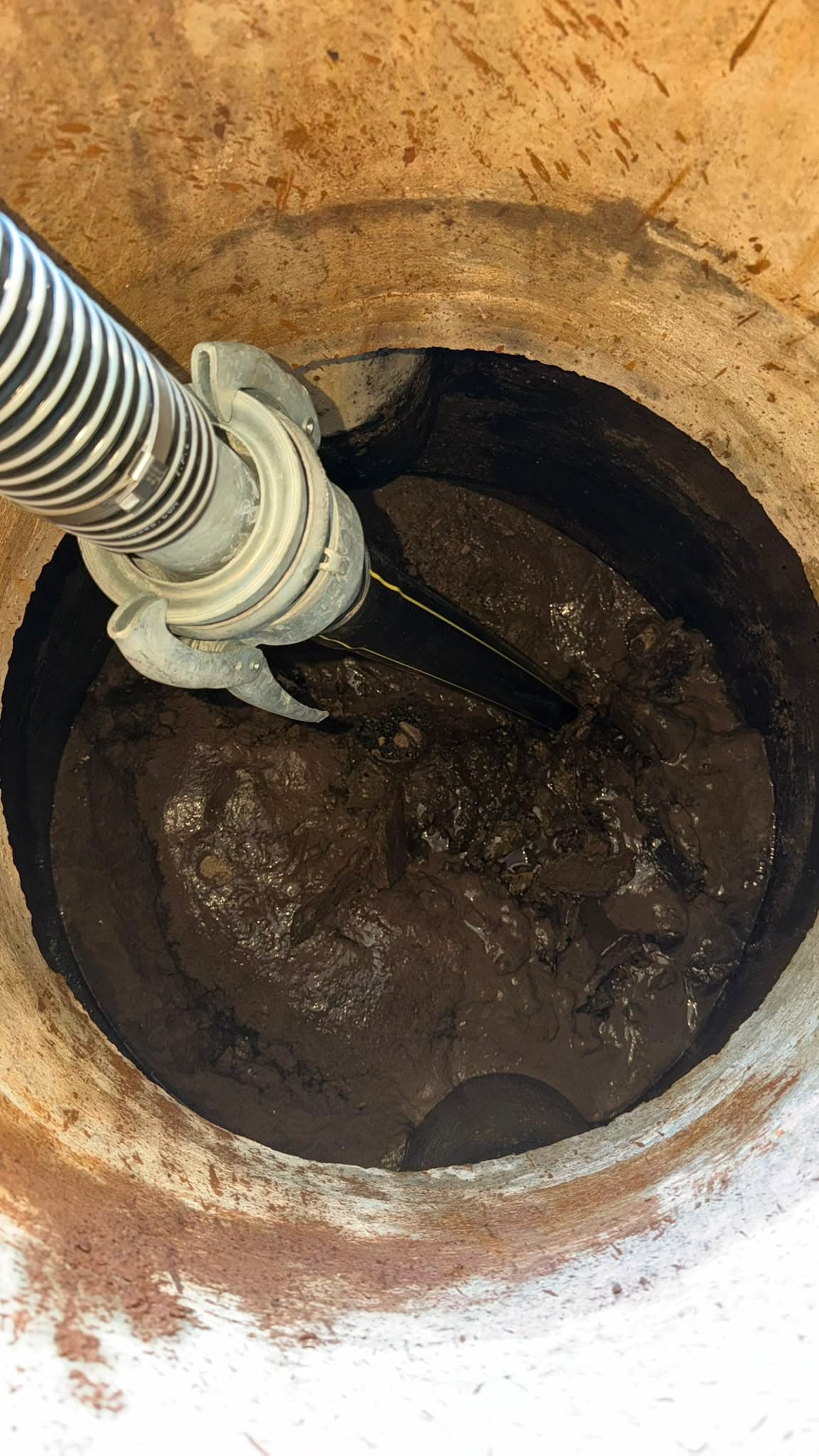
For properties with a lifting station or pump chamber, the unit itself is a common source if it pumps too rarely, is poorly vented or floating sludge has built up. Regular cleaning and maintenance usually solve this reliably.
Check it yourself in 5 steps
Before a specialist comes, the most common causes can be narrowed down yourself. Make a note of when and where it smells: this information considerably shortens any later search.
Step 1: Fill all drains
Pour half a litre to a litre of water into every drain in the house, including floor drains, rarely used showers, utility sinks and the guest WC. If the smell disappears within a day, a dried-out trap was the cause.
Step 2: Clean the trap and drain
Unscrew the trap under the washbasin or sink over a bucket, wash it out and refit it with an intact seal. For showers and floor drains, take out the strainer and insert and clean the drain pot. If you are unsure, you will find instructions in the guide to cleaning a trap.
Step 3: Listen for gurgling
While a second person flushes the WC or empties the bath, listen at the washbasin and shower and watch the water level. If it gurgles or the water in the trap drops, it is being sucked empty. Then the vent pipe needs checking – a job for a specialist.
Step 4: Check seals and openings
Check the WC connection, the screw connections of the traps and the covers of rodding eyes. If it smells more strongly directly at a connection than at the drain itself, the seal there is suspect.
Step 5: Record the pattern
Does it only smell when it rains, only in the morning, only when it is windy or only when water is running upstairs? Such patterns show whether backflow, ventilation or a leak is the more likely cause. If the smell persists after these five steps, the cause can no longer be found on the surface.
When a CCTV drain survey or smoke test is needed
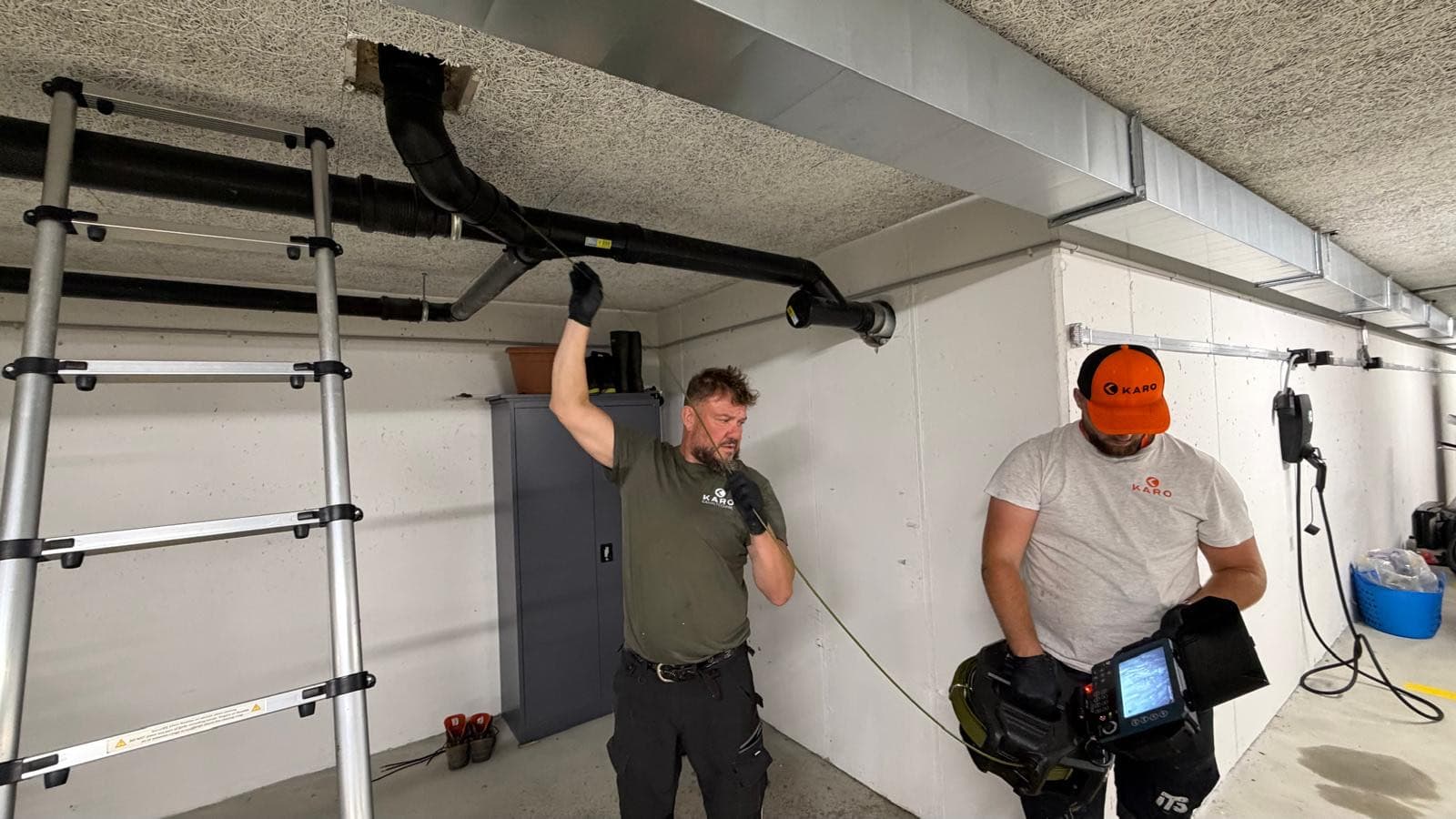
The smoke test is the method of choice when all the drains are full and it still smells, when the smell occurs in rooms without a drain or when it cannot be traced to any particular point. A camera survey is advisable when damage in the pipe is suspected, when the smell coincides with slow drainage or backflow, or when a vent pipe needs to be checked to see whether it is continuous. The two often complement each other: the smoke shows where gas is escaping, the camera shows why.
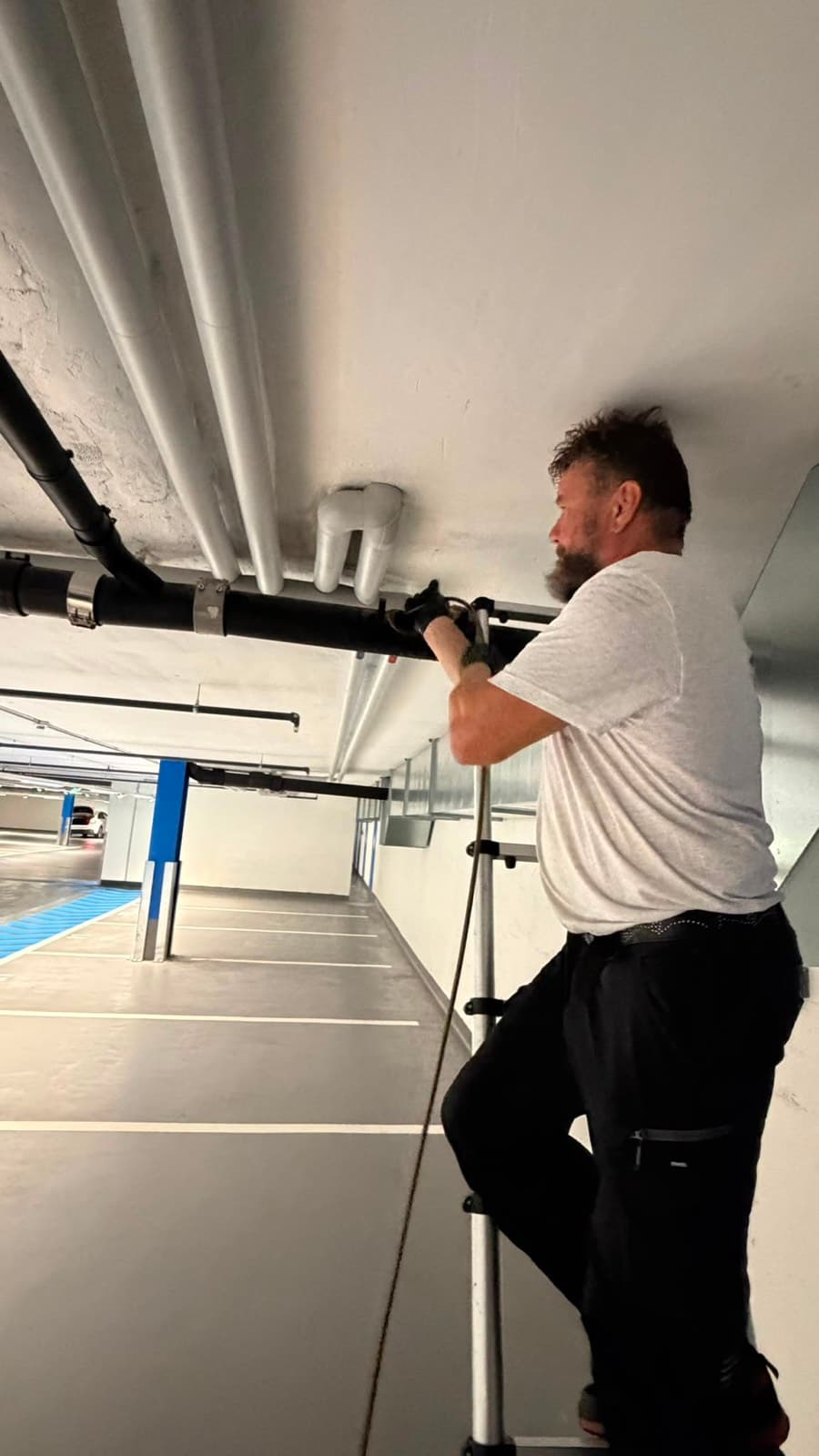
The search starts simply: fill all drains with water, check rodding eyes and WC connections, and observe when and where the smell occurs. If the source remains unclear, a specialist takes over. In a smoke test, harmless artificial smoke is blown into the pipe; it escapes exactly where gases also escape.
In addition, a camera survey shows the condition of the pipes: displaced joints, cracks, deposits or an interrupted vent pipe. With these findings, repairs can be targeted – often trenchlessly with a patch liner, instead of breaking open floors on suspicion.
At Karo Kanaltechnik, the findings of a CCTV drain survey are documented in accordance with SN EN 13508-2. This makes it possible to trace later which defect lies where, and the repair, for example a patch liner on a leaking joint, can be planned precisely.
How much does it cost to track down a drain smell?
A Karo Kanaltechnik job is charged by time: CHF 160 per working hour and a call-out fee of CHF 60, both excl. VAT. One hour on site including call-out therefore costs CHF 220 excl. VAT or CHF 237.82 incl. 8.1% VAT. If the pipe is also to be inspected with the camera, a CCTV surcharge from CHF 50 is added. As a guide figure, a typical job at a single-family home usually comes to CHF 150 to 400 excl. VAT.
If the cause is a dirty drain, cleaning is often enough: for a washbasin or shower we allow around CHF 40, for a kitchen or WC around CHF 80 of working time, plus call-out and excl. VAT in each case. For larger searches with a smoke test or for repairs, you will receive a quote on request, so that you know what to expect before placing the order.
Is a drain smell dangerous?
At the concentrations that occur in living spaces because of an empty trap, a drain smell is mainly a nuisance. It is, however, a warning sign that should not be ignored: where gases escape, wastewater can escape too, and persistent moisture damages the building fabric.
In manholes, pits and confined spaces, however, hydrogen sulphide can reach dangerous concentrations. At high concentrations it can no longer be smelt, because the sense of smell is numbed. Never enter manholes without gas measurement, safety precautions and trained personnel.
How to keep your drain odour-free
Fill rarely used drains with water every two to three weeks, and likewise before longer absences. Strainers in the shower and sink hold back hair and food scraps before they turn into biofilm. Grease and oil belong in the bin, not down the drain. Clean traps and shower drains once a quarter and take a look at the seals while you are at it.
It is better to avoid chemical drain cleaners: they only remove the smell briefly, pollute the wastewater and can attack seals and older pipes. Karo Kanaltechnik cleans without chemicals, mechanically and with high-pressure water jetting at up to 200 bar. For properties with a lifting station, grease separator or silt trap, regular maintenance prevents most odour problems.
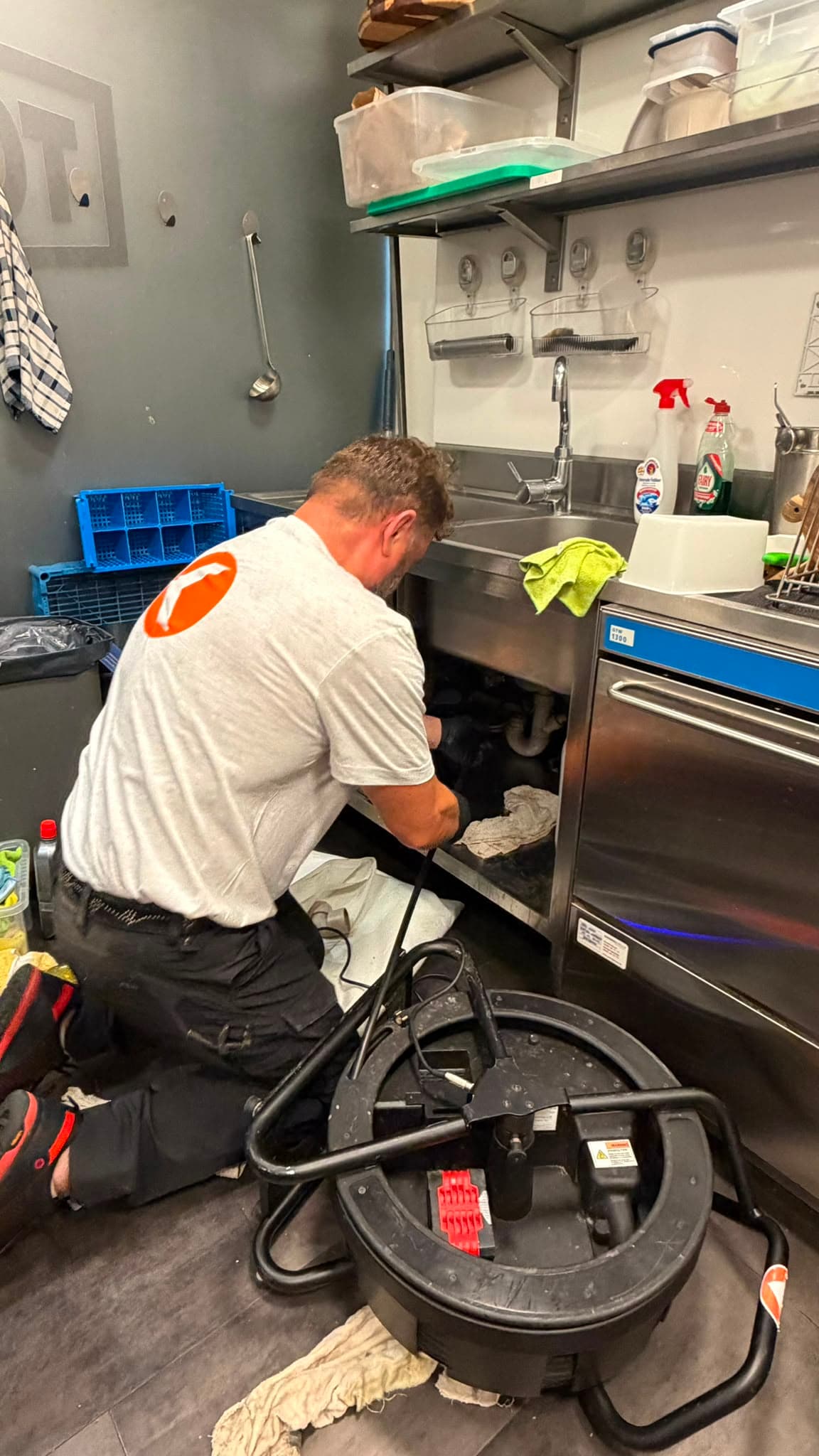
In a café in Zug, the guest area had smelt of sewage for weeks, especially in the morning. The traps were full and the grease separator had just been emptied. In the smoke test, the smoke escaped from a joint in the floor next to the counter. The subsequent camera survey revealed an old, disconnected pipe from a former sink under the floor, which had only been loosely plugged with a rag. It was properly sealed, and the smell had gone the next day – without opening up large areas of the floor.