What is a silt trap?
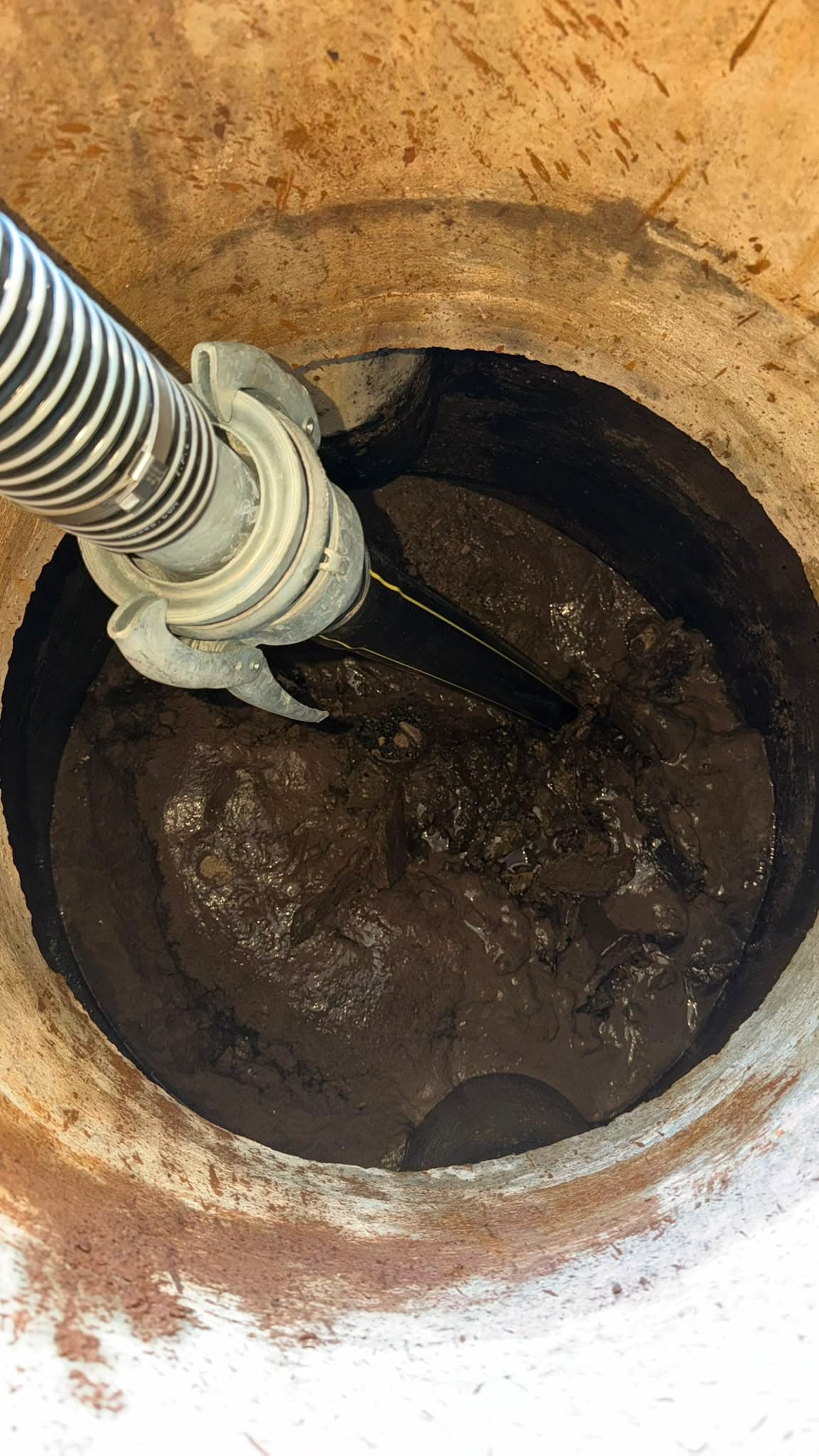
A silt trap is an inlet chamber whose base lies well below the outlet. The incoming water loses speed in the chamber, so that heavy components such as sand, grit and soil sink to the bottom. Lighter material such as leaves is held back, depending on the design, by a bucket, a grating or a dip pipe.
The term is widely used in Switzerland and refers to an important component of property drainage. Silt traps are found at yard and courtyard drains, at garage driveways, at the foot of roof water pipes and upstream of infiltration systems. They are, so to speak, the pre-filter of the drainage system.
Silt trap, rainwater gully, sand trap: the same thing?
Largely, yes. ‘Silt trap’ (Schlammsammler) is the technical term; in everyday speech, many owners say ‘rainwater gully’ (Regenschacht), ‘inlet chamber’ (Einlaufschacht), ‘sand trap’ (Sandfang) or ‘sludge trap’ (Schlammfang). They almost always mean the same chamber: a drain for rainwater, roof water or yard water with a deepened space in which solids settle. If you lift a grating on the forecourt and see standing water with sand at the bottom underneath, you are looking into a silt trap.
There are nevertheless subtle differences. ‘Rainwater gully’ is often used for any chamber into which rainwater flows, including an inspection chamber without a sludge space. ‘Sand trap’ emphasises the task of holding back mineral material, for example upstream of an infiltration system. ‘Sludge trap’ is also the name of the first chamber of a grease or oil separator, in which heavy substances settle; that is part of the separator installation and not a separate rainwater gully. The road drain at the edge of the pavement, popularly known as a gully (Dole), is technically also a silt trap, but usually belongs to the municipality.
In practice, one thing matters above all: every chamber with a sludge space below the outlet fills up over time and has to be emptied – no matter what it is called on the property. In the property’s drainage plan, these chambers are usually marked with their own symbol.
How a silt trap works
The water enters the chamber at the top through a grating or via an inlet pipe. In the calmed body of water, the solids settle in the sludge space. The outlet is higher up at the side, often with a downward-bent dip pipe. This dip pipe holds back floating material and forms a water seal that keeps odours from the sewer in.
Because the sludge space always contains water, the silt trap only works as long as there is enough room for new deposits. When it is full, the flow carries the sludge along into the pipe. The chamber then loses its protective effect, and the deposits end up exactly where they do the most damage.
Design and dip pipe
A silt trap consists of only a few parts, but they are precisely matched to one another. The chamber body is a pipe or ring element made of concrete or plastic that stands vertically in the ground. At the top, it is closed off by an inlet grating or a cover, depending on whether the water enters from the surface or via an inlet pipe. At the side, well above the bottom of the chamber, is the outlet into the onward pipe. Everything below this outlet is sludge space.
The most important detail is the dip pipe, also called a dip bend. It is a downward-bent piece of pipe that is fitted onto the outlet, with its opening below the water level. As a result, the water flows into the outlet from below, while anything floating, such as leaves, wood or plastic, stays at the surface. At the same time, the dip pipe forms a water seal that keeps sewer gases and odours in the pipe – similar to the water seal trap under a washbasin.
Some silt traps also have a removable leaf or sludge bucket directly beneath the grating. It catches coarse dirt and can be emptied by hand. The fine sludge still sinks further into the collection space. If the dip pipe is missing, has broken off or was not put back on after the last emptying, the chamber loses much of its effect: floating material gets into the pipe and there is a smell from the grating. Checking the dip pipe is therefore part of every emptying.
The components at a glance
Inlet grating or cover at the top, below it optionally a leaf bucket, the chamber body with the sludge space at the bottom, the outlet at the side and the dip pipe fitted to it. In chambers with an inlet pipe, for example at the foot of a roof water pipe, the pipe enters the chamber at the side above the water level.
Where silt traps are installed
Silt traps are found wherever rainwater carries solids: in yard and courtyard drains, in front of underground car park entrances, in car parks and on driveways, at the foot of roof water pipes and upstream of infiltration systems. On commercial sites, municipal depots and farms, they are often part of a larger yard drainage system with channels, several traps and separators.
In a separate system, the silt trap carries the water into the stormwater pipe, which leads to a watercourse or an infiltration system. In a combined system, it flows together with the foul water to the treatment plant. In both cases, the sludge space protects the downstream pipes. With infiltration, it is particularly important, because silted-up subsoil can hardly be cleaned any more.
Why silt traps have to be emptied regularly
A full silt trap leads to consequential damage: sand and gravel are deposited in the underground drain and narrow the cross-section, leaves rot and cause odours, and in rain the water backs up on the yard or in the garage driveway. With infiltration systems, the fine particles block the subsoil, so that the installation hardly takes in any water.
How often it has to be emptied depends on the location. Under trees, on roads with gritting chippings or with unpaved areas, the sludge space fills up faster than with a roof drain. Specialists usually recommend an annual check, ideally after the leaves fall in autumn, and emptying as needed.
Consequences of a full silt trap
A full silt trap usually only becomes noticeable in heavy rain. The water no longer drains away quickly enough, stands on the forecourt, in light wells or in front of the garage driveway and, in the worst case, gets into the building via cellar stairwells. Such backflow from the surface is often the first visible sign that the collection space has not been emptied for years.
Less visible but more expensive is the damage in the pipes behind it. Sand and gravel that the silt trap no longer holds back are deposited in the underground drain, narrow the cross-section and, together with leaves, form a solid plug. If the drainage pipe and the stormwater pipe are connected via the same chamber, as in some older properties, the sludge can back up into the drainage pipe; it becomes blocked and no longer takes in the water around the building properly. An infiltration system loses its permeability, and the water stays on the surface.
On top of that come odours and vermin. Leaves and organic material rot in the standing water, and without an intact dip pipe, gases rise from the pipe. Emptying early usually saves you from extensive jetting of the whole pipe or even rehabilitation of the infiltration system.
How often should a silt trap be emptied?
There is no fixed interval for all silt traps, because the amount they fill up depends heavily on the location. An annual check has proved its worth, ideally after the leaves fall in autumn and before the wet season. This involves looking at how high the sludge is and whether the dip pipe and grating are in order. It is emptied when the sludge space is well filled – but at the latest before the deposits reach the outlet.
Silt traps fill up quickly under trees, on driveways where grit is spread in winter, next to gravel and soil areas and on building sites. Roof drains from tiled roofs collect granules and moss, and green flat roofs bring substrate with them. With such chambers, it may be necessary to check several times a year. A roof drain without trees nearby, on the other hand, often fills so slowly that emptying at longer intervals is enough.
For property management companies and businesses with many chambers, a fixed cleaning plan is worthwhile: all silt traps on a property are checked and emptied in one job, and the fill level is recorded in the job report. After two or three rounds, it becomes clear which chambers need attention more often and for which less frequently is enough.
| Location | Typical load | Recommendation |
|---|---|---|
| Roof drain without trees | Little sand, some moss and granules | Check annually, empty according to fill level |
| Yard and courtyard drain under trees | A lot of leaves and organic material | Check and empty annually after the leaves fall |
| Driveway and underground car park entrance | Gritting chippings, sand, tyre wear | Check after the winter, empty if needed |
| Upstream of an infiltration system | Fine particles that block the soil | Check annually, empty early |
| Building site or recently converted area | Soil, cement slurry, building rubble | Empty when the work is finished and check the pipe |
Emptying and cleaning: the process with the vacuum tanker
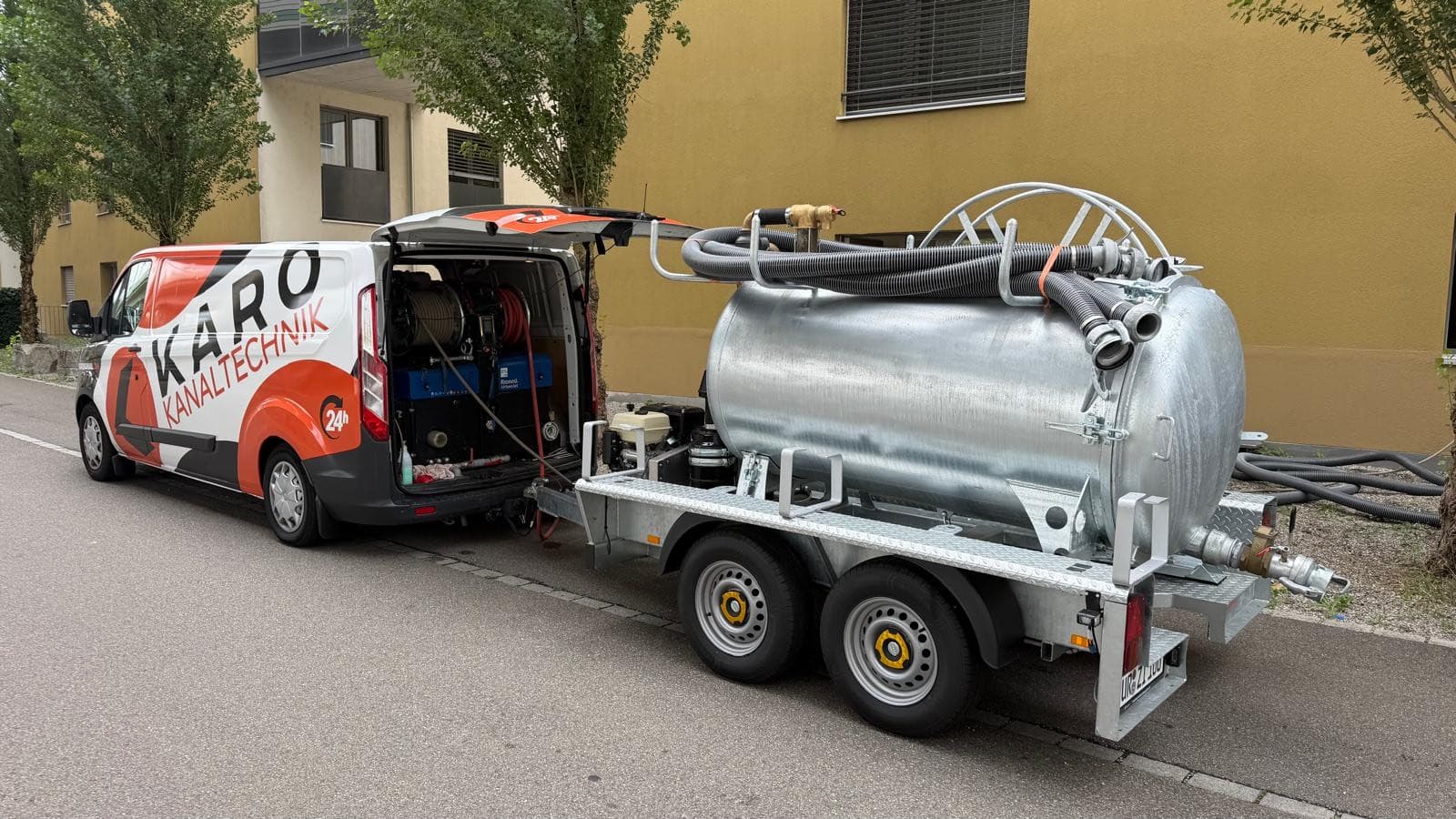
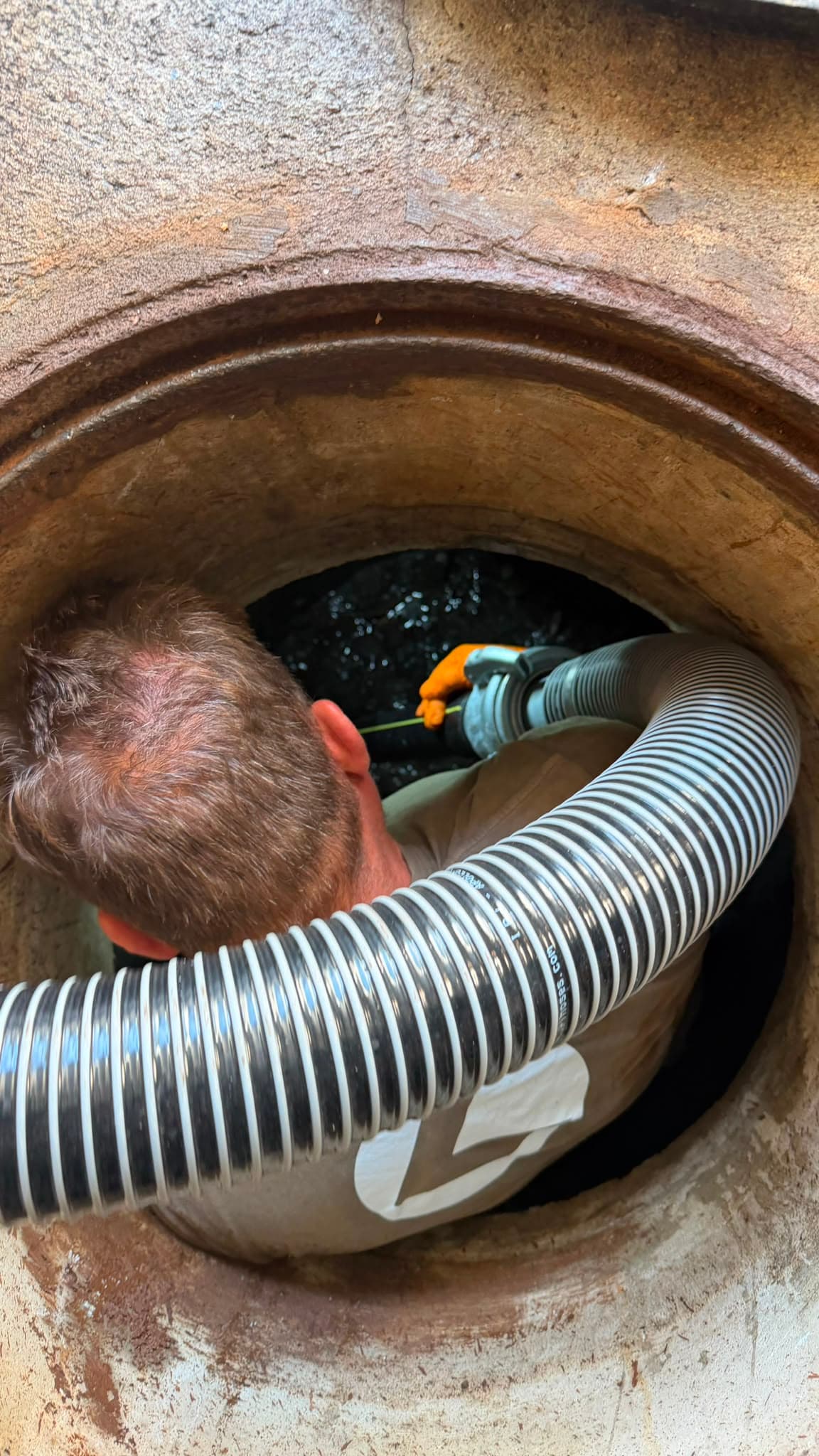
Cleaning is carried out with a vacuum tanker or a jet-vac combination. First, the grating or cover is removed and any leaf bucket is emptied. The team then sucks water and sludge out of the collection space, loosens stuck-on deposits with the high-pressure jet and jets the outlet pipe through to the next chamber.
At the same time, the structural condition is checked: are the dip pipe and grating present and intact, is the chamber watertight, have roots grown in? The extracted material is disposed of properly. The whole process usually takes only a short time per chamber, especially if several chambers on a property are cleaned in one job.
At Karo, such a job follows clear steps. First, we clarify by phone or using the drainage plan how many silt traps there are and where they are. On site, we secure the work area, lift the grating or cover and empty the leaf bucket. The jetting vehicle then sucks water and sludge out of the collection space. We loosen stuck material with the water jet, and the outlet pipe is jetted clear through to the next inspection chamber with chemical-free high-pressure water jetting at up to 200 bar.
Finally, we put the dip pipe back on and close the chamber. If the dip pipe is missing or damaged, we record this so that it can be replaced. If damage to the pipe is suspected, for example because the chamber fills up again unusually quickly or roots are growing out of the outlet, a CCTV drain survey follows. The footage is documented to SN EN 13508-2, so that owners and property management can see whether only cleaning or also rehabilitation is needed.
What owners can do themselves
Some things can be done without a specialist company. Keep the grating and inlet free of leaves, empty the leaf bucket after the autumn and check briefly after a thunderstorm that the water is draining away freely. If you lift the grating, you can also see whether the dip pipe is still in place. Scooping out the sludge at the bottom by hand, on the other hand, is laborious and rarely thorough, and the outlet pipe is left uncleaned.
It is important to know what does not belong in the silt trap. Because stormwater often goes into a watercourse or into the subsoil, paint residue, cement water, oil, cleaning products and detergents have no business being in it. For the same reason, washing the car on a yard whose drain leads into the stormwater pipe is problematic. Chemical drain cleaners do not help with a silted-up chamber: they do not dissolve sand and gravel, they only pollute the water.
How much does it cost to empty a silt trap?
Karo Kanaltechnik bills by time spent: CHF 160 per working hour plus a CHF 60 call-out fee, excl. VAT and materials. One hour on site therefore costs CHF 220 excl. VAT or CHF 237.82 incl. 8.1% VAT. If a CCTV check of the outlet pipe is added, the surcharge is from CHF 50. A typical drain cleaning job in a single-family home costs around CHF 150 to 400. All figures are guide values (±15%).
How long it takes depends on the number of chambers, how full they are and the length of the outlet pipe. If several silt traps, inspection chambers and pipes on a property are cleaned in the same job, the call-out fee is only charged once and the price per chamber falls. You can calculate the guide price for your property online or ask us directly.
Silt trap, inspection chamber and separator – the differences
An inspection chamber provides access to the pipe and has a continuous channel in which nothing is supposed to remain. The silt trap, on the other hand, is deliberately built so that material collects in it. Separators such as oil or grease separators go even further: they separate out specific substances in a targeted way and are subject to their own standards and servicing obligations.
In practice, the components are often combined, for example a sludge trap upstream of a mineral oil separator. For owners, it is important to know which chambers on the plot have which task. The drainage plan provides this information and helps to set up a suitable cleaning plan.
Who is responsible for the silt trap?
Silt traps on your own plot are part of the private property drainage. The owners are responsible for their maintenance – for rented properties and condominium ownership, usually via the property management. Road drains in public spaces, on the other hand, are maintained by the municipality. Exactly where the boundary lies and whether checks are mandatory is set out in the drainage regulations of the municipality concerned.
Anyone taking over a property should have the location of all silt traps shown to them on the drainage plan. Chambers that are covered over or overgrown in particular are often forgotten for years, until the first heavy rain shows that they are full.
At a residential development in Uster, a large puddle formed in front of the underground car park entrance after every heavy rain. The check showed that the three silt traps on the driveway were filled almost up to the grating with sand, grit and leaves, and that the material was already getting into the pipe. Karo sucked the chambers empty, jetted the outlet pipe through to the inspection chamber and agreed annual emptying in November with the property management. Since then, the water has drained away immediately again.