
Common causes of a burst pipe
The most common causes include ageing of the material and corrosion, especially in old cast-iron and steel pipes. Frost can also burst pipes when standing water freezes and expands. Ground movement, settlement and vibration from traffic put additional strain on pipes.
Another typical trigger is root ingress: fine roots get into joints and cracks, widen them and burst the pipe open over time. In wastewater pipes, chemical attack and mechanical wear from abrasive solids are added to this.
Signs of a burst pipe and how to locate it
Warning signs are unexplained water loss, damp patches on walls or floors, a drop in pressure, mould, sinking ground above the pipe or recurring blockages. In wastewater pipes, odour and backflow also point to damage.
To avoid unnecessary breaking open, the leaking point is located precisely – for example with acoustic leak detection, a smoke or pressure test and, above all, a CCTV drain survey. The camera shows the exact location, type and extent of the break and provides the basis for the right repair method.
Repairing a burst pipe
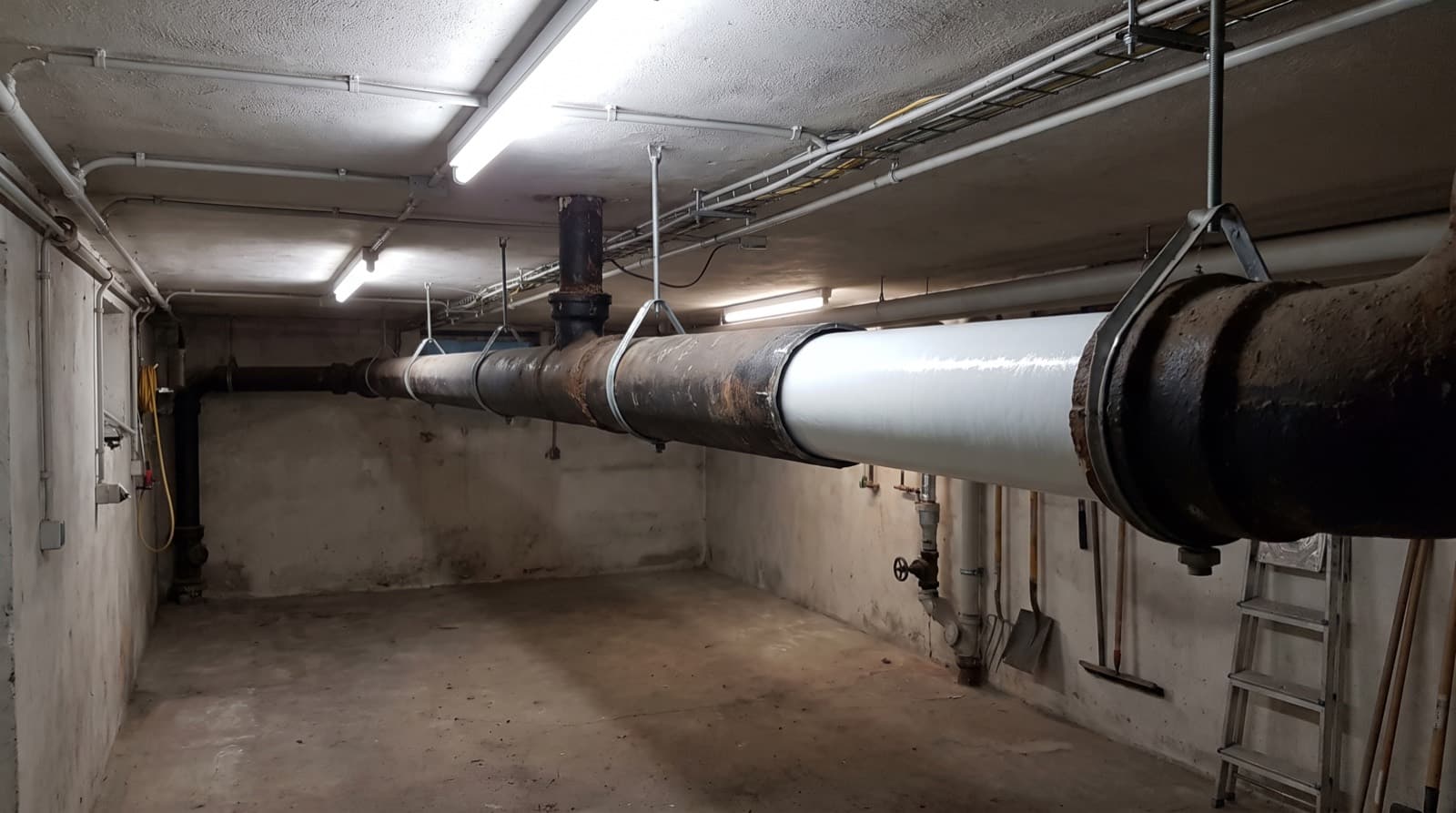
With localised damage, the break can often be repaired without digging – for example with a Pointliner or patch liner that seals the point from the inside. If the damage extends over a longer stretch, a continuous lining tube is an option.
Open-cut pipe replacement is only necessary if a pipe has completely collapsed or is badly deformed. After the repair, a leak-tightness test confirms that the pipe is watertight again. In the case of an acute burst pipe with water escaping, an emergency service helps quickly to limit consequential damage.
Preventing a burst pipe
Many burst pipes give warning long in advance. A regular CCTV drain survey detects cracks, root ingress, corrosion and leaking joints before they turn into a break. This makes it possible to carry out localised rehabilitation early and at low cost, instead of repairing major damage later.
Regular cleaning also helps to prevent damage, because it removes deposits and roots that harm the pipe in the long run. For pipes at risk of frost, good insulation helps. If you have a documented record of the condition of your pipes, you can plan rehabilitation work without an emergency.
In a terraced house in Kloten, damp cellar walls and a quiet but constant loss of water pointed to a hidden burst pipe. Instead of opening up large areas of wall, the leaking point was pinpointed acoustically and by camera: a crack in the underground drain caused by root ingress. The repair was carried out without digging using a Pointliner – the subsequent leak-tightness test confirmed that the pipe was watertight.