Precise leak detection

Leaking pipes cause high consequential costs. We locate leaks precisely and without damage – for a targeted and cost-effective repair.

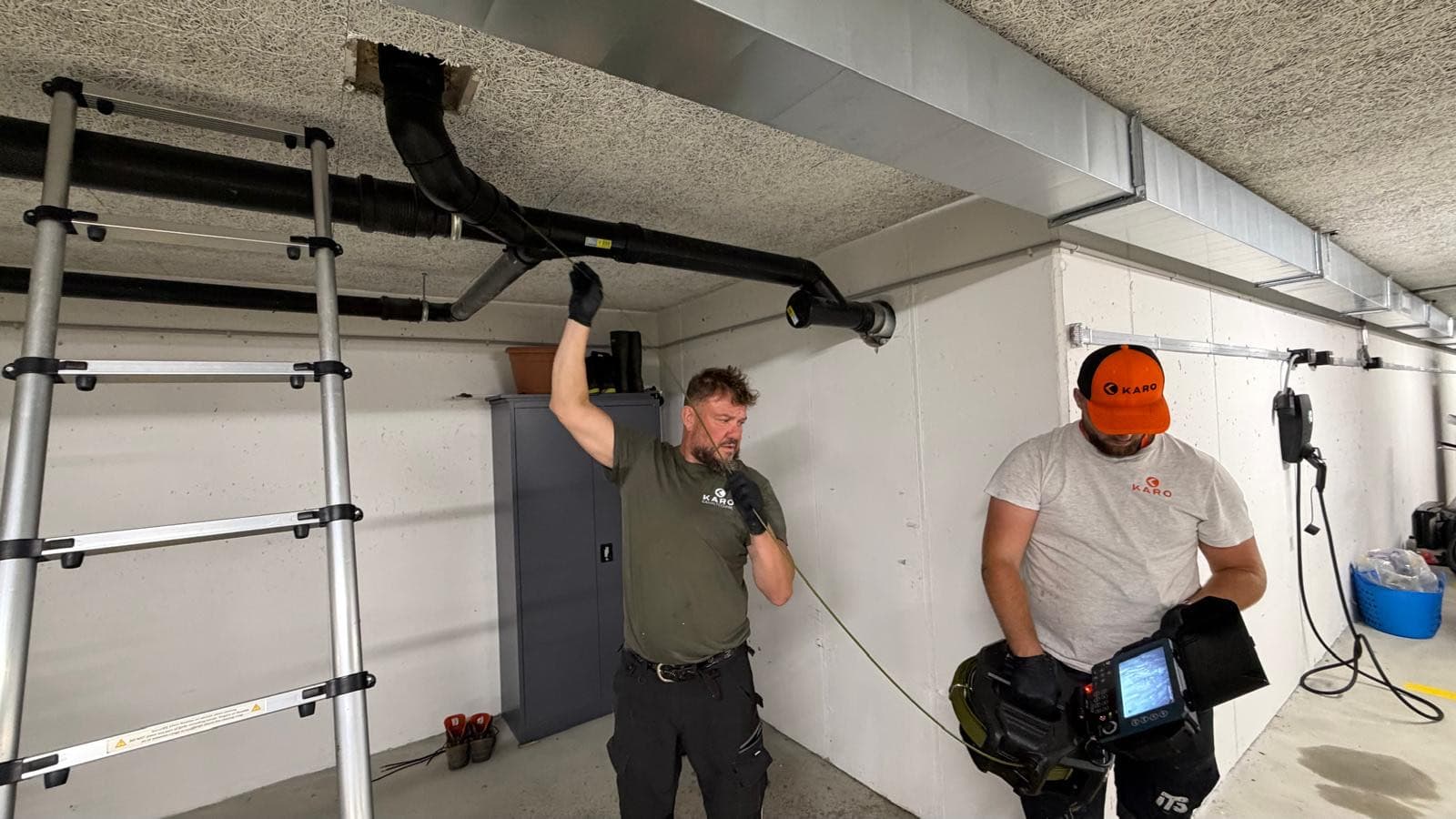
Karo Kanaltechnik technician checking a pipe on the camera monitor – CCTV survey to locate leaking points

In brief

Leak detection is finding leaking points in wastewater, drinking water or heating pipes without causing damage, before water loss, damp or undermining cause greater harm. Karo Kanaltechnik combines acoustic correlation measurement, tracer gas and thermography. After locating the leak, you receive a report with its position on the site plan and a repair recommendation.

Leak detection – finding damage before it gets expensive

Leak detection means finding a leaking point in a pipe without causing damage – in wastewater pipes and underground drains just as in drinking water and heating pipes. The aim is to pinpoint the leak so precisely that, later on, the pipe is only opened where the damage actually is, instead of breaking open walls, floors or the forecourt on suspicion.

A leak often goes unnoticed for a long time. Water travels along pipes, joints and layers of the floor and therefore often shows up somewhere quite different from where it escapes: as a damp basement wall, a stain on the ceiling, rising water consumption or a heating system that keeps losing pressure. With wastewater pipes, there may also be drain smells, subsidence in the garden or rats in the house. The longer a leak goes undetected, the greater the damp, the undermining and the consequential damage to the building fabric.

Which method is right depends on the pipe. We locate leaks in pressurised pipes such as drinking water and heating acoustically with correlation measurement, with tracer gas (forming gas) or by thermography. We inspect unpressurised wastewater pipes with the CCTV camera, test them for leak-tightness with air or water, or make incorrect connections and open points visible with a smoke test. Often it takes a combination of several methods to pinpoint the leak reliably.

After locating the leak, you receive a report with the position of the leak on the site plan, the method used and a recommendation for the most cost-effective repair – trenchless or conventional. For wastewater pipes, we document the camera findings in accordance with SN EN 13508-2. These documents are the basis for the repair and for the claim you submit to your insurer.

Our services at a glance

  • Acoustic leak detection with correlation measurement
  • Tracer gas leak detection (forming gas) for areas that are hard to access
  • Thermographic pipe locating and leak detection
  • Pressure testing and leak-tightness testing with air or water
  • CCTV drain survey for visual inspection of wastewater pipes
  • Smoke test for incorrect connections, odours and open pipe ends
  • Locating points where infiltration water enters drains
  • Pipe locating and route tracing
  • Report with site plan, photos and findings – also for your insurer
  • Repair recommendation and cost estimate

Pricing

per hour
CHF 160
call-out
CHF 60
CCTV survey
from CHF 50

Guide prices, excl. VAT.

We charge for leak detection by time and effort: CHF 160 per working hour plus a CHF 60 call-out fee, excl. VAT. If the CCTV camera is used, a surcharge from CHF 50 applies. We tell you the range before work starts – see the worked example below.

Areas of application

  • Wastewater pipes, underground drains and sewer pipes
  • Drinking water pipes and house connections
  • Heating pipes and underfloor heating
  • Rainwater pipes and drainage
  • Industrial process pipes

24/7 emergency service

You can reach us around the clock – including weekends and public holidays.

+41 43 588 12 08
Process

How it works

From enquiry to completion – transparent and structured.

1

Analysis & method

Where is there damp, pressure loss or a smell? We narrow down the area and choose the right method for your pipe.

2

Locating

Acoustics, tracer gas, thermography or camera: the leak is located without damage and marked on the surface.

3

Documentation

Position on the site plan, photos and measurement findings in the report – for wastewater pipes with camera findings in accordance with SN EN 13508-2.

4

Repair recommendation

You receive a recommendation for the most cost-effective repair – trenchless or conventional – and, on request, the quote for it.

Advantages

Why Karo Kanaltechnik?

Pinpoint accuracy

Correlation measurement narrows down the leak closely – even under buildings and floor slabs. Several methods confirm the result.

No damage

Locating the leak itself requires no digging or chiselling. The pipe is only opened for the repair – and only where the leak is.

Several methods

Acoustics, tracer gas, thermography, CCTV survey and leak-tightness testing – we combine the methods until the leak has been pinpointed.

Clear recommendation

You receive not just the location of the leak but a report with a site plan and a repair recommendation with a cost estimate.

FAQ

Frequently asked questions

With modern correlation measuring devices we narrow down the leak closely, even under buildings, floor slabs or in hard-to-reach areas. Depending on the pipe, we combine the acoustic measurement with tracer gas and thermography to confirm the result. This means that for the repair the pipe only has to be opened where the leak actually is, instead of breaking up whole floors on suspicion.

No, all our locating methods work without digging: acoustic correlation measurement, tracer gas, thermography and, for wastewater pipes, a CCTV drain survey. Only for the subsequent repair is the pipe opened at a single point if necessary, exactly where we mark it on the site plan in the report. For wastewater pipes, a trenchless repair with a patch liner is often possible.

Yes. After every leak detection job you receive a written report with the position of the leak on the site plan, the method used, photos or camera images (for wastewater pipes in accordance with SN EN 13508-2) and a repair recommendation. Whether damage is covered is decided by your insurer according to your policy; the report gives it the facts it needs.

We locate leaks in drinking water, wastewater, heating, rainwater and industrial pipes made of all common materials, whether plastic, copper, steel, cast iron or vitrified clay. Typical reasons are inexplicably high water consumption, damp in walls and floors, a loss of pressure in the heating system or a failed leak-tightness test on a wastewater pipe.

As a rule we can offer an appointment within 24 to 48 hours. The locating itself takes 1 to 4 hours, depending on the pipe network and method. In the event of acute water damage, first turn off the main stopcock and call the plumber; if it is then unclear where the concealed pipe is leaking, we will find the spot.

The cost depends on the effort, the size of the pipe network and the method used; you receive a quote in advance. As a rule it is well below the cost of digging on suspicion, which often opens up the wrong spot. You also receive a report with the position of the leak, which you can present to your insurer.

Enquire without obligation

Fill in the form – we will get back to you within 24 hours.

Subject / service *

Need help fast?

Our emergency team is ready around the clock – including Sundays and public holidays.

Methods

Which method finds which leak?

Pressurised pipes (drinking water, heating) and unpressurised wastewater pipes require different methods. In a drinking water pipe, a leak gives itself away through noise and pressure loss; in a wastewater pipe, which only carries water when in use, through cracks, displaced joints and infiltrating water in the camera image. We choose the method according to the type of pipe, accessibility and the pattern of damage – and combine methods until the point has been pinpointed.

Acoustic leak detection

Drinking water, heating, pressure pipes

Water escaping from a leak under pressure makes a noise. A ground microphone picks it up at the surface; the correlator records it at two points on the pipe and calculates the position of the leak from the difference in travel time.

Leak detection in the glossary

Tracer gas (forming gas)

Pressure pipes, areas that are hard to access

The drained pipe is filled with a harmless test gas made of hydrogen and nitrogen. The gas escapes at the leak and rises through the ground, screed or surfacing, where a detector picks it up – even with small leaks.

What is tracer gas?

Thermography

Hot water, heating, underfloor heating

A thermal imaging camera makes temperature differences on walls and floors visible. A hot water or heating leak shows up as a heat trace and narrows down the area before further targeted testing.

Thermography explained

CCTV drain survey

Wastewater pipes, underground drains and house connections

The camera travels through the pipe and shows cracks, fractures, leaking joints or root ingress on screen. Using the transmitter in the camera head, we mark the damaged point at its exact position on the surface.

CCTV drain survey in the glossary

Leak-tightness test

Wastewater pipes, manholes

A sealed-off section is pressurised with air or water. If the pressure drops, the pipe is leaking. This proves a leak and narrows it down section by section – and after the repair, it proves that the pipe is leak-tight.

Leak-tightness test in the glossary

Smoke test

Wastewater, incorrect connections, drain smells

Non-toxic smoke is blown into the wastewater pipe and comes out wherever it leaks, ends open or is incorrectly connected. This is how we find sources of odours and entry points for rats. It does not replace a standardised leak-tightness test.

Smoke test in the glossary

Process and methods in detail in our guide: Leak detection – methods and how the search for leaks works.

Water damage

Water damage: find the cause first

Water damage can only be repaired permanently once it is clear where the water is coming from. Drying out, replastering or replacing floors while the pipe keeps leaking means the damage will come back. That is why leak detection comes first – before drying and before the repair.

If a pipe is leaking and the wall is damp, the water may come from the drinking water or heating pipe, from a leaking wastewater pipe, or seep in from outside. We establish which pipe is affected and locate the leak with the appropriate method. In the event of an acute burst pipe: close the main water valve, switch off the power in the affected area if water reaches electrical installations, and call us.

What to do after a burst pipe and who pays is explained in our guide Burst water pipe: what to do – and who pays?

+41 43 588 12 08

Signs

Signs of a leak in the pipe

  • Damp patches on walls, ceilings or the basement floor, flaking plaster
  • The water meter keeps running although no water is being used
  • Heating keeps losing pressure and has to be topped up
  • Musty smell, mould or salt efflorescence in the basement
  • Drain smell in the house or garden, rats in the building
  • Subsidence in the lawn or on the forecourt above a pipe

Water that does not belong in the foul water sewer – such as groundwater entering through leaking pipes or incorrectly connected drainage – is called infiltration water; it puts a strain on the sewer and the wastewater treatment plant. A CCTV drain survey shows where it enters, a smoke test shows incorrect connections.

Documentation

Report for your insurer

With water damage from a pipe, the insurer wants to know where the damage occurred and what caused it. After every leak detection job, you receive a written report that you can attach to your insurance claim and that allows the repair to be targeted at exactly the right point.

Whether and to what extent damage is covered is decided by your insurer on the basis of your policy. Our report provides the verifiable basis for this. For wastewater pipes, we also carry out the rehabilitation after locating the leak.

  • Position of the leak

    Position on the site plan, marked on the surface – with reference to a manhole, wall or fixed point.

  • Method and measurement findings

    Which method was used and what it showed, clear to third parties.

  • Photos and camera images

    For wastewater pipes with camera findings in accordance with SN EN 13508-2: type, position and extent of the damage.

  • Repair recommendation

    Trenchless or conventional, with a cost estimate for the repair.

Prices

How much does leak detection cost?

We charge by time and effort: CHF 160 per working hour plus a CHF 60 call-out fee, excl. VAT. If the pipe is inspected with the CCTV camera, a surcharge from CHF 50 is added.

How long locating the leak takes depends on the type of pipe, its length and accessibility, and on the number of methods required. A single leak in an accessible pipe is found more quickly than a small leak under a screed floor. We tell you the range before work starts.

Measured against the consequential costs, precise locating pays off: the pipe is only opened where the leak is – instead of at several points on suspicion.

Worked example

One hour of leak detection, including call-out.

1 working hourCHF 160.00
Call-out (one-off)CHF 60.00
Total excl. VATCHF 220.00
VAT 8.1%CHF 17.82
Total incl. VATCHF 237.82

Guide price. We charge for the actual work; CCTV survey as a surcharge from CHF 50, we quote for the repair separately.