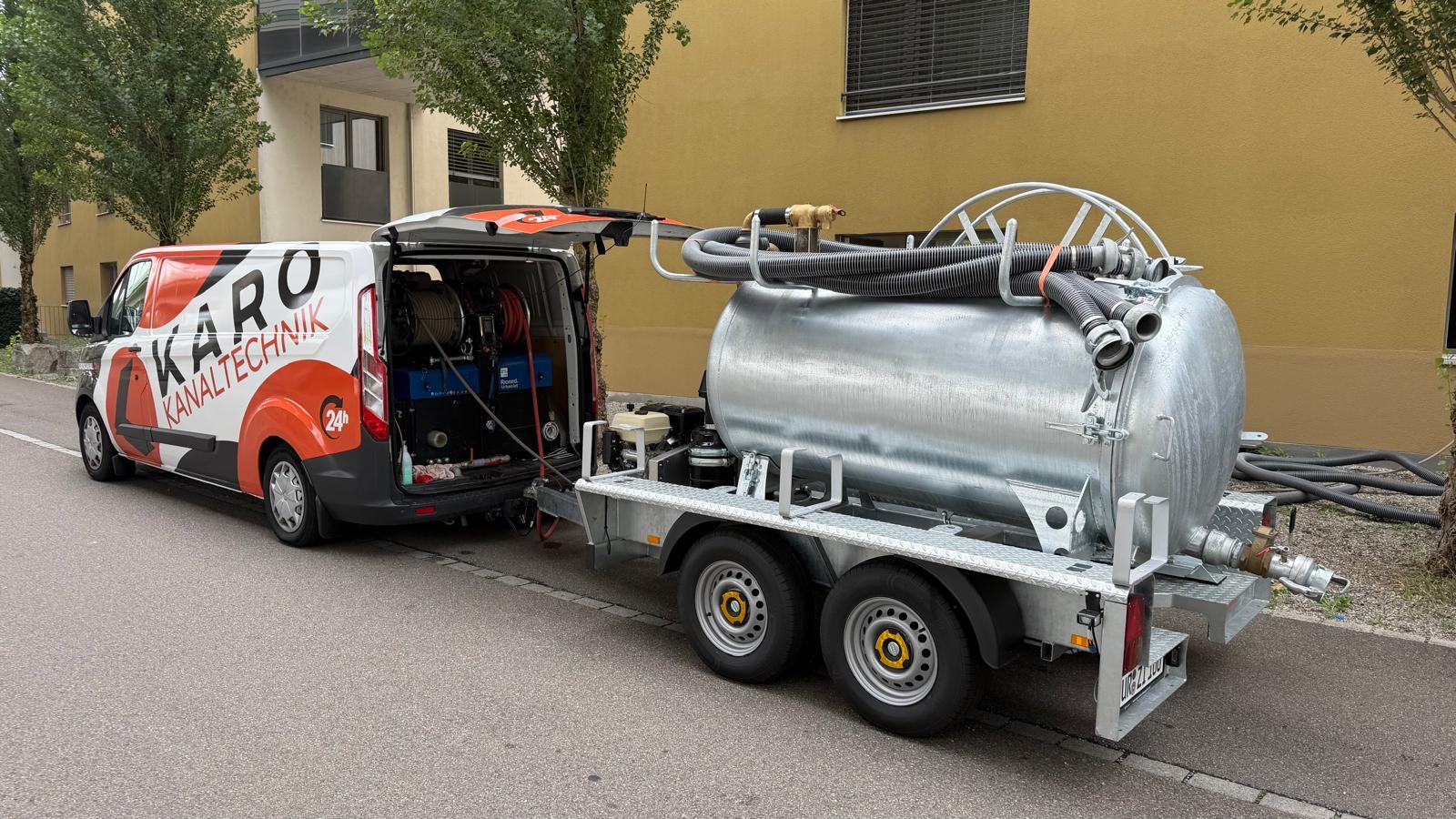
A jetting truck, also known as a jetting vehicle, is a specially equipped lorry that carries all the technology for drain cleaning on board: a powerful high-pressure pump, a large water tank, kilometres of high-pressure hose on a reel and, in combination vehicles, also a suction unit with a sludge tank. This allows the vehicle to flush pipes with water under high pressure and vacuum up the loosened dirt straight away. It is the mobile powerhouse behind every professional drain-cleaning job.
What are the main components of a jetting truck?
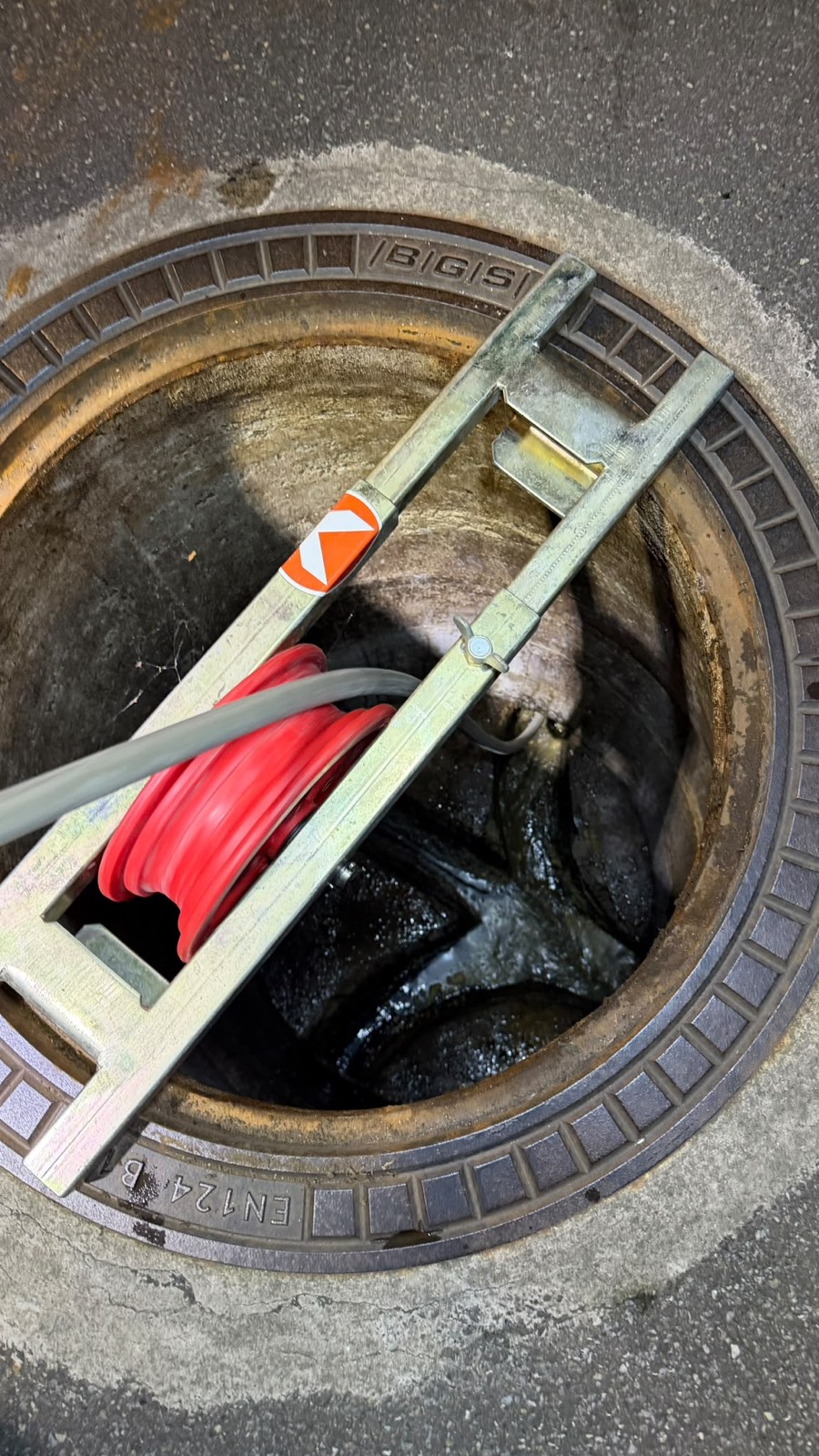
The vehicle can be divided into several assemblies. Depending on its size, the water tank holds several thousand litres of fresh water and supplies the cleaning with flushing water. The high-pressure pump generates the operating pressure of around 120 to 200 bar, which loosens the deposits via the nozzle. The hose reel carries the reinforced high-pressure hose, which is often 60 to over 120 metres long and is reeled in and out by motor.
A combination vehicle also has suction technology: a powerful suction blower draws the foul water and sludge through a thick suction hose into a separate sludge tank. Modern vehicles also have water recovery, which filters the extracted water and makes it usable again as flushing water, considerably reducing fresh water consumption.
How do flushing and vacuuming work together?
The principle is a cycle. The drain is flushed via the high-pressure hose and the nozzle, with the hose moving forward by itself thanks to the recoil force and cleaning the pipe wall as it is pulled back. The loosened dirt collects in the manhole, where the suction hose picks it up. In combination vehicles, both processes run in parallel: while flushing takes place at the front, the vehicle vacuums up the resulting sludge at the back. This keeps the drain clear and the dirt is disposed of properly.
The vehicle is operated from a control panel on the vehicle, where the technician regulates the pressure, water volume and hose feed. Experienced operators can hear and feel from the behaviour of the hose whether the nozzle is running freely or has hit an obstacle, and adapt the way they work accordingly. This interplay of powerful technology and experience ensures that even stubborn blockages are cleared without damaging the pipe. The combination of flushing and vacuuming makes the vehicle the most important tool in modern drain cleaning.
For this cycle to run smoothly, safety and environmental protection are always kept in view. The hoses are under high pressure, which is why trained staff, protective equipment and secured work areas are a matter of course. Care is also taken to ensure that no foul water escapes uncontrolled and that the extracted contents remain entirely in the sludge tank until they are taken for disposal.
What types of vehicle are there?
Depending on the area of use, the vehicles differ in size and equipment. Pure jetting vehicles concentrate on high-pressure cleaning and are suitable for pipes where the dirt can flow away to the next manhole. Combination vehicles combine flushing and vacuuming and are the all-rounders for drains, manholes and pits. For narrow old-town lanes or underground car parks, there are compact small jetting vehicles based on vans, which can get to places where large lorries cannot fit through.
For large public sewers, there are also high-performance vehicles with particularly powerful pumps and large tanks. The choice of the right vehicle depends on the pipe diameter, access and type of soiling, which is why an experienced firm should have a versatile fleet.
Why is water recovery important?
Modern jetting vehicles with water recovery, often referred to as recycling vehicles, filter the extracted foul water directly on board and feed it back into the flushing process. This has several advantages at once. Fresh water consumption falls drastically, as new water does not have to be topped up constantly. This extends the working time without interruption, and the vehicle can also work where there is no water supply point nearby.
Ecologically, recovery means considerably lower resource consumption, which is particularly significant for large cleaning projects. The filtering process reliably separates out solids, so that the treated water achieves the same cleaning effect as fresh water. For clients, this technology is often cheaper, because there are fewer trips for water and shorter working times.
What else is the suction technology used for?
The suction unit of a combination vehicle can do far more than just pick up flushing sludge. It empties silt traps, gully pots and inspection chambers, empties soakaway pits and slurry pits and vacuums up sand, gravel or liquids after accidents. The collected contents are transported in the sludge tank and then taken properly to an approved disposal facility. This makes the jetting vehicle a central tool not only for cleaning but also for disposal.
How is a job prepared?
Before the actual job, the team gets an overview of the local conditions. These include the accessibility of the manholes, the pipe diameter, the pipe material and the type of soiling. On the basis of this information, the appropriate vehicle is selected and fitted with the right nozzles. Where space is tight, a compact vehicle is used; for large sewers, a high-performance vehicle with the corresponding pump and tank capacity.
Disposal also needs to be prepared: the specialist firm calculates how much sludge and foul water will be produced and plans transport to the approved disposal facility. This preparation ensures that the job runs efficiently and that there are no unnecessary waiting times or additional trips, which ultimately reduces the costs for the client.
Why is professional equipment worthwhile?
The technology of a jetting truck achieves a cleaning performance that is impossible with hand-held equipment. The controlled high pressure cleans the entire pipe wall, the suction technology removes the dirt completely, and documentation by camera proves the result. At the same time, modern technology with water recovery conserves resources. For homeowners, property management companies and businesses, this means thorough, environmentally sound and documented drain cleaning from a single source.
What does a job with a jetting truck cost?
The use of a jetting truck is usually charged according to time and effort. As a guide, there is an hourly rate of around CHF 160 per hour plus a flat call-out fee of about CHF 60, with costs varying by plus/minus 15 per cent depending on the vehicle size and the quantity to be disposed of. A CCTV drain survey can be added from about CHF 50. A binding quote before the job provides transparency about the total amount including proper disposal. If several tasks are bundled into one job, such as cleaning, a CCTV drain survey and emptying manholes, the proportionate call-out and set-up costs fall noticeably, which makes the job more economical for the client.
Do you need thorough drain cleaning or a pit emptied? Karo Kanaltechnik turns up with modern jetting and combination vehicles and also takes care of proper disposal. For acute problems, our 24/7 emergency service can be reached at any time on +41 43 588 12 08.