What is a slurry pit?
A slurry pit is a watertight tank made of concrete or plastic that collects liquids and releases nothing to the outside. Everything that flows in stays there until the pit is sucked out or the contents are put to use. The German term is searched for in many spellings (Jauchegrube, Jauchgrube, Jauche Grube or Jauchergrube), but it always means the same sealed collection tank.
In agriculture, liquid manure and slurry pits collect liquid farmyard manure until it is spread on the fields as fertiliser. The pits must be watertight and offer enough volume so that no nutrients get into the groundwater.
Outside agriculture, the term used is a sealed holding tank with no outlet: properties with no connection to the public sewer system – such as remote houses, alpine huts or holiday homes – collect their domestic wastewater in it. In everyday speech, this tank is also often called a ‘slurry pit’. For owners, the same applies in both cases: the pit must stay watertight, must not overflow and must be emptied in good time.
Where does the word ‘liquid manure’ (Jauche) come from?
Liquid manure refers to the liquid fraction from livestock farming, essentially urine with water and few solids. Slurry, on the other hand, is a mixture of dung, urine and water. Because modern livestock buildings mostly produce slurry rather than pure liquid manure, the words have become largely interchangeable in everyday use – in Switzerland, you mainly hear ‘slurry pit’ (Güllengrube) or, in dialect, (Güllenloch).
Slurry pit, liquid manure pit, manure pad: the terms
Several terms are used around the slurry pit, and they are often confused. The overview shows what goes into which tank and what it is intended for. What matters for maintenance is always whether a structure has to be watertight or whether it deliberately releases water.
| Term | What goes into it | Watertight or permeable? |
|---|---|---|
| Liquid manure pit | Liquid manure: urine and water with few solids | Watertight, no outlet |
| Slurry pit / slurry tank | Slurry: dung, urine and water, often with an agitator | Watertight, no outlet |
| Manure pad (manure slab) | Solid manure; the seepage liquid is drained into a liquid manure or slurry pit | Paved, watertight slab |
| Sealed holding tank | Domestic wastewater from a property with no sewer connection | Watertight, no outlet |
| Soakaway pit | Rainwater or already treated water | Deliberately permeable |
The difference from a soakaway pit in one sentence
The slurry pit stores and is sucked out; the soakaway pit releases water into the ground through permeable walls and a permeable base. In Switzerland, untreated foul water must not be allowed to soak away; soakaway pits used to be used for this, became choked with sludge and overflowed. You will find the detailed comparison of design, distinguishing features and cleaning in the guide ‘Slurry pit vs. soakaway pit: difference and function’ (linked at the bottom of this page) and in the glossary entry on soakaway pits.
Obligations in Switzerland: water protection, watertightness, inspection
The legal basis is the Federal Act on the Protection of Waters (Waters Protection Act, GSchG, SR 814.20). Under Art. 15 GSchG, the owners of storage facilities for farmyard manure must ensure that they are properly built, operated, serviced and maintained; the competent authority is responsible for periodic inspection. For farms that keep livestock, Art. 14 para. 3 GSchG requires storage facilities with a capacity of at least three months.
Watertightness is the central requirement: a leaking pit releases nutrients and germs into the soil and groundwater without anyone noticing. How often and by which method a pit has to be tested is regulated by the cantons. Binding information is available from the cantonal office for water protection or agriculture – ask there before you build, convert or rehabilitate a pit.
For domestic wastewater, the principle of mandatory connection applies: within the area served by public sewers, polluted wastewater must be discharged into the sewer system (Art. 11 GSchG). A sealed tank with no outlet is therefore mainly common where there is no connection. Whether domestic wastewater from a farm may be used together with the slurry is regulated by Art. 12 para. 4 GSchG; the canton decides whether the conditions are met.
Safety: slurry gases are life-threatening
Gases such as hydrogen sulphide, ammonia, carbon dioxide and methane form in liquid manure and slurry pits. Hydrogen sulphide is heavier than air, collects at the bottom of the pit and is released especially when the contents are stirred. So never climb into a pit and do not lean over the open hatch. Work inside the pit belongs in the hands of specialists with gas measurement, ventilation and safety equipment.
Emptying and cleaning: the process
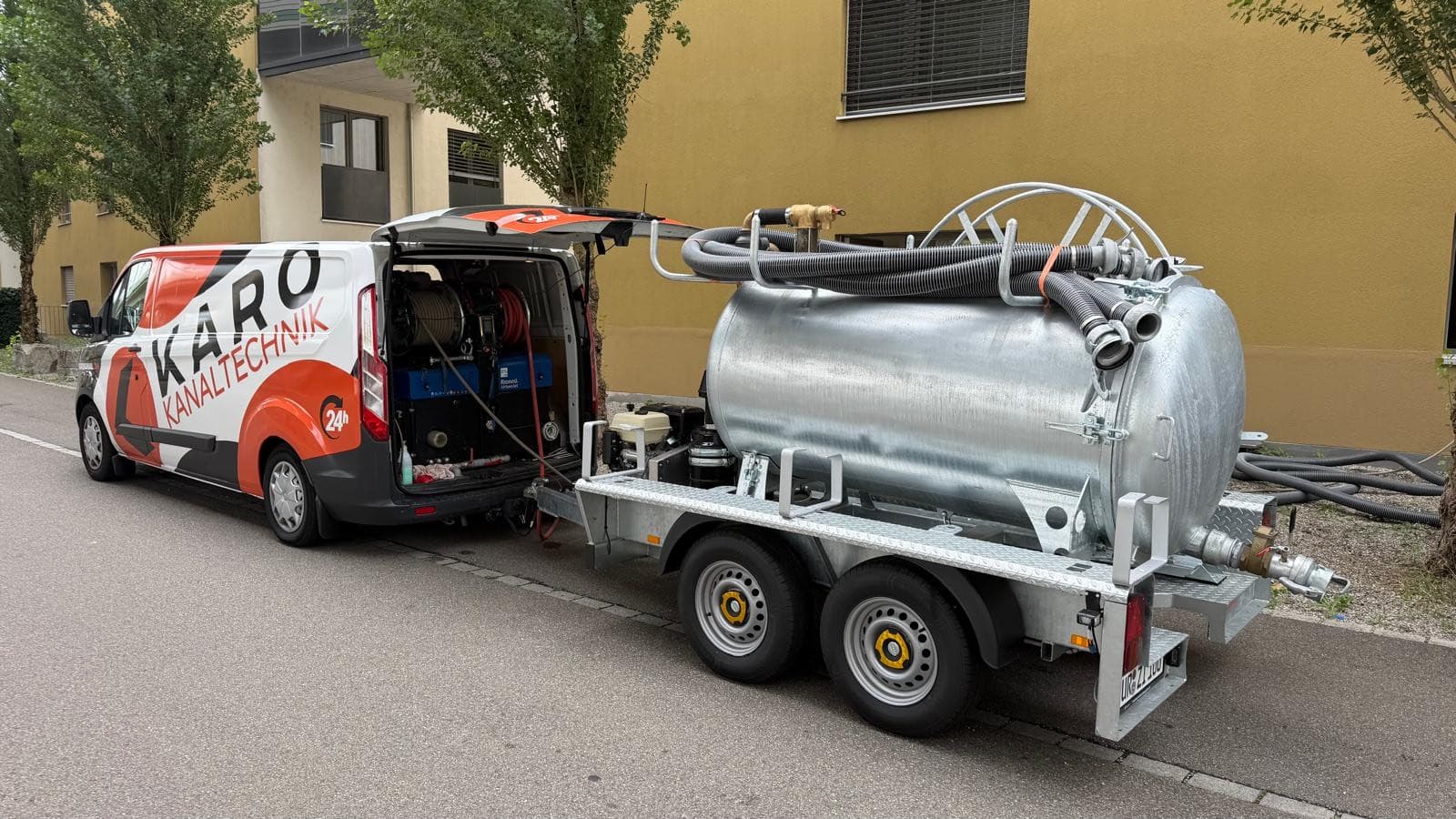
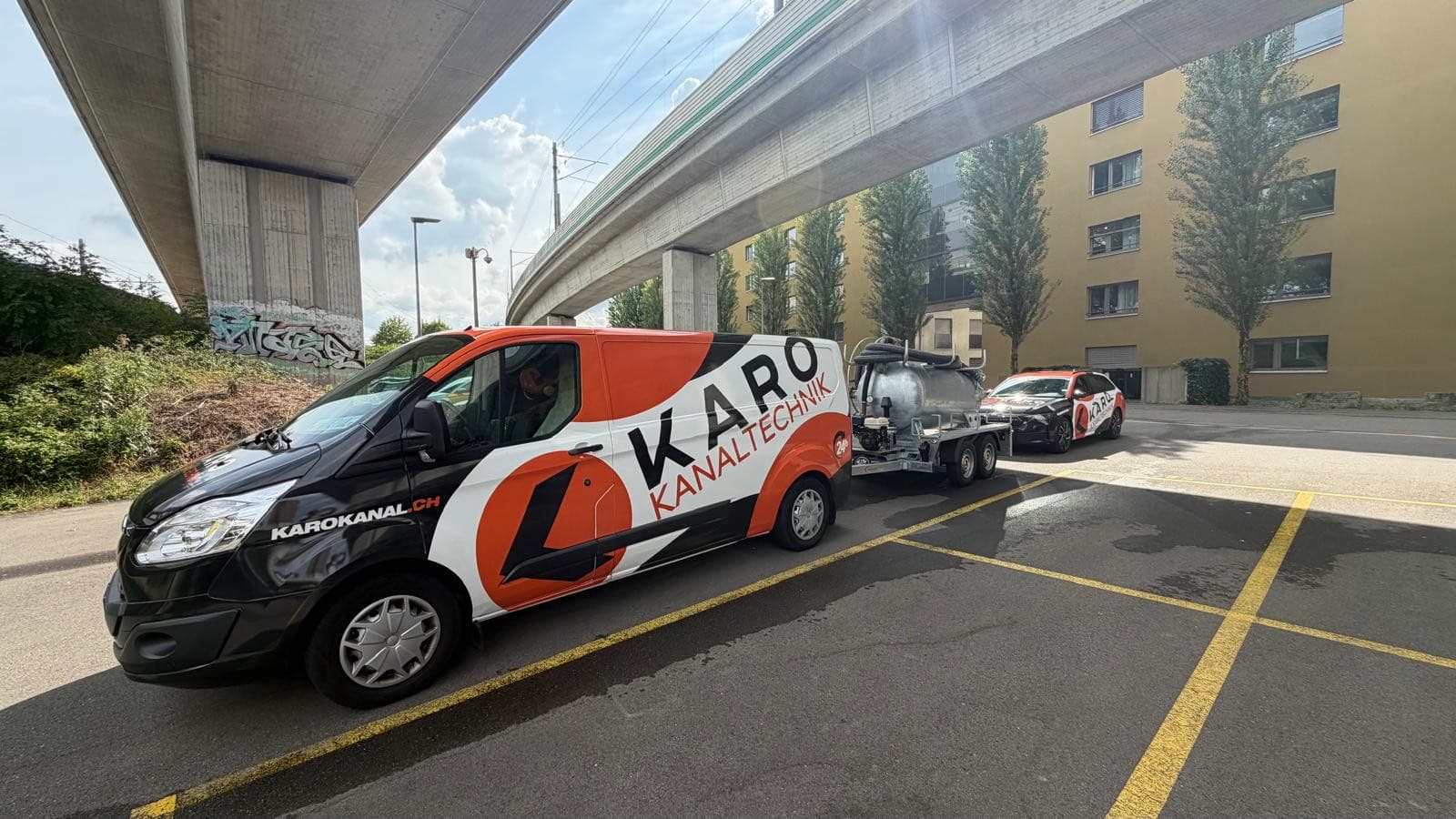
Before spreading and during maintenance work, the pit is emptied with the vacuum tanker. Deposits and floating layers are removed at the same time, so that the usable volume is maintained.
The vacuum tanker arrives, sucks out the contents completely and removes stuck-on deposits. The contents are disposed of properly or – in the case of slurry – passed on for agricultural use.
Karo Kanaltechnik documents the emptying and, if required, issues a certificate of disposal so that the legal requirements are met.
Step by step
1. Assessment: size of the pit, fill level, contents (slurry, liquid manure or domestic wastewater) and vehicle access. This determines the duration and the disposal route.
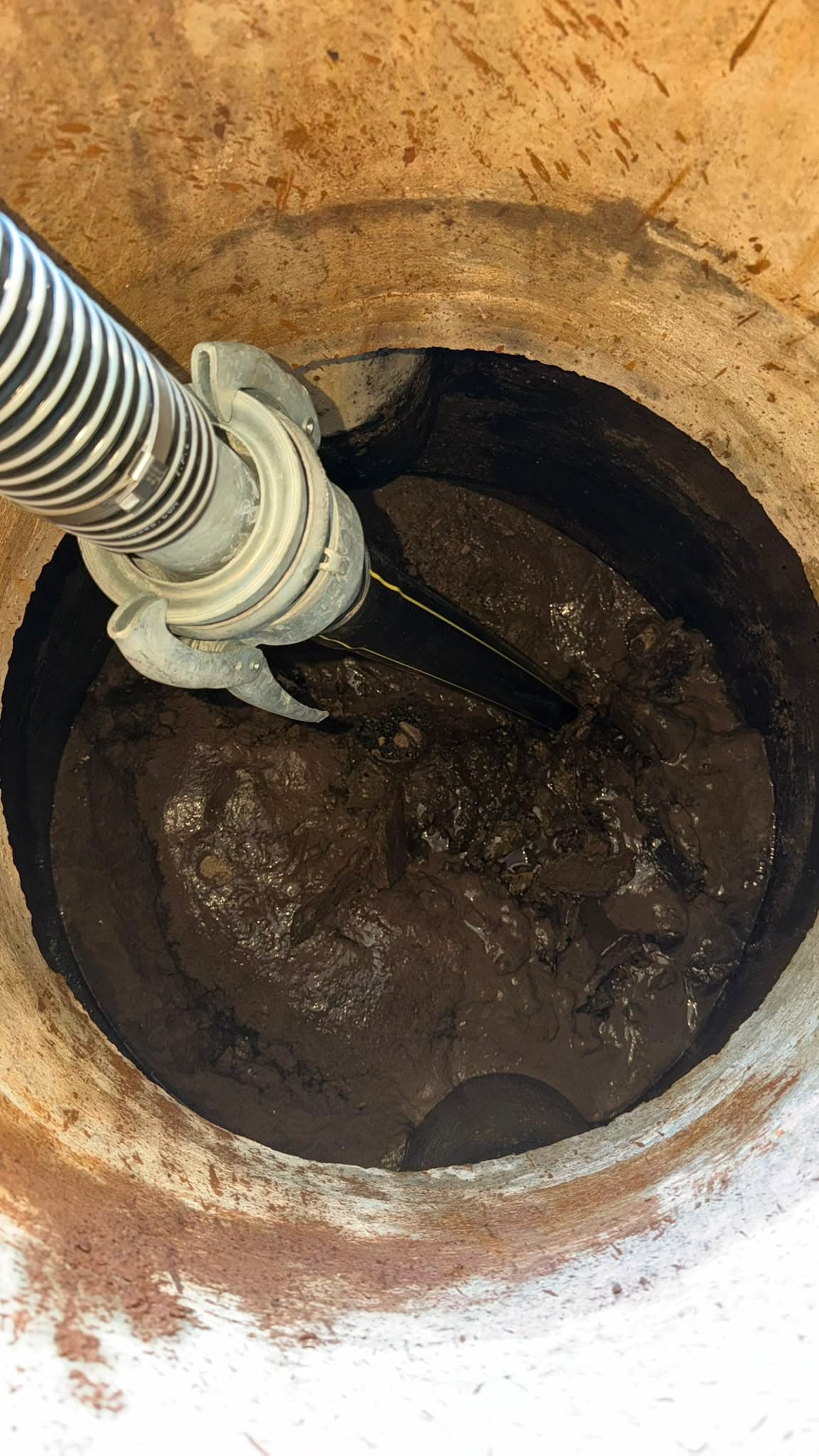
2. Suction: the liquid contents and the settled bottom sludge are taken up with the suction hose.
3. Loosening layers: hardened floating crusts and sunken layers are loosened with chemical-free high-pressure water jetting at up to 200 bar and also sucked out.
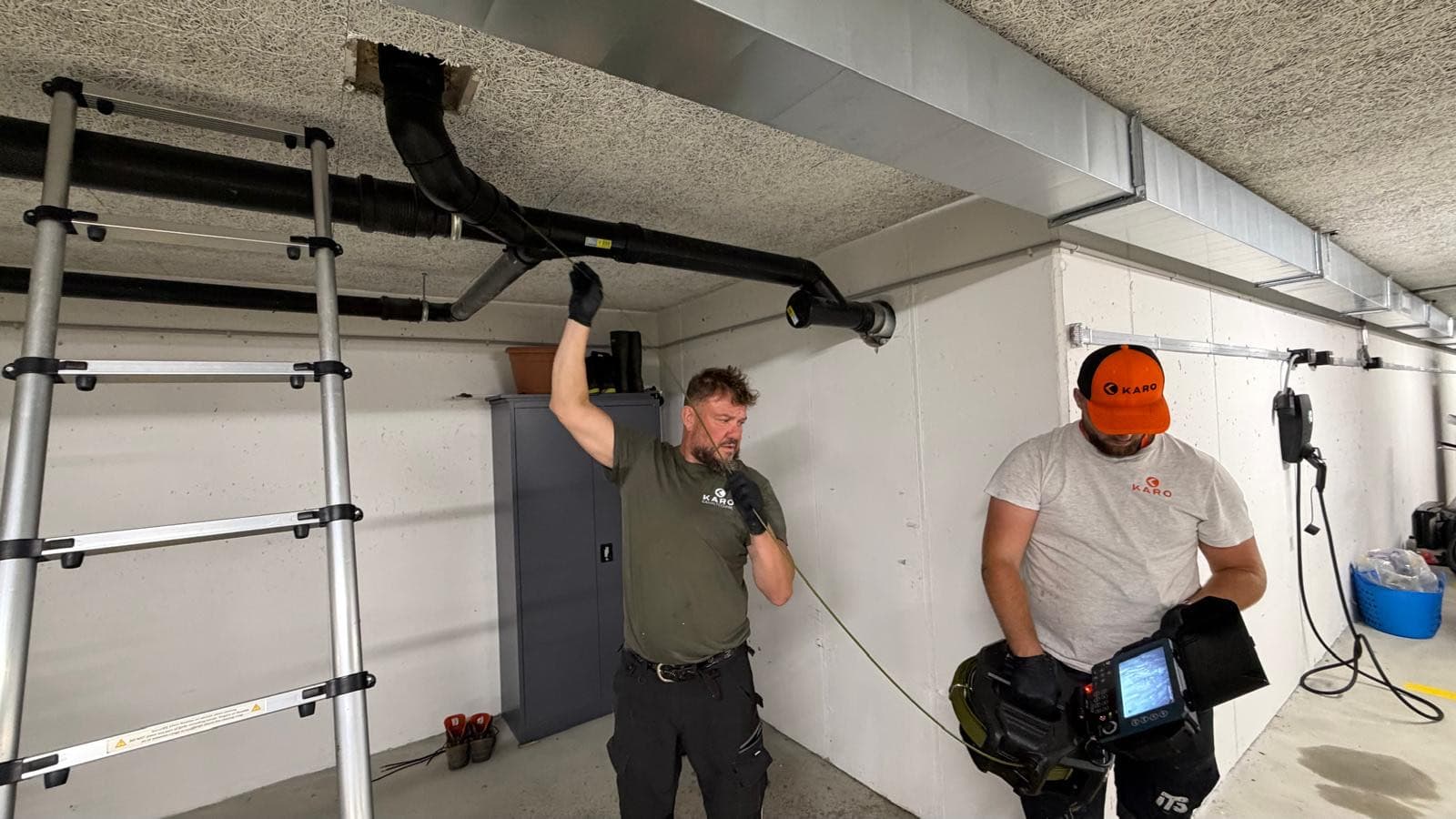
4. Inspection: once the pit is empty and clean, the walls, joints and connections can be assessed. If needed, we examine the inlet pipes with the drain camera and document the findings to SN EN 13508-2.
5. Disposal and certificate: the contents go to disposal by an approved route or to agricultural use; on request, you receive a written certificate.
How often does a slurry pit have to be emptied?
There is no fixed interval. In agriculture, storage capacity, livestock numbers and spreading times set the pace. With a sealed household tank, only the fill level counts: it must be emptied before it is full, because it must never overflow. Regardless of this, a thorough clean is worthwhile as soon as a thick floating layer or a lot of bottom sludge has formed, and always before a leak-tightness test or rehabilitation.
Costs: how much does it cost to empty a slurry pit?
Billing is based on time spent. At Karo Kanaltechnik, working time costs CHF 160 per hour, plus a call-out fee of CHF 60 (prices excl. VAT). The cost of disposing of the extracted material depends on the quantity and type and is shown in the quote. A camera inspection of the pipes costs a surcharge from CHF 50.
Worked example: one hour of work plus the call-out comes to CHF 220 excl. VAT or CHF 237.82 incl. 8.1% VAT. Each additional hour costs CHF 160. How long emptying takes depends mainly on the size of the pit, the fill level and how hard the deposits are – we prepare a binding quote after the assessment.
| Item | Karo Kanaltechnik rate |
|---|---|
| Working time | CHF 160 per hour, excl. VAT |
| Call-out | CHF 60 flat rate, excl. VAT |
| Camera inspection of pipes | Surcharge from CHF 50 |
| Disposal | By quantity and type, shown in the quote |
| Example: 1 hour + call-out | CHF 220 excl. / CHF 237.82 incl. 8.1% VAT |
Rehabilitation if the pit leaks
Signs of a leaking slurry pit are a fill level that drops without emptying, wet or strikingly green patches in the surrounding area, visible cracks and spalling on the walls, or a smell in places where there should be none. Conversely, a fill level that rises faster than expected can point to infiltration water getting in.
Rehabilitation always starts with emptying and cleaning, because damage can only be assessed on a clean wall. After that, the findings decide: smaller cracks and leaking joints can be sealed or the inner surfaces coated, much as with manhole rehabilitation. If the structure is badly damaged, replacing the pit is often the more economical solution. We rehabilitate leaking inlet pipes trenchlessly with a CIPP liner or patch liner.
Karo Kanaltechnik provides a warranty of up to 10 years on rehabilitation work. Whether rehabilitating or rebuilding the pit requires a permit is something to clarify in advance with the municipality or canton.
A farmer in the Zurich Oberland has Karo Kanaltechnik check his slurry pit before spreading. The vacuum tanker removes the hardened floating crust and the bottom sludge, so that the pit has its full capacity again and the agitator works properly. Because the walls are exposed after cleaning, it also becomes clear whether the joints and connections are still watertight – the basis for the next periodic inspection by the competent authority.