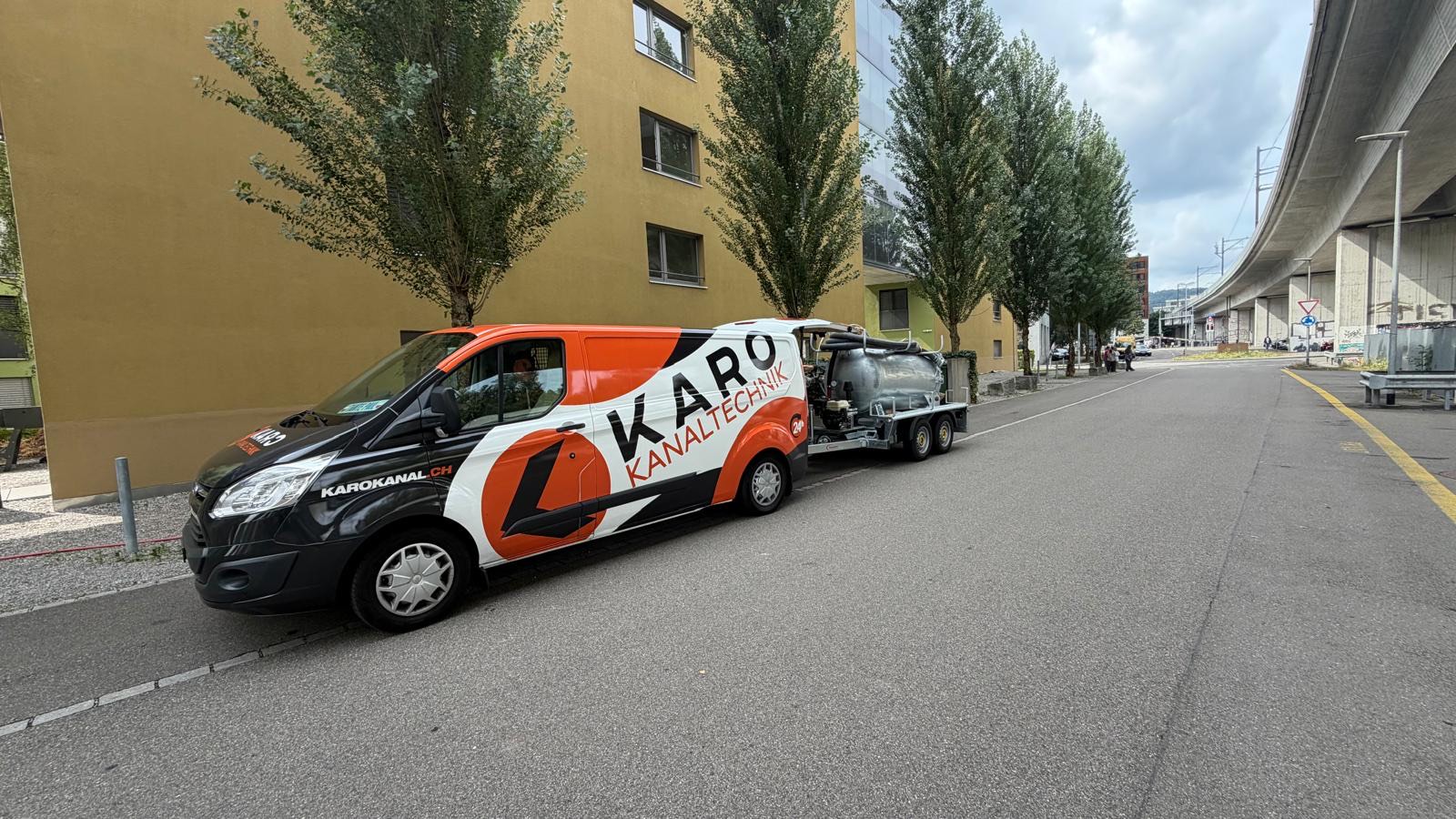
You clean a soakaway pit by vacuuming out the settled sludge and flushing the permeable walls and the base clear with high-pressure jetting, so that the water can once again seep into the ground unhindered. Over time, fine sludge, sand and organic material build up on the infiltration surfaces and increasingly seal them. Without regular cleaning, the pit loses its function, backs up and can lead to waterlogging and odours. As a guide, a soakaway pit should be checked every one to three years and cleaned if necessary. The cleaning is carried out by a specialist firm with a combination vehicle, which combines vacuuming and high-pressure jetting in a single operation, so that the pit is fully back in service the same day.
Why does a soakaway pit silt up?
The principle of the soakaway pit is based on water draining into the soil through the porous walls and the gravel base. This very permeability is its weak point: fine suspended solids, sand and biological sludge lodge in the pores and gradually form a sealing layer. This is known as colmation. The more this layer builds up, the more slowly the water seeps away, until the pit finally overflows. Roots from the surrounding area can also grow into the pit and block it further.
How can I tell that cleaning is due?
There are clear warning signs. If the water level in the pit rises visibly or water stands in it even though there is no inflow, infiltration is impaired. Waterlogged areas around the pit, slow drainage of connected pipes or an unpleasant smell also indicate that action is needed. If you notice such signs, you should have the pit checked by a specialist firm before backflow occurs.
It makes sense not to wait for these symptoms but to have the pit checked at regular intervals. A quick look into the shaft is often enough to assess the fill level and the amount of settled sludge. If there is a significant layer of sludge or a high water level, cleaning is due. This way the ideal time can be determined before infiltration fails completely.
How does the cleaning work step by step?
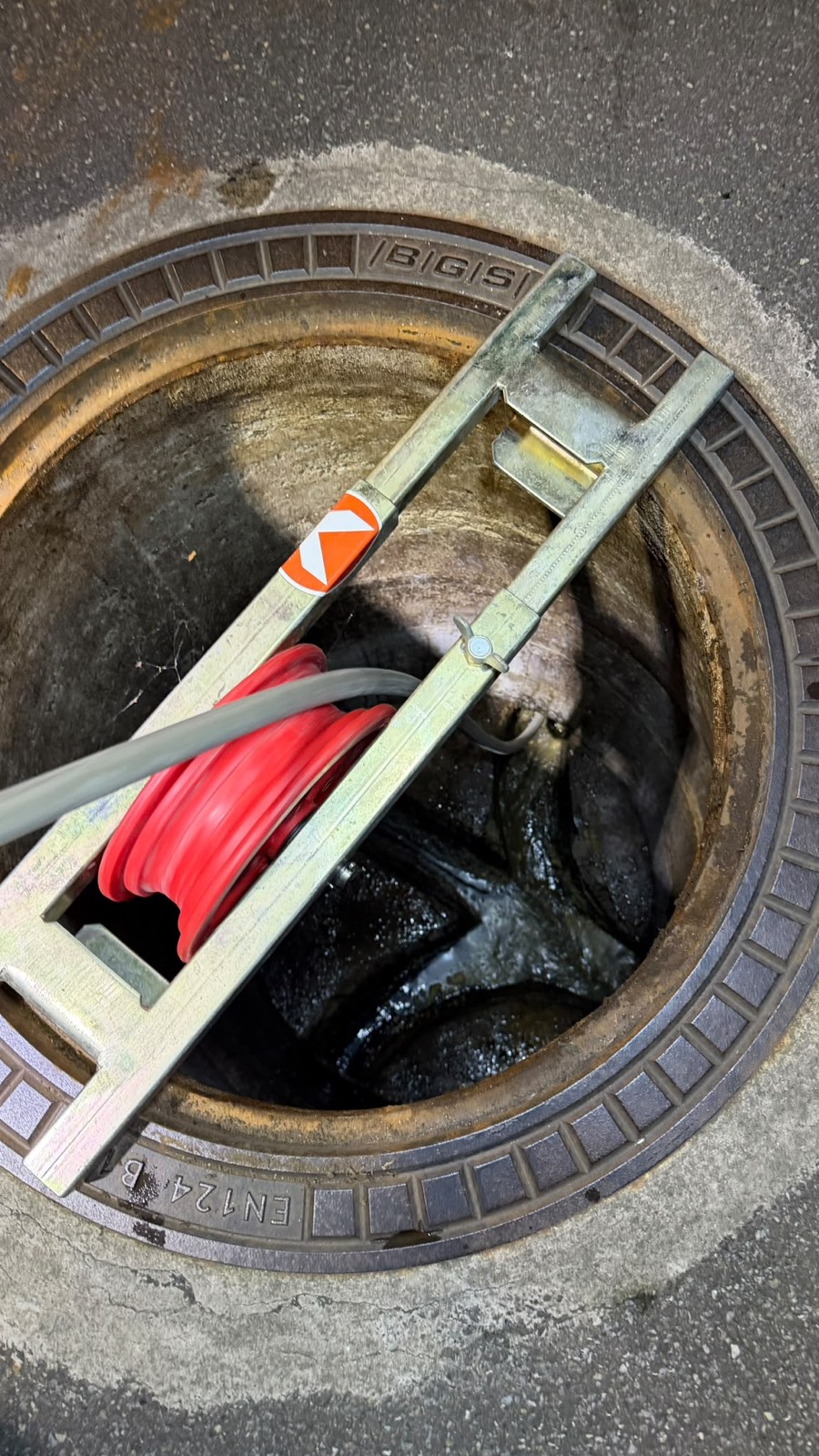
First, the technician opens the cover and gets an overview of the fill level and condition. The liquid contents and the settled sludge are vacuumed out completely with the suction hose of a combination vehicle. This exposes the infiltration surfaces so that they can be assessed.
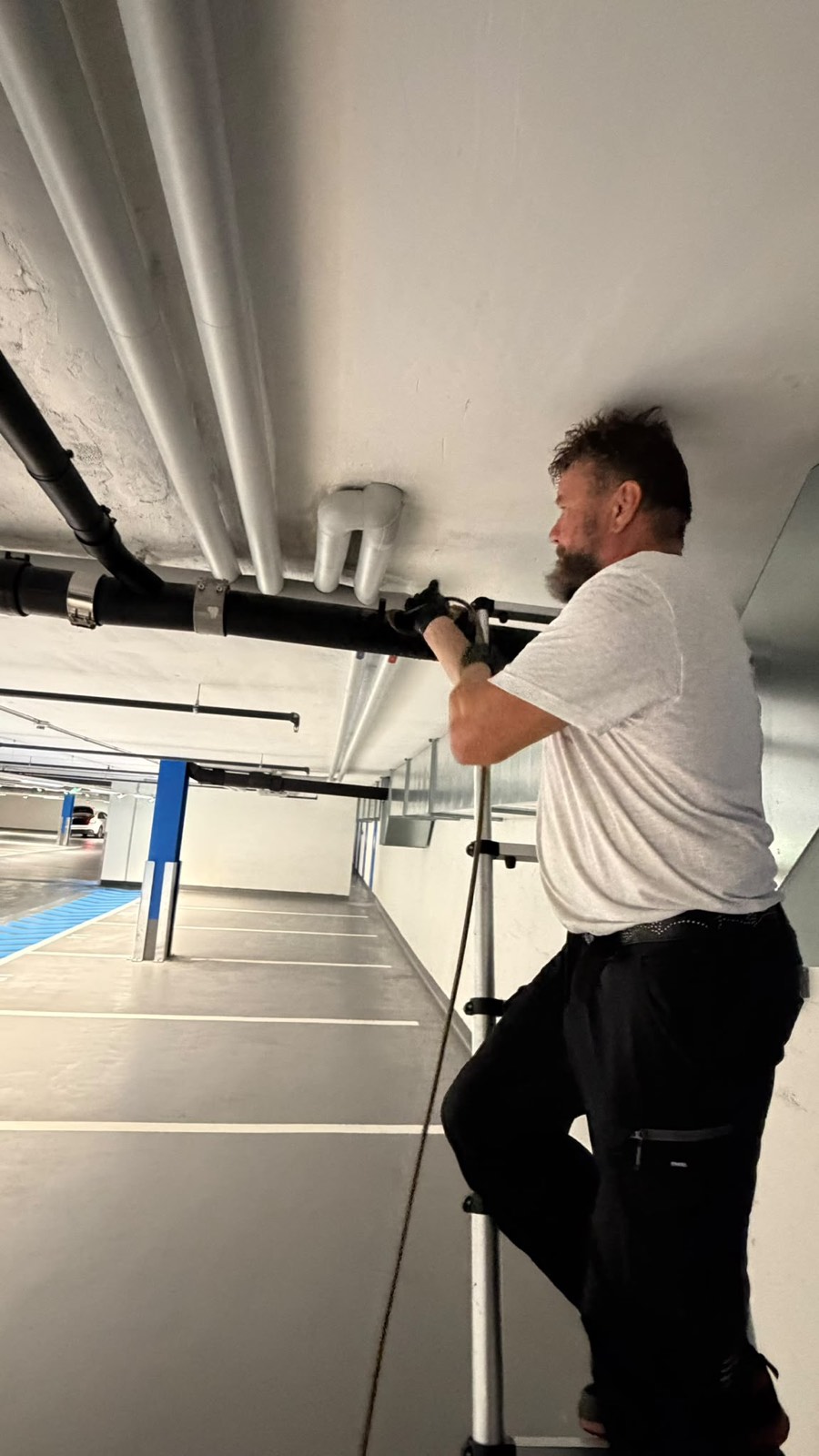
The walls and the base are then cleaned by high-pressure jetting to loosen the sealing layer of sludge and reopen the pores. The resulting foul water is vacuumed out again. If root ingress or structural damage is suspected, a CCTV drain survey can be added. Finally, the extracted contents are disposed of properly and the pit is closed again. Depending on the size and degree of silting, the entire process usually takes only a few hours, so that the pit is fully functional again the same day.
At what intervals should it be cleaned?
There is no standard interval, as silting depends on the volume of water, the type of soil and the load. As a rule of thumb, a check every one to three years is recommended. Pits that take in a lot of water or lie in fine-grained soil silt up faster and need more frequent care. If only a small amount of clean rainwater is fed in, the interval can be longer. A maintenance contract for drain maintenance with fixed inspection dates relieves the owner of this planning.
What happens if you put off cleaning?
If a silted-up soakaway pit is not cleaned in time, the problem gets steadily worse. At first the water just seeps away more slowly, then it backs up in the pit and finally in the inflow pipes. As a result, connected drains can no longer drain properly, water emerges at lower-lying points and waterlogging forms around the pit. With persistent waterlogging, the fabric of neighbouring structures suffers and the ground can subside.
In addition, a completely blocked soakaway pit is much more difficult to bring back into service than one that has been looked after early on. If the sealing layer is very thick and hardened, simple flushing passes are often no longer enough, and in extreme cases the surrounding gravel bed has to be renewed or the pit replaced. Having the cleaning done in good time therefore saves not only trouble but also considerable costs.
What does not belong in a soakaway pit?
So that cleaning is needed as rarely as possible, only what it is approved for should go into a soakaway pit. As a rule, this is clean rainwater or stormwater, or wastewater that has already been treated. Grease, food waste, oils, chemicals and solids considerably accelerate silting and must not be discharged into it. If you observe this, you extend the service life of the pit and protect the groundwater at the same time.
Is a maintenance contract worthwhile?
For most owners of a soakaway pit, a maintenance contract is the most convenient and safest solution. Instead of you having to remember the check, the specialist firm takes care of regular inspection and gets in touch in good time for the next cleaning. This keeps the infiltration capacity at a good level in the long term and avoids expensive emergencies caused by sudden backflow. The firm also knows how quickly the particular pit silts up and can adjust the interval precisely.
Another advantage is documentation. If you can prove that cleaning has been carried out, you are on the safe side with the authorities and in the event of a change of ownership. Especially with older installations, whose condition is not always obvious, regular professional inspection provides certainty. On balance, the maintenance contract often pays for itself through the avoided follow-on costs of a neglected, completely blocked pit.
What does cleaning a soakaway pit cost?
The costs depend on the size, degree of silting and the quantity to be disposed of. As a guide, the rate is around CHF 160 per hour plus a flat call-out fee of about CHF 60, as well as the disposal costs for the extracted material. These figures can vary by plus/minus 15 per cent. A combined CCTV drain survey can be added from about CHF 50 and provides clarity about the structural condition. A quote in advance makes the total costs transparent.
Is your soakaway pit no longer draining properly or backing up? Karo Kanaltechnik desludges it, flushes it clear and restores infiltration, including proper disposal. In the event of acute backflow, you can reach our 24/7 emergency service at any time on +41 43 588 12 08.