What is a soakaway pit?
A soakaway pit is a chamber in the ground that does not store water but deliberately releases it into the subsoil. The water flows into the pit through an inlet pipe, collects there briefly and then seeps through the permeable base and the perforated walls into the surrounding gravel layer and on into the ground. Regionally, it is also called a soakaway well or infiltration pit. Closely related is the soakaway chamber: it works on the same principle but is now built as part of a planned infiltration system for rainwater – more on this in the glossary entry on infiltration systems.
In the past, soakaway pits at remote properties were also used for domestic wastewater, often downstream of a septic tank. This use is no longer permitted today. Today, soakaway pits mainly take rainwater from roofs and paved areas, i.e. stormwater, or – with the authority’s permit – water that has previously been treated in a small sewage treatment plant. Modern solutions for rainwater are grouped under the term infiltration system; besides the soakaway chamber, these also include swales and infiltration trenches.
For owners, the soakaway pit is above all a maintenance issue: it only works as long as the infiltration surface stays open. Sand, leaves and fine sludge block it a little more year by year, until the water no longer drains away.
How does a soakaway pit work? (diagram)
The incoming water enters a chamber that is built of masonry or lined with perforated concrete rings. The water slowly seeps into the surrounding soil through the open or permeable base and the openings in the sides. A gravel fill around the pit increases the infiltration area and stops the base from blocking up too quickly.
For infiltration to work in the long term, the subsoil must be permeable enough – gravel or sand, for example. In cohesive, clay-rich soils, the water seeps away too slowly and the pit overflows. Solids and suspended matter in the water settle at the bottom and, over time, form a layer of sludge that blocks infiltration.
Put simply, the water’s route can be described in five stations, from top to bottom – just as it would appear on a cross-section through a soakaway pit: inlet, chamber, settling zone, gravel fill and subsoil.
1. Inlet
Rainwater from the roof, forecourt or driveway reaches the inlet pipe via a roof water pipe, floor drain or channel. Ideally, it first passes through a silt trap, which holds back sand and coarse material.
2. Chamber with cover
The chamber usually consists of perforated concrete rings or is built of masonry. At the top it is closed off by a walk-on cover, through which the pit is inspected and cleaned.
3. Settling at the bottom
In the still water of the pit, suspended matter, sand and organic material sink. A layer of sludge gradually forms at the bottom – it is the reason why every soakaway pit has to be cleaned sooner or later.
4. Gravel fill
Around the chamber and under the base lies a packing of gravel. It increases the area through which the water can pass into the ground and supports the permeable walls.
5. Subsoil
From the gravel, the water seeps into the natural ground and replenishes the groundwater. How quickly this happens depends on the permeability of the subsoil: gravel and sand absorb water well, loam and clay hardly at all.
What role does the gravel play?
The gravel is the actual working medium of the soakaway pit. It distributes the water and keeps the soil away from the openings in the chamber. If the pores in the gravel become blocked with fine material – specialists call this colmation (Kolmation, Kolmatierung) – even a clean pit can only help to a limited extent. The gravel then has to be washed out or replaced. An upstream silt trap is therefore the most effective protection for the gravel fill.
Soakaway pit and slurry pit – do not confuse them
A soakaway pit is deliberately permeable and releases water into the ground. A slurry pit, on the other hand, is completely watertight and stores slurry or wastewater until it is pumped out and disposed of properly. The two structures therefore have opposite tasks.
For water protection reasons, soakaway pits in Switzerland may now only be used for unpolluted rainwater or treated water. Domestic or commercial foul water belongs in the sewer system or in a sealed tank – never in a soakaway pit, as otherwise pollutants get straight into the groundwater.
In between sits the modern infiltration system: it has the same task as a soakaway pit, but is designed for rainwater and, where possible, lets the water drain through a vegetated soil layer that holds back pollutants. The overview shows the differences at a glance.
| Soakaway pit | Slurry pit | Infiltration system | |
|---|---|---|---|
| Task | Release water into the subsoil at one point | Store liquid manure, slurry or wastewater in a sealed tank | Let rainwater soak away in a controlled way |
| Design | Chamber with perforated walls, open base and gravel fill | Sealed tank made of concrete or plastic, closed base | Swale, infiltration trench or soakaway chamber, often with pre-treatment |
| What may go in? | Only unpolluted or already treated water | Farmyard manure or wastewater until disposal | Only unpolluted or slightly polluted rainwater |
| Watertight or permeable? | Deliberately permeable | Must be watertight | Deliberately permeable |
| Typical maintenance | Suck out sludge, jet the base and walls clear | Suck out contents, check watertightness | Empty the silt trap, jet the inlet pipe, suck out the soakaway chamber |
| Most common problem | Silting and overflowing | Leaks and overfilling | Colmation and backflow in heavy rain |
Are soakaway pits still permitted in Switzerland?
Yes, but only for the right water. The Waters Protection Act (GSchG) requires that unpolluted wastewater – above all rainwater – should be allowed to soak away as directed by the cantonal authority. Polluted wastewater from the kitchen, bathroom, toilet or business, on the other hand, must not soak away; it belongs in the public sewer system and thus in the wastewater treatment plant or, where there is no connection, in a sealed tank or a permitted small sewage treatment plant.
Where and how rainwater may soak away on a plot is set by the municipality in the general drainage plan (GEP, Genereller Entwässerungsplan), which is required by the Waters Protection Ordinance (GSchV). The cantons specify the requirements in more detail with water protection maps and information sheets. Stricter rules apply in groundwater protection zones or on contaminated sites. A new or converted soakaway pit therefore generally needs a permit – the municipality can give you binding information.
The Waters Protection Act also obliges owners to maintain their installations. Anyone who owns a soakaway pit is therefore personally responsible for making sure it works and that nothing impermissible flows into it.
A soakaway pit at an old house
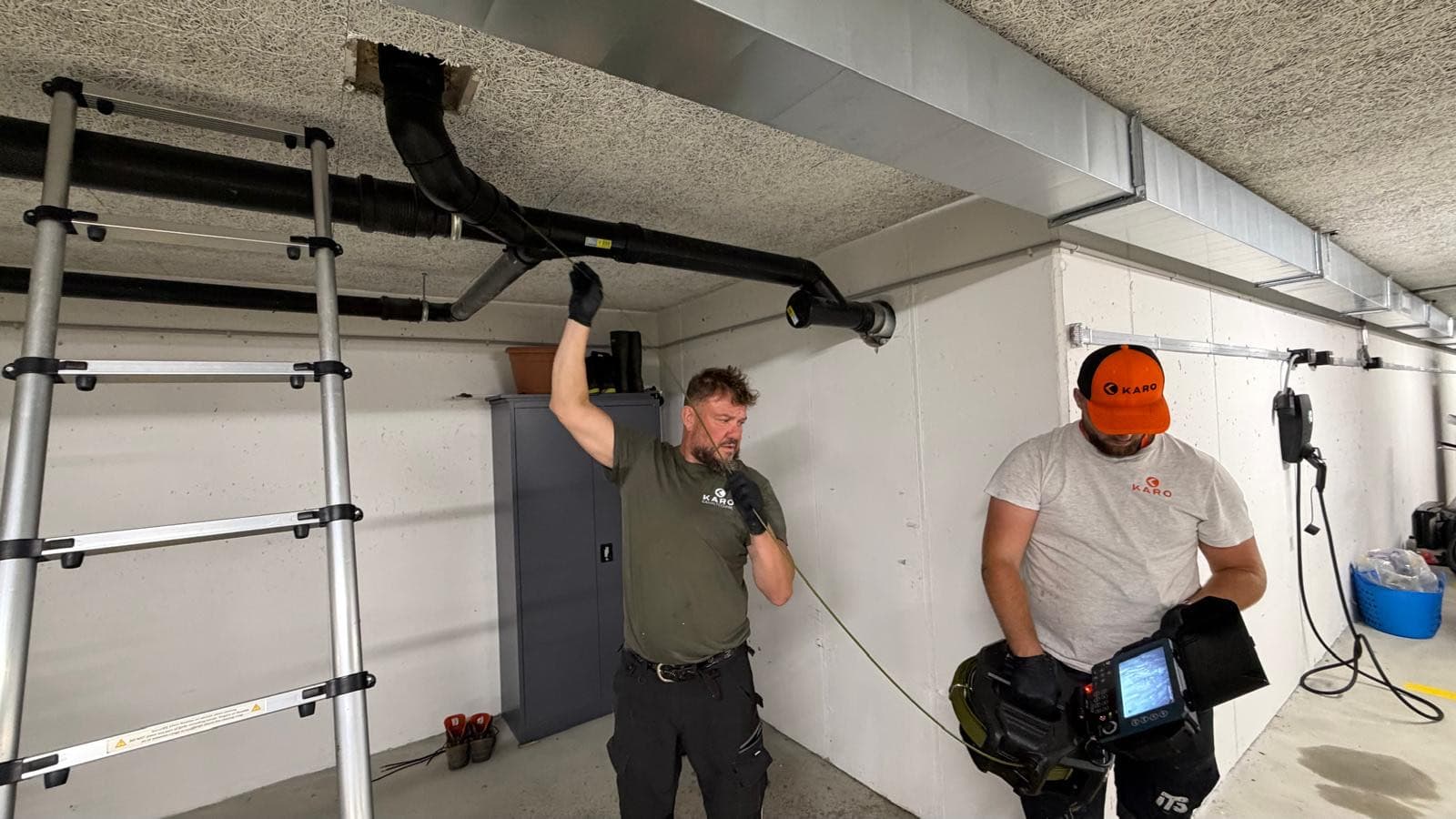
With older properties, especially in rural areas, there is often still a pit in the garden whose purpose nobody really knows. Before it continues to be used, is converted or is decommissioned, it should be established whether it is a soakaway pit, a sealed holding tank or an old septic tank, and which pipes lead into it. A camera inspection of the inlet pipes shows whether, for example, a toilet, a laundry room or a garage drain is connected that has no business being there.
Can I build a soakaway pit myself?
You can dig and set concrete rings yourself – but what matters is the permit, and that depends on the municipality, canton, soil conditions and groundwater. Without clarification, you risk an installation that does not drain or one that has to be removed. The municipality can tell you whether the plot is suitable for infiltration and which type of installation is required.
A garden toilet with a soakaway pit?
No. Toilet wastewater is polluted wastewater and must not be allowed to soak away in Switzerland. For a garden house or a toilet without a sewer connection, the only options are a connection to the sewer system, a sealed holding tank that is emptied regularly, or a permitted small sewage treatment plant.
Why a soakaway pit has to be cleaned
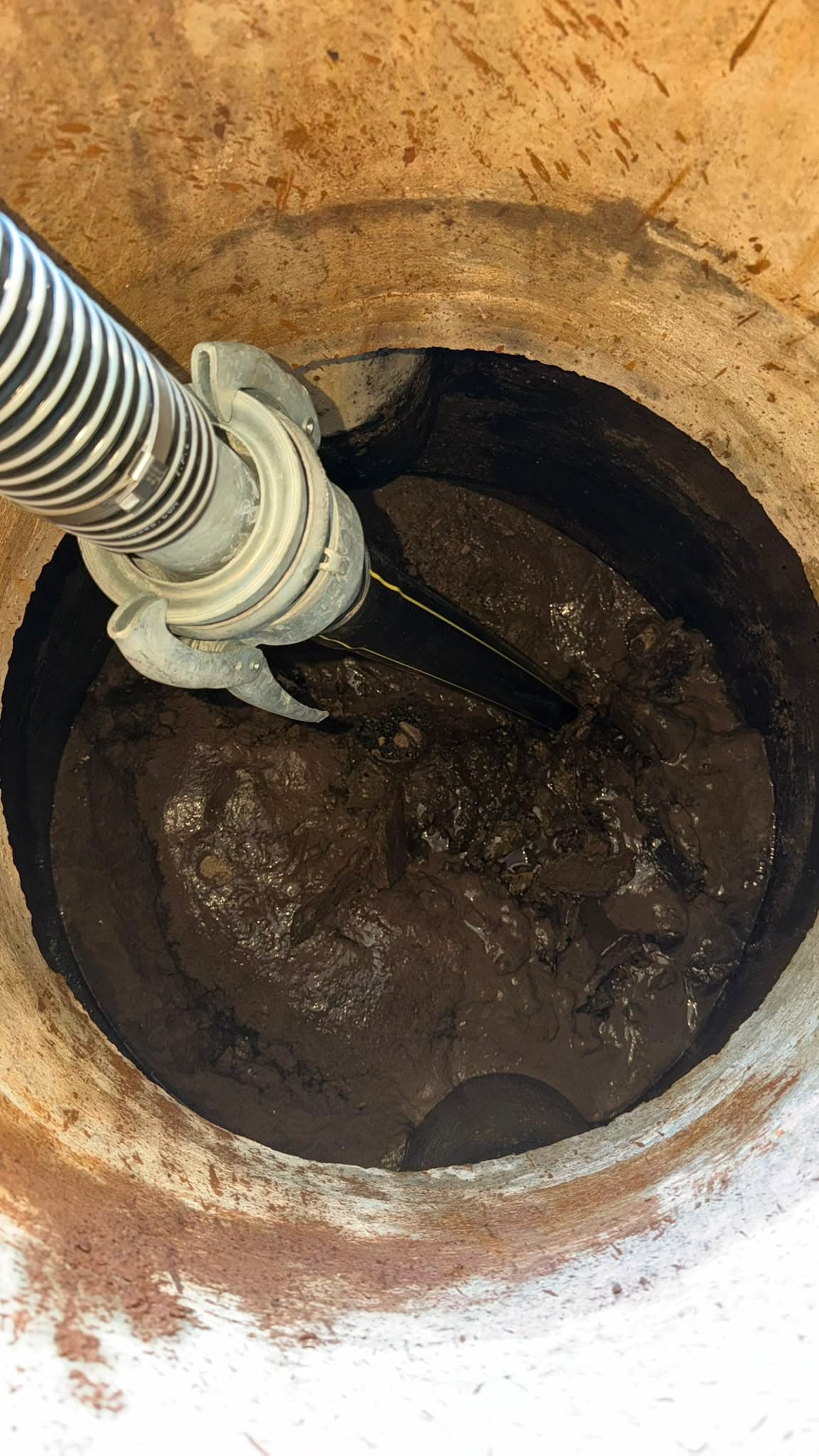
Sand, leaves, fine sediment and organic material collect at the bottom of the pit and, over time, seal the infiltration surface. Once the base has silted up, the water can no longer drain away, the pit overflows and, in heavy rain, there is a risk of water on the property or in the cellar.
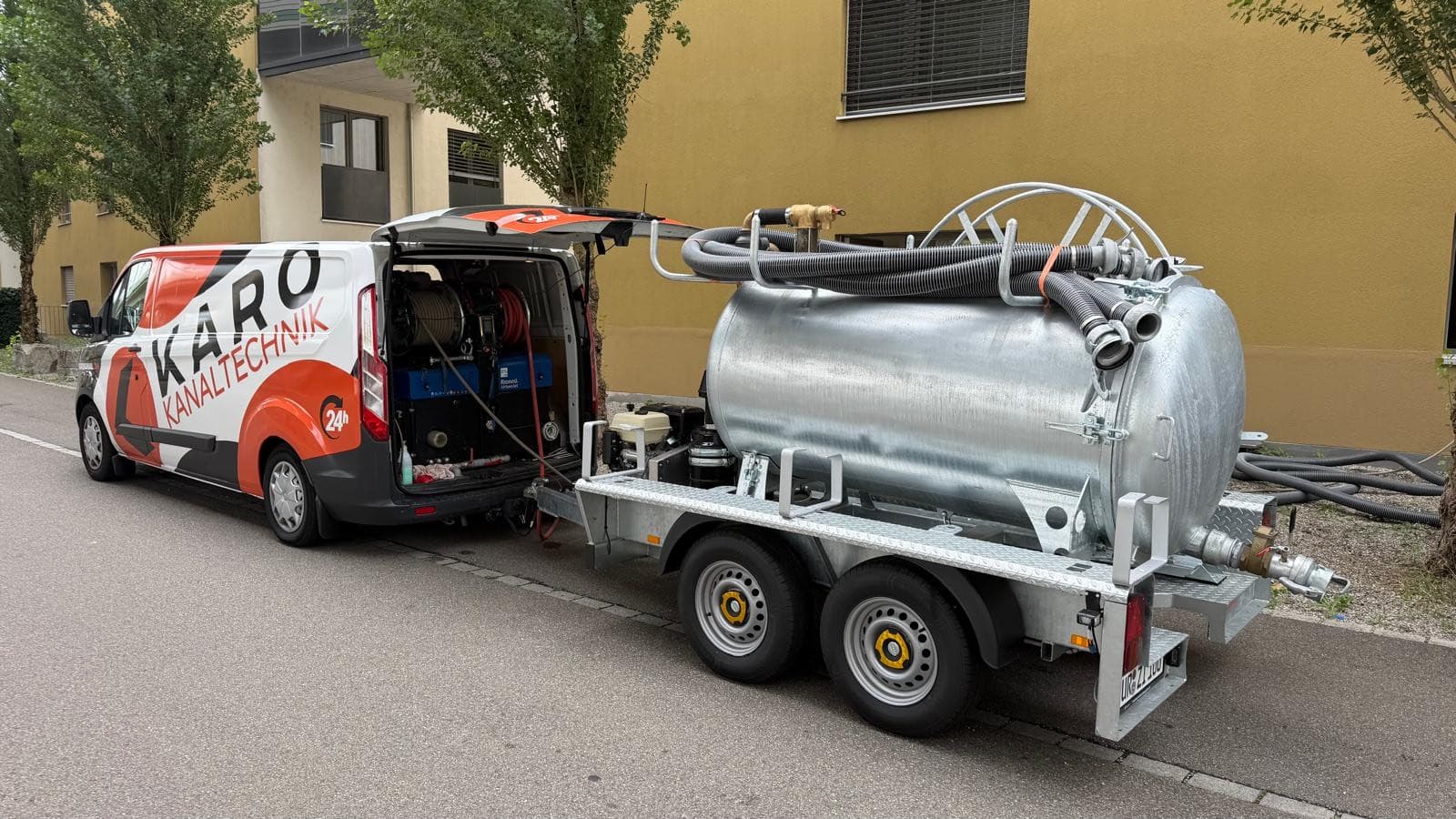
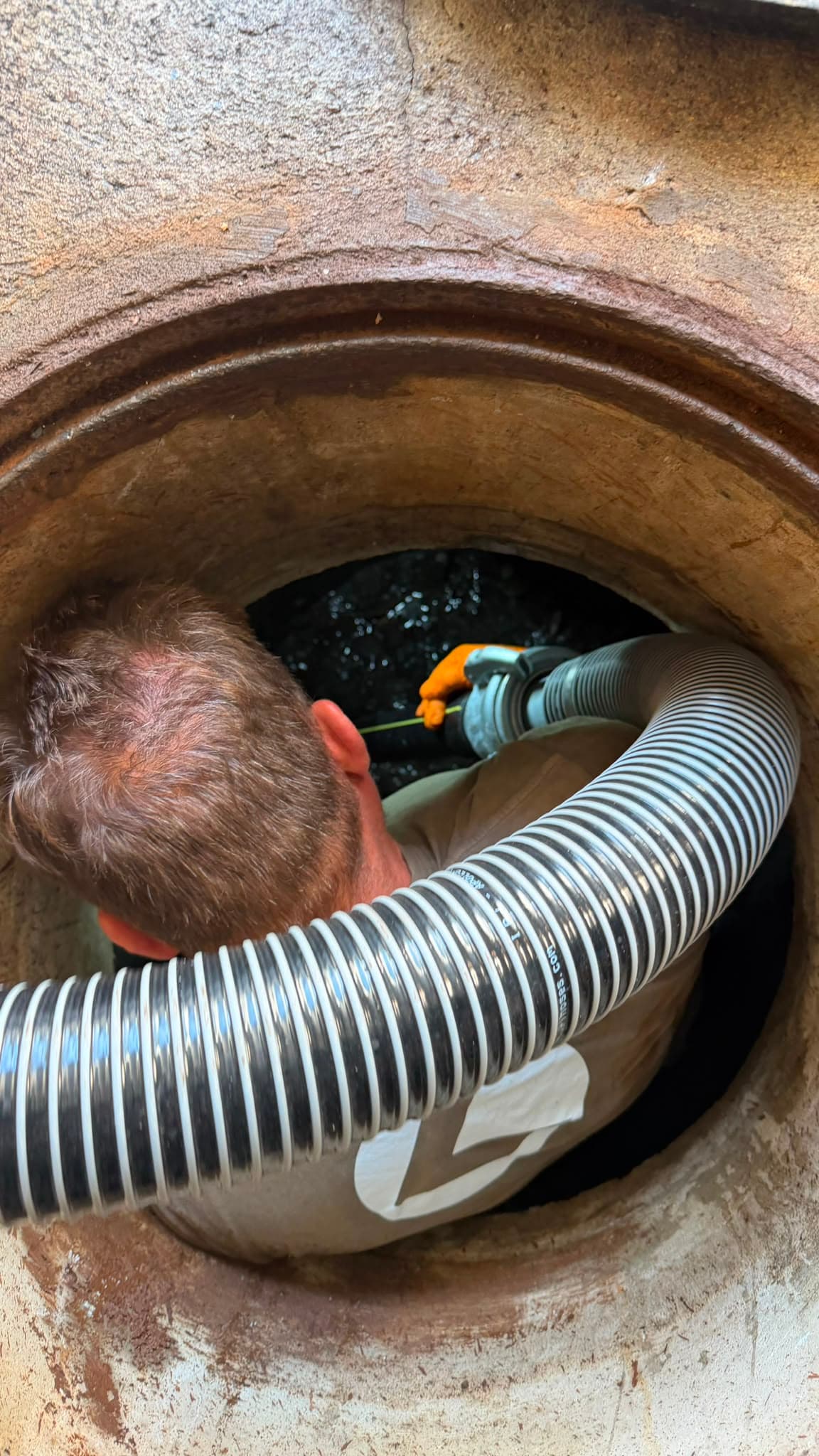
During manhole cleaning, the deposited sludge is removed with a vacuum tanker or combination vehicle and the base is exposed again. Depending on the load, an inspection and clean every one to three years is recommended. A CCTV drain survey also shows whether the walls and inlets are still intact.
How often does a soakaway pit have to be cleaned?
As a rule of thumb: inspection and, if necessary, cleaning every one to three years. There is no fixed interval for all pits, because silting depends on several factors: how much water flows in, how much sand and leaves it carries, whether there is an upstream silt trap and how permeable the soil is.
The interval should be shorter if large roof or paved areas are connected, there are trees nearby, a gravel area or driveway washes in sand, or the pit lies in fine-grained soil. It can be longer if only clean roof water flows in through a well-maintained silt trap.
It also makes sense to look into the pit after the leaves fall in autumn and after heavy thunderstorms. If you note down the sludge level and how quickly the water level drops over the years, you will find the right interval for your own installation. You will find detailed advice on cleaning in the guide ‘Cleaning and maintaining a soakaway pit’ further down this page.
Signs of a silted-up soakaway pit
A soakaway pit silts up gradually. For a long time you notice nothing, then one thunderstorm is enough and the water is standing on the forecourt. Typical warning signs are standing water in the pit, wet patches around it, overflowing gutters in heavy rain, a thick layer of sludge and an odour. The overview shows what they mean.
| Sign | What it means |
|---|---|
| Water stands in the pit for days after rain | The base and gravel hardly absorb any water any more |
| Puddles or wet patches around the pit | Water is coming out at the top instead of soaking away |
| Gutters or floor drains overflow in heavy rain | Backflow from the full pit into the inlet pipe |
| Thick layer of sludge when you look into the chamber | Cleaning is due before the base is completely sealed |
| Odour from the pit | Organic material is decomposing or something impermissible is flowing in |
| Water in the cellar or on the façade after rain | The pit is backing up – have it checked quickly |
How Karo Kanaltechnik cleans a soakaway pit
How long cleaning takes depends on the size of the pit and how badly it has silted up. It includes inspection, suction, jetting, a camera check if needed, and disposal and a report.
Inspection
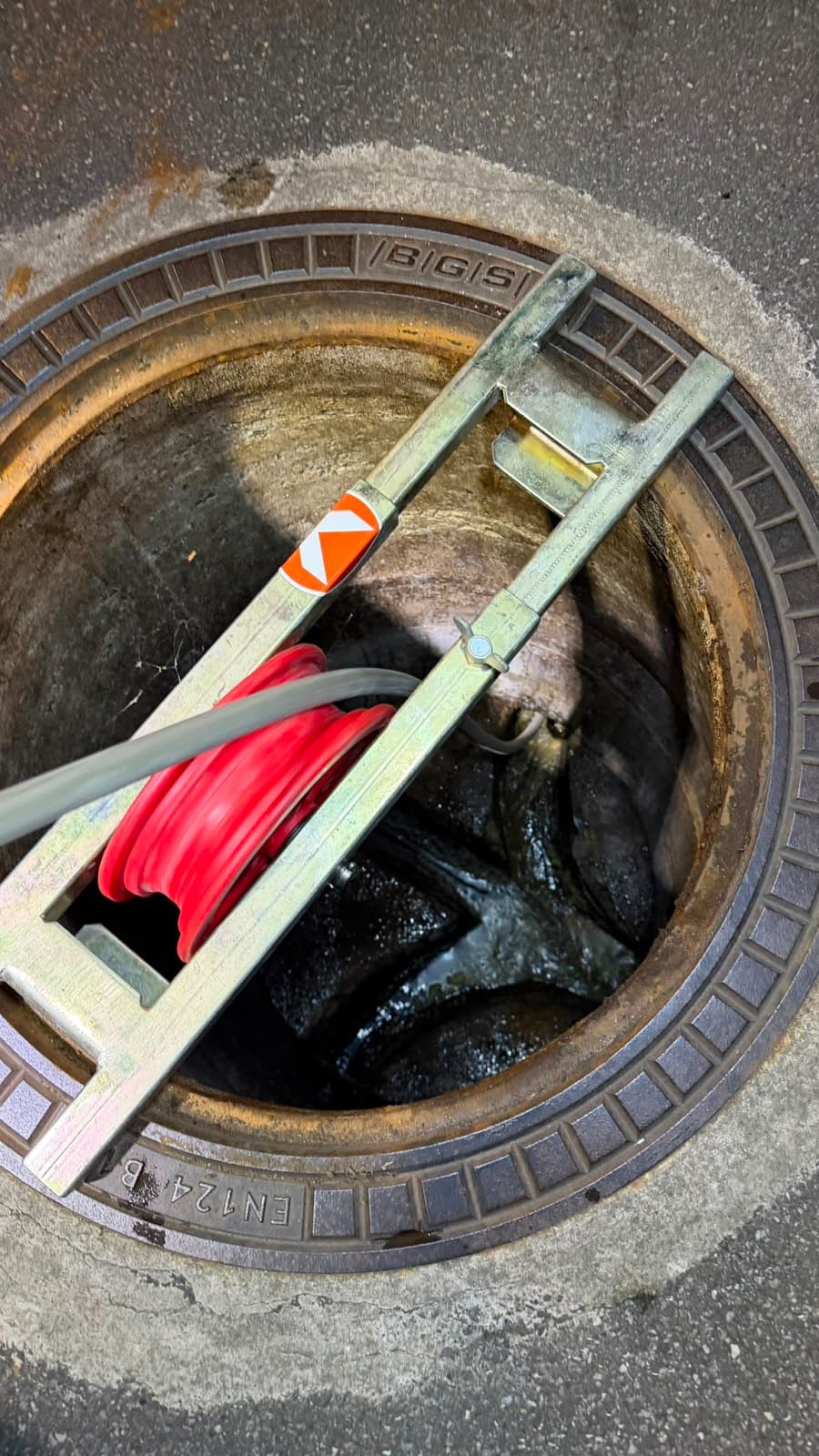
Open the cover, assess the water level, sludge level and condition of the walls, check the inlet pipes.
Suction
Water and settled sludge are sucked out completely with the combination vehicle’s suction hose until the base is exposed.
Jetting
The base, perforated walls and inlet pipe are jetted chemical-free at up to 200 bar so that the pores open again. The jetting water is then sucked out again.
Camera if needed
If root ingress, damage or incorrect connections are suspected, a CCTV drain survey of the inlet pipes follows, documented to SN EN 13508-2.
Disposal and report
The extracted contents are disposed of properly. The work carried out is recorded in the job report.
How much does it cost to clean a soakaway pit?
Karo Kanaltechnik bills by time spent: CHF 160 per working hour plus a CHF 60 call-out fee, both excl. VAT. One hour of work including the call-out therefore costs CHF 220 excl. VAT or CHF 237.82 incl. 8.1% VAT. Disposal of the extracted sludge depends on the quantity and is charged separately; a camera check of the inlet pipes costs a surcharge from CHF 50.
How long the job takes depends mainly on the size of the pit, the amount of sludge and the accessibility. The rates are guide values; you receive a binding quote after the assessment, and you can calculate an initial guide price online.
| Item | Karo Kanaltechnik rate |
|---|---|
| Working time | CHF 160 per hour, excl. VAT |
| Call-out | CHF 60 flat rate, excl. VAT |
| CCTV survey of the inlet pipes | Surcharge from CHF 50 |
| Disposal | By quantity, charged separately |
| Example: 1 hour + call-out | CHF 220 excl. / CHF 237.82 incl. 8.1% VAT |
When is cleaning no longer enough?
If the colmation layer has hardened over the years or the gravel around the chamber has become blocked, even thorough suction and jetting will not restore infiltration. The gravel fill then has to be washed out or renewed, the chamber rehabilitated or the pit replaced by a modern infiltration system. If concrete rings are cracked or roots have grown in, manhole rehabilitation may be an option.
If polluted wastewater flows into the pit, the issue is not cleaning but the connection: the affected pipe has to be rerouted and connected to the sewer system or a sealed tank. A camera inspection beforehand shows exactly which pipes lead where.
At a single-family home in the Zurich Weinland, water built up on the forecourt after every thunderstorm. The soakaway pit had not been maintained for years and its base was blocked by a thick layer of sand and leaves. After the sludge was sucked out and the infiltration surface exposed, the rainwater soaked away again without any problems – the backflow stopped.