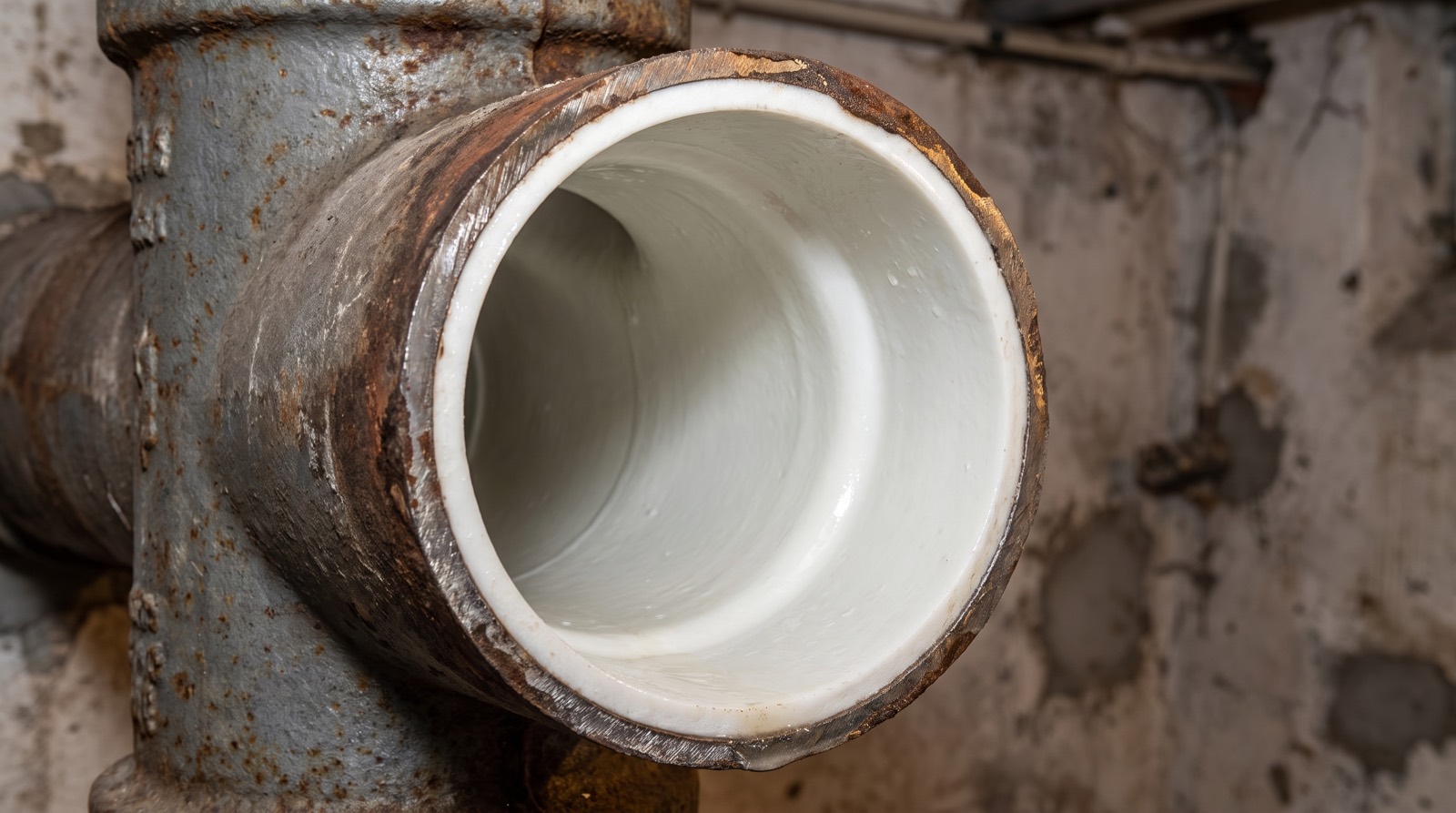
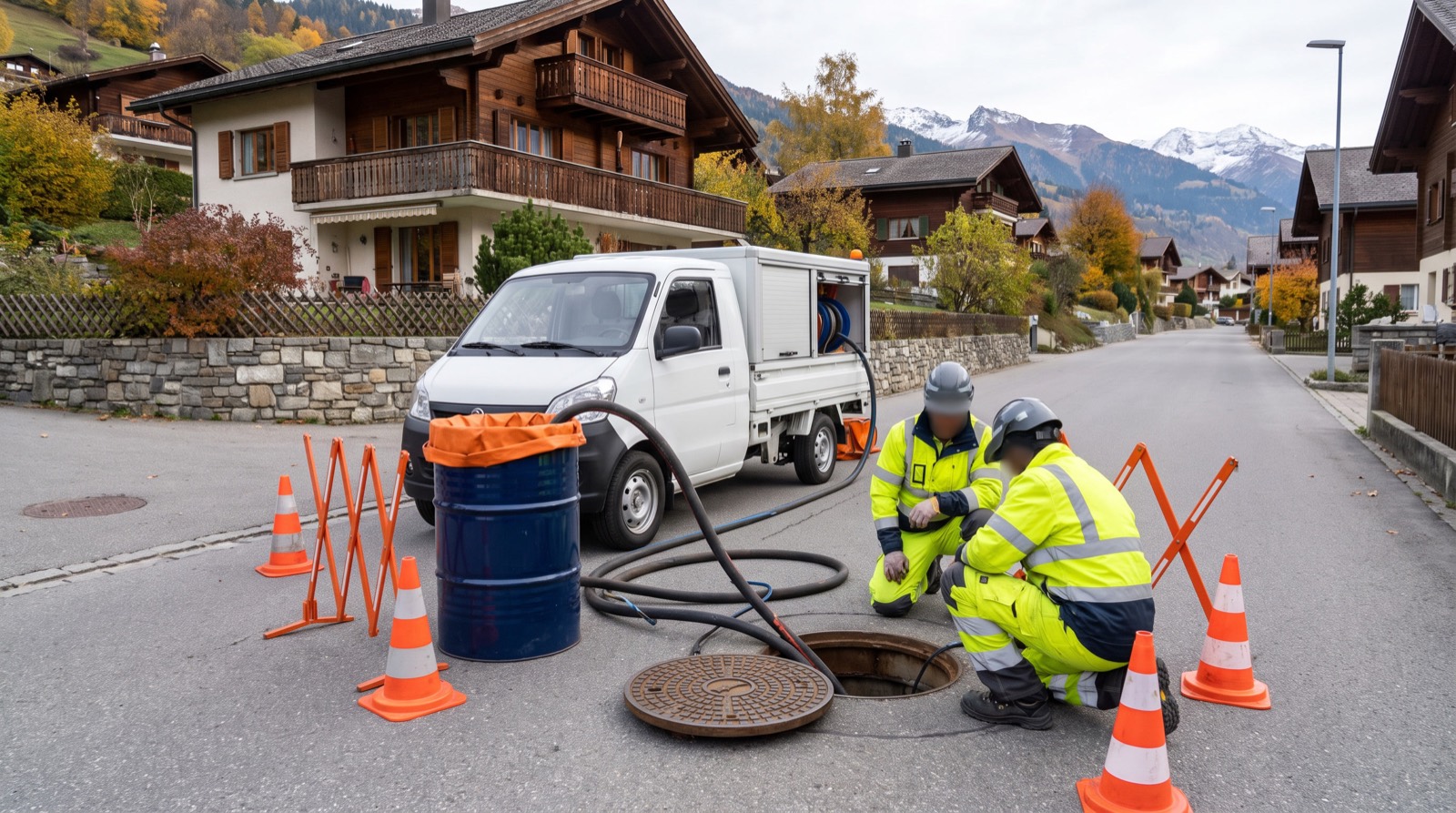
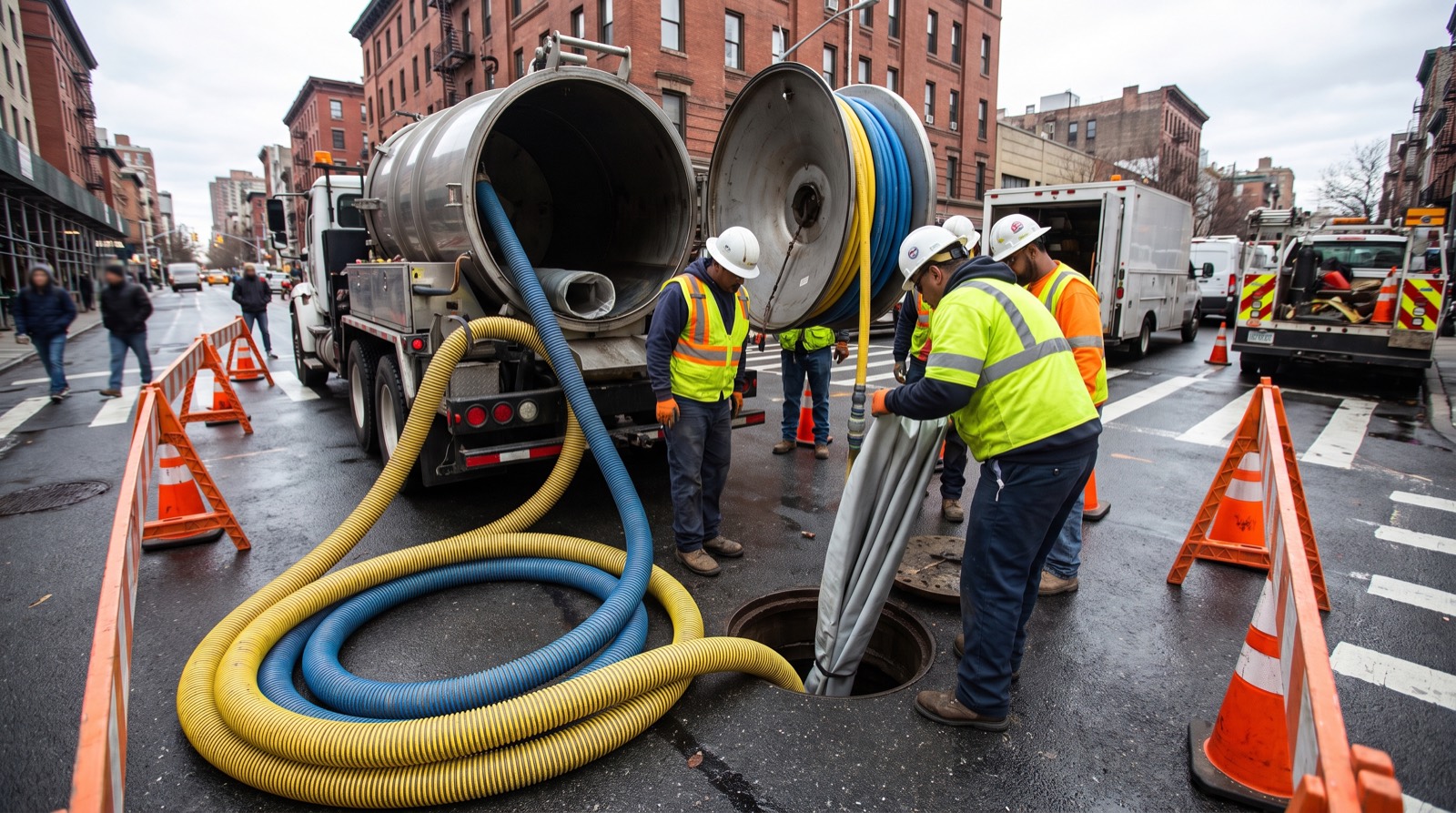
Manhole rehabilitation becomes necessary when an inspection chamber or access manhole is leaking, corroded or mechanically damaged. The methods include grouting and repointing cracks, applying mineral or resin-based coatings and installing a complete lining. The aim is to make the manhole watertight, structurally sound and fully functional again, usually without a complete rebuild.
In this article we explain what damage is typical in manholes, which rehabilitation methods are available and how manhole rehabilitation works. This will help you recognise when action is needed and which solution makes sense.
What a manhole does
Inspection chambers are the access and inspection points of the drainage network. They allow inspection, cleaning and maintenance, connect pipe sections and serve as inspection and transfer points. An intact manhole is therefore crucial for the entire drainage system to work properly.
Because manholes are constantly exposed to wastewater, changing moisture, aggressive gases and mechanical loads from traffic, they age over time. If damage is not repaired, water can escape or infiltration water can get in, which puts a strain on the treatment plants and endangers the ground.
Typical damage in manholes
The most common damage includes cracks in the masonry or concrete, leaking connections and joints, corroded surfaces and defective step irons and covers. So-called biogenic sulphuric acid corrosion is particularly hard on concrete manholes, when gases in the wastewater attack and break down the surface.
Another problem is infiltration water getting in through leaks. It increases the volume of wastewater unnecessarily and causes costs for conveyance and treatment. Conversely, escaping wastewater can contaminate the surrounding soil and the groundwater. Both are good reasons for timely rehabilitation.
Diagnosis as the basis
Every manhole rehabilitation starts with an accurate condition survey. An inspection, often supplemented by a CCTV drain survey of the adjoining pipes, documents the type, extent and cause of the damage. If there are leaks, a leak-tightness test clarifies the actual condition.
On the basis of this diagnosis, the right method can be chosen. Individual cracks call for a different solution than widespread corrosion or a structurally weakened manhole. Careful preliminary investigation is therefore the prerequisite for a lasting rehabilitation.
The main rehabilitation methods
For local leaks and cracks, grouting and repointing techniques are used to seal them in a targeted way. For widespread damage and to protect against further corrosion, coatings are applied, such as mineral mortar systems or resin-based linings, which form a new, resistant surface.
If the manhole is more badly damaged, a complete lining with prefabricated elements or a plastic insert installed on the inside is an option. This creates a new, watertight inner manhole without having to demolish the existing one completely and rebuild it. Which method is suitable depends on the damage pattern, material and loads.
How manhole rehabilitation works
After the diagnosis, the manhole is first thoroughly cleaned, usually with high pressure, and cleared of loose material and deposits. Damaged areas are then prepared, cracks are grouted and the chosen system is applied, whether a coating or a lining. Once it has cured, it is checked.
A final test, with proof of leak-tightness if required, confirms success. The manhole is then watertight, structurally sound and ready for normal operation again, without the need for an elaborate open excavation.
Conclusion: repair the manhole in good time
Manhole rehabilitation preserves a central component of the drainage network and prevents leaks and corrosion from leading to greater damage. Thanks to modern methods such as grouting, coating and lining, manholes can usually be repaired permanently without a complete rebuild. The basis is always a careful diagnosis.
Do you have a damaged or leaking manhole, or would you like its condition checked? Call us on +41 43 588 12 08. We assess the manhole and recommend the right method, from six locations in Frauenfeld, St. Gallen, Winterthur and Zurich, and in urgent cases via our 24/7 emergency service around the clock.