
What is a backflow valve?
A backflow valve is a component fitted into a wastewater pipe, where it works like a valve that only lets water through in one direction. In normal operation the flap hangs open or rests lightly against its seat, so wastewater from the building flows freely to the sewer. If the water level in the sewer rises and wastewater pushes back, this counter-pressure presses the flap onto its sealing seat – the pipe is shut and the basement stays dry.
Technically, the backflow valve is a backflow stop and therefore one form of backflow protection. The umbrella term backflow protection covers every device that guards against backflow, so besides flaps and closures it also includes lifting stations with a backflow loop. If you want an overview of all types of protection, you will find it under the term backflow protection; this page deals specifically with the valve itself.
A word of caution when searching: ventilation engineering also has components called «backflow dampers». They stop air from flowing backwards through a ventilation duct and have nothing to do with wastewater drainage. They are no use for protecting a basement from wastewater.
How does a backflow valve work?
Behind the simple principle lies a well-thought-out design. A housing made of plastic or cast iron contains a flap that is hinged so it can move and closes against a rubber seal. Many models have two flaps one behind the other: if one fails, for example because a foreign object holds it open, the second one seals. Common designs also have an emergency closure that can be shut by hand using a lever or a spindle – for instance when a storm is forecast or the house will be empty for a longer period.
It is important to understand this: as long as the flap is closed, no wastewater can drain out of the building either. Anyone who showers in the basement, runs the washing machine or flushes the WC during a backflow fills the pipe in front of the closed flap until the water comes out in the basement. A backflow valve is therefore mainly suited to drainage points you can do without during a backflow, such as a floor drain in the laundry room or the boiler room.
Just as crucial is which water is routed through the valve. Wastewater from the upper floors and rainwater from the roof lie above the backflow level and must not run through the backflow valve. If they did, it is exactly this water that would collect in front of the closure when the flap is shut and come out in the basement – the valve would then cause the flooding rather than prevent it. Properly installed protection covers only the pipes that actually drain from below the backflow level.
Where is a backflow valve fitted?
There are three usual options for where it is installed. The first is in the underground drain, i.e. the pipe beneath the floor slab or in the ground, often in a dedicated chamber or an inspection chamber in front of the house connection. There the valve is easy to reach and can protect several drainage points in the basement at once, provided no pipes from above the backflow level join this run.
The second option is installation in an exposed pipe in the basement, for example on the wall or under the ceiling of the laundry room. This solution is popular in renovations because neither the floor nor the garden has to be opened up. The third option is a floor drain with an integrated backflow stop. It protects precisely this one drainage point and can be fitted at the same time when an old drain is replaced.
Wherever it sits, one rule applies: the valve must be accessible for inspection and servicing. A backflow valve that disappears under a tiled floor or sits in a silted-up chamber never gets serviced and then fails at the worst moment – during the next heavy rainfall.
When is a backflow valve mandatory?
In Switzerland, the standard SN 592 000 «Installations for property drainage – planning and execution» governs the drainage of buildings and plots. It requires drainage points below the backflow level to be protected against backflow from the sewer. Whether a backflow valve is sufficient or a lifting station is needed depends on what kind of wastewater is produced and how the rooms are used.
The backflow level is usually at the height of the road surface at the property's connection point. What is binding, however, is the level set by the municipality, normally in the wastewater or drainage regulations and in the building permit. For new buildings and renovations that require a permit, property drainage is part of the approval procedure; in existing buildings, by contrast, backflow protection is often missing because basement rooms were converted later or new drains were connected afterwards.
For owners, insurance matters too. If required backflow protection is missing or does not work, an insurer may reduce its payout for backflow damage. What exactly applies is set out in the terms of the building and household contents insurance concerned. If you are unsure whether your situation meets the requirements, it is best to check with the municipal building authority and a specialist firm.
Mechanical or electric backflow valve – and when a lifting station?
The product standard SN EN 13564-1 classifies backflow stops by design. Put simply, there are mechanical versions that close by water pressure alone, some with a second flap and an emergency closure, and versions powered by external energy: in an electric backflow valve, a sensor detects the rising water level and a motor actively closes the flap. Afterwards it opens again by itself. Many models also signal a backflow with an alarm.
The advantage of the electric version is that it closes actively and does not rely solely on a flap remaining free to move. In return it needs electricity and a control unit, plus, depending on the model, a battery or an emergency power supply so that the closure still shuts during a thunderstorm with a power cut. For wastewater containing faeces, i.e. wastewater from WCs, standards and manufacturers generally do not permit simple mechanical flaps; electrically operated closures approved for faecal matter or a lifting station are used instead.
A lifting station works differently from any valve: it collects the wastewater from the basement and pumps it via a backflow loop, which sits above the backflow level, into the underground drain. This means the basement can still be drained even during a backflow. Where permanently used rooms such as a granny flat, a guest room with a shower or a WC in the basement have to be drained, a lifting station is usually the right solution, whereas a backflow valve is sufficient for rarely used drainage points.
Servicing: how often does a backflow valve need checking?
A backflow valve is a mechanical component that sits right in the wastewater flow. Grease, hair, sand and sludge build up on the flap and seal, and rubber parts age. Manufacturers therefore specify servicing intervals in their operating instructions; typical figures are once or twice a year for servicing by a competent person, supplemented by regular visual checks by the operator. The instructions for the installed product always take precedence.
Servicing typically involves opening the housing, cleaning the flaps and sealing surfaces, checking the seals for cracks and hardening, checking that the parts move freely, and closing and reopening the emergency closure. With electric versions, the sensor, motor, alarm and emergency power supply are tested as well. Worn seals and flaps are replaced. A short record with the date and findings helps prove to the insurer that servicing has been carried out.
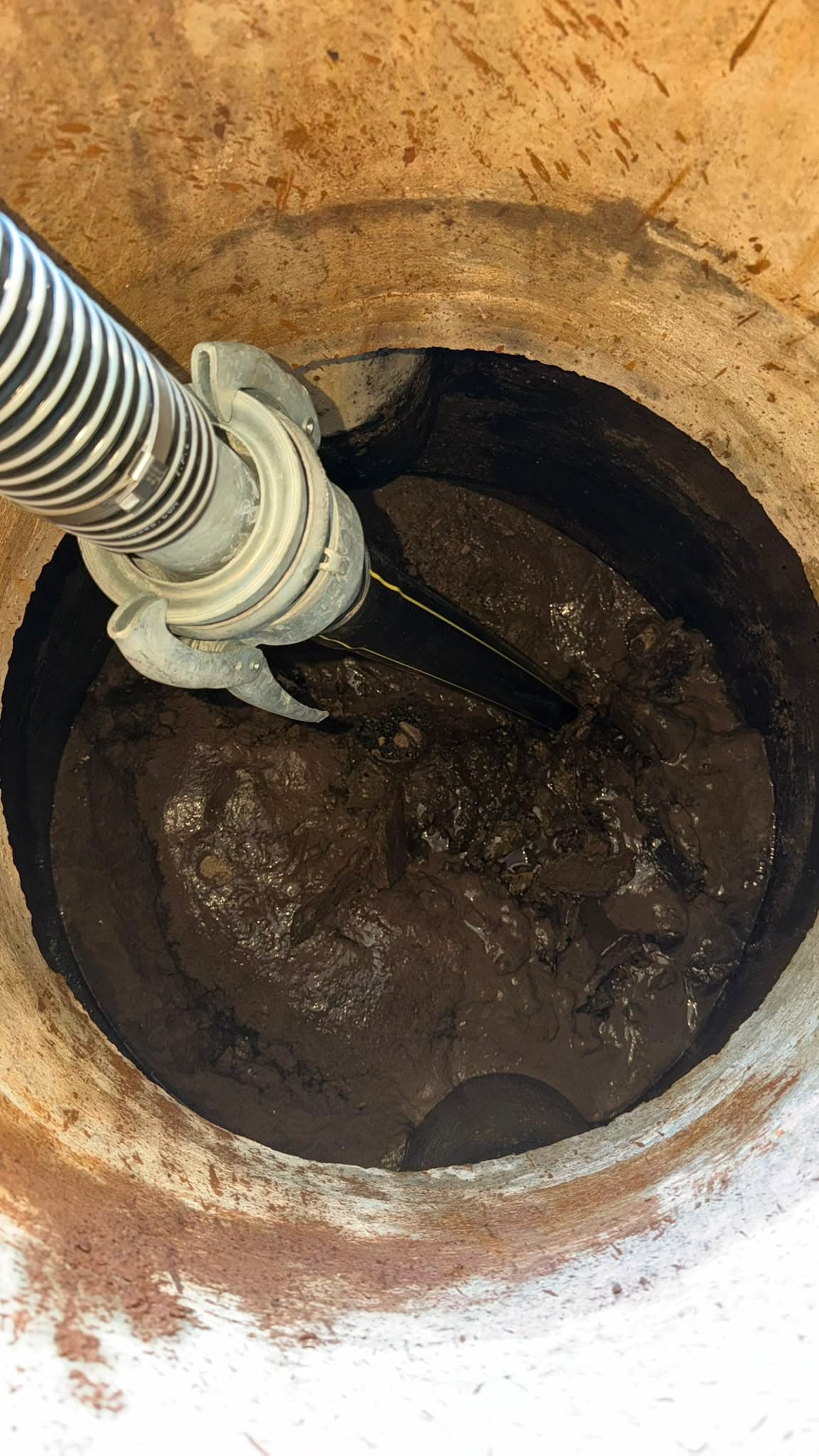
If the valve sits in a chamber, servicing is closely linked to looking after the chamber. A silted-up or sanded-up chamber has to be cleaned first before the valve is even accessible. Karo Kanaltechnik carries out manhole cleaning with combined jetting and suction technology and cleans the connected pipes without chemicals using high pressure of up to 200 bar.
Common faults and malfunctions
The most common reason a backflow valve fails is a jammed flap. Grease deposits from the kitchen, sand from floor drains, hair or foreign objects stop it from closing completely. Even a narrow gap is enough for wastewater to push through during a backflow. The opposite is just as problematic: a flap that has stuck no longer opens properly, wastewater backs up in front of the closure and the drain in the basement empties slowly or gurgles.
A second classic mistake is a forgotten emergency closure that has been left shut. Anyone who turns it off before a storm and does not open it again afterwards is later surprised by water in the basement, even though there is no backflow from the sewer. Other sources of faults are wrongly connected pipes from above the backflow level, a flap installed the wrong way round, a model that is not approved for the nominal diameter or the type of wastewater, and faulty batteries or sensors in electric versions.
If water comes out in the basement even though a backflow valve is installed, it pays to look for the cause systematically: is there a genuine backflow from the sewer, or a blockage in your own pipe? Cleaning the pipe and carrying out a camera inspection will make things clear.
Inspection and retrofitting without digging
Before a backflow valve is retrofitted, it must be clear how the pipes in the basement run, which drainage points lie below the backflow level and which pipes feed in from above. If up-to-date plans are missing, a CCTV drain survey provides the basis: the camera shows the route, branches, nominal diameter and condition of the pipe, and the findings are documented in accordance with SN EN 13508-2.
For existing pipes there are backflow stops that are inserted directly into the existing pipe, for example via a chamber or a cleaning access. This often makes it possible to retrofit backflow protection without breaking up the floor or digging up the garden. The prerequisite is a clean, undamaged section of pipe in a suitable nominal diameter. Cracks, displacements or deposits at the installation point prevent a tight fit – which is why cleaning and a camera inspection come before every installation.
Karo Kanaltechnik cleans the pipes, inspects them with the camera, checks existing backflow valves for proper function and advises on choosing and installing the right solution. Work is charged by time: CHF 160 per hour plus CHF 60 call-out fee, excl. VAT. One hour including call-out therefore costs CHF 220 excl. VAT or CHF 237.82 incl. 8.1% VAT; for a CCTV drain survey there is a surcharge from CHF 50. The cost of the valve itself depends heavily on the design, nominal diameter and drive, and is therefore shown in the quote.
A typical case from the Winterthur area: in a single-family home from the 1980s, water is standing in the laundry room after a summer thunderstorm, even though a backflow valve is fitted in the inspection chamber in front of the house. When the chamber is opened, it turns out that sand and sludge are holding the flap open by a gap. The team sucks out the chamber, jets the underground drain at high pressure and cleans the flap and seal. The subsequent camera inspection brings a second finding: the roof water pipe joins the run in front of the valve and would flood the basement with the closure shut. The owner receives the survey report as a basis for adjusting the pipe layout and having the valve serviced once or twice a year from now on.