
What is a drain cleaner?
Drain cleaner or pipe cleaner refers to any product that can be used to clear a slow-running or blocked drain in the home. In the shops they are on the shelves as granules, gel, liquid or powder, plus devices such as the plunger, drain snake or compressed-air drain unblocker. What they all have in common is that they are meant to clear a blockage in the trap (U-bend) or in the first section of the pipe – that is, where hair, soap residues, fat and food scraps most often get stuck.
Broadly speaking, there are three groups: chemical cleaners, which break down organic material with alkali or acid; enzymatic or biological cleaners, which slowly degrade deposits with enzymes and bacteria; and mechanical aids, which dislodge the plug with pressure, suction or a snake. Which substance a product contains is revealed not by the brand name but by the list of ingredients and the hazard symbols on the label.
Chemical cleaners: how they work
Most chemical drain cleaners for household use are strongly alkaline. Their main active ingredient is sodium hydroxide, also called caustic soda in granule form, which in solution becomes caustic soda lye. The alkali breaks down hair and protein and saponifies fat. Many granules also contain metal particles, usually aluminium: when they come into contact with water and alkali, heat and hydrogen gas are produced. The fizzing is meant to loosen the plug and the heat to liquefy the fat.
Gel cleaners often contain sodium hypochlorite, i.e. chlorine bleach, in addition to the alkali. Acidic cleaners work with concentrated sulphuric acid; they also dissolve limescale and urine scale, but are even more aggressive and are intended mainly for professionals. What all chemical cleaners have in common is that they only work if they actually reach the plug. If water is standing in the basin, the product is diluted before it gets to the blockage.
Then there is an effect that many underestimate: alkali and fat together form soap. With a thick plug of fat, the granules can turn into a hard, tough mass that seals the pipe even more firmly than before. A drain cleaner that has not worked once should therefore not be poured in a second and third time.
Enzyme and bio cleaners
Enzymatic or biological drain cleaners contain enzymes and in some cases bacterial cultures that break down organic deposits such as fat, protein and starch step by step. They are significantly less corrosive than alkalis and acids and hardly attack pipes and seals. On the other hand, they need time: usually they are meant to act overnight or for several hours, and repeated application is often necessary.
Their strength lies in prevention. If you treat kitchen and washbasin drains regularly, you can keep fat and soap deposits thin. Enzymes will not, however, dissolve a solid plug of hair, wet wipes or a foreign object. Home remedies such as bicarbonate of soda and vinegar also belong in this gentle category: they dissolve light deposits, but not a genuine blockage.
Mechanical aids: plunger, drain snake and trap
With a fresh blockage in a washbasin, shower, sink or toilet, a mechanical aid is almost always the better first choice. The plunger creates alternating pressure and suction through pumping and loosens the plug. It is important that a little water covers the rubber cup and that any overflow is sealed with a damp cloth, otherwise the pressure escapes.
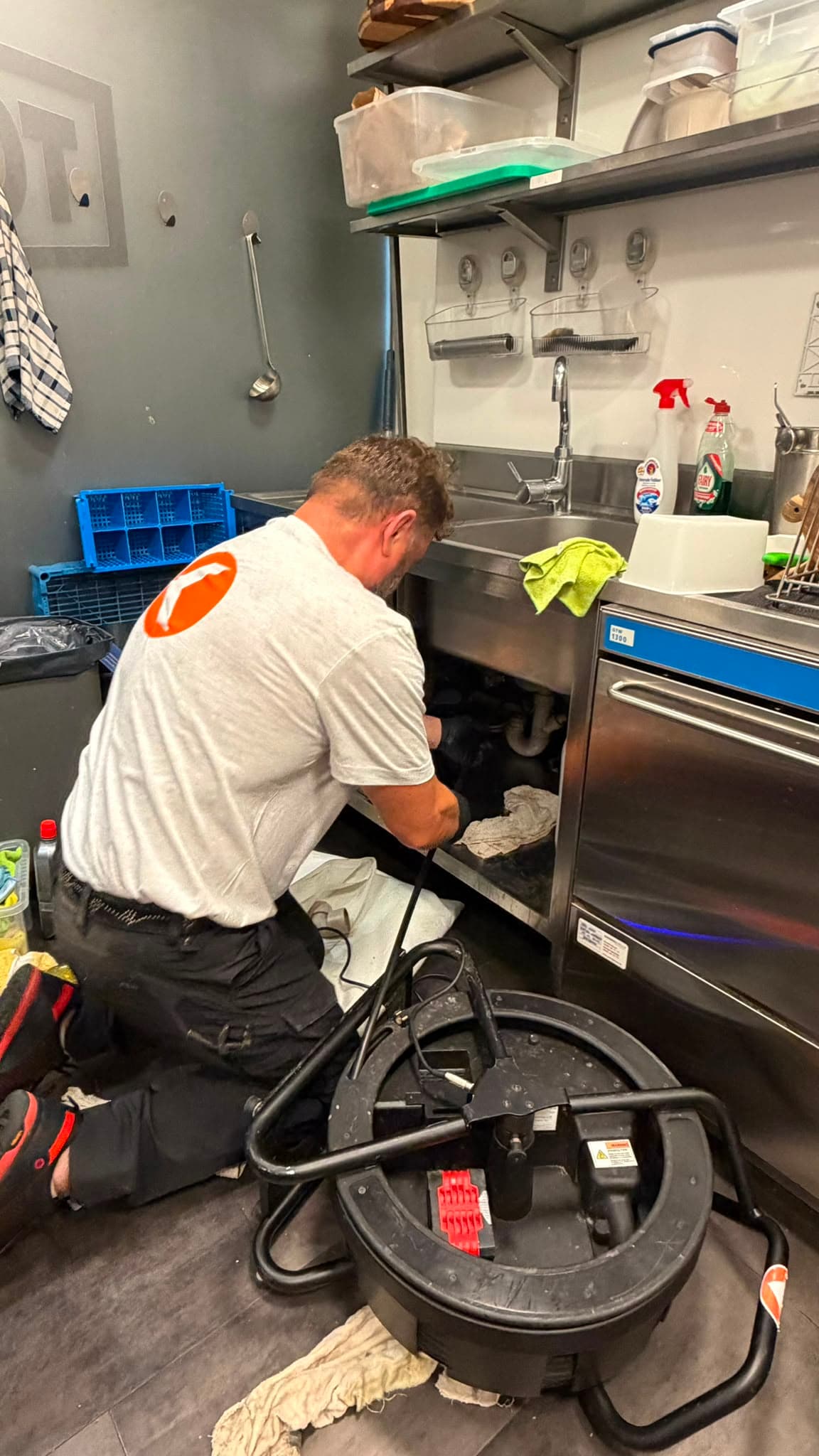
If the blockage is in the trap, it is worth putting a bucket underneath and unscrewing the trap. Hair and soap residues can then be removed by hand, without any chemicals at all. A handy drain snake reaches a few metres into the pipe and can pull out or push through clumps of hair. Finally, compressed-air drain unblockers push the blockage further along with a blast of air – this helps with soft plugs, but can put strain on joints in old pipes.
Mechanical methods have one big advantage: they leave no alkali in the pipe. If they do not work, the specialist company can carry on straight away without any risk of chemical burns.
Do drain cleaners damage pipes?
A single, correctly dosed use of a chemical drain cleaner usually does not cause much damage in an intact, modern plastic pipe. It becomes problematic with frequent use, overdosing and older pipes. The reaction of granules with water generates heat, which can put strain on plastic pipes and traps made of PVC or PP over time. Rubber seals in joints and traps age faster due to alkali, becoming brittle and leaky.
Old cast iron pipes are often already corroded on the inside; acids and alkalis further attack the weakened wall and rust layers. With old vitrified clay pipes, the weak point is usually not the pipes themselves but the joints made of mortar, tar or older seals. Fittings, chrome-plated parts and drains made of aluminium or zinc can also be attacked.
Then there is the environment: whatever disappears down the drain ends up at the wastewater treatment plant (ARA). Large quantities of alkali, acid or chlorine put a strain on the biological treatment stage. That is why Karo Kanaltechnik always works without chemicals – using only water pressure and mechanical tools. This is gentler on the pipes and on the environment.
Hazards during use
Chemical drain cleaners are among the most dangerous household products. Caustic soda lye and sulphuric acid burn skin and eyes; even a single splash can permanently damage the eye. Safety goggles and gloves should therefore be worn when pouring them in, and your face should not be over the drain. Because the reaction in the pipe gets hot and fizzes, liquid can splash back out of the drain.
Never mix different cleaners or use them one after the other. When acid and alkali meet, they react violently and become very hot. Chlorine-based cleaners release toxic chlorine gas with acids. Pouring hot water directly onto fresh granules is also risky. The products should be stored closed and out of the reach of children.
Important for the call-out afterwards: if you have already poured in drain cleaner and call a specialist company, be sure to say so. The standing water in the basin is then corrosive – for the residents just as much as for the technician who opens the trap or jets the pipe.
When a professional is the better choice
At best, a drain cleaner can clear a light blockage just after the trap. However, many causes lie further back and cannot be remedied this way: fat deposits in the soil stack of an apartment building, limescale and urine scale, ingrown roots in the underground drain, foreign objects such as wet wipes, toys or sanitary products, a displaced joint or a reverse fall. Here, chemicals at most shift the problem elsewhere.
Clear signs that a specialist company is needed are: several drains are affected at the same time, water rises up in the shower or floor drain, other drains gurgle, there is a persistent smell of sewage, or the blockage returns after a few weeks. In that case, the cause is not in the trap but in the pipe.
Depending on the findings, professional pipe cleaning uses an electromechanical drain snake or high-pressure water jetting at up to 200 bar – free of chemicals. With recurring problems, a CCTV drain survey shows whether structural damage lies behind it and is documented in accordance with SN EN 13508-2. This way, not only is the plug removed, but it also becomes clear why it formed.
Disposing of drain cleaner correctly
Leftover chemical drain cleaner does not belong down the sink or in the household rubbish. It is special waste. Opened or no longer needed packs should be taken, closed and in their original packaging, to the point of sale, which usually takes back small quantities, or to the municipality's special waste collection point. Never decant different leftovers into one container.
Completely empty packaging can usually be disposed of with household rubbish; the information on the label and the municipality's waste information take precedence. If you want to do without chemicals altogether in future, rely on prevention: a strainer in the drain, no fat and oil in sinks and toilets, wet wipes in the bin – and mechanical methods when problems arise.
A typical case from the Zurich area: in a rented flat, the kitchen sink has been draining slowly for weeks. The residents have poured in drain granules twice, after which the water stops draining altogether. When they call, they say that there is still alkali standing in the basin – so the water is first skimmed off wearing protective equipment and the trap is carefully opened. The cause is not in the trap, but a few metres further along the kitchen pipe: a plug of fat that the alkali has partly bound into a hard, soapy mass. Using the electromechanical drain snake followed by jetting, the pipe is cleaned without chemicals. The advice to the residents: do not pour fat down the sink, and reach for the plunger first the next time there is a blockage.