
What is water damage?
Water damage is when water gets where it does not belong and damages building components, floors, walls, ceilings or furnishings in the process. The water can come from the building itself – from a drinking water, heating or wastewater pipe – or penetrate from outside, for example as rainwater via blocked roof outlets or as backflow from the sewer system.
Some water damage is immediately visible: water is standing in the basement, dripping from the ceiling or flowing back out of a floor drain. But a lot of it remains hidden for a long time. A small leak in a concealed pipe or a leaking underground drain under the floor slab soaks masonry and insulation for weeks before stains, flaking paint, swollen parquet, a musty smell or mould point to the problem.
For the repair and for the insurer, it is important to distinguish where the water comes from. Mains water from a burst pipe, wastewater from backflow and surface water after heavy rain are different cases, both technically and in terms of insurance law. That is why every serious damage repair starts with the question of the cause.
Causes: when the pipes supply the water
From the point of view of building services, there are a handful of typical causes. The best known is the burst pipe: a water pipe ruptures due to corrosion, material fatigue, frost or pressure surges, and a lot of water escapes under mains pressure in a short time. Just as common, but less conspicuous, are dripping joints, porous seals and hairline cracks from which water slowly escapes over a long period.
A second cause is leaking wastewater pipes. Older underground drains made of concrete, vitrified clay or fibre cement often have displaced joints, cracks or root ingress. The wastewater then escapes into the ground or the masonry, soaks basement walls and floor slabs and in the worst case can undermine the foundations. Because wastewater is not under pressure, such damage usually only comes to light late.
The third cause is backflow. If the sewer is overloaded by heavy rain or your own underground drain is blocked, the wastewater is pushed back and comes out at the lowest points – from floor drains, showers or toilets in the basement, i.e. below the backflow level. If there is no functioning backflow protection, the basement is quickly under water – and not clean water, but contaminated wastewater.
Fourth, blocked drains cause water damage, which is often underestimated. If a roof water outlet is blocked by leaves, moss or gravel, rainwater backs up on the flat roof or in the gutter and runs into the building via the facade, junctions or light wells. A blocked floor drain in the underground car park, the courtyard or in front of the basement door leaves rainwater standing until it comes over the threshold. Here the trigger is not a defective pipe, but a lack of maintenance.
Immediate steps: what to do in the event of water damage?
The first few minutes determine the extent of the damage. First stop the water supply: in the event of a pipe burst, close the main stopcock, which is usually in the basement where the water supply enters the building, or the shut-off valve of the affected riser. With backflow, turning off the water helps little – in that case, stop using any water in the house so that no more wastewater flows into the blocked pipe.
Second, think of safety. If water is standing in a room with sockets, electrical appliances or a distribution board, do not enter it, but switch off the power at the fuse box – provided you can get to it without danger. If in doubt, call an electrician. With wastewater, also wear gloves and boots and keep children and pets away.
Third, record the damage before tidying up: photos and short videos of the standing water, the suspected point of escape, wet walls and damaged items, ideally with date and time. Only then move valuables to safety, raise furniture and remove standing water. Do not dispose of damaged items too hastily – the insurer may want to see them.
Fourth, get help and report it: depending on the cause, call the plumber or, in the case of backflow or blocked drains, a drain cleaning company, and inform the insurer as soon as possible and – in rented properties – the property management company or landlord. The sooner everyone involved knows, the fewer disputes there will be later about consequential damage.
Finding the cause: leak detection and CCTV drain survey
Water damage is only remedied once the cause has been remedied. Anyone who simply dries out and repaints without knowing where the leak is has already built in the next damage. That is why the immediate steps are followed by the search for the cause – as non-destructively as possible, so that walls and floors do not have to be opened on suspicion.
For pressurised pipes carrying drinking or heating water, leak detection methods are used, such as acoustic measurements, correlators or moisture measurements. They narrow down the location of the leak so far that only a small opening is needed for the repair. A pressure test shows in advance whether a pipe section is losing water at all.
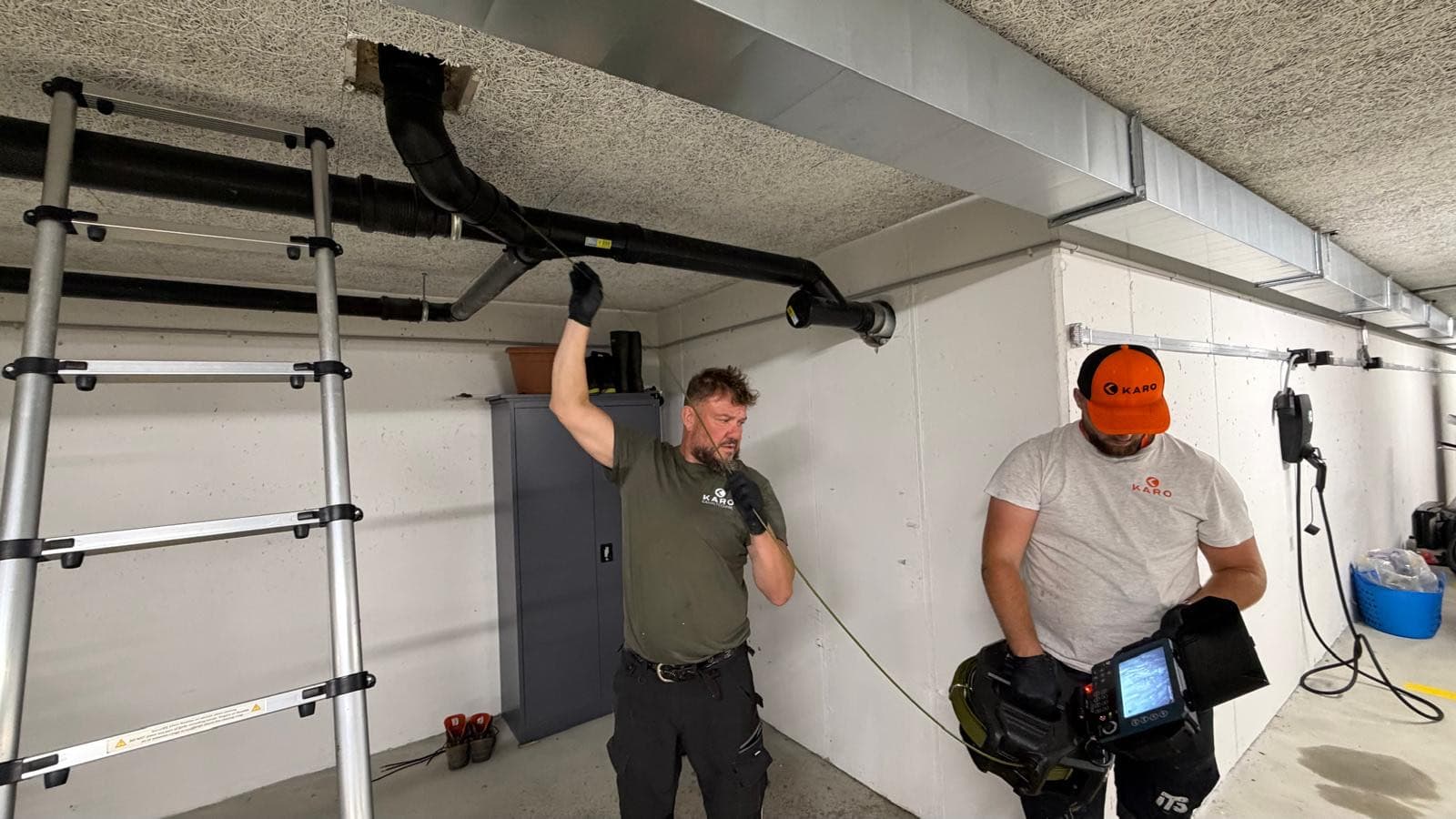
For wastewater pipes, the CCTV drain survey is the most important tool. A camera travels into the pipe via an inspection chamber or a rodding eye and shows cracks, displaced joints, root ingress, deposits or a pipe collapse. The findings are coded according to SN EN 13508-2, recorded with position and distance and documented as images and video. If the damage is due to backflow, the survey shows where the pipe was blocked and whether something is structurally wrong.
Karo Kanaltechnik takes care of this part: leak detection, CCTV drain survey, cleaning of the blocked pipe with chemical-free high-pressure water jetting at up to 200 bar and, if necessary, rehabilitation of the damaged wastewater pipe – without digging wherever the damage pattern allows.
Drying and repair: work for specialists
Once the cause has been found and remedied, the second part begins: drying. Soaked screeds, insulation layers and walls often only dry out incompletely on their own, and residual moisture leads to mould and consequential damage. Building drying companies measure the moisture, set up dehumidifiers, technically dry insulation layers under the screed and monitor progress until the readings are right. Depending on the component, this takes days to weeks.
This work must be clearly separated from the search for the cause. Karo Kanaltechnik does not dry buildings or repair water damage to interior fittings, but makes sure that the pipes are watertight again and the wastewater drains away freely. Building dryers, painters and floor layers are responsible for drying, painting and floor coverings; with larger damage, the insurer or the property management company often coordinates the sequence of work.
The order is important here: first remedy the cause, then dry, and finally repair. If the defective pipe is only repaired after drying, in the worst case it has to be opened up and dried a second time.
Water damage and insurance: who is responsible?
Which insurance steps in depends on what is damaged and where the water came from. As a rough guide: damage to the building itself – walls, floors, fitted kitchen, pipes – is a matter for the owner's buildings insurance. In most cantons, the compulsory cantonal buildings insurance covers fire and natural hazard damage; escape of water damage, on the other hand, is usually insured through a separate, private building water damage insurance.
Damage to movable property – furniture, clothes, electronics, items stored in the basement – is a matter for the contents insurance of the person who owns the items, so for tenants their own policy. If someone caused the damage, for example because a washing machine leaked while unattended and damaged the flat below, personal liability insurance may also play a role.
Whether a specific loss is covered is decided solely by the policy and its terms and conditions. Frequently disputed points are backflow from the sewer system, penetrating groundwater or surface water, gradual damage caused by long-standing leaks, and the costs of searching for the cause and exposing the pipe. Read the terms and conditions or ask your insurer directly before placing orders that you want to claim through the insurance. This page is no substitute for advice from your insurer.
Documentation for the insurer
Clean documentation makes settling the claim easier and faster. This includes your own photos and videos from the day of the damage, a short written account of when and how the damage was discovered, a list of the damaged items with receipts where available, and the invoices from all companies commissioned.
With damage to pipes, the technical findings are particularly valuable. The report of a CCTV drain survey shows the damaged spot with distance and position, the coding according to SN EN 13508-2 and, where assessed, the condition grade according to VSA, and it records whether it is a sudden fracture, a blockage or damage that has developed over years. This distinction is often decisive for the insurer. Karo provides images, video and a report according to SN EN 13508-2 for this purpose.
Keep all documents together, even if the damage seems minor. If consequential damage appears later, such as mould behind a wall, complete documentation allows it to be attributed to the original event.
Preventing water damage
A lot of water damage can be prevented with little effort. Regularly clear leaves and sludge from roof, yard and floor drains as well as silt traps, have the backflow protection checked and serviced, do not leave washing machines and dishwashers running unattended and close the main stopcock during longer absences.
With older properties, a CCTV drain survey of the underground drains is worthwhile before damage occurs. It shows cracks, root ingress and deposits while they can still be remedied with cleaning or targeted rehabilitation. Karo provides a warranty of up to 10 years on rehabilitation work.
A typical case from the Zurich area: after a thunderstorm, dirty water flows back out of the floor drain in the laundry room of an apartment building, and the basement floor is several centimetres under water. The property management company has the washing machines taken out of service and the damage photographed. Karo cleans the underground drain at high pressure and then surveys it with the camera. The inspection reveals root ingress in a displaced joint just before the inspection chamber – this is where the pipe had become choked, so that the water could no longer drain away during the heavy rain. The report and video go to the property management company and the insurer; the joint is then rehabilitated without digging. A building drying company takes care of drying out the basement.