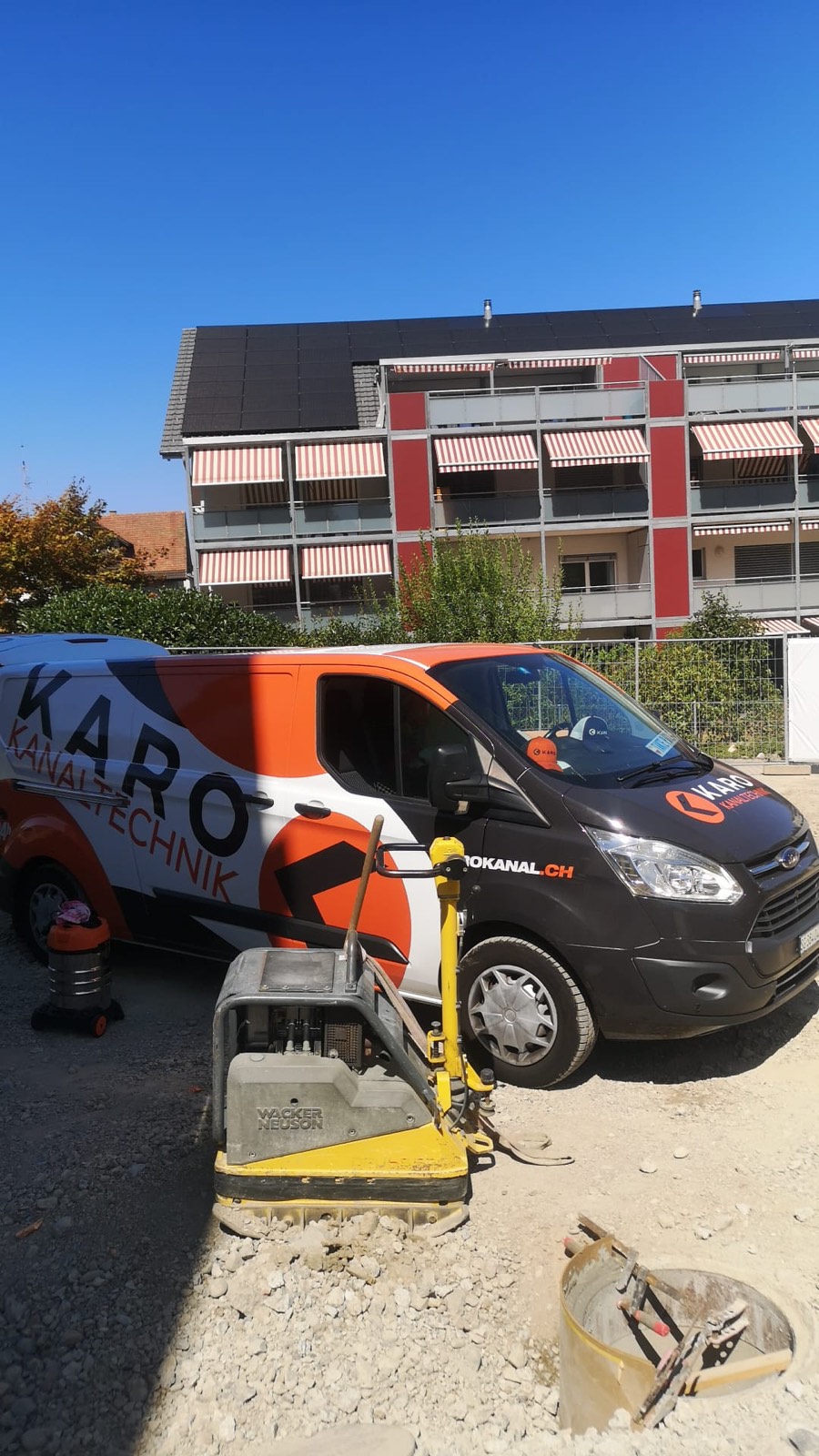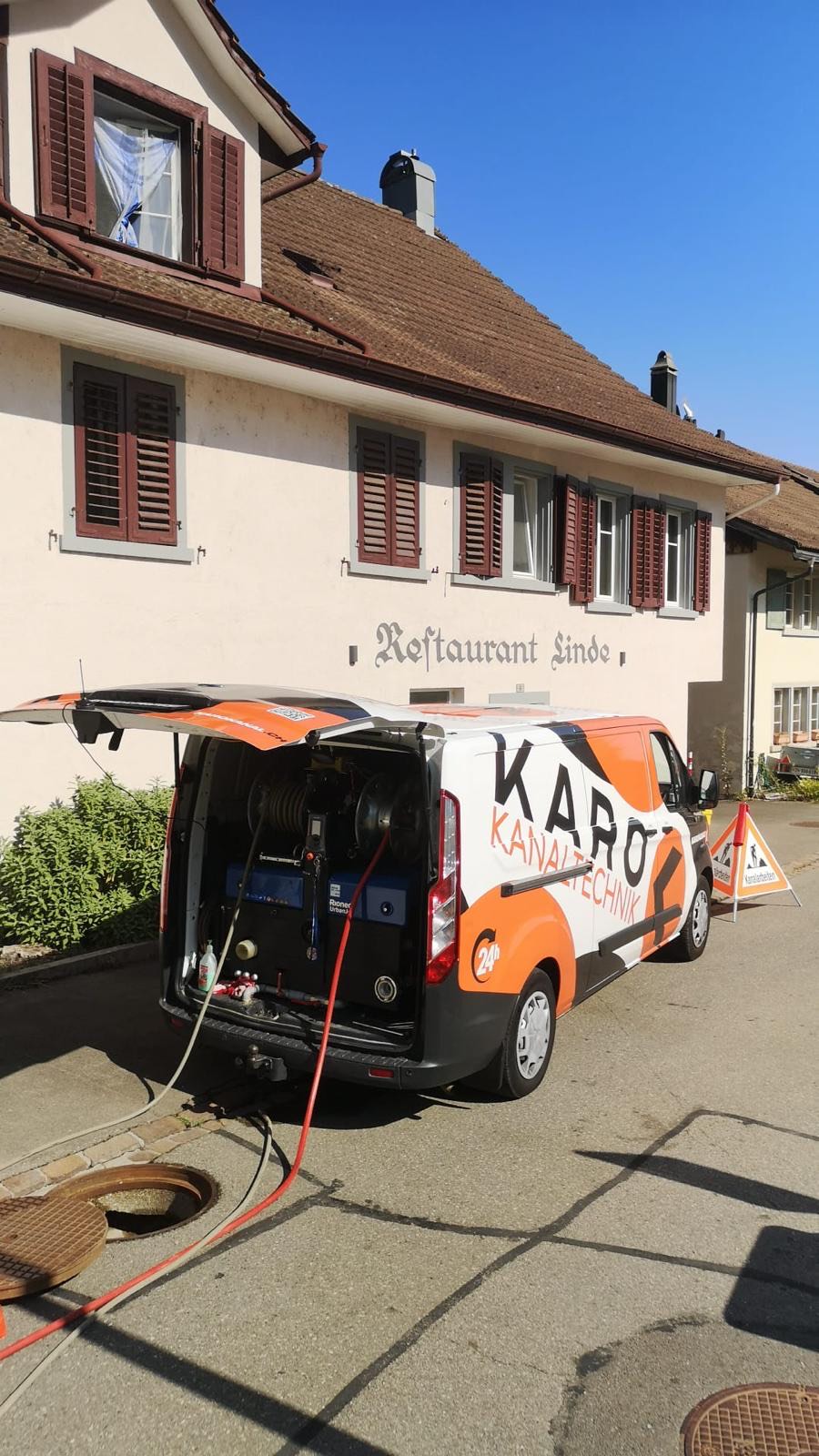
Stormwater and rainwater pipes need cleaning because leaves, sand, silt, moss and gravel settle in them and obstruct the flow of rainwater. Once the pipe is blocked, the rainwater can no longer drain away, backs up and floods courtyards, basement stairwells and underground car parks. Cleaning is done with high-pressure water jetting, which loosens and flushes away deposits, and by emptying silt traps and gully pots with a suction unit. This keeps the drainage working even in heavy rain. Precisely because these pipes only carry water when it rains, dirt builds up unnoticed over a long period until the system reaches its limits in the next downpour.
What is a stormwater pipe?
Stormwater (Meteorwasser) is the term commonly used in Switzerland for precipitation, meaning rain, snow and hail. A stormwater or rainwater pipe collects this water from roofs, forecourts, roads and sealed surfaces and carries it away separately from foul water, either into a watercourse, an infiltration system or the stormwater sewer. Unlike the foul water pipe, it does not carry household wastewater, only surface water. This separation protects watercourses and relieves the wastewater treatment plants.
Why do rainwater pipes become blocked?
Rainwater pipes are particularly vulnerable to dirt coming in from outside. Leaves, pine needles, blossom, sand and fine debris enter the pipe via gutters and their roof water pipes and via ground inlets. In heavy rain, gravel and soil are washed in as well. This material settles in the pipes, in gully pots and in silt traps. If root ingress or a faulty gradient is added to the mix, the situation gets worse. Because rainwater pipes often only carry water when it rains, the dirt is not flushed away on its own but accumulates over time.
The season is another factor. In autumn there are especially large amounts of leaves, which collect in gutters and inlets within a short time and are washed from there into the pipes. In spring, pollen and fallen blossom add to the load. If you live somewhere with lots of trees, expect the pipes to get dirty faster and plan cleaning more often, ideally before the wetter months begin.
What happens when the pipe is blocked?
If rainwater cannot drain away, it finds another route. Courtyards and driveways end up under water, basement stairwells and light wells fill up, and underground car parks flood. As a result, water gets into the building and causes damp and structural damage. Foundations can also suffer from water standing against them for long periods. With heavy rainfall events becoming more intense, efficient rainwater drainage is essential to prevent flooding. On properties with a lot of sealed surface, municipalities also often require stormwater retention, which holds back rainwater and releases it with a delay.
How is the cleaning carried out?
First, the silt traps, gully pots, gullies and inspection chambers are checked and emptied with the suction vehicle, because this is where most of the coarse dirt collects. The pipes are then jetted at high pressure: the nozzle pulls the hose through the pipe, loosening sand, silt and deposits from the pipe wall, which are then flushed to the manhole and sucked out.
If needed, a CCTV drain survey checks the condition of the pipe and reveals root ingress, cracks or a faulty gradient. This shows whether further measures are needed besides cleaning. All the dirt removed is disposed of properly. After cleaning, the rainwater flows away freely again.
How does it differ from the foul water sewer?
In modern drainage systems, rainwater and foul water are carried separately; this is known as the separate system. The stormwater pipe carries only clean rainwater, which can be discharged into a watercourse or an infiltration system without treatment. The foul water sewer, by contrast, takes polluted household wastewater to the wastewater treatment plant. This separation relieves the treatment plants in heavy rain and protects watercourses from overload.
A common mistake with serious consequences is the misconnection, where foul water accidentally ends up in the rainwater pipe or vice versa. Such misconnections pollute watercourses or overload the sewer system and are sometimes only discovered during a CCTV drain survey. That is exactly why regular inspection of rainwater pipes is not only a question of cleanliness but also of water protection. If you know your separate system and have it checked, you avoid these problems.
How often should the pipes be cleaned?
The interval depends on the location. If there are many trees nearby, a lot of leaves get into the pipe in autumn, so cleaning once a year makes sense. Where there are few leaves, the interval can be longer. As a rule of thumb, rainwater pipes, gutters and gully pots should be inspected and cleaned at least once a year, ideally before the wet season. A maintenance contract ensures the appointments are not forgotten and that the drainage is ready in good time before the autumn and winter season.
What role do gully pots and silt traps play?
Gully pots and silt traps are the silent helpers in the rainwater system. They are designed so that sand, gravel and coarse dirt carried along with the water settle in them before the water enters the pipe further downstream. In this way they protect the pipes from getting dirty too quickly. For this protection to work, however, they must be emptied regularly, because a full silt trap no longer holds back any dirt and passes it straight into the pipe.
When the rainwater system is cleaned, the gully pots and silt traps are therefore always emptied with the suction vehicle and flushed as well. If you have these components maintained regularly, you significantly extend the cleaning intervals of the pipes themselves and effectively prevent blockages. The combination of emptied traps and jetted pipes ensures that the whole system drains reliably even in heavy rain.
What does cleaning cost?
The cost depends on the length of the pipe, the number of manholes and how dirty they are. As a guide, expect an hourly rate of around CHF 160 per hour plus a call-out fee of about CHF 60, as well as disposal costs for the silt removed. A CCTV drain survey can be added from around CHF 50. These figures can vary by plus or minus 15 per cent. If several manholes and pipes are cleaned in one visit, the share of call-out costs falls.
Your rainwater or stormwater pipe no longer drains, or your courtyard is under water when it rains? Karo Kanaltechnik thoroughly cleans pipes, gully pots and silt traps and helps prevent flooding. If water is backing up right now, our 24/7 emergency service is there for you around the clock on +41 43 588 12 08.