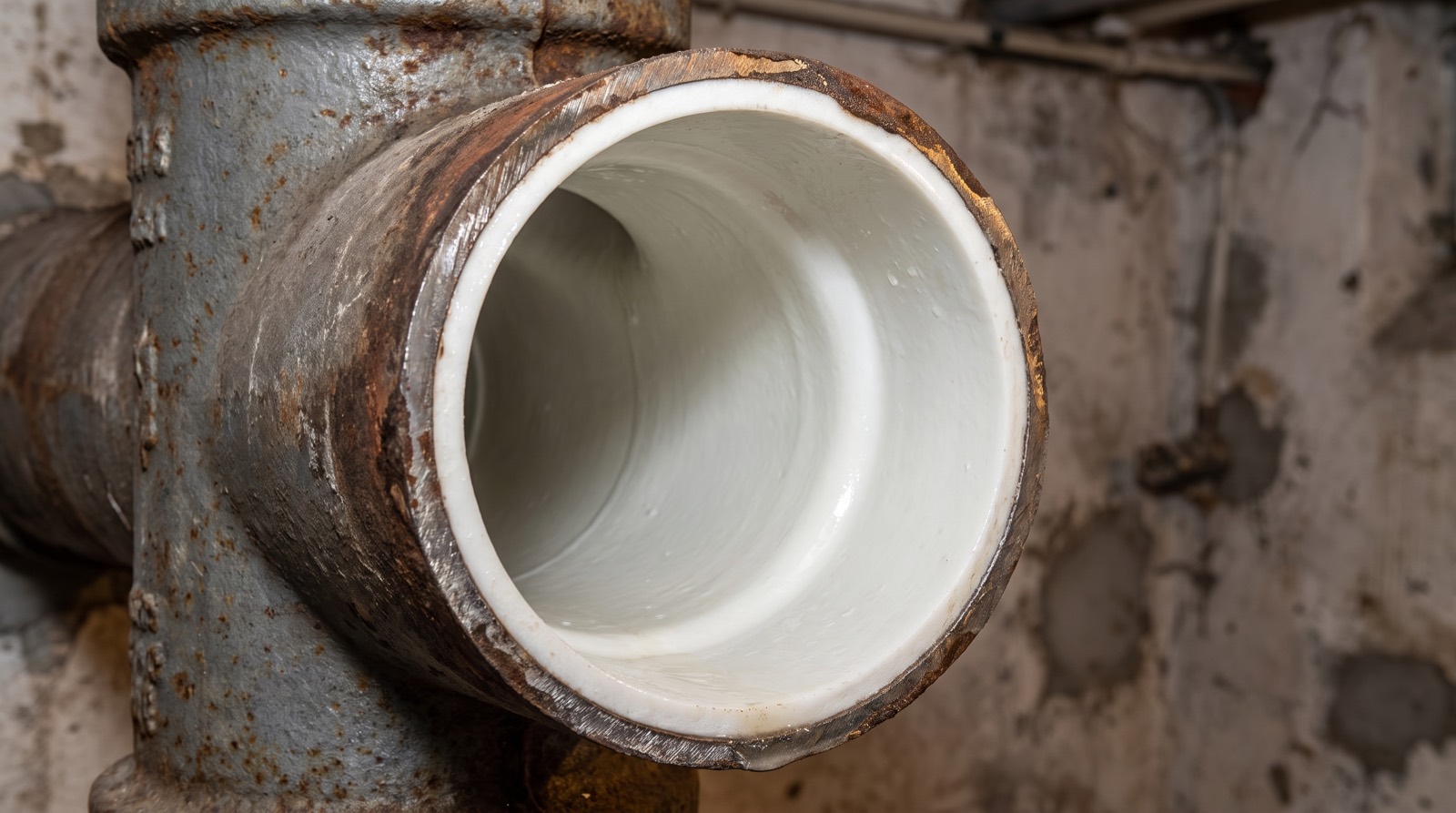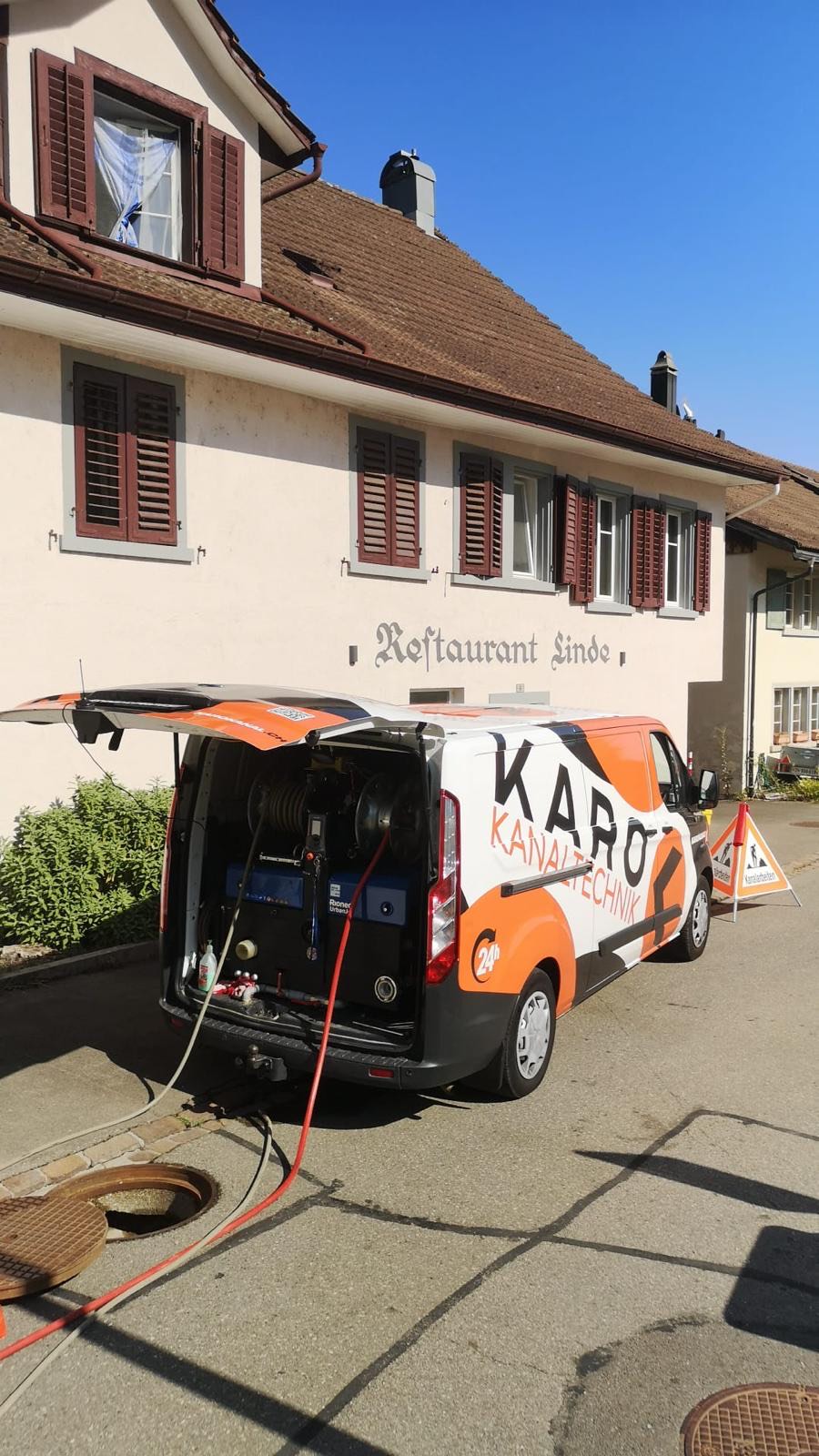
In most cases you can now rehabilitate an underground drain without trenching, meaning without breaking up the ground: a CIPP liner impregnated with synthetic resin is pulled into the damaged pipe, pressed against the pipe wall and left to cure, creating a new, watertight pipe inside the old one. This process repairs cracks, leaking joints and corrosion damage from the inside without having to dig up gardens, driveways or floor slabs. Only for badly deformed or collapsed pipes is open-cut construction still necessary. Which method is suitable in a given case is always decided only after a thorough CCTV drain survey that records the location and extent of the damage.
What is an underground drain?
The underground drain is the part of the drainage system that collects wastewater inside and below the building and usually carries it through the ground under the floor slab or the garden to the public sewer. It lies hidden underground and is therefore invisible in everyday life, but it is central to the working of the entire building drainage. Because underground drains are often decades old, typical damage appears over time: leaking joints, cracks, root ingress, fragmentation and corrosion. Such damage leads to blockages, backflow and, in the worst case, soil washout, where voids form under the floor slab and endanger the structural stability of the building.
How can you tell that a pipe needs rehabilitation?
Signs include recurring blockages, slow drainage, smells from the drains, damp patches in the basement or subsidence in the garden. However, only a CCTV drain survey gives a definitive answer. It shows exactly where and how badly the pipe is damaged and provides the basis for choosing the rehabilitation method. Only once the location, extent and type of damage are known can you decide whether trenchless rehabilitation is possible or whether an open-cut repair is required.
How does trenchless rehabilitation work?
The most common trenchless method is the CIPP lining process. First, the pipe is thoroughly cleaned with high-pressure water jetting and measured with a camera. A fabric tube is then impregnated with synthetic resin and pulled or inverted into the old pipe through a manhole or a rodding eye. Compressed air or water presses the liner against the pipe wall.
The resin then cures, depending on the system by hot water, steam or UV light. Once cured, a new, seamless and watertight pipe has formed inside the old one and takes over its structural and hydraulic function. Finally, any branch connections that have been covered are reopened with a robotic cutter, and a CCTV drain survey records the result. For individual, localised damage there is also patch liner (short liner) technology, which rehabilitates only the damaged section.
What are the advantages of the no-dig method?
The biggest advantage is that gardens, terraces, driveways and floor slabs remain untouched. There is no costly excavation, no need to reinstate surfaces and no long construction period. As a result, rehabilitation is faster, cleaner and often cheaper than replacing the whole pipe. In addition, the new inner layer is smooth, which improves flow and makes new deposits less likely. A properly installed liner lasts for several decades.
How long does trenchless rehabilitation take?
The duration depends on the length, diameter and type of damage, but compared with open-cut construction, trenchless rehabilitation is much faster. A single underground drain can often be rehabilitated within a day, from cleaning and inserting the liner through to curing. With patch liner technology for a single defect, it is often quicker still. Because there is no excavation or reinstatement work, the property is usually fully usable again shortly after curing.
The curing time itself depends on the system used. UV light curing is particularly fast, whereas hot water or steam curing takes somewhat longer. What matters is that curing is controlled and complete, because only a correctly cured liner achieves full strength and the expected service life of several decades. An experienced contractor monitors this process carefully and documents it.
When is open-cut construction still necessary?
Not every defect can be fixed from the inside. If the pipe has collapsed, is badly deformed, broken along its entire length or completely displaced, the liner has no load-bearing base. In such cases the affected section must be exposed and replaced. Open-cut construction is also used when the pipe route is to be changed or several pipes are to be combined. Which method is possible is decided on the basis of the CCTV drain survey and the conditions on site.
How can you prevent new damage?
After rehabilitation, the question is how to keep the new pipe in good condition for as long as possible. The smooth inner layer of a liner makes deposits less likely and improves flow, but it still benefits from regular checks. An occasional CCTV drain survey shows early on whether new problems are developing, for example in sections not yet rehabilitated or at transitions. This allows smaller interventions to be planned before they turn into bigger damage.
Careful use of the drainage also helps prevent problems. Fats, wet wipes, sanitary products and other solids do not belong in the pipe, as they encourage deposits and blockages. If you follow these basic rules and have the pipes cleaned and inspected at sensible intervals, you will considerably extend the life of the drainage and protect your investment in the rehabilitation. A maintenance contract for drain maintenance takes scheduling off owners' hands.
What does it cost to rehabilitate an underground drain?
The cost depends heavily on length, diameter, type of damage and method, and can only be given reliably after a CCTV drain survey. The survey is available from around CHF 50; the preparatory cleaning and labour are charged at an hourly rate of about CHF 160 per hour plus a call-out fee of around CHF 60, with these figures varying by plus or minus 15 per cent. Trenchless rehabilitation is usually considerably cheaper than complete replacement with excavation, because there is no surface reinstatement and no long construction period. A detailed quote after the inspection gives you planning certainty.
Do you suspect damage to your underground drain? Karo Kanaltechnik inspects the pipe by camera and, wherever possible, rehabilitates it without digging and without tearing up your garden. For acute blockages or backflow, our 24/7 emergency service can be reached around the clock on +41 43 588 12 08.