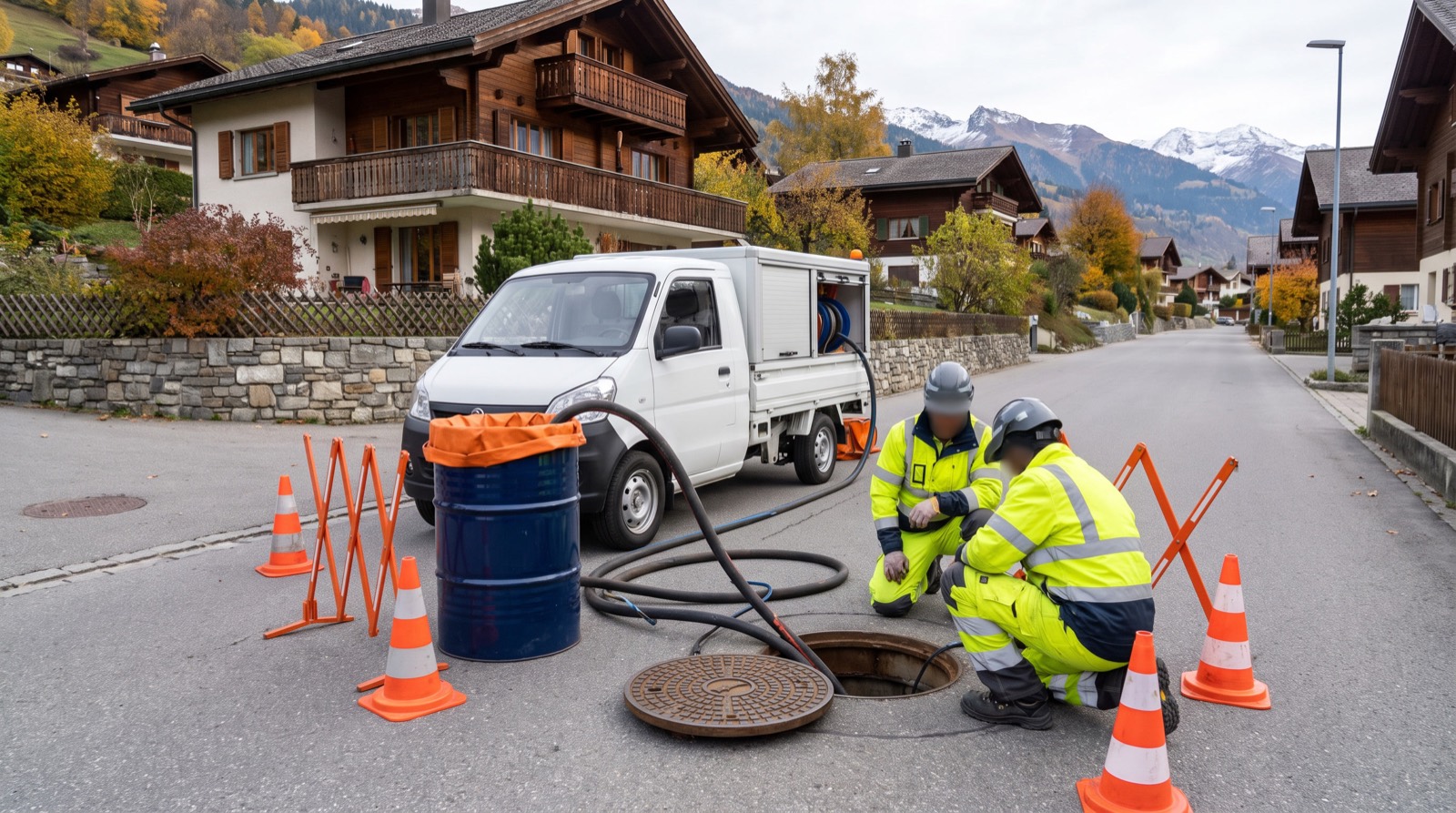
In Switzerland, trenchless drain rehabilitation usually costs between CHF 250 and CHF 600 per running metre, depending on the method and diameter. For small house connections (DN 100–150), the CIPP liner price often starts at around CHF 250 to CHF 400 per metre, whereas larger diameters, difficult access or additional work can push the price per metre up considerably. These figures are guide prices – the final quote can only be given after a CCTV drain survey of the pipe.
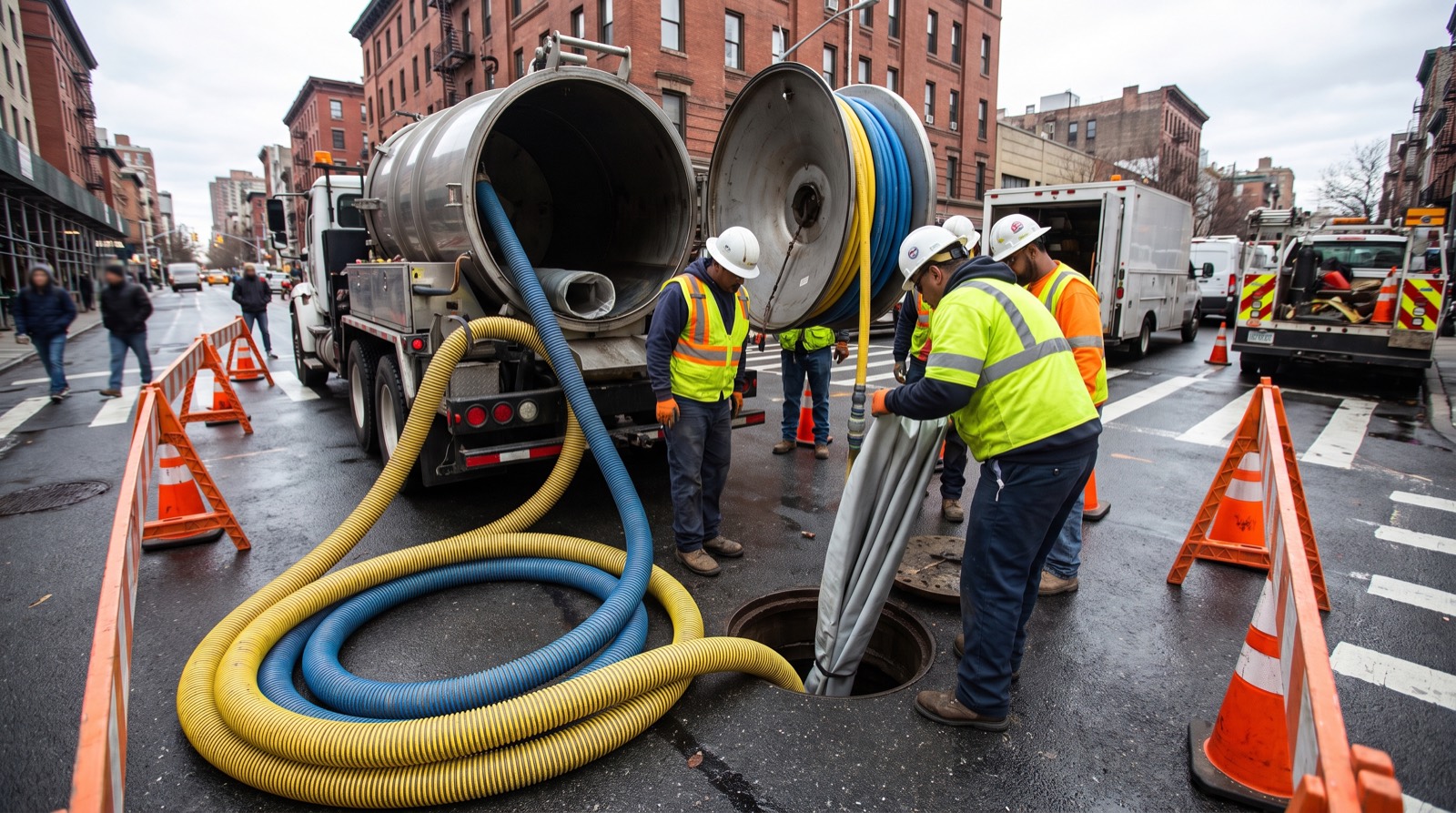
The big advantage over traditional excavation: trenchless rehabilitation does away with expensive earthworks, road works and reinstatement. It is precisely these ancillary costs that often make up the largest part of the bill for open-cut construction. Anyone who compares only the price of the pipe therefore misses the crucial point: with open-cut rehabilitation you mainly pay for the excavator, digging, disposal and reinstating the surface – not for the pipe itself.
Why the price per metre varies so much
The price per metre is not a fixed figure but the result of several factors. Two pipes of identical length can differ in price by a factor of two – for example because one is easy to access and runs straight, while the other has several bends, branches and root ingress. If you know the cost drivers, you can assess a quote better and compare offers fairly. That is why any flat-rate figure on the internet should be treated with caution: it can only be a rough guide, never a binding price for your particular situation.
Factor 1: pipe diameter (DN)
The larger the nominal diameter, the more material (carrier felt, resin) is needed per metre and the more complex the installation. A house connection of DN 100–150 is cheaper to rehabilitate than a collector sewer of DN 300 or larger. Typical private underground drains in a single-family home are at the lower end of the price range. With larger diameters, not only the material costs rise but also the demands on technology and structural design, which is reflected in the price per metre.
Factor 2: method and pipe condition
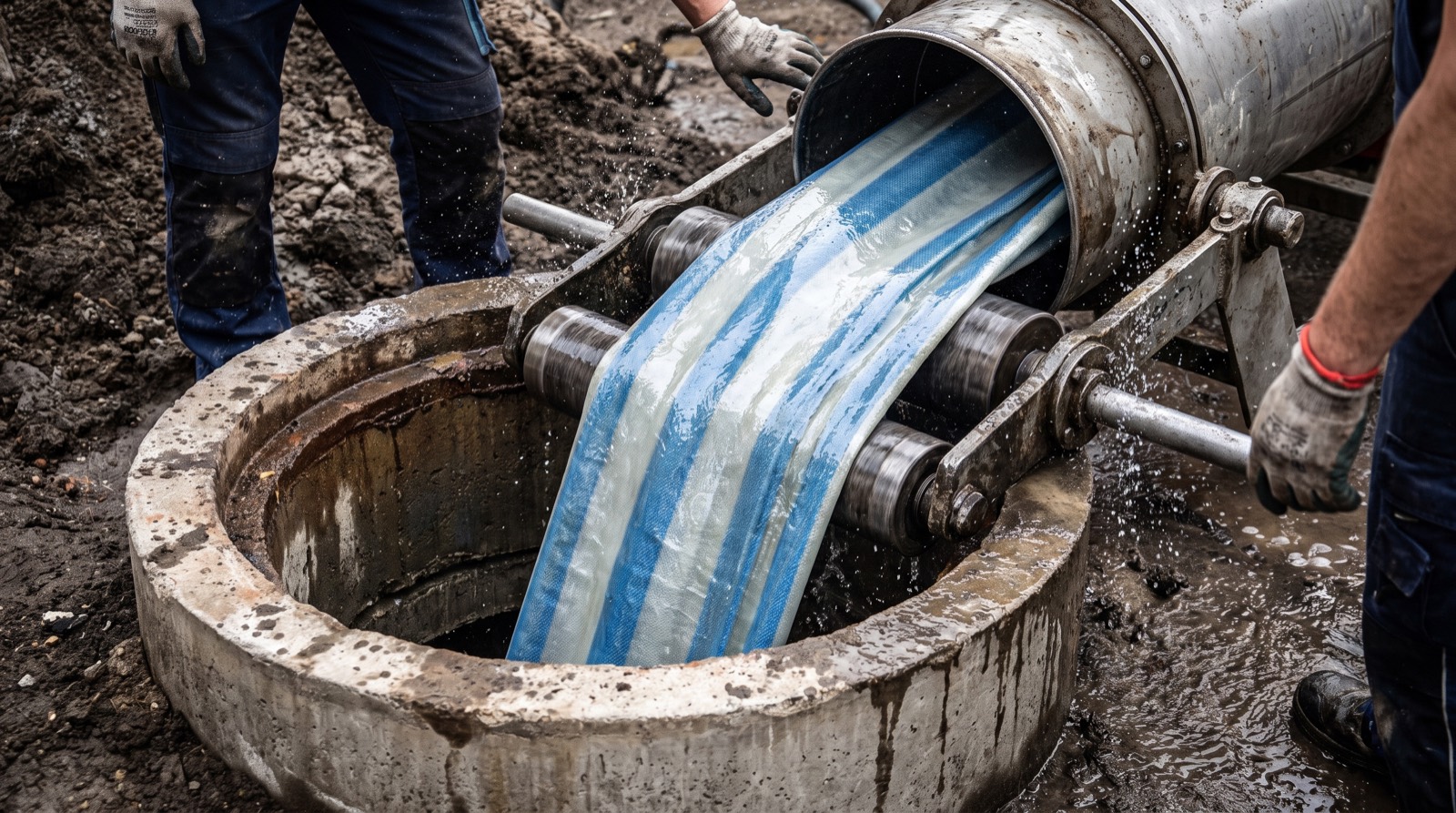
A continuous CIPP liner along the whole pipe costs something different from a patch liner that seals just a single damaged spot. If cutting work is also needed to remove roots, protruding connections or deposits, these are added as separate items. Reopening connections after lining (with a robotic cutter) is also usually charged separately. The worse the initial condition of the pipe, the more preparatory work is required – and the higher the total bill.
Factor 3: access and preparatory work
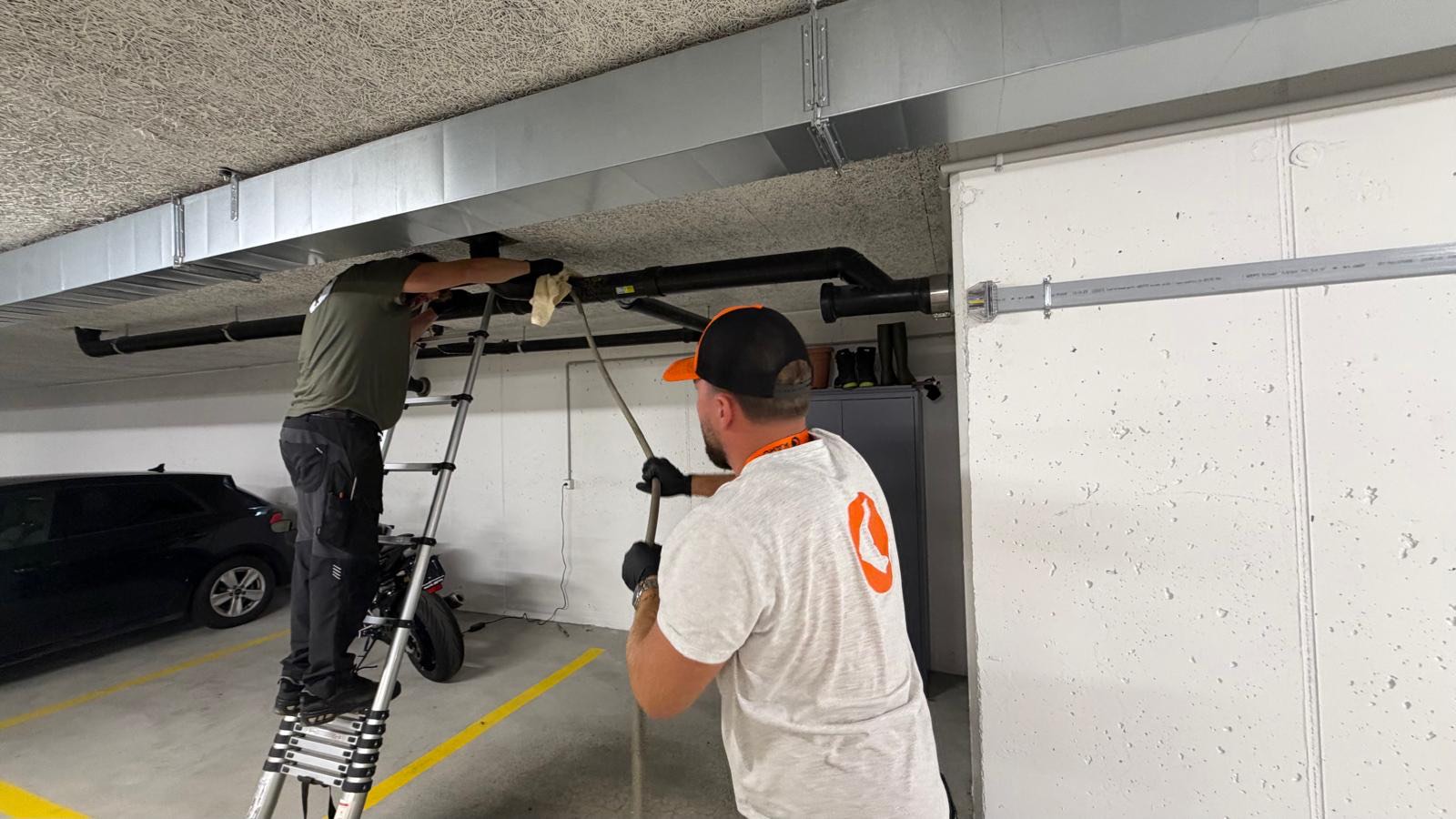
A pipe that is easy to reach via an existing manhole or inspection chamber can be rehabilitated efficiently. If, on the other hand, an access first has to be created, a floor opened up or a hard-to-reach spot in the basement accessed, the costs rise. In addition, every rehabilitation is preceded by thorough cleaning – high-pressure cleaning of the pipe is a prerequisite for the liner to cure properly. Without a clean pipe wall, the resin does not bond reliably and the rehabilitation would not be permanently watertight.
Typical guide prices at a glance
As a rough guide for Switzerland: CIPP lining (continuous rehabilitation) costs around CHF 250 to CHF 600 per metre, depending on diameter and condition. A patch liner or Pointliner for a single damaged spot often costs CHF 800 to CHF 2'000 per repair point including call-out and preparatory work. On top of that come the preliminary CCTV drain survey (from CHF 50, ±15%), drain cleaning (guide price CHF 160 per hour) and the call-out (CHF 60). All figures are guide prices – we prepare the final quote after the CCTV drain survey.
Worked example for a house connection
Let us take a 12-metre underground drain of DN 150 in a single-family home with a section that leaks due to age. At a price of CHF 350 per metre, the rehabilitation alone comes to around CHF 4'200. On top of that come the call-out, CCTV drain survey, cleaning and reopening the connections. Realistically, in a case like this you end up at around CHF 5'000 to CHF 7'000. Open-cut rehabilitation of the same pipe – with excavation under the terrace and subsequent reinstatement – could easily cost twice as much. This is exactly where the economic appeal of the trenchless method lies.
These items belong in a reputable quote
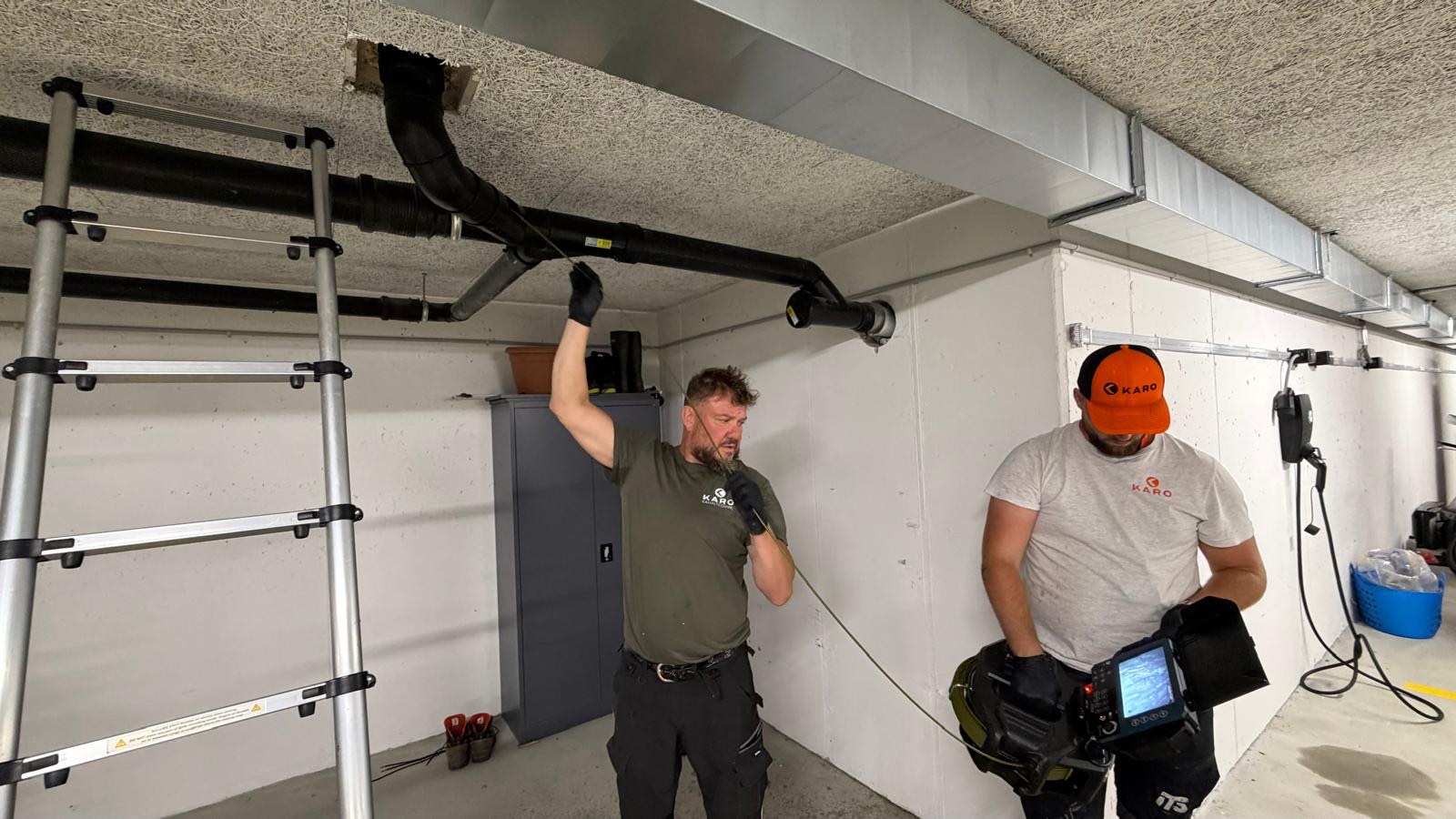
A transparent quote lists the individual steps separately: CCTV drain survey and condition report, cleaning and any cutting work, the actual liner material and its installation, curing, reopening the connections and an acceptance survey after the rehabilitation. This way you can see exactly what you are paying for. Flat rates "per metre" without stating the condition are not reputable, because they cannot reflect the actual effort. Make sure that every item is listed clearly – this protects you from unpleasant supplementary charges.
How to save on drain rehabilitation
The biggest lever is choosing the trenchless method instead of open-cut construction – the earthworks and surfacing alone that are saved often amount to several thousand francs. Secondly, it pays to have several damaged spots rehabilitated in the same visit, because the call-out and set-up time are only incurred once. And thirdly, early rehabilitation prevents a small crack from turning into extensive damage with undermining. If you only react when the basement is under water, you end up paying considerably more than for a planned, timely repair.
Another cost factor that many people underestimate is combining several services. If drain cleaning is being carried out anyway, the CCTV drain survey can usually be done during the same appointment – and conversely, a small damaged spot can be treated with a patch liner directly after the inspection without a second call-out. Bundling work like this noticeably reduces the total cost. It is therefore worth talking openly about the suspected condition of the pipe when you book the appointment, so that we can plan the job efficiently from the outset and without unnecessary journeys.
Would you like to know what rehabilitating your pipe will actually cost? Use our guide price configurator for an initial estimate or call us directly. Karo Kanaltechnik is there for you with its 24/7 emergency service – on +41 43 588 12 08. After a CCTV drain survey, you receive a binding, transparent quote with no hidden costs.