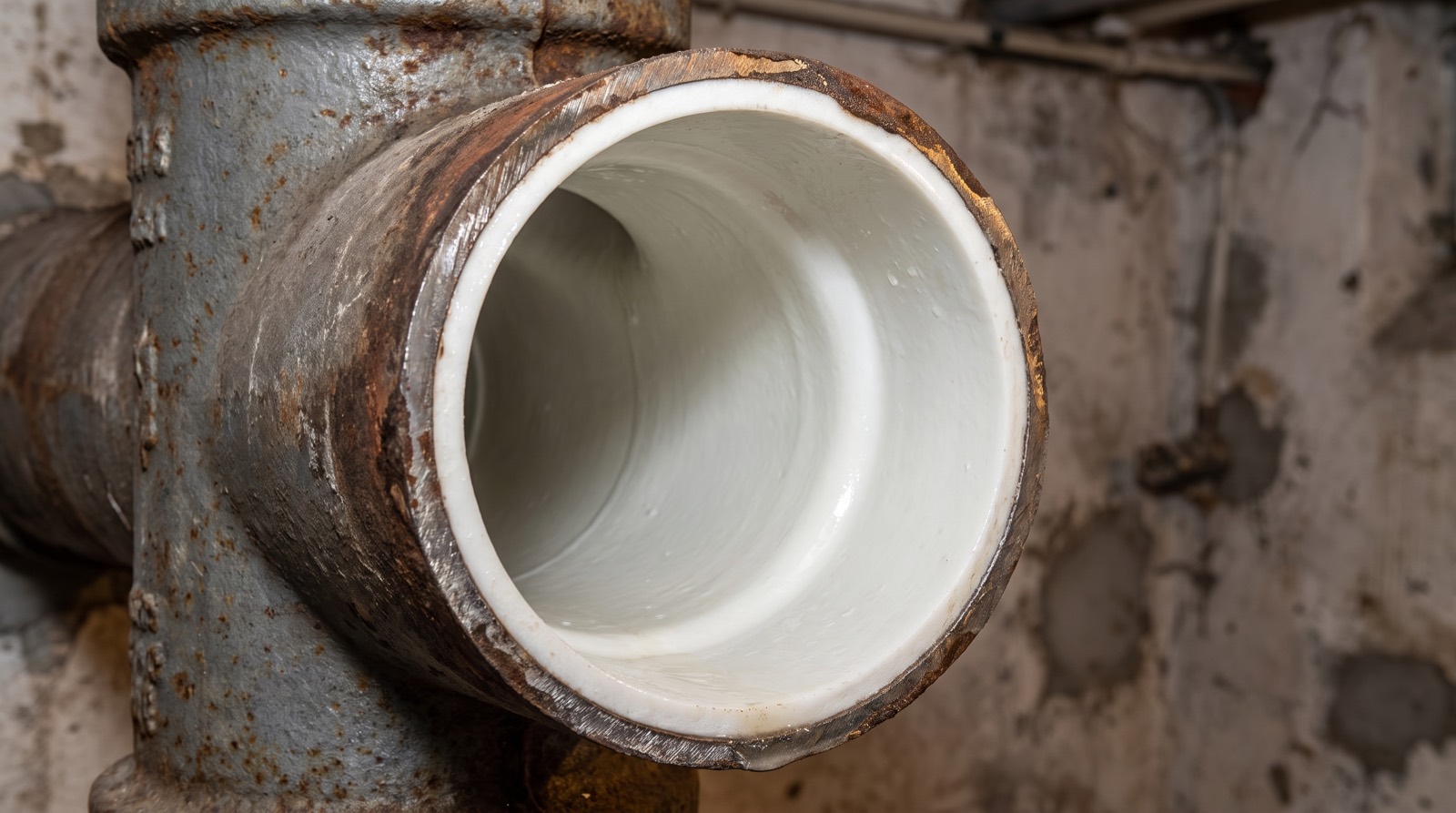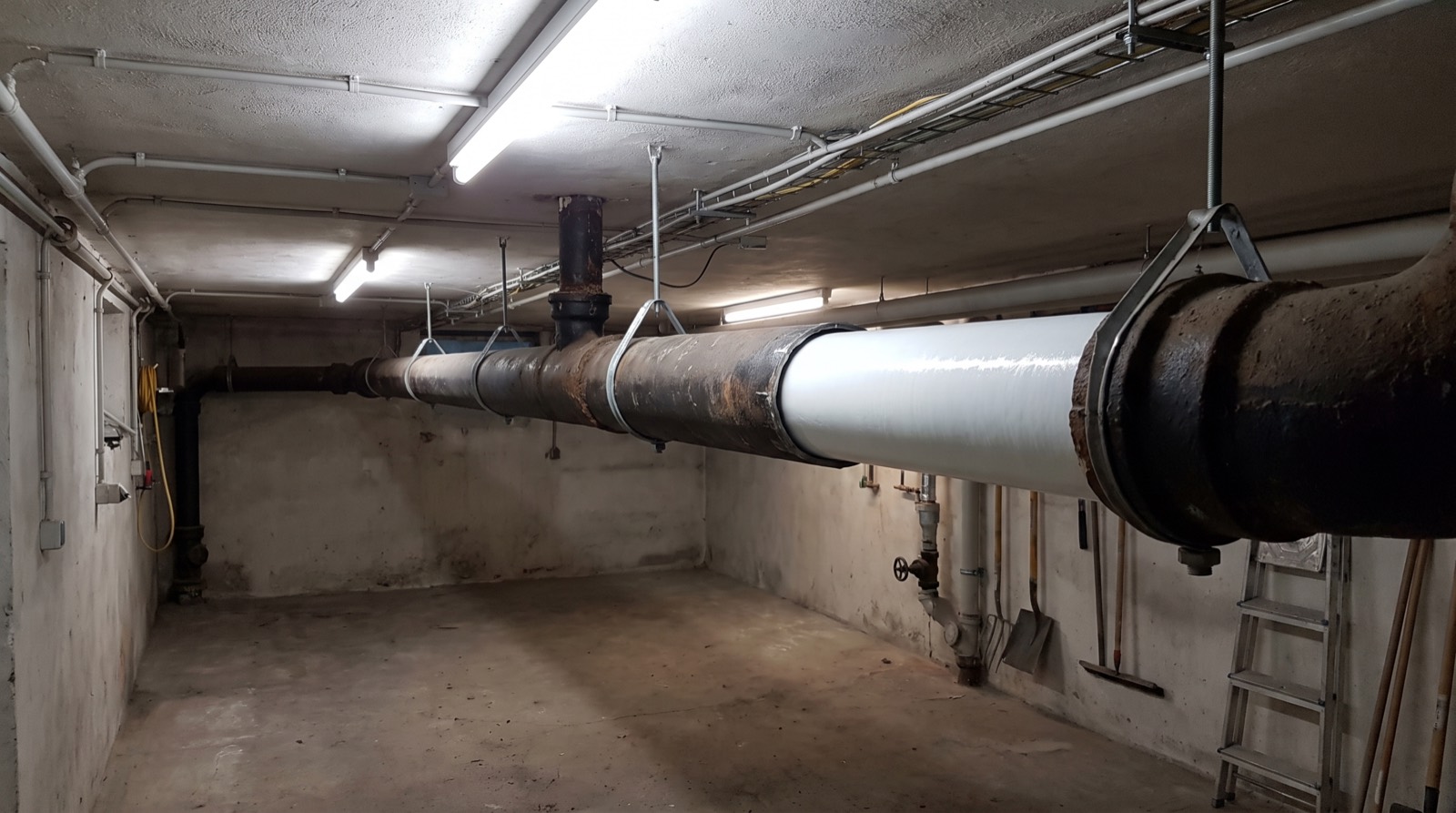
CIPP lining is a trenchless method in which a liner impregnated with synthetic resin is pulled into a defective pipe, pressed against the pipe wall and cured – creating a new pipe inside the old pipe, without any digging. In Switzerland, the costs are usually between CHF 250 and CHF 600 per running metre, depending on diameter, condition and access. All prices are guide prices; the binding quote follows after the CCTV drain survey.
The method is also known as cured-in-place pipe (CIPP) and is one of the most established methods of trenchless drain rehabilitation. It is suitable for renewing entire pipe sections with several defects in a single operation – quickly, cleanly and with a long service life. Especially for pipes damaged by age that leak along their entire length, it is in most cases clearly superior to open-cut construction. Below we explain the method step by step and put the costs into realistic perspective.
How does CIPP lining work?
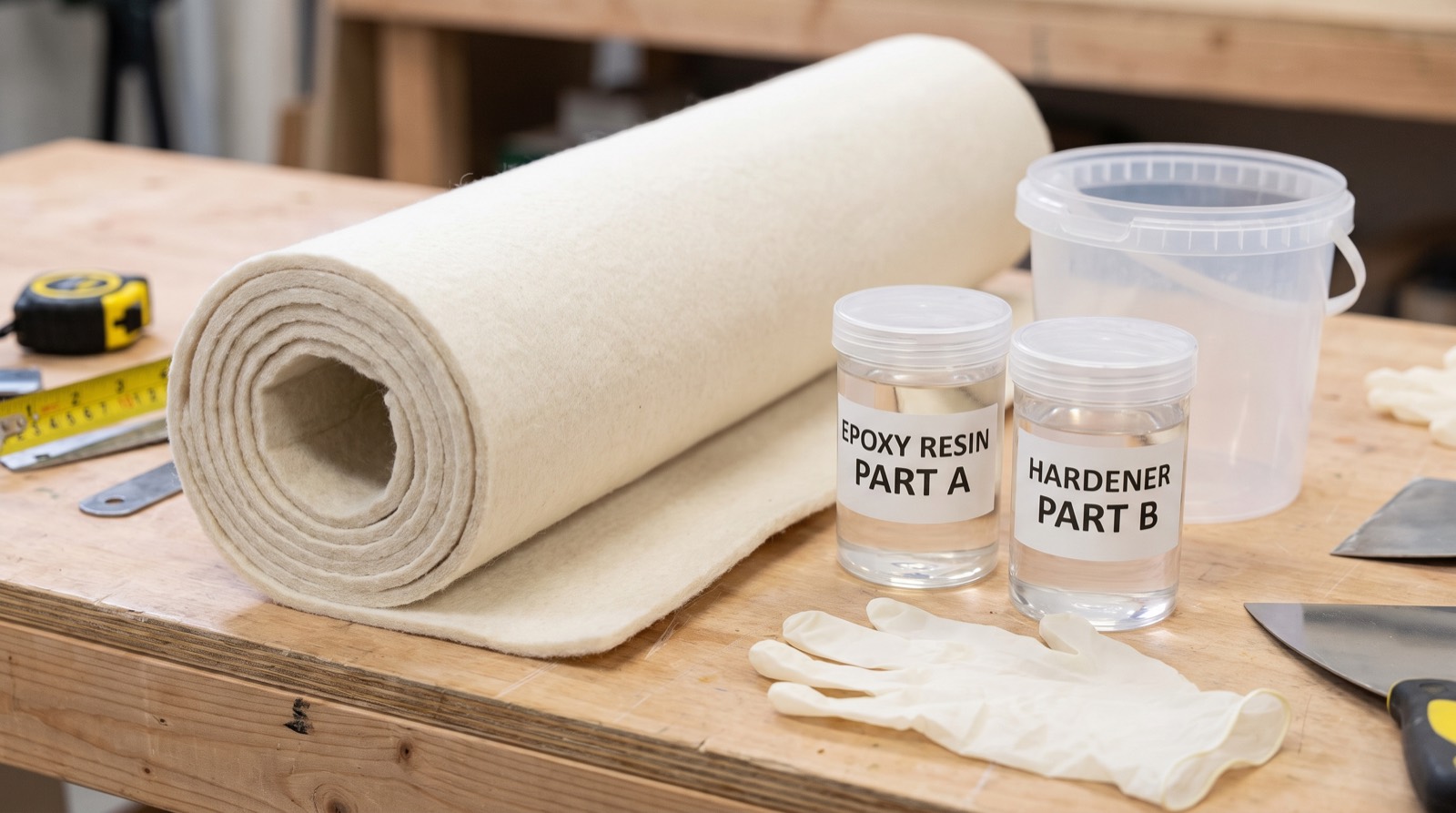
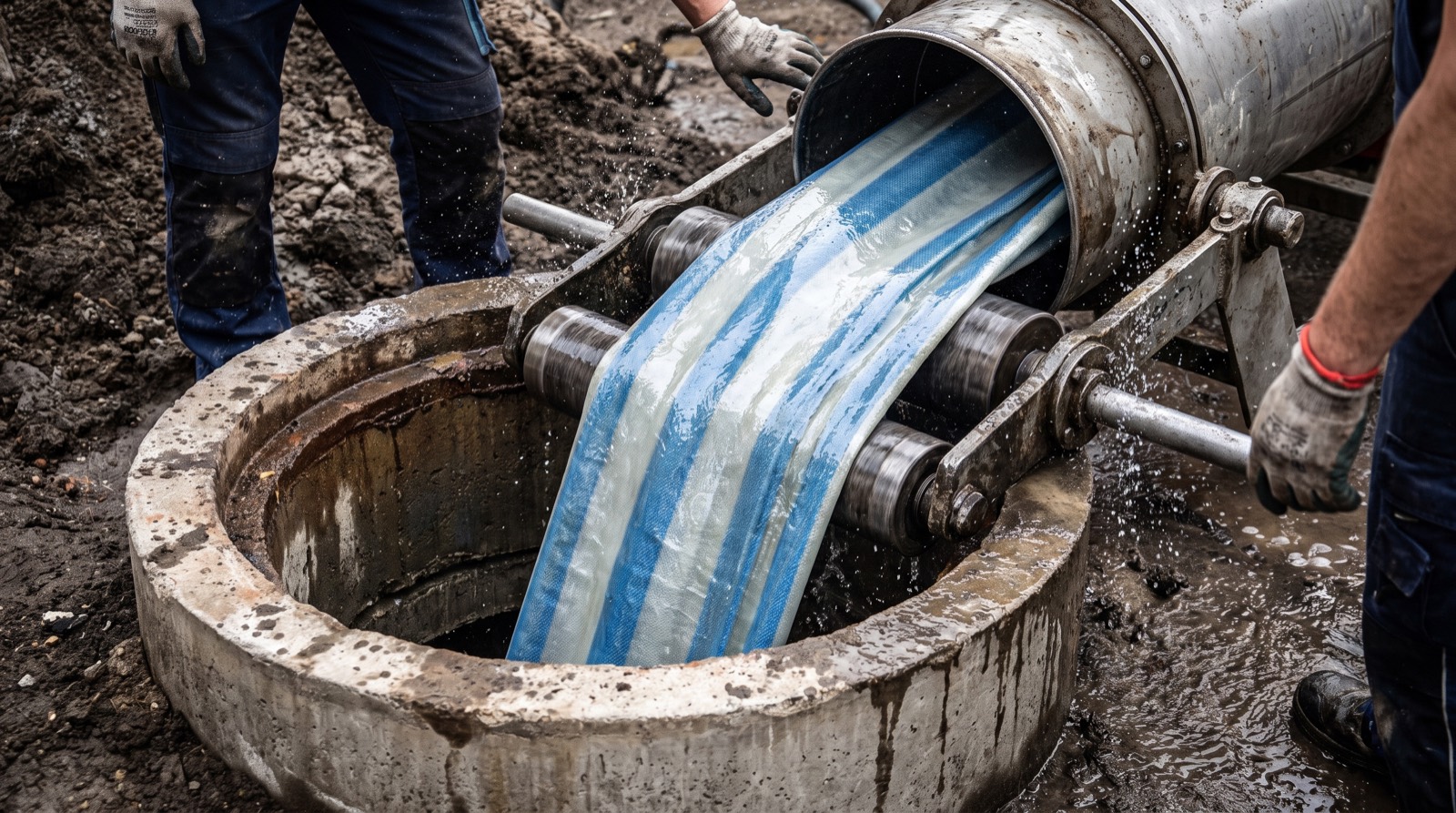
A carrier liner made of needle felt or glass fibre is impregnated with a two-component resin. This liner is pulled into the cleaned pipe via a manhole or an opening, or turned inside out into it using pressure (inversion). There it is pressed against the pipe wall and left to cure. After curing, the liner forms a structurally load-bearing, watertight and smooth new pipe that is firmly bonded to the old pipe and takes over its load-bearing function.
Curing: hot water, steam or UV light
Depending on the system, the resin cures with hot water, steam or UV light. UV-cured glass-fibre liners cure particularly quickly and evenly, whereas hot-water or steam-cured systems are proven and versatile. Which system is used depends on the diameter, length and conditions on site. Correct control of temperature and time is crucial for the liner to reach its full strength.
The process step by step
First the pipe is inspected by camera survey and cleaned with high pressure. Roots, deposits and protruding connections are milled away. Then the impregnated liner is inserted, pressed into place and cured. After curing, a robotic cutter reopens the connections that have been covered. A final acceptance survey documents the result and serves as proof of quality. Each step builds on the previous one – only clean execution from start to finish guarantees a watertight result.
What does CIPP lining cost?
Guide prices in Switzerland are CHF 250 to CHF 600 per metre for the rehabilitation itself. On top of that come the preliminary CCTV drain survey (from CHF 50, ±15%), cleaning (CHF 160 per hour), any milling work and the call-out (CHF 60). The price per metre rises with the diameter and the extent of the damage. Because no excavation is needed, the expensive earthworks and surfacing of open-cut construction are eliminated – which makes CIPP lining the cheaper overall solution in many cases. We can only give the exact price per metre for your pipe after the CCTV drain survey, because only then are the diameter, condition and effort known. For an initial rough guide, however, our guide price configurator is enough.
Benefits of CIPP lining
CIPP lining is fast (usually one day), clean and gentle: no torn-up road, no destroyed garden, hardly any noise. The smooth inner surface of the liner improves the flow, prevents deposits and makes the pipe root-proof. The method can also be used where digging would not be possible at all – for example under buildings or paved surfaces. For residents and businesses, this means minimal restrictions during the work.
When is CIPP lining the right choice?
The method is suitable when a pipe has several defects over a longer stretch, leaks due to age or shows root ingress, but its basic structure is still load-bearing. For a single, isolated damaged spot, on the other hand, a patch liner is often the more economical solution. The CCTV drain survey shows which option is suitable – so that neither too much nor too little is rehabilitated.
Service life and value preservation
A professionally installed CIPP liner lasts around 50 years. This makes CIPP lining a long-term investment in preserving the value of your property – at a fraction of the effort a complete open-cut renewal would involve. The acceptance survey after the rehabilitation serves as proof for owners, insurers and a later sale.
What to expect on the day of the rehabilitation
On the day of the rehabilitation, our team arrives with the equipped vehicle and sets up the work area at the access manhole. While the liner is being installed and cured, the affected section of pipe should not be used – so the toilet, washing machine and drains remain out of use for a few hours. We let you know in advance how long this restriction will last. In most single-family homes, the pipe is fully functional again the same day, so everyday life is hardly interrupted.
After curing and reopening the connections, we carry out the acceptance survey and show you the result directly on screen. You see the new, smooth inner pipe wall and, on request, receive the video recording and the report. This gives you complete proof that the work was carried out professionally. Should any rework unexpectedly be necessary, it is identified and remedied immediately – another advantage of the documented final check.
CIPP lining is suitable both for individual house connections and for larger projects with several pipe runs. In apartment buildings, commercial buildings or entire properties, several pipes can be rehabilitated in one coordinated operation, which saves call-out and set-up costs and concentrates the disruption into a short period. Rehabilitating soil stacks inside buildings is also possible without breaking open walls or ceilings. This makes the method an economical and gentle solution not only for single-family homes but for almost every type of building.
Would you like to have your pipe rehabilitated with CIPP lining? Our guide price configurator gives you an initial idea, and after a CCTV drain survey you receive a binding quote. Karo Kanaltechnik is there for you with its 24/7 emergency service – call us on +41 43 588 12 08.