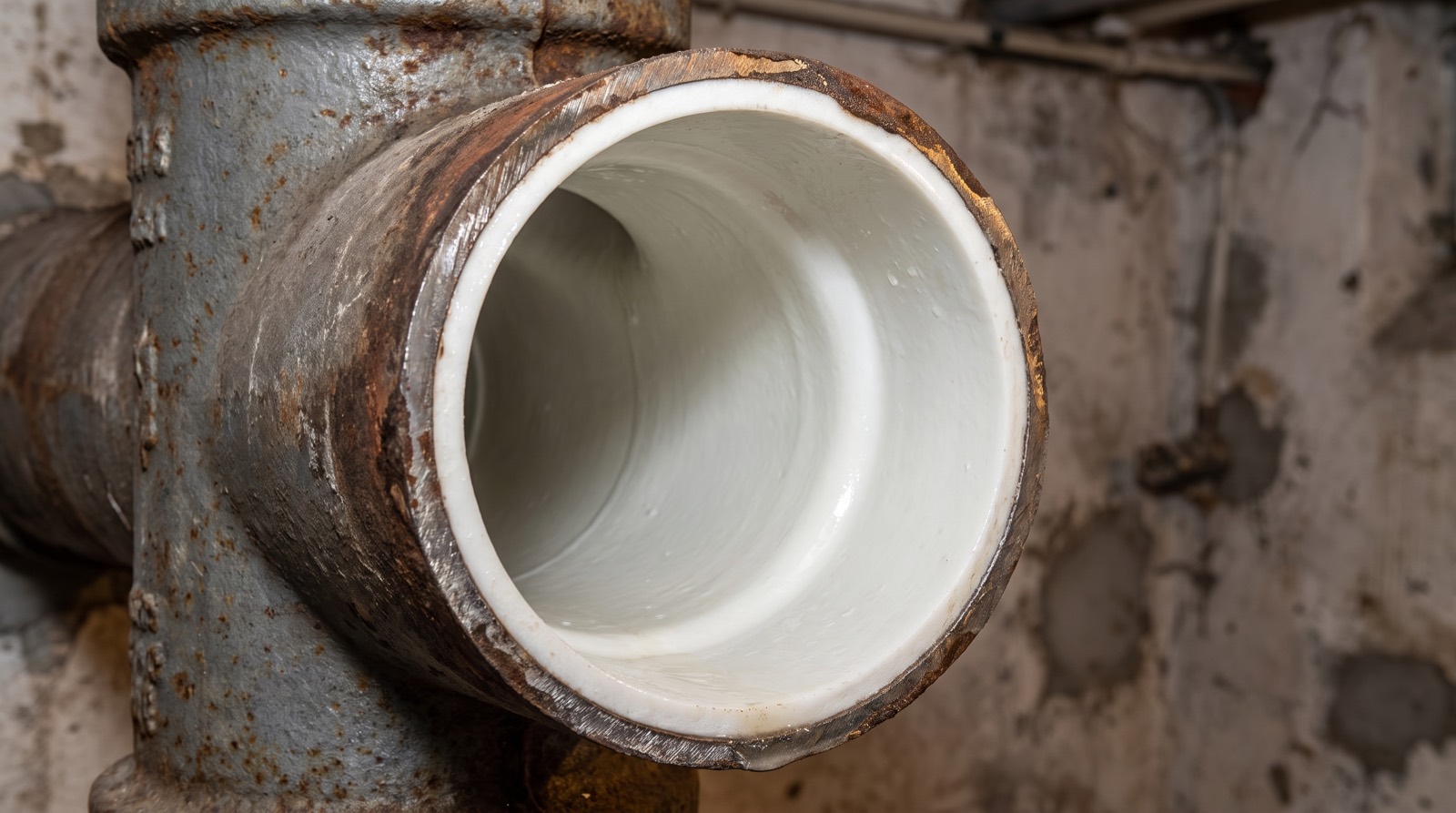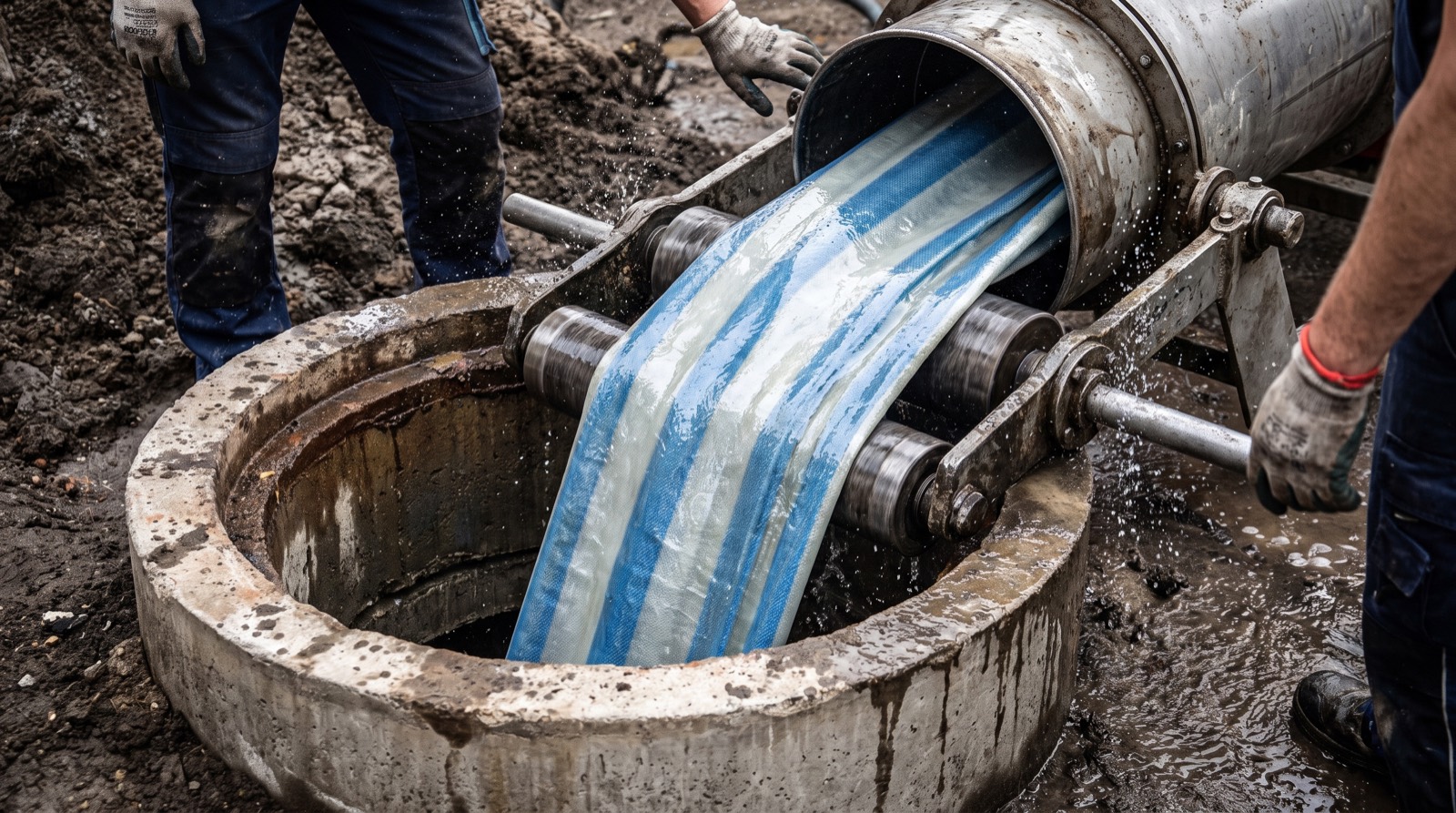
Trenchless drain rehabilitation renews defective wastewater pipes from the inside, with no need for excavation – in Switzerland usually at a cost of CHF 250 to CHF 600 per metre for continuous methods. Instead of exposing the pipe, a resin-impregnated liner or a local sleeve is inserted into the existing pipe and cured there. The result is a new, watertight pipe inside the old one – without tearing up the road, garden or floor. All prices are guide prices; the binding quote follows after the CCTV drain survey.
This construction method has become established over the past decades because it is faster, cleaner and in many cases considerably cheaper than traditional open excavation. Especially for pipes under buildings, driveways or trees, it is often the only economically sensible solution. Internationally, the term no-dig technology has become established for it.
What exactly does "trenchless" mean?
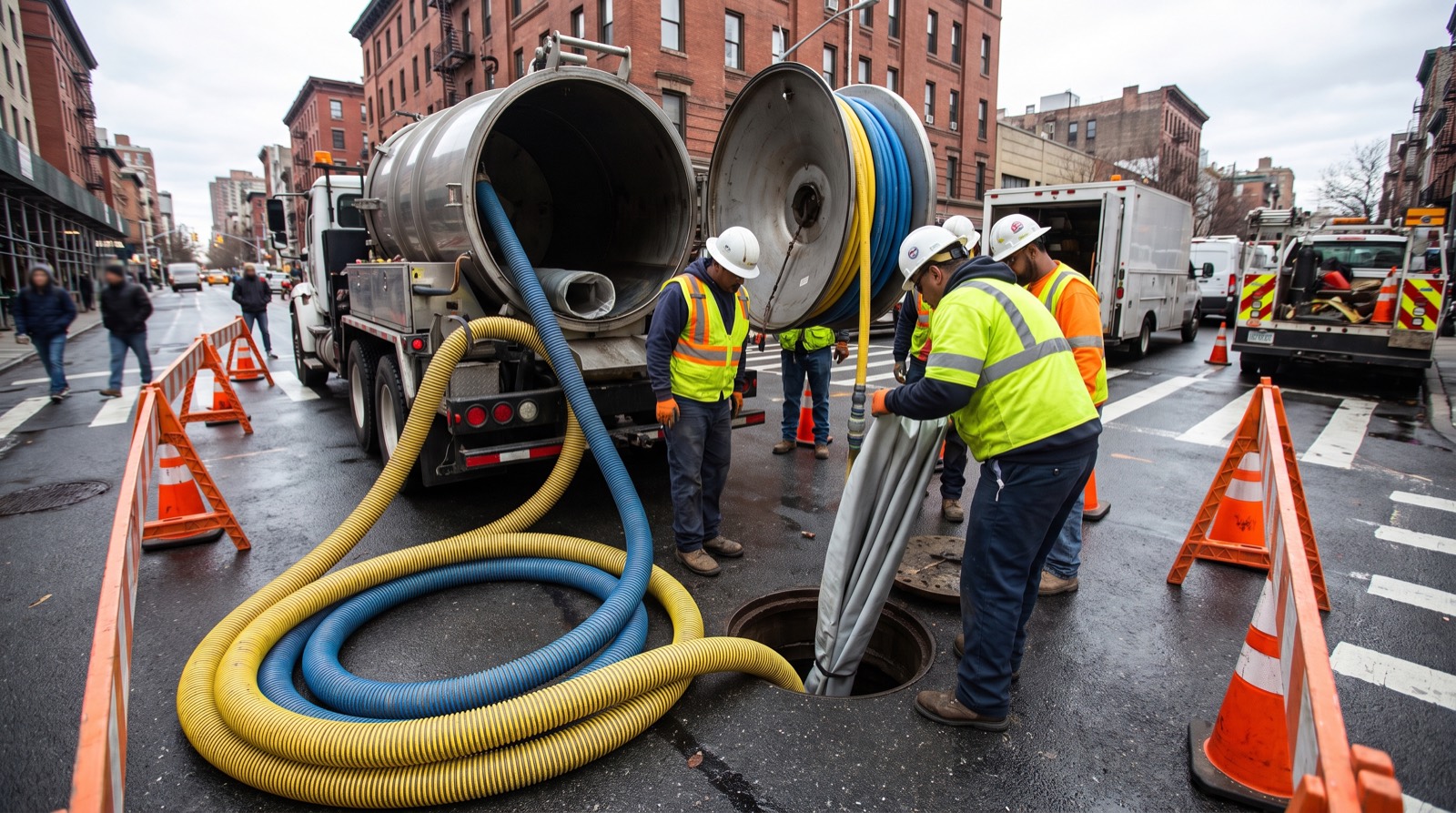
Trenchless means that no continuous trench is dug to reach the pipe. The rehabilitation is carried out via existing access points such as manholes, inspection openings or rodding eyes. The ground remains intact, and paving and planting do not have to be reinstated. This considerably reduces not only the costs but also the disruption for residents, neighbours and the environment.
The process step by step
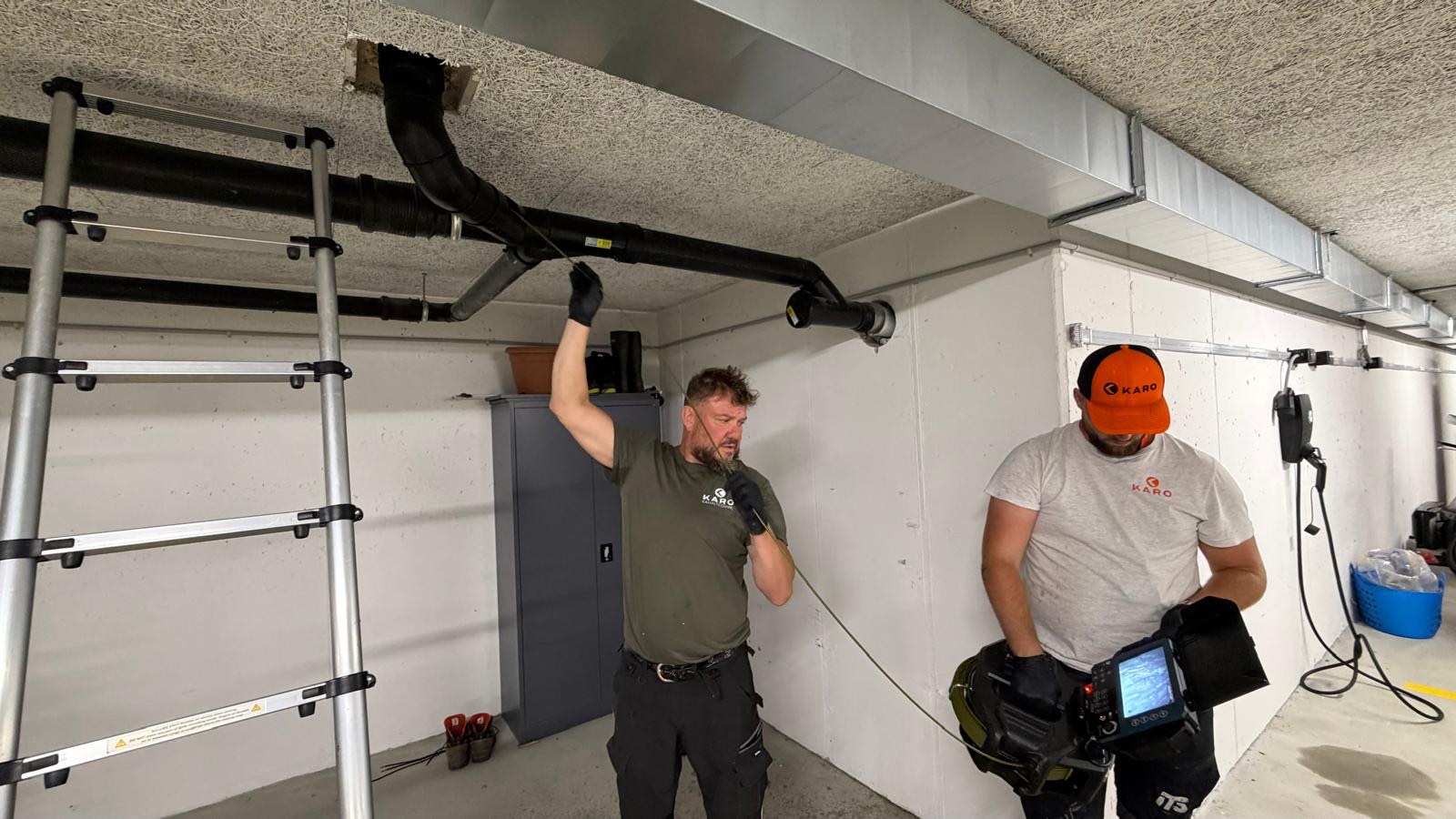
It starts with a CCTV drain survey: a camera travels through the pipe and documents every defect. The pipe is then cleaned with high pressure and – if necessary – milled to remove roots or deposits. This is followed by the actual rehabilitation, either as a continuous CIPP liner or as a local patch liner, depending on the damage. After curing, the connections are reopened and an acceptance survey documents the result. Each of these steps is important for a permanently watertight pipe.
Steps 1 to 3 in detail
In the inspection phase, the current condition is recorded precisely – the location, type and extent of each defect. In the cleaning phase, the high-pressure jet removes all deposits, grease and root remains so that the resin can bond properly later on. In the milling phase, protruding connections and hard encrustations are removed. Only when the pipe is truly clean and passable does the actual rehabilitation begin – care in the preparation determines the quality of the end result.
What methods are there?
The three most important trenchless methods are CIPP lining (rehabilitating the entire pipe), the patch liner or Pointliner (repairing a single damaged spot) and the spray lining method (coating with special resin). Which method is suitable depends on the damage – continuous damage calls for a different approach than a single crack. The CCTV drain survey provides the basis for this decision and prevents too much or too little from being rehabilitated.
The benefits compared with excavation
The biggest benefit is the saving on ancillary work: no excavation, no backfilling, no reinstatement of paving or garden. On top of that come the short construction time – often just one day instead of several –, less noise and dirt, and the fact that your property and your business are hardly affected. The smooth inner surface of the liner also improves the flow and helps to prevent new blockages. For commercial and industrial premises, too, this means minimal business interruptions.
What does trenchless rehabilitation cost?
Guide prices in Switzerland are: continuous CIPP lining CHF 250 to CHF 600 per metre, local patch liner from CHF 800 per damaged spot. On top of that come the CCTV drain survey (from CHF 50, ±15%), cleaning (CHF 160 per hour) and the call-out (CHF 60). The price per metre varies depending on diameter, condition and access. Compared with open-cut construction, where the earthworks and surfacing alone can cost several thousand francs, the trenchless option is usually the cheaper overall solution.
Which pipes is the method suitable for?
Trenchless methods are suitable for house connections and underground drains, soil stacks, collector sewers and public sewers across a wide range of diameters. The prerequisite is that the pipe still has a load-bearing basic structure – if a pipe has completely collapsed or is badly displaced over a stretch, partial replacement may be necessary. The CCTV drain survey clarifies this in advance too, so that there are no unpleasant surprises during the work.
Service life and sustainability
Professionally executed trenchless rehabilitation lasts around 50 years. Because there is no excavation, the environmental footprint is better too: less use of machinery, less material transport, no landfill material. For owners, this means preserving the long-term value of the property with minimal intervention – and a clear conscience, because the consumption of resources is considerably lower than with a complete relaying.
Time is another important factor: whereas open-cut rehabilitation can take several days to weeks depending on the scope – including curing of the paving and reinstatement of the surroundings – trenchless rehabilitation is often completed within a single working day. For residential buildings, this means only a brief restriction on using toilets and drains; for commercial and industrial businesses, minimal business interruptions. Especially where a construction site lasting several days would bring operations to a standstill, this advantage is worth hard cash.
Bear in mind that trenchless rehabilitation requires careful planning. The pipe must be completely clear and dry before installation, which is why the inflow is briefly shut off or diverted during the work. We discuss these organisational steps with you in advance so that everything runs smoothly and you know exactly when your drains can be used without restriction again. Good preparation is the key to a trouble-free rehabilitation day.
Incidentally, trenchless methods are suitable not only when damage has occurred but also for preventive value preservation. If you have the underground drains of an older property checked by camera once, you can spot incipient damage early and rehabilitate it in a targeted way before roots or cracks lead to backflow. This can be planned, is cheaper and less stressful than emergency rehabilitation after acute water damage. Regular condition checks therefore pay off in the long term.
Are you considering having your pipe rehabilitated without digging? Our guide price configurator gives you an initial estimate, and after a CCTV drain survey you receive a binding quote. Karo Kanaltechnik is there for you with its 24/7 emergency service – call us on +41 43 588 12 08.