
What is a house connection?
The house connection or lateral is the last section of the private drainage. The wastewater from soil stacks and underground drains is collected on the plot, usually in an inspection chamber, and flows from there via the lateral into the public sewer beneath the road. Depending on the location of the property, this pipe is just a few metres long or considerably longer.
In a separate system there are two connections: one for foul water and one for rainwater. In a combined system everything is drained together. Where and how a connection may be made is set by the municipality and its wastewater regulations; the technical principles are described in SN 592 000, the Swiss standard for property drainage.
Who owns the lateral?
A frequent question when damage occurs: who pays? In most Swiss municipalities the principle is that the lateral belongs to the private property up to its connection to the public sewer – even where it runs under public land. This means the owners bear the construction, maintenance and renewal of this section.
The exact demarcation is set out in the wastewater regulations of the respective municipality. It is worth checking there or asking the building department before planning any work on public land. Work in the road space also requires a permit from the municipality.
Typical damage to the house connection
Because laterals are often decades old, they show the classic signs of ageing: roots penetrate leaking joints, pipe connections shift due to settlement, and cracks form under traffic loads above the pipe. The junction with the municipal sewer is particularly often affected if it was not made properly at the time.
Such damage goes unnoticed for a long time. The first signs are recurring blockages, backflow in the basement, odours in the garden or subsidence above the pipe. Leaking connections also let groundwater enter the sewer as infiltration water or allow wastewater to escape into the ground.
Inspection and cleaning
A CCTV drain survey establishes the condition of the house connection. The camera is pushed from the inspection chamber to the municipal sewer and records every metre. The damage is recorded using the coding system of SN EN 13508-2 and documented in the report. Many municipalities require such an inspection for conversions, changes of ownership or as part of inspections of private pipes.
High-pressure water jetting removes deposits, grease and smaller roots. For heavy root ingress, a robotic cutter is used. After cleaning, the recording shows whether the pipe is structurally sound or needs rehabilitation.
Rehabilitation without digging
Under roads and pavements in particular, digging is costly because the surface, traffic and other utility lines are affected. This is why house connections are now often rehabilitated trenchlessly: individual defects with a patch liner, longer sections with a continuous CIPP liner. The junction with the main sewer can be sealed with a top-hat profile.
After rehabilitation, a leak-tightness test proves that the pipe is watertight again. Only with collapsed pipes, incorrect gradient or too small a diameter is open-cut construction with replacement of the pipe still necessary.
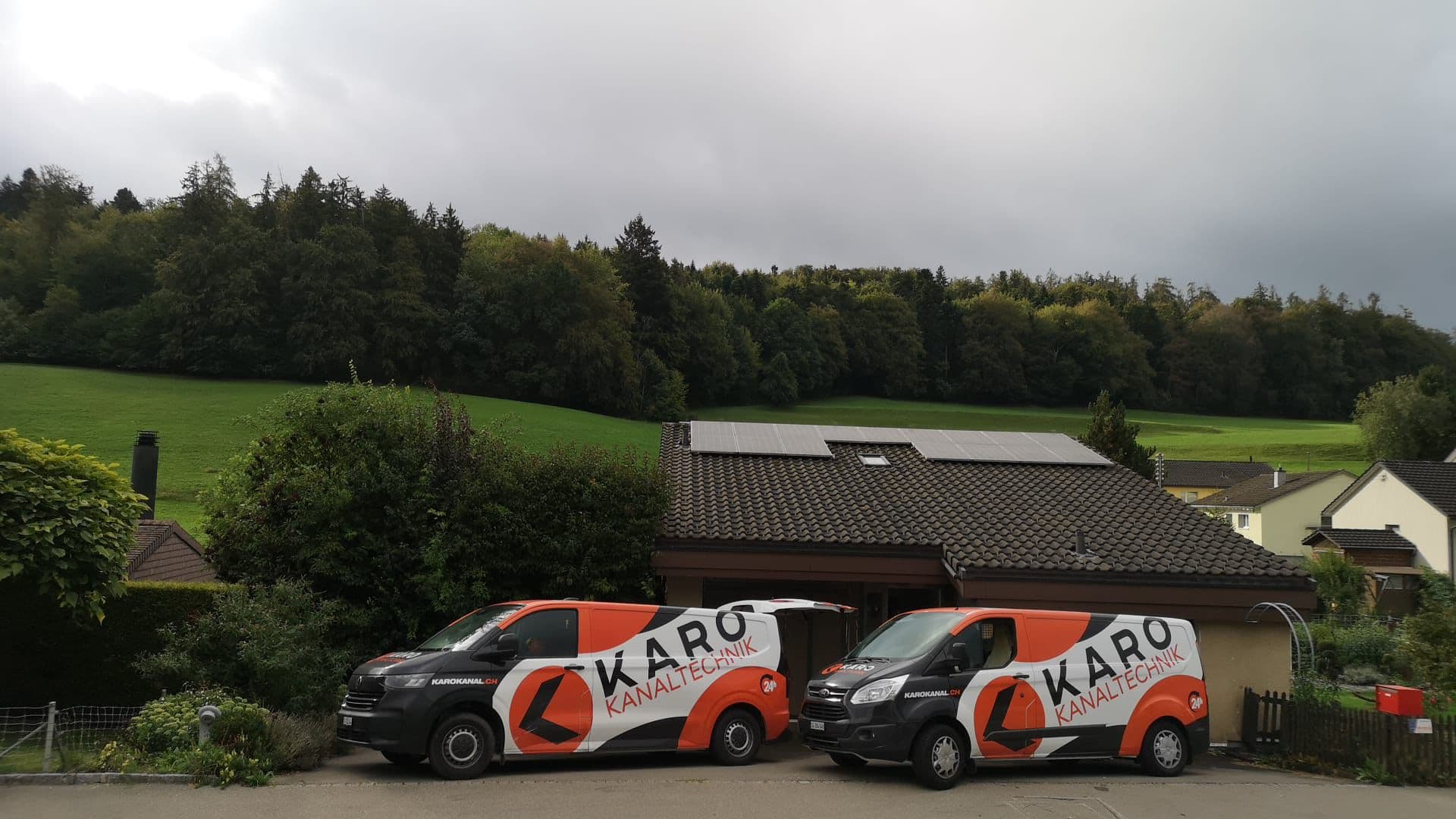
At a single-family home in Uster, the basement drain backed up twice a year. The CCTV drain survey from the inspection chamber in the front garden to the municipal sewer showed root ingress in two joints under the pavement and a leaking junction. After consultation with the building department, the roots were cut, the joints rehabilitated with patch liners and the junction with a top-hat profile – without breaking up the pavement. A leak-tightness test completed the work.