
Causes of pipe collapse and drain damage
Pipe collapse and damage are caused by ageing of the material, root ingress, ground movement, settlement, frost or incorrectly laid pipes. Aggressive wastewater and corrosion also weaken the pipe over time.
Typical signs are recurring blockages, backflow, damp patches in the ground, subsidence in the ground surface or a rat infestation that points to open damage.
Locating the damage
Before any repair, the damaged point is located precisely. To do this, the pipe is cleaned and inspected with a camera that records the position, type and extent of the damage to the metre.
On this basis, a decision is made as to whether a trenchless repair is possible or whether an open excavation is needed in an individual case.
Trenchless repair methods
Localised damage such as cracks or leaking joints can be sealed with a Pointliner (patch liner), which is brought to the damaged point from the inside and cured. Longer sections are rehabilitated with a CIPP liner, which forms a new pipe inside the old pipe.
These methods are fast, clean and considerably cheaper than open excavation, because roads, gardens and floors do not have to be dug up. With serious damage such as a collapsed pipe, excavation remains the last option.
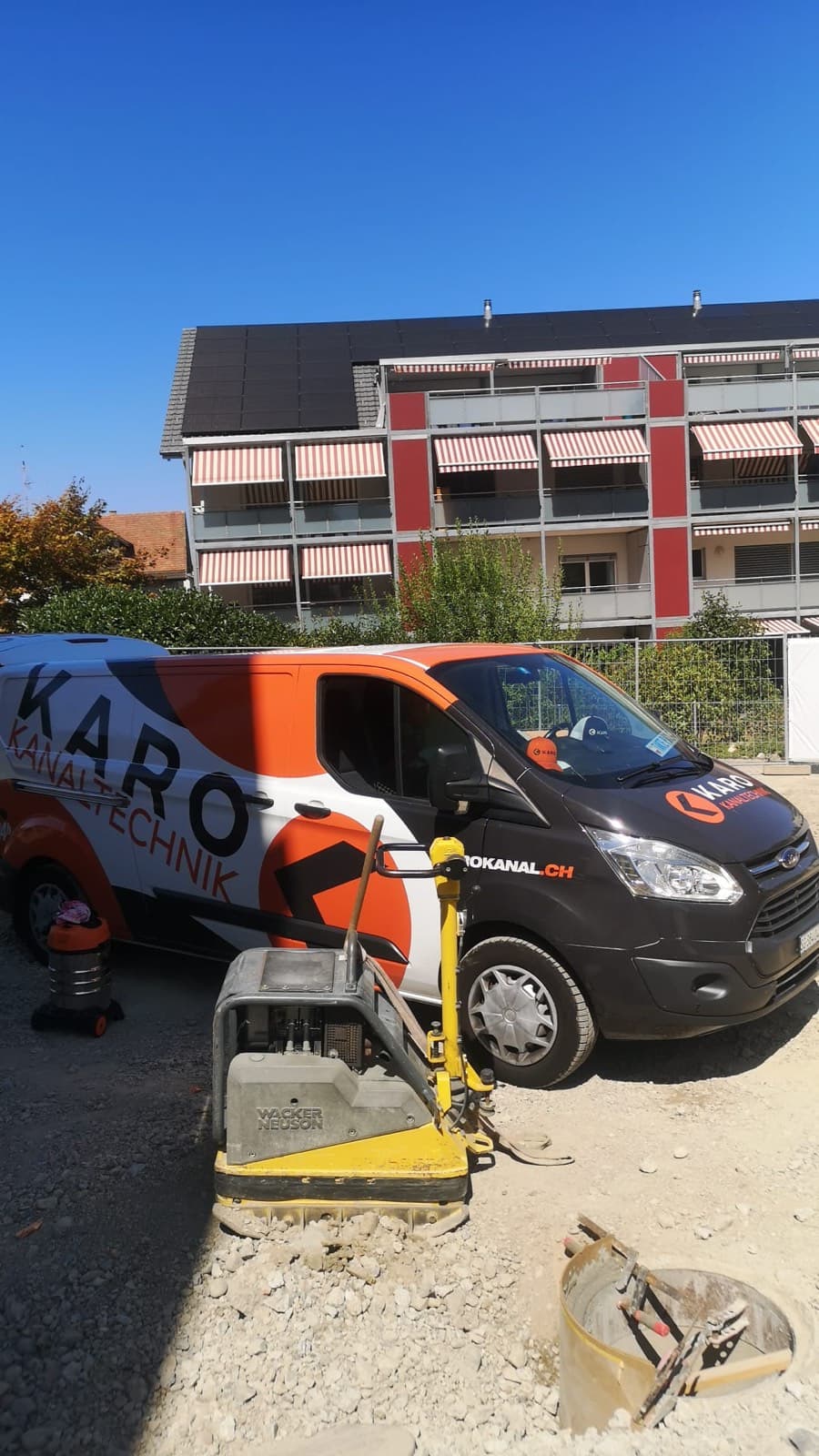
In a residential area in Opfikon, the paving above an underground drain is sinking slightly. The camera inspection shows a pipe collapse with fragmentation. Karo Kanaltechnik pinpoints the location and rehabilitates the section without excavation using a CIPP liner, so that neither the road nor the front garden has to be dug up.