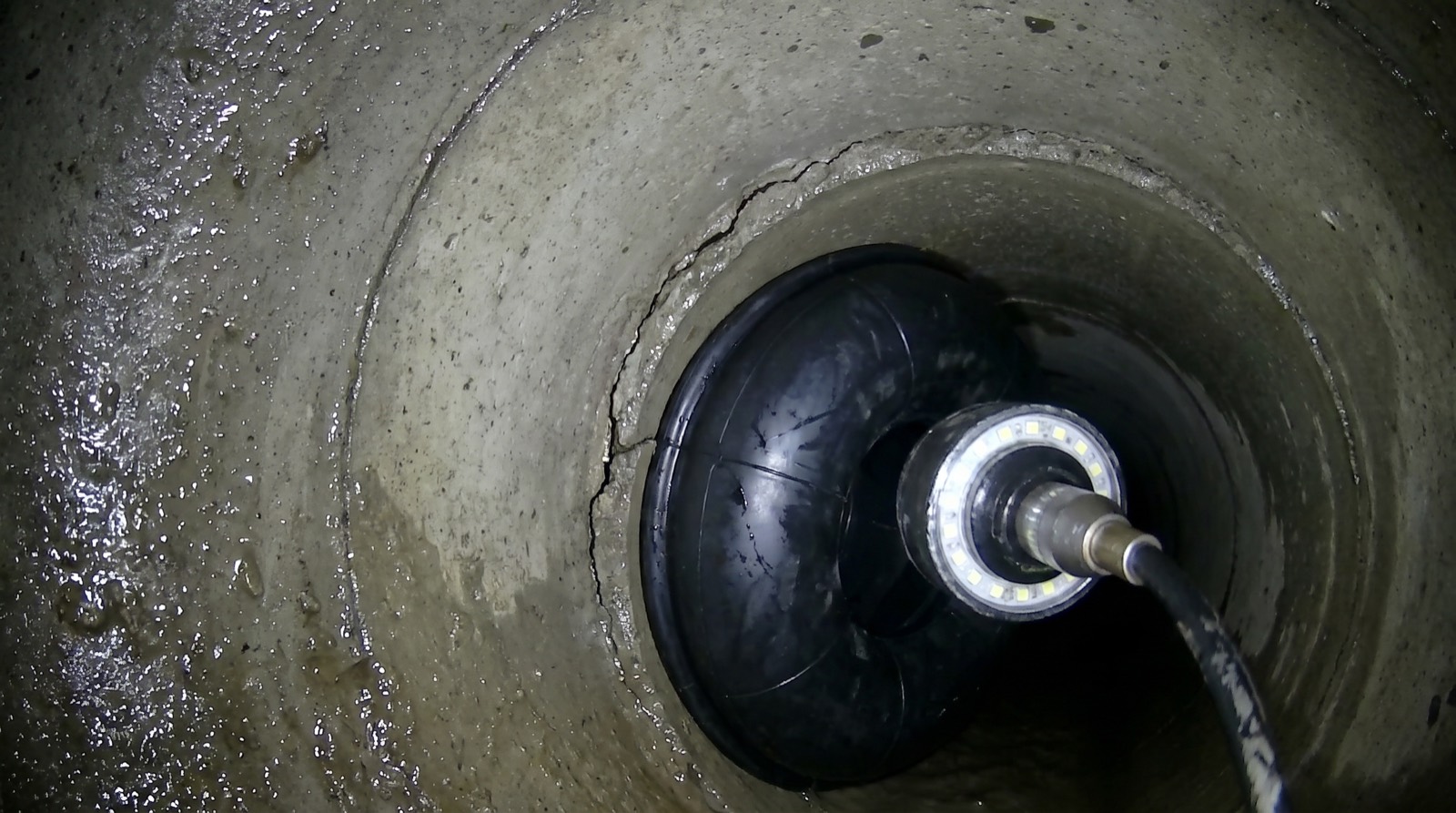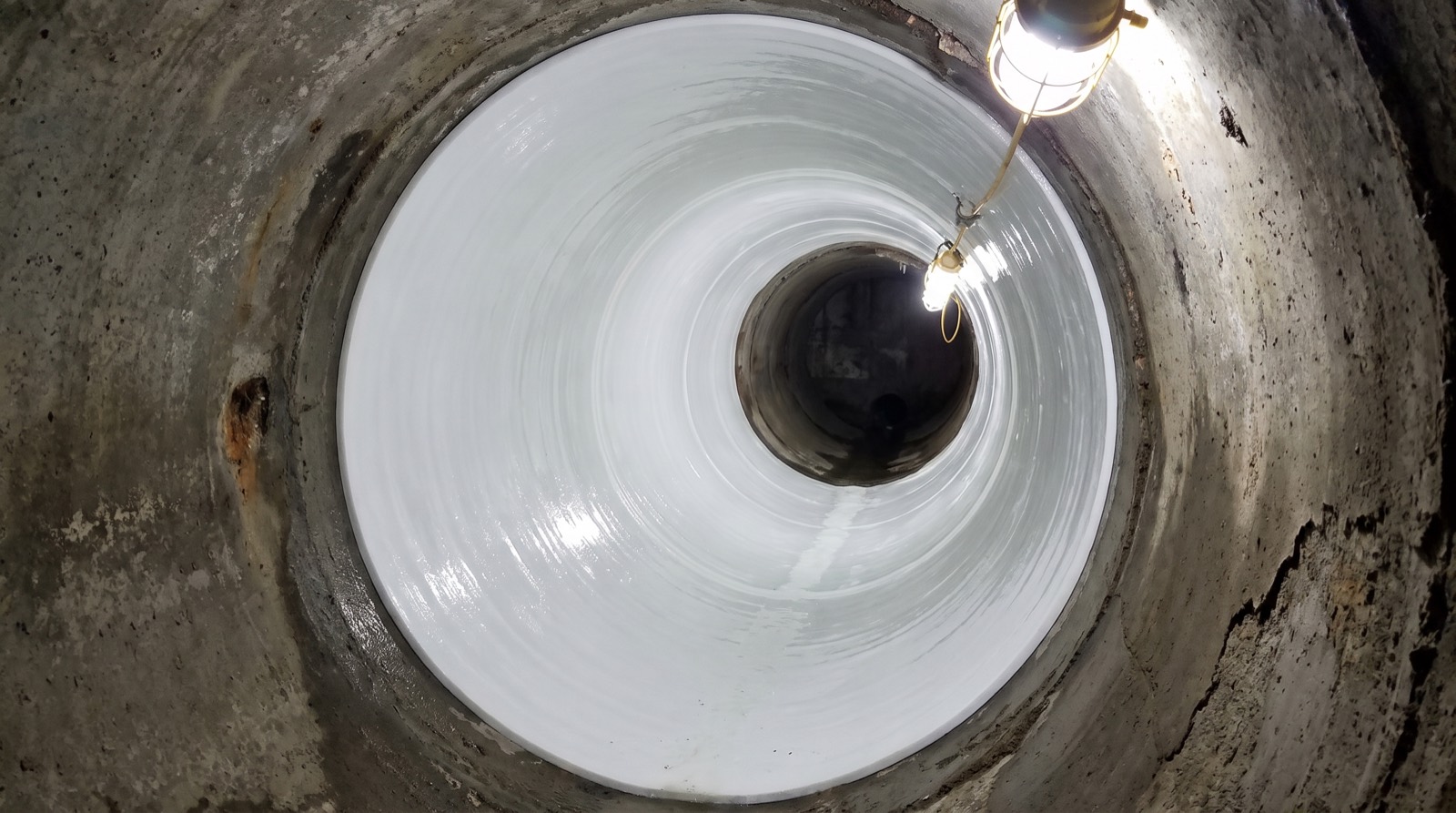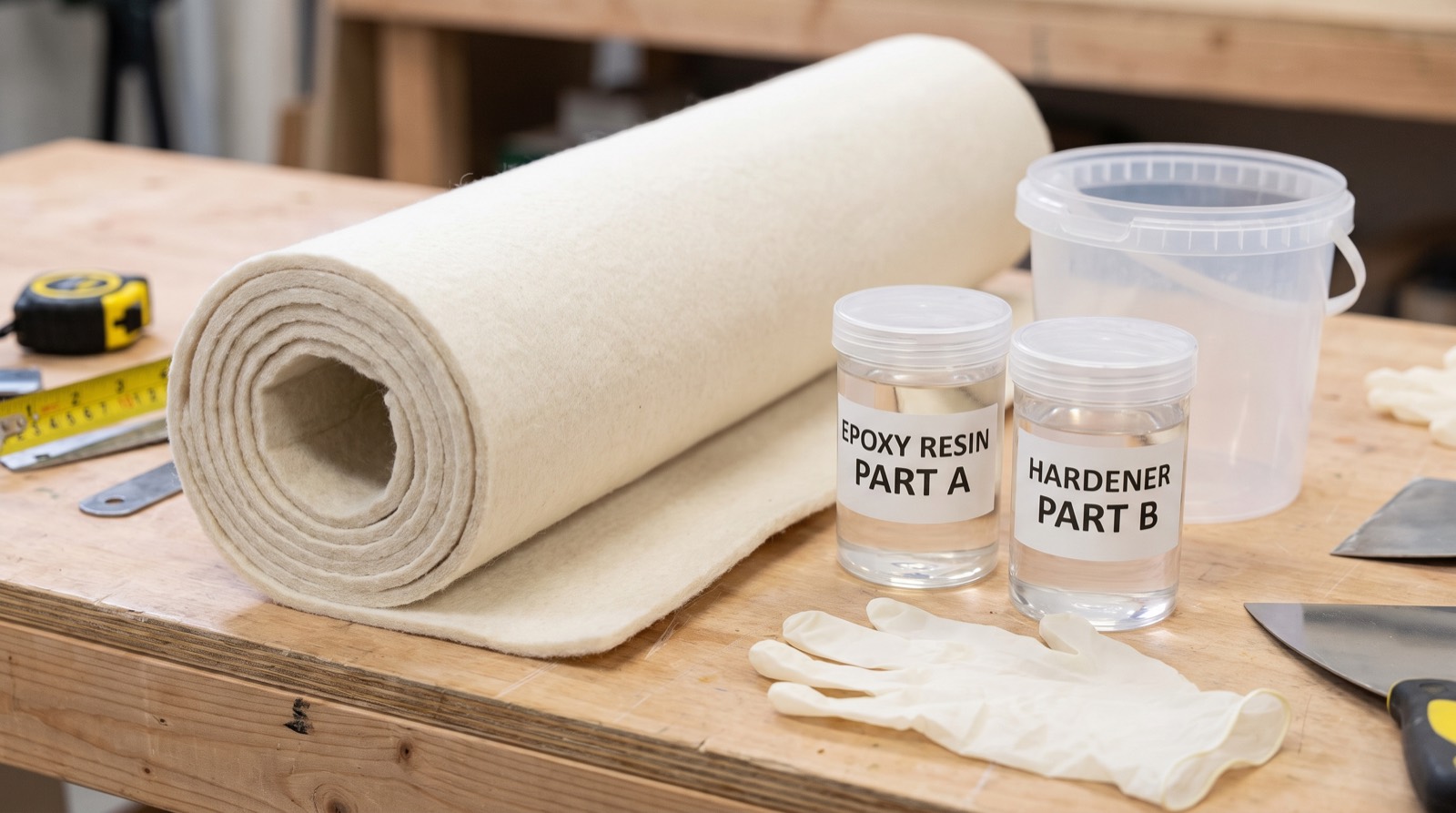
A CIPP liner is a carrier liner impregnated with synthetic resin that is inserted into a defective pipe and cured there to form a new, watertight pipe – the heart of trenchless pipe relining. It typically consists of a carrier material (needle felt or glass fibre) and a two-component resin and is pulled in via existing manholes or openings without digging. After curing, it forms a structurally load-bearing pipe inside the old pipe.
The CIPP liner is the central element of the CIPP lining method (cured-in-place pipe). Its composition determines strength, service life and area of use – which is why it is worth taking a close look at the structure and materials before planning a rehabilitation. If you know the components and their function, you can assess quotes better and judge the quality of a rehabilitation realistically.
Structure of a CIPP liner
A CIPP liner consists of several layers: an outer film, the load-bearing felt or glass-fibre fabric and an inner coating. The carrier material is impregnated with resin before installation. The outer film protects the resin during installation, and the inner layer forms the smooth, abrasion-resistant surface of the new pipe after curing. This multi-layer structure ensures that the liner is both watertight and mechanically resilient.
Carrier material: needle felt vs. glass fibre
Needle-felt liners are flexible, well suited to bends and changing diameters and proven in house connections. Glass-fibre liners (GRP) are particularly dimensionally stable and high-strength, which allows higher structural loads – they are often used for larger diameters and more demanding requirements. The choice depends on pipe geometry, diameter and structural specifications. In practice, both materials are used selectively depending on the property.
Resin systems
The resins mainly used are epoxy resin, polyester resin and vinyl ester resin. Epoxy resin is chemically resistant and low-shrinkage, while polyester and vinyl ester resins cure quickly and are economical. The appropriate resin system is selected according to the load, curing method and medium (e.g. domestic or industrial wastewater). With aggressive media in commercial and industrial settings, choosing the right resin is particularly important for longevity.
Curing: hot water, steam or UV
After installation, the resin must cure. With hot-water or steam curing, the pipe is heated until the resin cross-links. With UV curing, a light train travels through the glass-fibre liner and cures it evenly and quickly. UV systems score with a short curing time and good quality control, hot-water and steam systems with flexibility and proven practice. Curing is monitored continuously to ensure an optimal result.
Installation methods: inversion and pull-in
There are two common installation methods: in the inversion method, the liner is turned inside out into the pipe using water or air pressure, so that the resin-impregnated side faces outwards. In the pull-in method, the liner is pulled in and then pressed against the wall using pressure. Both methods ensure that the liner lies flush against the old pipe wall over its full surface and that no voids form in which moisture could later collect.
Areas of use
CIPP liners are used in house connections and underground drains, in soil stacks, in municipal collector sewers and in industrial pipes. They are suitable for a wide range of diameters and can also be installed where digging is not possible – under buildings, roads or trees. The prerequisite is that the old pipe still has a load-bearing basic structure. Bends and changes in diameter can also be bridged with the right liners.
Benefits and service life
A professionally installed CIPP liner is watertight, root-proof and improves the flow thanks to its smooth surface. The service life is around 50 years. Because no excavation is needed, expensive earthworks and surfacing are eliminated. In Switzerland, the costs are usually CHF 250 to CHF 600 per metre (guide price, final quote after the CCTV drain survey). The CIPP liner thus combines technical quality with economic efficiency. For owners, this means a lasting solution that secures the value of the property in the long term.
Quality assurance and acceptance
For a CIPP liner to reach its full service life, material quality, clean preparation and controlled curing are crucial. After installation, the rehabilitated pipe is documented with an acceptance survey; where requirements are higher, a leak-tightness test can also be carried out. This evidence gives you certainty that the rehabilitation has been carried out professionally and to standard.
Another aspect is resistance to the wastewater itself. Domestic wastewater is relatively unproblematic, but grease, acids, alkalis or elevated temperatures can occur in commercial and industrial pipes. For such cases, chemical-resistant resin systems are deliberately chosen that will withstand the medium permanently. The wall thickness of the liner is also adapted to the expected load. This individual design is one of the reasons why serious planning always starts with an accurate survey of the existing situation and not with an off-the-shelf standard product.
How the material is stored and processed also affects quality. Resin-impregnated liners are temperature-sensitive and must be installed within a certain time window before the resin starts to react. That is why the liner is often only impregnated shortly before installation or transported chilled. An experienced team pays attention to these details, because they help determine how durable the rehabilitation is. For you as the client, this means that choosing a specialist firm with clean work processes is just as important as the material itself.
Not every pipe can be rehabilitated with a standard liner. For changes in diameter, tight bends or oval cross-sections, specially made-up liners are used that adapt to the geometry. There are also suitable products for very small diameters, such as those found in downpipes inside buildings, or for large collector sewers. This variety is a key reason why CIPP lining can be used in so many situations today – provided the material is carefully matched to the pipe in question.
Would you like to know which CIPP liner is right for your pipe? We will be happy to advise you and, after a CCTV drain survey, prepare a binding quote. Our guide price configurator provides an initial estimate. Karo Kanaltechnik can be reached via its 24/7 emergency service – call us on +41 43 588 12 08.