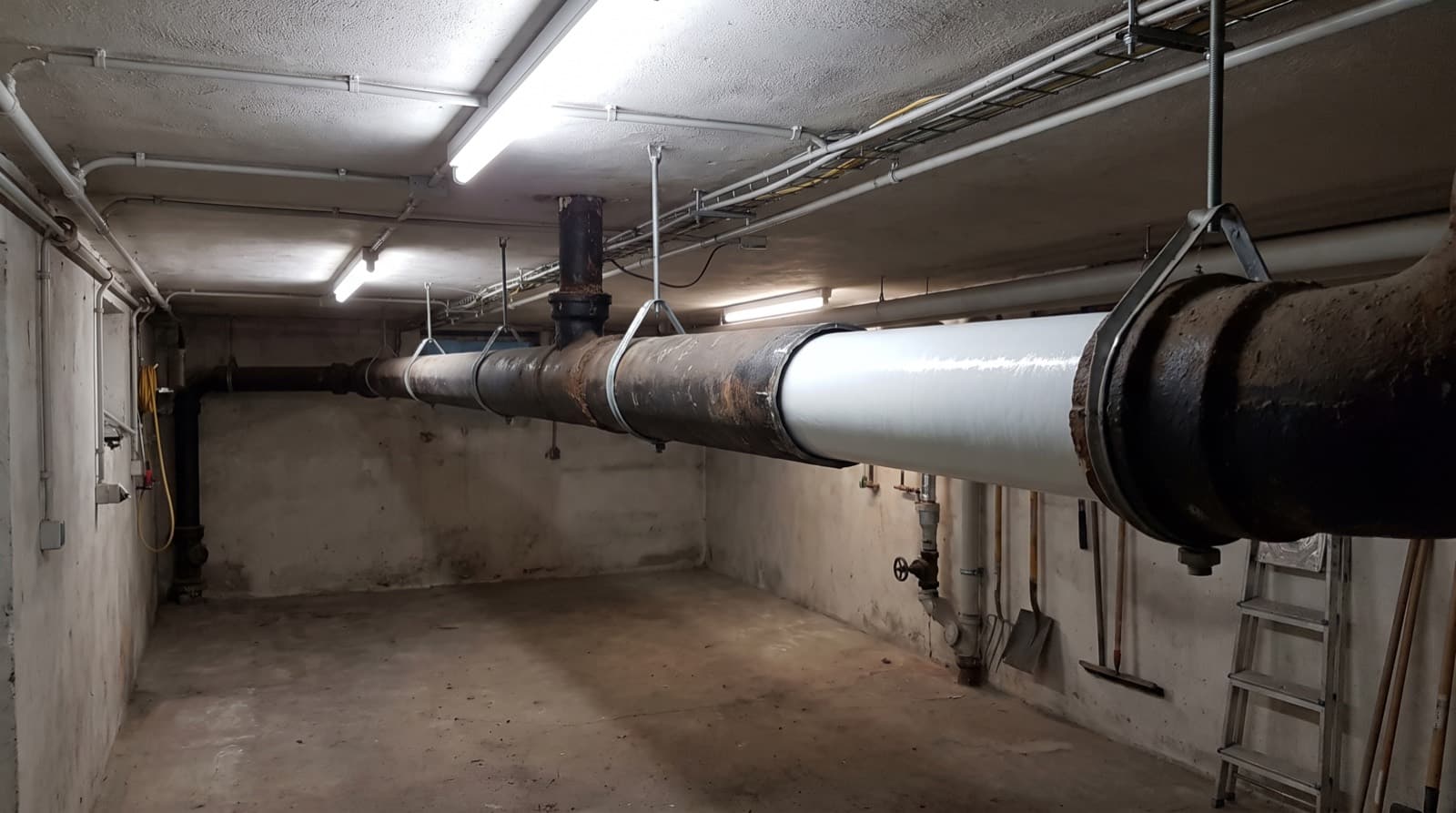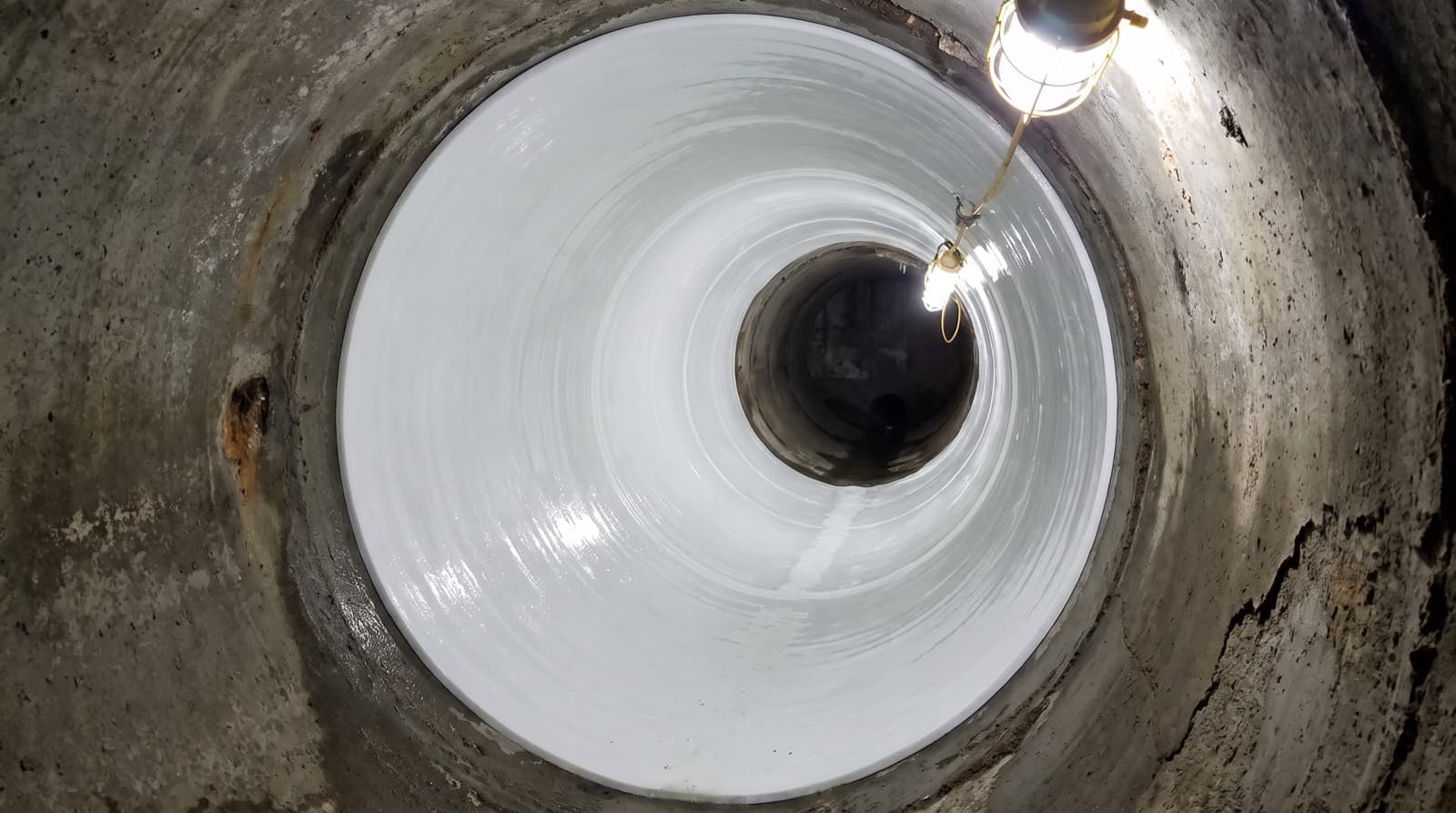
The pipe-in-pipe principle
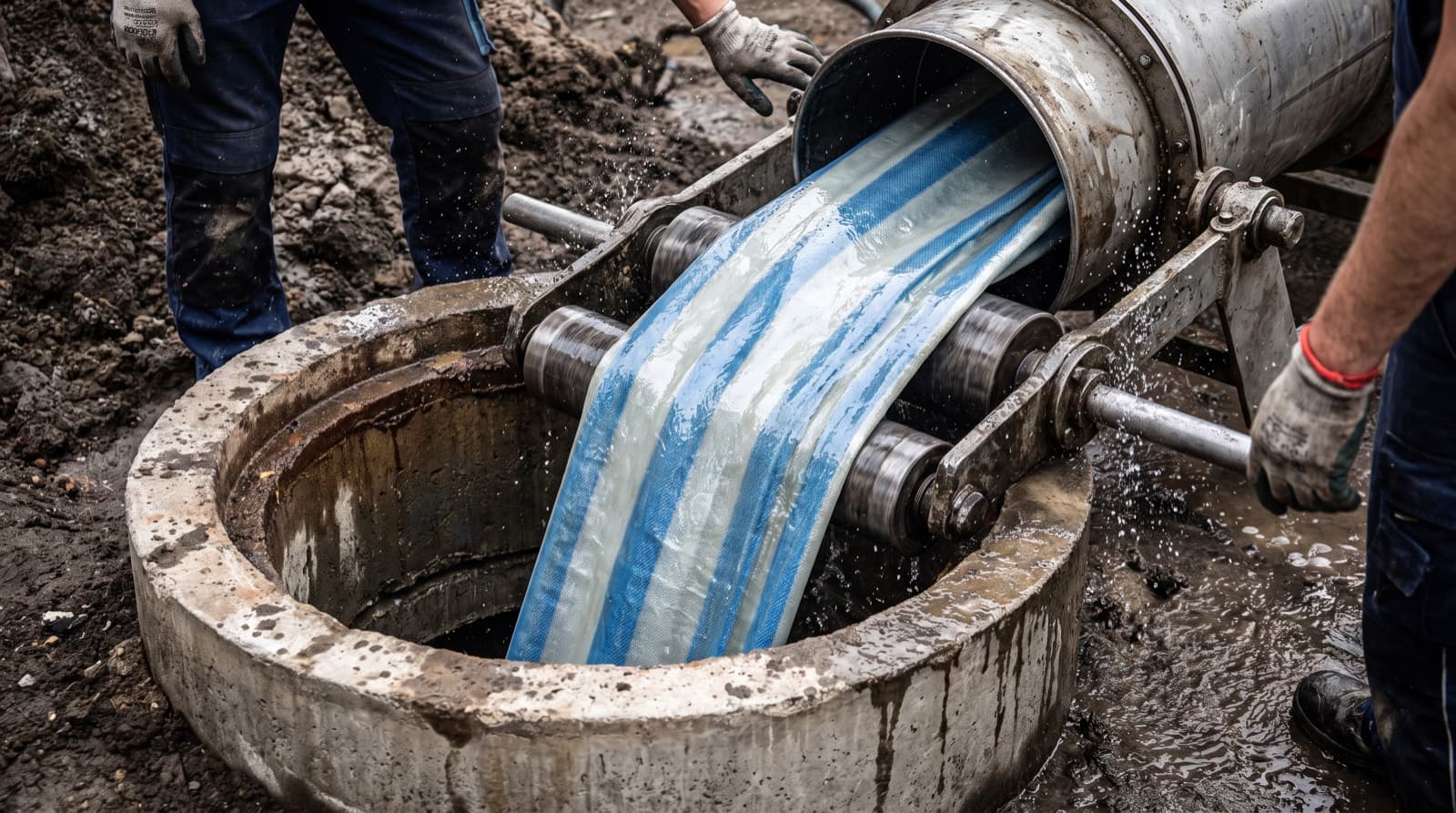
With the lining method, no new pipe is laid; instead, a liner is installed in the existing pipe and formed there into a new inner pipe. Under pressure, the resin-impregnated tube presses tightly against the old pipe wall and cures – with hot water, steam or UV light.
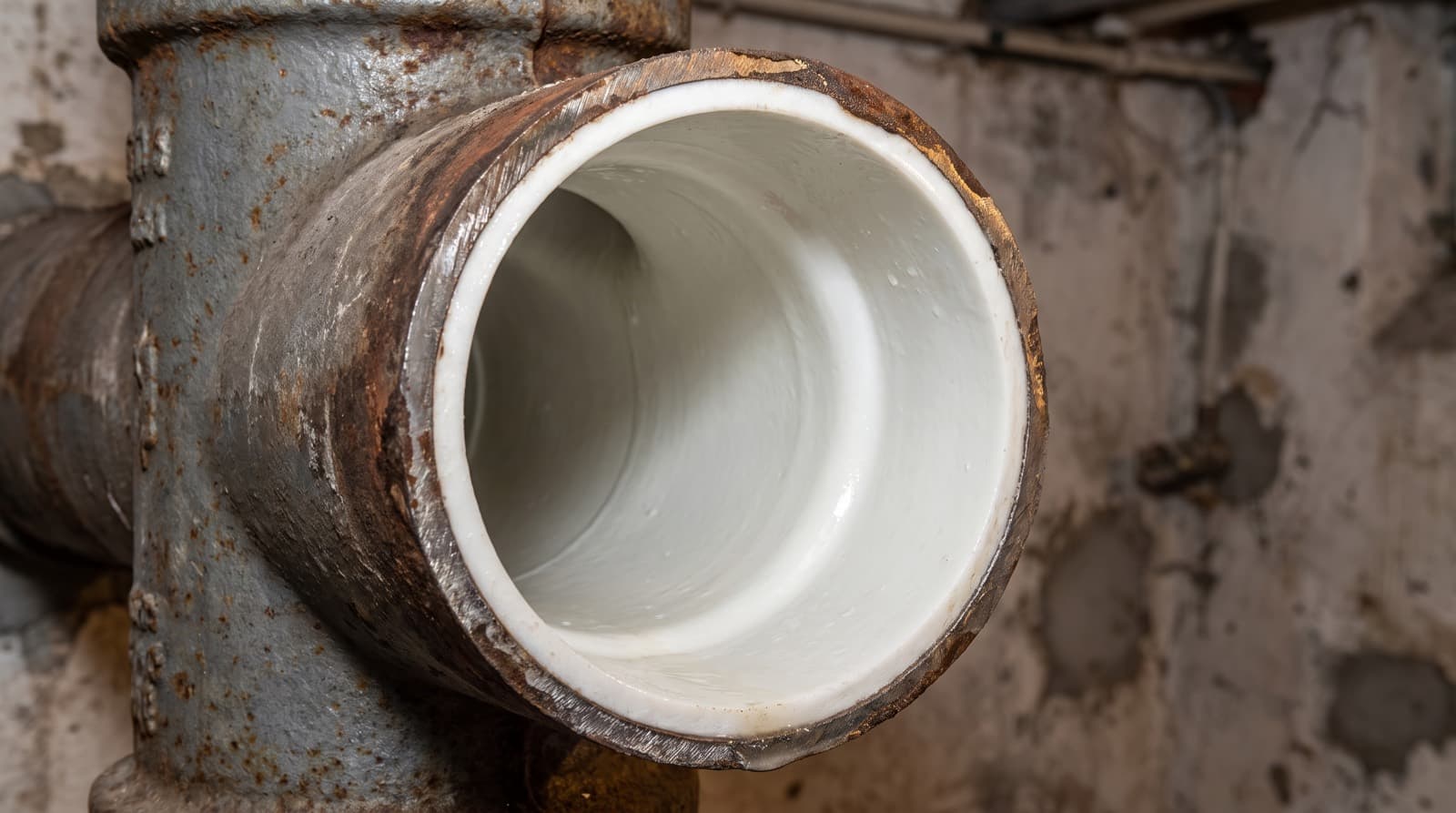
Once cured, the result is a smooth, jointless pipe within a pipe that forms a close-fit bond with the host pipe. The cross-section is reduced only minimally, while the smooth inner surface can even improve the flow capacity.
In CIPP lining, the old pipe therefore serves as formwork and guide. It does not need to be removed or exposed. This is exactly what sets it apart from open-cut construction, in which a trench is dug, the old pipe is removed and a new pipe is laid – with all the consequences for the garden, forecourt, road or cellar floor.
CIPP liner, lining tube, relining – the terms
The terms CIPP liner, lining tube and pipe-in-pipe rehabilitation describe the same basic principle: a new pipe is installed inside the existing one instead of replacing it. ‘Liner’ emphasises the inner pipe that is installed, ‘lining tube’ the starting material – the resin-impregnated tube.
In quotes and guides you will also come across other names for the same procedure: ‘CIPP lining’, ‘lining method’ or ‘CIPP pipe rehabilitation’ refer to the whole measure, ‘tube lining’ and ‘relining’ are used mainly for house drains, and ‘CIPP’ (cured-in-place pipe) is the international technical term for the pipe that cures where it is installed. These are to be distinguished from the patch liner, which seals only a single damaged point, and spray lining, in which a coating is applied from the inside.
What matters in practice is not the name but choosing the right material, wall thickness and curing method to suit the pipe diameter, the damage pattern and the route of the pipe. This design is based on the camera inspection and a structural calculation for the pipe.
Requirements for CIPP lining
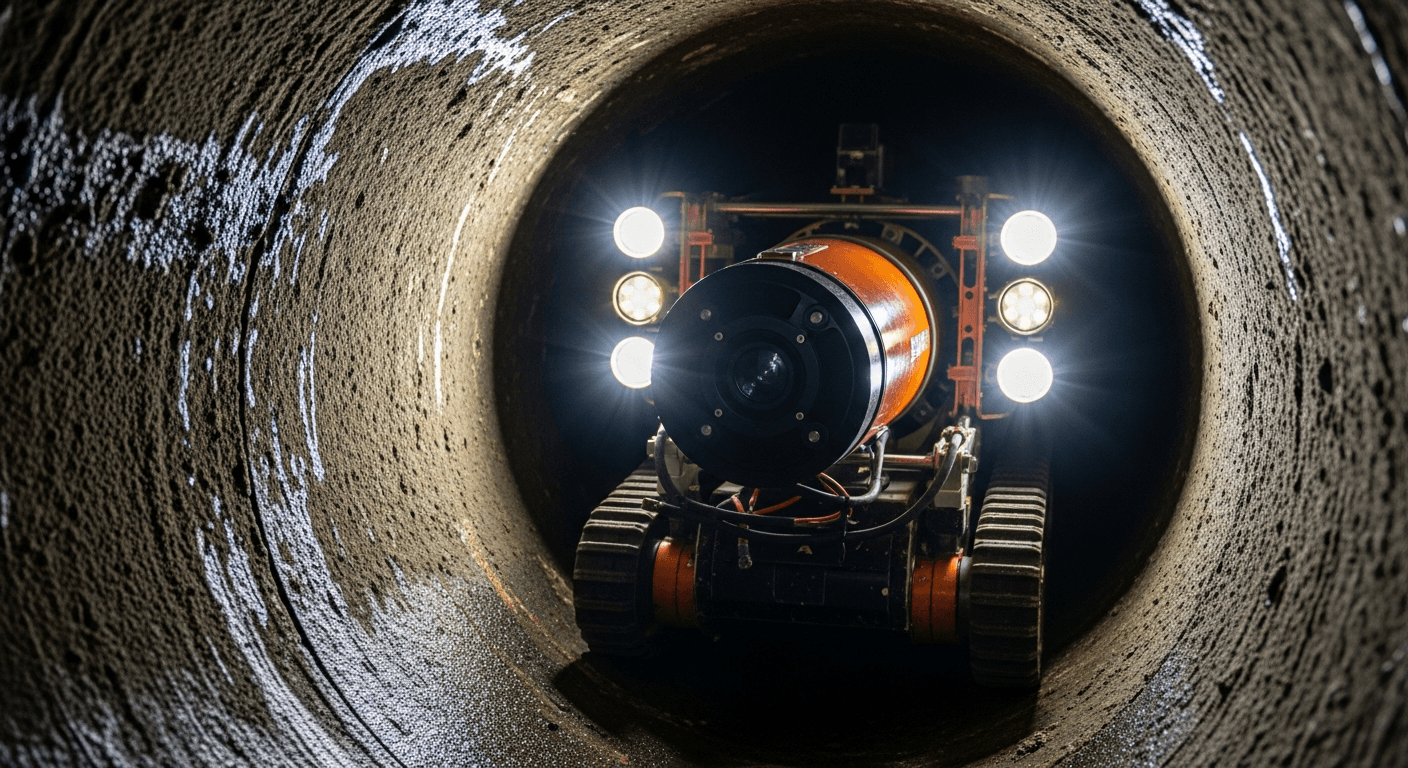
Whether a pipe can be rehabilitated with a CIPP liner is decided by the CCTV drain survey. It shows the location, type and extent of the damage, the number of lateral connections, bends and changes in diameter. Karo Kanaltechnik documents the survey to SN EN 13508-2, so that the damage is coded consistently and can later be compared with the result.
The basic rule is that the pipe must still be in place in its position and basic shape and must be passable along its whole length. Cracks, fragmentation, leaking joints, corrosion and light root ingress are typical cases for a CIPP liner. A collapsed pipe, a large displacement that severely narrows the cross-section, or a pipe with a reverse gradient in which water stands permanently, on the other hand, cannot be reliably rehabilitated from the inside.
The second requirement is access. The tube is inserted via an inspection chamber, a cleaning access point or an access shaft. If there is no such access, a small excavation pit or creating an opening may be necessary – still considerably less work than a trench along the whole length.
The third requirement is a clean pipe. Deposits, grease, encrustation and roots are removed beforehand, usually with chemical-free high-pressure water jetting at up to 200 bar and, where necessary, with the robotic cutter. Only on a clean pipe wall does the liner fit snugly.
How CIPP lining works
Before rehabilitation, the drain is thoroughly cleaned and inspected by camera, so that the damaged points and inlets are known. The liner is then pulled in via an existing manhole or inverted under pressure and brought into position.
After curing, a remote-controlled robotic cutter reopens the inlets that were covered over. A final camera inspection documents the result and confirms that the work has been carried out properly. The entire rehabilitation is done without digging, usually within one day.
While the work is in progress, the pipe concerned must not carry any wastewater. In a single-family home, this means that for a few hours the toilet, shower, kitchen and washing machine that drain into this pipe should not be used. Exactly how long depends on the resin system and the curing time; the timing is agreed in advance. For longer jobs, or in apartment buildings and commercial buildings, the wastewater can be diverted with a pump so that operations can continue.
1. Diagnosis and planning
Camera inspection, measuring the pipe length and connections, choosing the carrier material, resin and wall thickness, deciding on the access point.
2. Cleaning and preparation
High-pressure water jetting, cutting out roots and protruding stubs, checking by camera that the pipe wall is clear.
3. Installation and curing
Impregnating the tube, pulling it in or inverting it, pressing it against the pipe wall and curing it with hot water, steam or UV light.
4. Reopening connections and final acceptance
Cutting open the lateral inlets, finishing the ends, acceptance survey with a report and, if required, a leak-tightness test.
Lining tubes in the CIPP method: pulling in, inverting, curing
The lining tube is the starting material of the CIPP liner: a fabric tube impregnated with reactive resin. The method is called CIPP, ‘cured-in-place pipe’ – a pipe that cures directly where it is installed. After cleaning and the camera inspection, the tube is either pulled into the pipe via a manhole or an access opening, or inverted into it with compressed air or water pressure, i.e. turned inside out.
Under pressure, the tube presses tightly against the pipe wall and bridges cracks, leaking joints and corrosion. The resin then cures – with hot water, steam or UV light, depending on the system. Finally, a remote-controlled robotic cutter reopens the covered inlets. The result is a smooth, jointless and self-supporting pipe within a pipe, structurally designed to take over the load-bearing function of the old pipe.
The requirements for the material, installation and testing of such cured-in-place lining tubes are set out in the standard EN ISO 11296-4. In the classification of drain maintenance, which the VSA also uses, the CIPP liner counts as renovation – between the repair of individual points and renewal, for example in an open trench.
Carrier material, resins and suitability
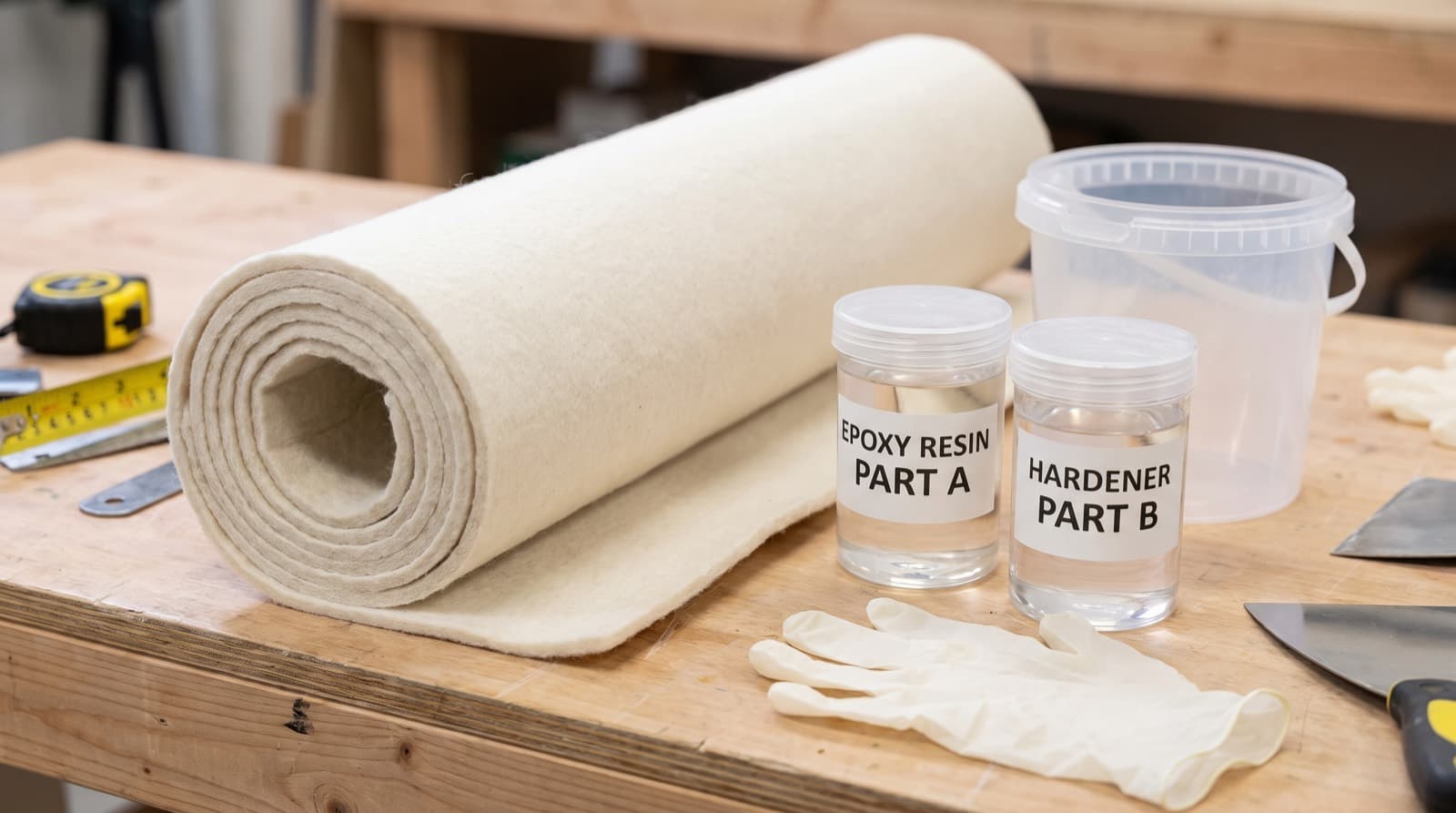
The carrier is needle felt, glass fibre or a composite fabric, impregnated with epoxy, polyester or vinyl ester resin. The choice depends on the pipe diameter, the load and the type of wastewater. A professionally installed lining tube achieves a service life of several decades and is resistant to renewed root ingress.
The lining tube is suitable for continuous damage along an entire pipe run: cracks, fragmentation, leaking joints, corrosion or light root ingress. The prerequisite is a pipe that is still in place in its position and basic shape and is passable. For a single damaged point, a patch liner (Pointliner) is more economical; for many tight bends, spray lining; for collapsed pipes, open-cut replacement. The costs depend on length, diameter, condition and accessibility; because excavation and the reinstatement of roads and floors are not needed, the overall bill is often lower than for open-cut pipe replacement.
On the question of health and the environment: once installed, the resin is fully cured and forms a solid plastic. During the work, a noticeable smell can arise, especially with polyester and vinyl ester resins that contain styrene; the work area is therefore usually ventilated, and open drains in the house are sealed during curing. Epoxy resins are styrene-free. Which system is used in an individual case is stated in the quote – ask about it if this matters to you.
Branches and bends: top-hat profile and robotic cutter
A house drain is rarely a straight pipe. Lateral connections from soil stacks, floor drains or neighbouring pipes, bends and changes in diameter are all part of it. Whether CIPP lining succeeds is often decided at exactly these points.
Reopening lateral connections
During installation, the liner initially seals off all inlets. Their position is measured with the camera beforehand. After curing, a remote-controlled robotic cutter travels to the positions, opens the inlets from the inside and smooths the edges so that nothing gets caught.
Sealing junctions with the top-hat profile
At the transition from the new liner to the old lateral pipe, a gap remains. A top-hat profile – a hat-shaped, resin-impregnated moulded part – covers it: the brim sits against the main pipe, the cylinder reaches into the connection. This makes even the weakest point of the pipe watertight, without any digging.
Bends and changes in diameter
Flexible liners can follow bends. In tight bends, the tube can form wrinkles on the inside; how many bends and which angles a system can cope with depends on the carrier material and is checked before rehabilitation on the basis of the camera inspection. Changes in diameter, for example from DN 100 to DN 150, can also be bridged with suitable liners. If the bends are too tight or too numerous, spray lining or working section by section is the better choice.
Service life of a CIPP liner
A CIPP liner is not installed as a temporary fix but as a new, self-supporting pipe with a service life of several decades. How long it lasts in an individual case depends on the structural design, the material chosen, the quality of the installation and the load from the wastewater. The system manufacturers state a specific number of years in their technical documentation; ask for this figure to be stated in writing in the quote.
Karo Kanaltechnik provides a warranty of up to 10 years on rehabilitation work, depending on the method and scope. For the pipe to keep working for a long time, sensible maintenance is still needed after rehabilitation: jetting at intervals that suit how the pipe is used, and a camera inspection if anything unusual occurs or before a sale.
And if a CIPP liner one day reaches the end of its own life? Then the same options are open as today: localised damage can be repaired with a patch liner, with a large diameter a further liner can be installed in some circumstances, and otherwise renewal follows in an open trench or by pipe bursting.
How can I tell that a CIPP liner has been installed properly?
The proof is the acceptance survey with the CCTV camera. It is recorded to SN EN 13508-2 and can be compared directly with the footage from before rehabilitation. Ask to be given the footage and the report – they are also proof for the municipality, the property management or a later buyer that the pipe is in good order.
Specialists look for these points at acceptance: the liner lies smoothly against the pipe wall along its whole length, with no bulges, blisters or detachment. Wrinkles are at most small and visible mainly in bends; they must not obstruct the flow. All lateral connections are fully open, with cleanly cut edges. At the ends in the manhole, the transition to the old pipe is cleanly finished, with no gap through which water could run behind the liner. And there is no standing water in the pipe where there was none before.
Where proof is required, for example by the municipality, a leak-tightness test to SN EN 1610 with air or water follows as well.
Costs of CIPP lining: what they depend on
A reliable price for CIPP lining is only possible after the camera inspection. The main cost drivers are the length and diameter of the pipe, the damage pattern, the number of lateral connections that have to be opened and sealed with a top-hat profile, bends and changes in diameter, access via manholes or access openings, and the effort required for preparatory work such as cleaning and root cutting.
For cleaning and preparatory work, Karo Kanaltechnik’s guide prices are CHF 160 per hour plus a CHF 60 call-out fee, and for the CCTV drain survey a surcharge from CHF 50 (prices excl. VAT). The price for the liner itself depends on the factors above and is only given in the quote after the survey; you will find a detailed cost breakdown in the guide ‘Drain rehabilitation with a CIPP liner: costs and process without digging’.
Costs can be kept down above all through good planning: rehabilitating several pipes of a property in one job, detecting damage early before a crack turns into a displacement, and checking that quotes from different providers cover the same services – cleaning, connections, top-hat profiles, the acceptance survey and the guarantee should all be included. Compared with open-cut pipe replacement, CIPP lining avoids excavation, disposal and the reinstatement of surfaces, gardens or cellar floors.
| Cost factor | Why it affects the price |
|---|---|
| Length and diameter | Determine the amount of material, resin required and installation time. |
| Damage pattern | Severe cracks, displacements or deformation require thicker walls or preparatory work. |
| Lateral connections | Each inlet has to be measured, cut open and often sealed with a top-hat profile. |
| Bends and changes in diameter | Require suitable liners and more checks during installation. |
| Access | If there is no manhole, an opening or a small excavation pit may be needed. |
| Preparatory work | Cleaning, root cutting and removing protruding stubs, charged by time spent. |
Who pays for CIPP lining in Switzerland?
In Switzerland, the owners of the property are responsible for private wastewater pipes; the basis is federal and cantonal water protection law and the municipality’s drainage regulations. Where the private pipe ends and the public sewer begins is set out in the municipality’s drainage regulations. In many municipalities, the house connection up to where it joins the public sewer belongs to the property, even if it lies under the pavement or road. In that case, the owners also bear the cost of rehabilitating it.
In tenancies, maintaining the drainage installations is in principle the landlord’s responsibility; tenants therefore do not pay directly for CIPP lining. Under condominium ownership, underground drains and the house connection are usually part of the common property and are financed from the renewal fund or by a resolution of the owners’ association.
Insurance policies generally do not cover wear and age-related damage to pipes. Whether a policy pays out in an individual case, for example for consequential damage from escaping water, is for the insurer to decide. In any case, a complete record is helpful: camera inspections before and after rehabilitation show what damage existed and how it was repaired.
Advantages and limits of CIPP lining technology
The biggest advantage is that it is trenchless: roads, forecourts, gardens and floor coverings remain untouched, and excavation and reinstatement are not needed. This saves time and money and minimises disruption to everyday use. The service life of a CIPP liner is several decades.
The prerequisite is a pipe that is still stable enough and continuous along its route. With completely collapsed or severely deformed pipes, the method reaches its limits. Where damage is only localised, a patch liner is the more economical alternative; for pipes with many bends, spray lining.
CIPP lining is also unsuitable if the pipe has to be rerouted, enlarged or have its gradient corrected anyway, for example during a conversion or in the case of persistent backflow problems caused by a cross-section that is too small. In that case, new construction in an open trench or pipe bursting, in which the old pipe is destroyed and a pipe of the same size or larger is pulled in behind it, is the right solution.
| Method | Suitable for | Limit |
|---|---|---|
| CIPP liner (lining tube) | Continuous damage along an entire pipe run | Collapsed or severely deformed pipes |
| Patch liner (Pointliner) | Individual damaged points in an otherwise sound pipe | Many damaged points along the whole length |
| Spray lining | Small diameters with many bends | Structurally weakened pipes |
| Open-cut replacement / pipe bursting | Destroyed pipes, new route or larger cross-section | Effort, excavation or launch pit |
Under the driveway of an apartment building in Dietikon, the wastewater pipe was leaking over 25 metres because of cracks and roots that had grown in. Digging it up would have closed the only access for weeks. With a pulled-in CIPP drain liner, the pipe was renewed without excavation in one day. The driveway remained open to traffic throughout, and the pipe has been watertight ever since.