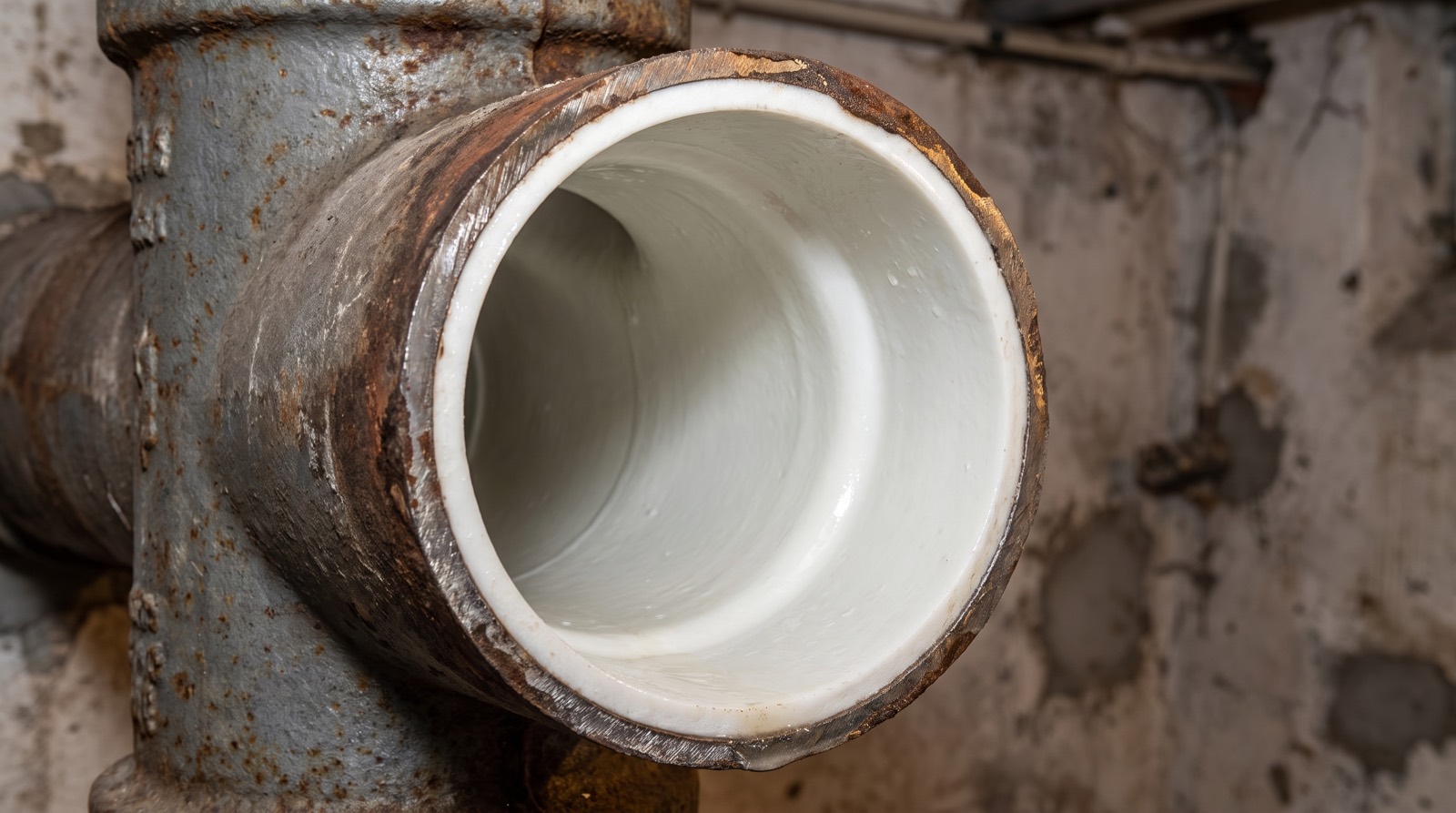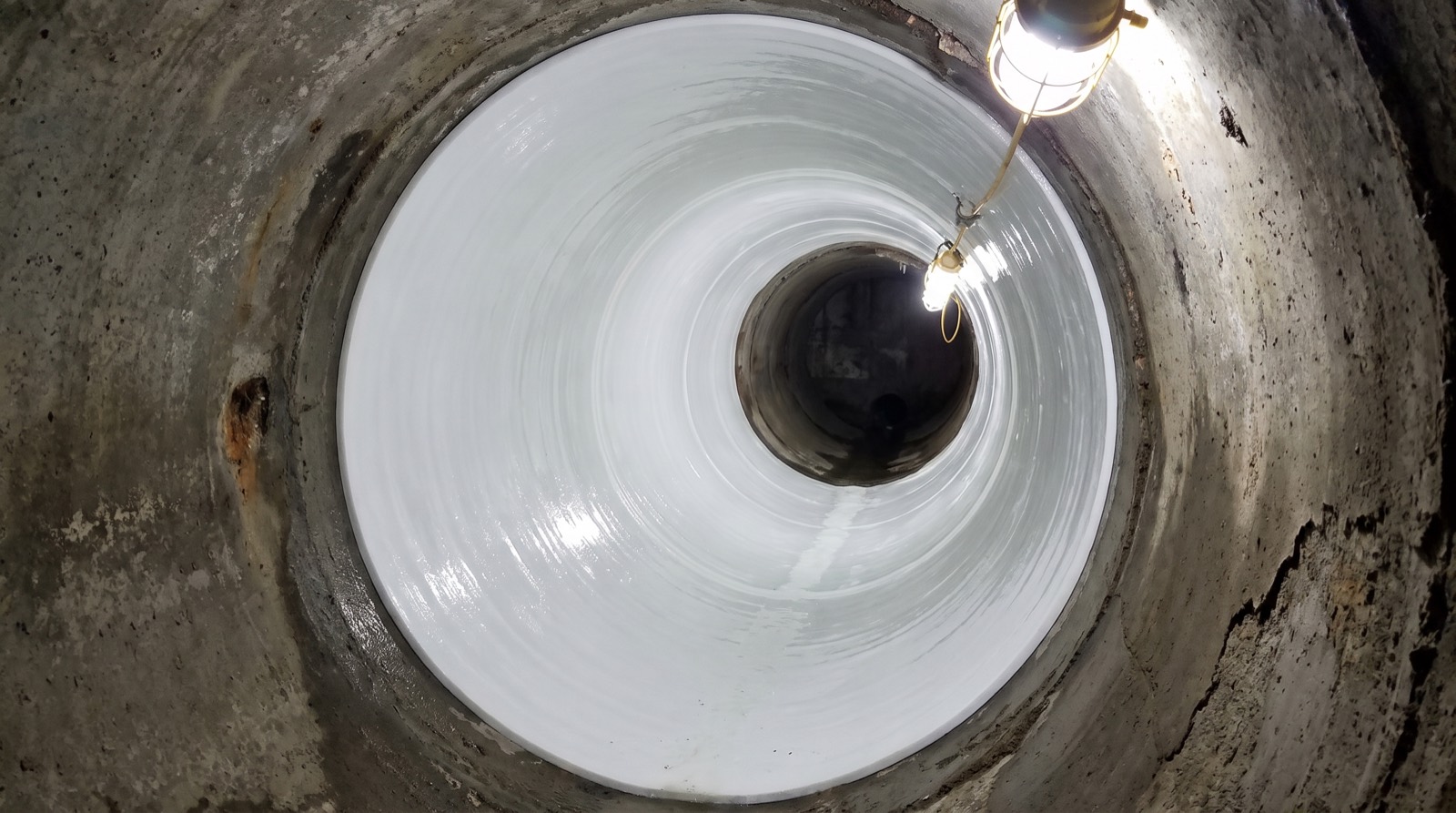
A patch liner – also known as a Pointliner or part liner – is a short, resin-impregnated repair section used to seal a single damaged spot in a pipe locally and without digging. Instead of rehabilitating the whole pipe, only the defective section, from a few decimetres to around one metre long, is treated. In Switzerland, such a spot repair usually starts from CHF 800 per damaged spot including call-out and preparatory work (guide price, final quote after the CCTV drain survey).
The patch liner is the economical solution when a pipe is basically in good order but has a crack, a leaking joint or a shattered section at a single spot. It saves time and money compared with continuous rehabilitation and is done in a few hours. This makes the patch liner one of the most efficient tools in trenchless drain rehabilitation when it comes to individual, clearly limited defects. It prevents an entire pipe from being rehabilitated unnecessarily because of one small spot.
What exactly is a patch liner?
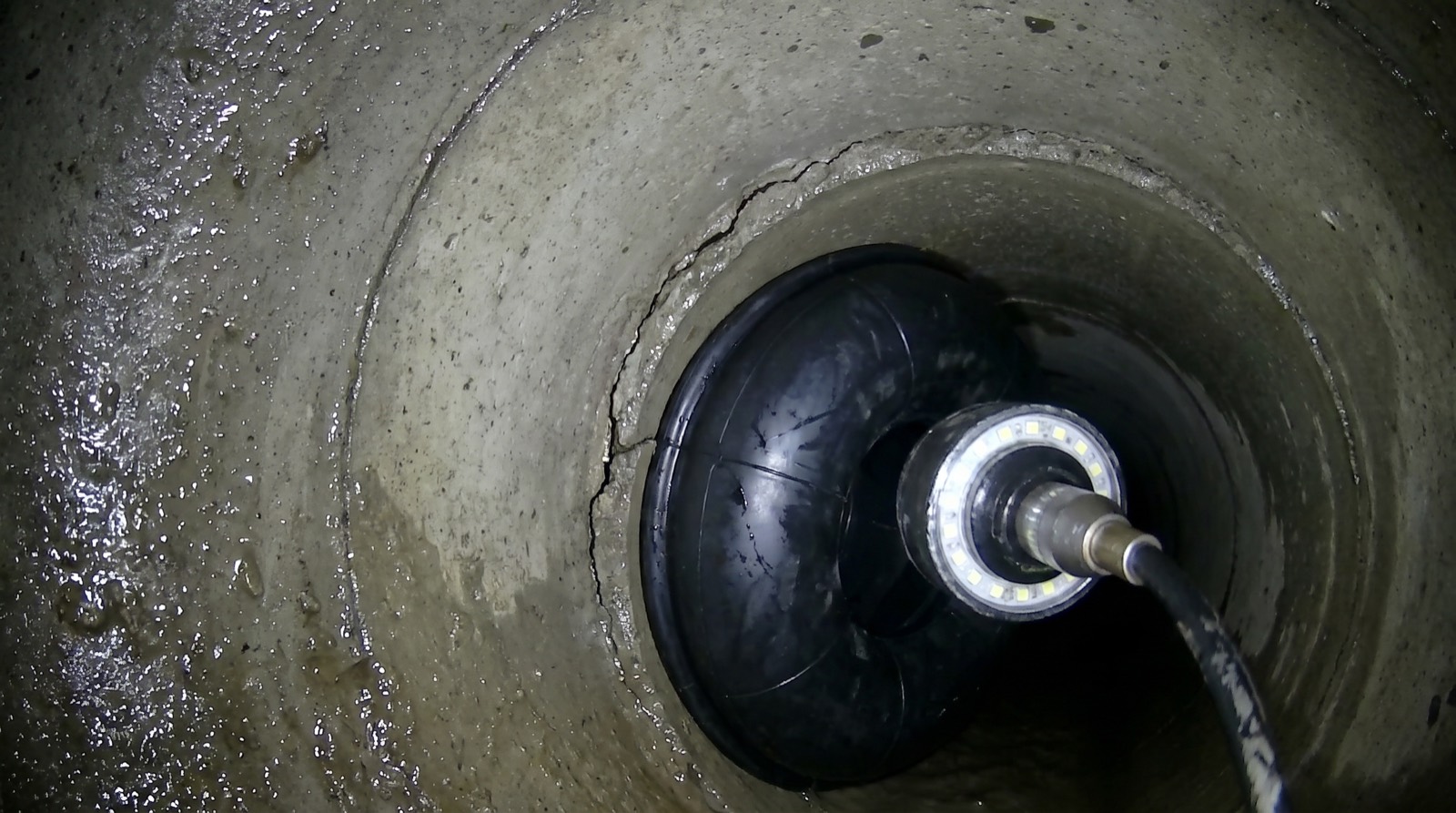
A patch liner consists of a short piece of carrier material (usually glass fibre or needle felt) that is impregnated with a two-component resin. It is transported precisely to the damaged spot on an inflatable packer, pressed against the pipe wall there and cured. After curing, the packer is removed – the damaged spot is permanently sealed and reinforced. The treated section is then as watertight and resilient as a new pipe.
The process step by step
First, the pipe is surveyed by CCTV drain survey to locate and measure the damaged spot precisely. The spot is then cleaned and milled if necessary. Next, the impregnated patch liner is fitted onto the packer, positioned and pressed into place. After curing, a further camera survey checks the result. The whole job is usually done in a few hours – inspection and rehabilitation can often be carried out in a single appointment.
When is a patch liner the right choice?
A patch liner is suitable when there are only one or a few individual damaged spots and the rest of the pipe is intact. Typical cases: a crack, a leaking or displaced joint, a protruding connection after milling or local fragmentation. If, on the other hand, there is a lot of damage spread over the entire length or the pipe is weakened by age, a continuous CIPP liner is the more sustainable solution. The CCTV drain survey provides the necessary clarity here.
Patch liner vs. continuous CIPP liner
The difference lies in the scope: the patch liner treats one spot locally, the CIPP liner the entire pipe. For an isolated damaged spot, the patch liner is considerably cheaper, because less material and time are needed. With several defects, however, the total of several patch liners can approach the price of a continuous liner – in that case the overall solution often makes more sense. The CCTV drain survey provides the basis for the decision, so that you do not pay more than necessary.
What does a patch liner cost?
The guide price in Switzerland is from CHF 800 per damaged spot, including call-out and preparatory work. The exact price depends on the diameter, access and the effort involved in preparation (cleaning, milling). If several spots are rehabilitated in the same visit, the price per spot falls, because the call-out and set-up time are only incurred once. Before that comes the CCTV drain survey (from CHF 50, ±15%). All figures are guide prices; we prepare the binding quote after the survey, when the location and extent of the damaged spot are known exactly.
Benefits of the patch liner
The patch liner is fast, cost-effective and trenchless: nothing is torn up, the job takes only a few hours and the damaged spot is permanently sealed and reinforced. The material is resistant to wastewater and roots. For owners, this means a targeted, budget-friendly repair that prevents greater consequential damage. For individual root intrusions or joint damage in particular, it is the first choice.
Limits of the method
The patch liner reaches its limits where a pipe has a lot of damage, leaks throughout due to age or has collapsed or is badly displaced over a stretch. In such cases, a continuous CIPP liner or partial replacement is the better choice. Honest advice therefore also means not using a patch liner where it would only conceal the problem in the short term.
Typical cases from practice
In practice, the patch liner is used particularly often in two situations. Firstly, for root ingress at a leaking joint: after the roots have been cut out, the patch liner seals the spot permanently so that no new roots can get in. Secondly, for individual cracks or shattered sections in otherwise intact vitrified clay or concrete pipes, as found in many older properties. In both cases a continuous liner would be oversized and unnecessarily expensive.
A patch liner can also make sense after connecting a new supply pipe or after milling work, to seal a transition cleanly. What matters is always that the damaged spot is clearly limited and the surrounding pipe is load-bearing. We check this with the camera and only recommend the patch liner where it is the best solution technically and economically. This gives you a targeted repair that fixes exactly what needs fixing – no more and no less.
How long does a patch liner last? Installed professionally, a localised repair also achieves a service life of several decades, comparable to a continuous liner. What matters is that the preparation is right: the damaged spot must be clean, dry and free of loose parts so that the resin bonds over the full surface. That is why cleaning and, where necessary, milling are an essential part of the process. If the work at this spot is careful, the patch liner is a permanent solution and by no means just a temporary fix – a widespread misconception that unfairly clings to the method.
Do you have a single damaged spot in your pipe? A patch liner is often the quickest and cheapest solution. Our guide price configurator provides an initial estimate, and the binding quote follows after the CCTV drain survey. Karo Kanaltechnik can be reached via its 24/7 emergency service – call us on +41 43 588 12 08.