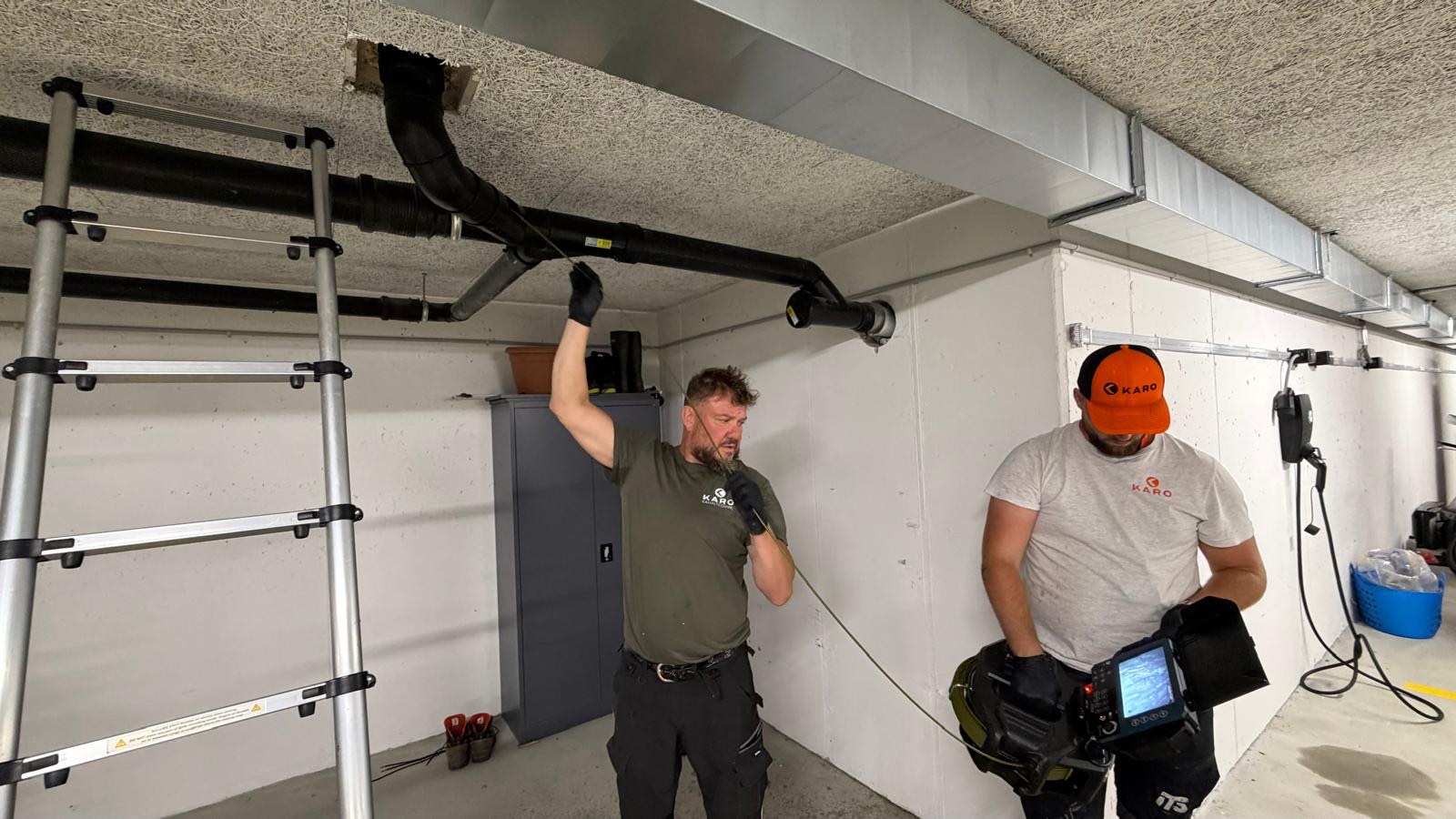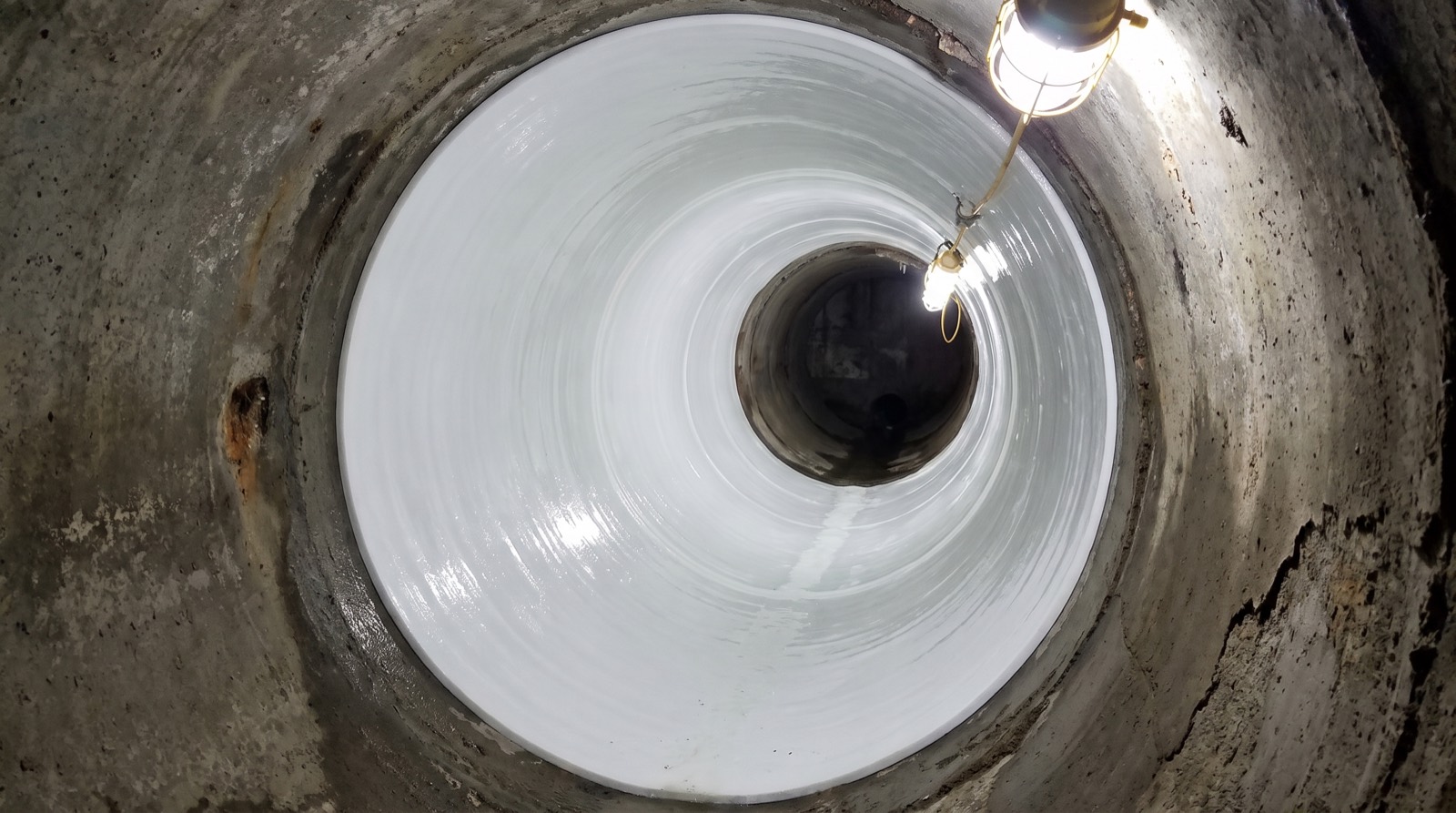
CIPP liner technology renews drains from the inside: a liner impregnated with synthetic resin is inserted into the existing, defective pipe, pressed against the pipe wall and cured, creating a new, watertight and structurally load-bearing pipe inside the old pipe – without digging. The technical term is cured-in-place pipe (CIPP). This technique is one of the most proven methods of trenchless drain rehabilitation and has fundamentally changed the repair of wastewater pipes.
The principle sounds simple, but the execution requires precise technology and experience. Below we explain CIPP liner technology step by step – from the materials and installation to the structural design – so that you understand what actually happens during trenchless rehabilitation. This knowledge helps you compare quotes on a sound basis and ask the right questions.
The basic principle: pipe within a pipe
The liner uses the old pipe as a mould. The resin-impregnated carrier liner lies flush against the inner pipe wall over its full surface and cures there to form a solid composite pipe. After curing, the liner is bonded to the old pipe and takes over its load-bearing function – or even replaces it structurally entirely. This turns a leaking old pipe into an as-new pipe without having to dig up a single metre of ground.
The materials
The carrier liner consists of needle felt or glass fibre. Needle felt is flexible and suitable for bends and house connections, while glass fibre is high-strength and dimensionally stable for higher loads. The resins used are epoxy, polyester or vinyl ester resins. The combination of carrier material and resin determines the strength, chemical resistance and service life of the finished liner. There is a suitable combination of materials for every situation.
Installation: inversion or pull-in
In the inversion method, the liner is turned inside out into the pipe using water or air pressure – in the process it is reversed so that the resin-impregnated side comes into contact with the pipe wall. In the pull-in method, the liner is pulled in and then expanded with pressure. In both cases, the pressure ensures that the liner is pressed seamlessly against the old wall and that no voids form. The choice of method depends on the pipe length, diameter and geometry.
Curing
Depending on the system, the resin cures with hot water, steam or UV light. With UV curing, a light train travels through the glass-fibre liner and cross-links the resin evenly and quickly. Hot-water and steam curing heat the entire pipe. Correct control of temperature and time is crucial for the liner to reach full strength and remain permanently watertight. Mistakes at this stage can hardly be corrected later – which is why experience is particularly important here.
Structural design: fully or partially load-bearing
Liners are distinguished by their structural function. A partially load-bearing liner supplements the old pipe, which is still load-bearing, whereas a fully load-bearing (independent) liner takes over the structural role on its own – important when the old pipe has largely lost its load-bearing capacity. The required wall thickness is calculated on the basis of soil cover, groundwater and traffic load so that the liner withstands the loads permanently. This structural design is the basis of a rehabilitation that complies with the standards.
Connections and finishing work
During lining, lateral connections are initially covered. After curing, a remote-controlled robotic cutter reopens these connections precisely. Where requirements are higher, the transitions can additionally be sealed with a top-hat profile. Finally, an acceptance survey with the camera documents that the work has been carried out properly and serves as proof for owners and authorities.
Benefits and limits
CIPP liner technology is fast, trenchless, watertight and root-proof, improves the flow and lasts around 50 years. Its limit is reached where a pipe has completely collapsed, is badly displaced or is no longer passable over a stretch – then additional measures or partial replacement are needed. Whether the technology can be used is reliably clarified by the preliminary CCTV drain survey. This gives you a realistic assessment from the outset of whether the trenchless solution is an option for your pipe.
Economic and ecological benefits
Because there is no excavation, CIPP liner technology saves not only money but also resources: less use of machinery, less transport, no landfill material and no lengthy reinstatement of the surface. For owners, this means cost-effective, sustainable value preservation – and for the environment a much better balance than a complete relaying in an open trench.
Historically, CIPP liner technology has developed continuously since the 1970s. At first, hot-water-cured needle-felt liners dominated; today, UV-cured glass-fibre systems are increasingly used, which cure faster, can be controlled more precisely and achieve high material strength. At the same time, the robot and camera technology for preparation and finishing work has improved greatly. This development has increased the quality and reliability of trenchless rehabilitation to such an extent that today it is preferred to open-cut construction in many cases.
Ultimately, three things are decisive for the quality of a CIPP liner rehabilitation: the right choice of materials, clean preparation of the pipe and carefully controlled curing. Mistakes in any of these areas can hardly be corrected later without repeating the rehabilitation. That is why choosing an experienced specialist firm is just as important as the technology itself. A documented acceptance survey gives you the certainty that all steps have been carried out professionally and that the liner will reach its full service life.
It is also interesting that CIPP liner technology is not limited to wastewater pipes. Related methods are used for drinking water, gas and industrial pipes as well as for rainwater sewers. The basic principle always remains the same: renewing an existing pipe from the inside without exposing it. For municipal and private wastewater, however, the CIPP method is by far the most common application – and has been tried and tested there for decades. This broad track record is a strong argument for the reliability of the technology.
Would you like to know whether your pipe can be rehabilitated with CIPP liner technology? We assess the condition by camera survey and prepare a binding quote. Our guide price configurator gives you an initial idea. Karo Kanaltechnik can be reached via its 24/7 emergency service – call us on +41 43 588 12 08.