In a CCTV drain survey, a remote-controlled camera crawler or a push-rod camera travels through the drain and transmits live images to a monitor. This makes cracks, root ingress, deposits, pipe collapses and displaced joints visible to the millimetre, without having to dig up a single metre of ground. The CCTV drain survey is thus the central diagnostic tool of modern drain technology: it shows exactly where damage is located, how large it is and what rehabilitation would be needed.
What is a CCTV drain survey in the first place?
The CCTV drain survey, also known as a camera survey or pipe inspection, is the visual examination of wastewater pipes, underground drains and rainwater pipes with a special drain camera. Unlike simply flushing, it provides a documented picture of the inside of the pipe. Specialist firms use it to find the cause of a blockage, check the condition before buying a property or prepare a planned rehabilitation accurately. Precisely because drains lie underground, the camera image is often the only way to assess their actual condition.
What camera technology is used?
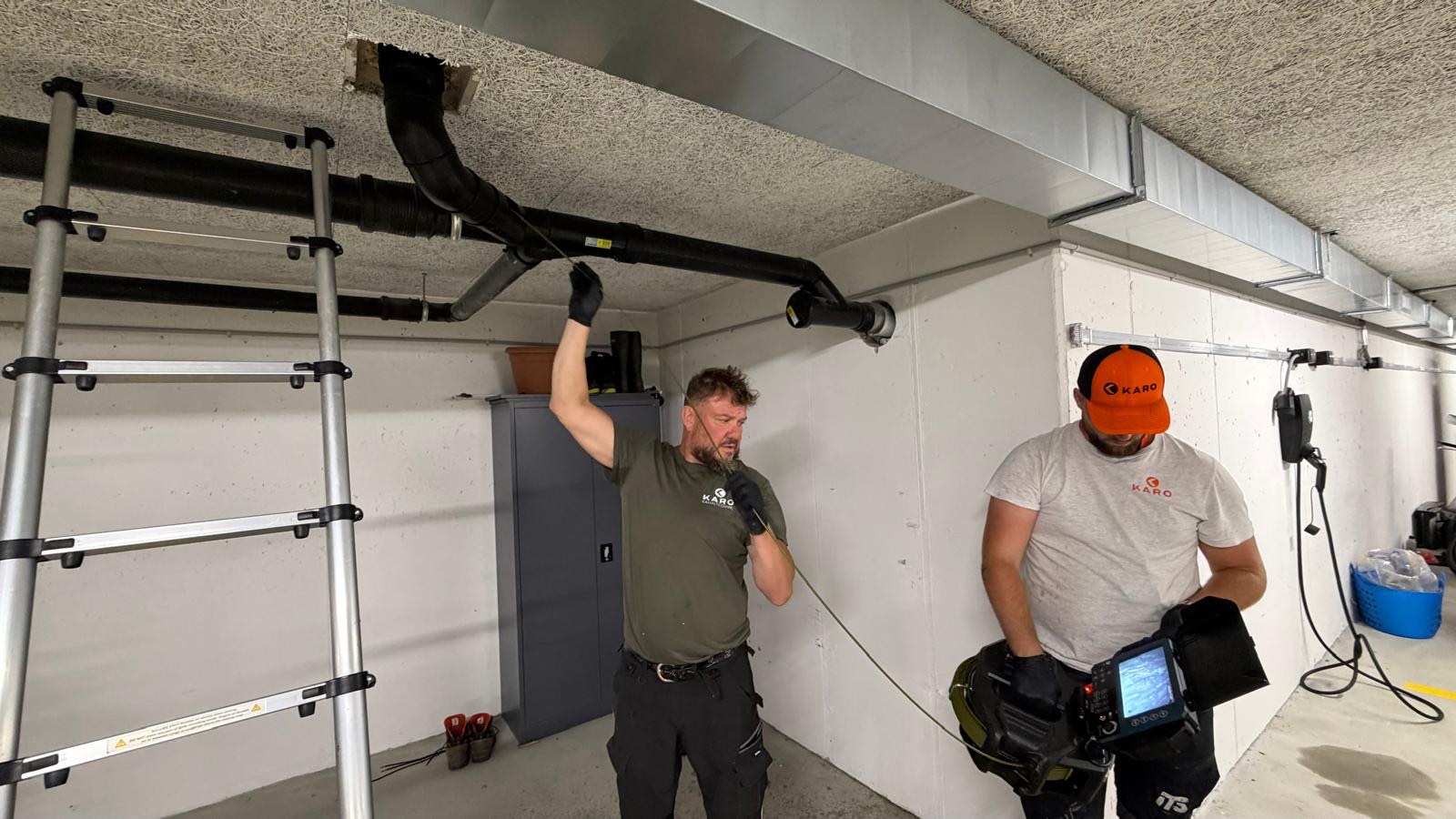
Depending on the pipe diameter and length, two systems are used. For shorter pipes and house connections from about 40 millimetres, the push-rod camera is suitable: a flexible cable with a camera head is pushed forward by hand. For larger drains from around 100 millimetres, a self-propelled camera crawler is used, whose head can rotate and pan so that branches and joints can also be examined from every angle.
Modern cameras have powerful LED lighting, high-resolution optics and an integrated transmitter, known as a sonde. This allows the position of the camera to be determined precisely from the surface with a locating device. The technician thus knows to the centimetre where the damage lies under the garden or driveway, which is crucial for a later localised repair.
How does a CCTV drain survey work step by step?
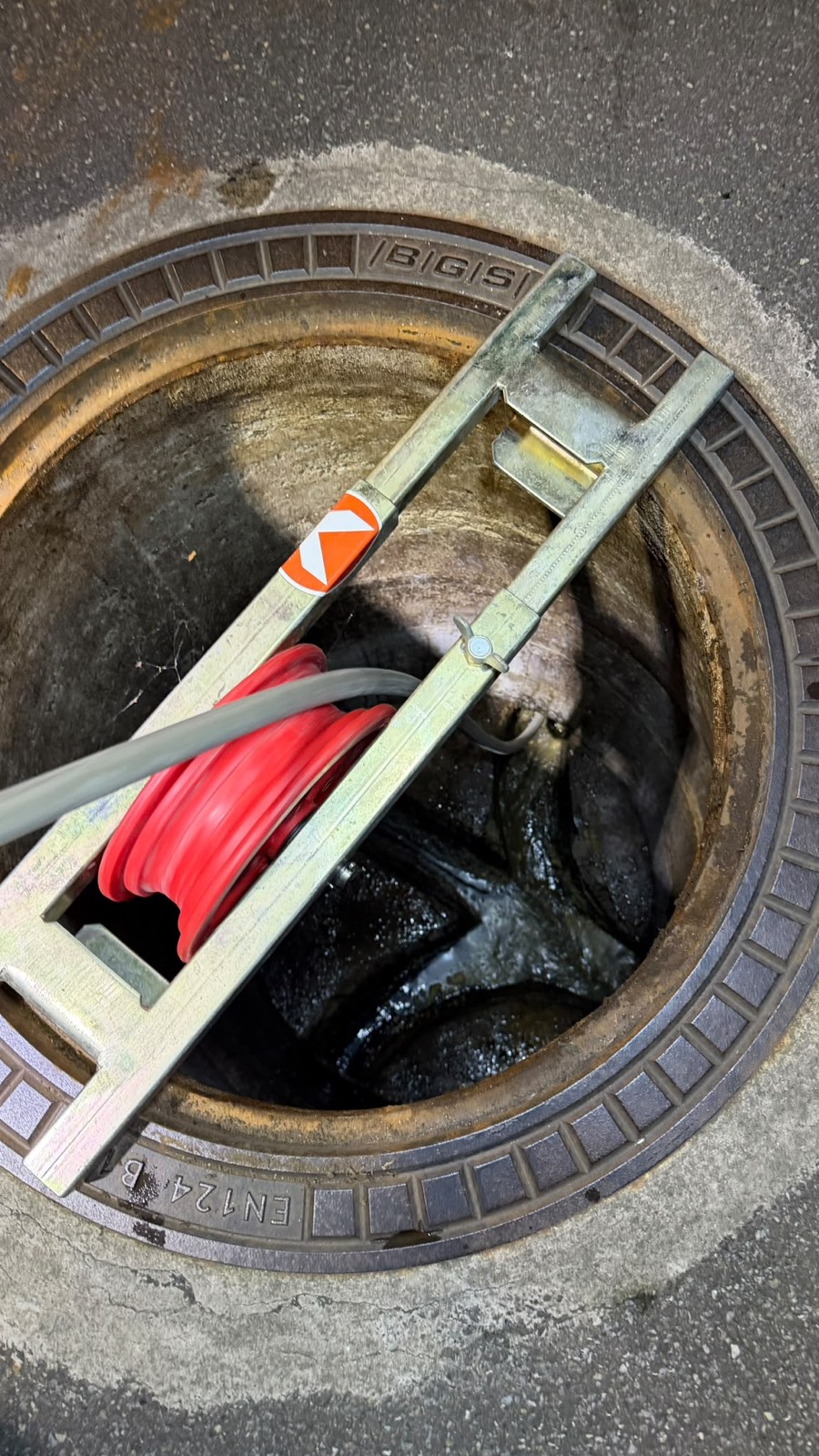
First, the technician gains access to the pipe, usually via an inspection chamber, a floor drain or an opened rodding eye. If the pipe is heavily soiled, it is first cleaned by high-pressure water jetting, because only a clean pipe wall provides meaningful images. The camera is then inserted and guided slowly through the drain.
During the survey, the specialist watches the live image and documents every anomaly with its metre mark. Anomalies include roots growing through joints, fragmentation at cracks, sagging pipe sections, encrustations or the ingress of infiltration water. At the end, the customer receives an inspection report with video, photos and a condition assessment using the standard damage classifications. This documentation is the basis for every further decision.
What damage can be detected?
The camera image reveals the whole spectrum of typical drain damage. This includes longitudinal and transverse cracks, from which fragments break off over time, as well as displaced joints, where two pipe sections no longer sit flush against each other and gaps open up. Roots that have grown into the pipe through leaking joints and formed whole root balls there are often visible. Encrustations, i.e. hard deposits of limescale and minerals, deposits of grease and sand, and corrosion in old metal pipes can also be detected.
In addition, the camera reveals structural problems that would otherwise remain hidden: pipe sections that have sagged or shifted in height, an incorrect gradient, connections protruding into the pipe and the ingress of infiltration water, which points to a leak. Each of these observations is recorded with its metre mark and a condition grade, giving a precise picture of the damage along the entire pipe. This accuracy is the prerequisite for targeted repairs later on without unnecessary digging.
When does a CCTV drain survey make sense?
A CCTV drain survey is worthwhile in several situations. Where blockages keep recurring, it shows whether there is a structural cause such as a pipe collapse or root ingress rather than just grease and deposits. Before buying a property, it provides certainty about the condition of underground drains that are often decades old and protects against nasty surprises after the purchase. After construction work, it serves as an acceptance test to ensure that the pipes are undamaged and correctly laid, and where basement walls are damp it helps to locate leaks.
Regular checks are also recommended as part of preventive maintenance. If you know the condition of your pipes, you can fix minor damage early before it turns into an expensive pipe collapse requiring excavation. Property management companies therefore use the CCTV drain survey as a fixed part of their planning for drain maintenance. The CCTV drain survey is thus not only diagnosis but also active preservation of the property's value, which pays off in the long term.
How do I prepare for the CCTV drain survey?
Good preparation increases the informative value of the survey. It is important that the specialist firm has access to a suitable entry point, such as an inspection chamber, a rodding eye or a floor drain. If the location of the manholes is unknown, locating them via the camera transmitter helps to uncover them. Heavily soiled pipes should be flushed before the inspection, as only a clean pipe wall provides a clear image. That is why the combination of high-pressure water jetting followed by a CCTV drain survey is so common.
For the customer, this involves little effort: they ensure access and describe the observed problems to the technician, for example where and when blockages occur or where damp is visible. These pointers help to direct the inspection specifically to the critical sections. After the survey, the customer receives the complete report with video footage, which they can also use for insurers, buyers or tradespeople.
What does a CCTV drain survey cost in Switzerland?
The costs depend on the pipe length, access and the technology required. As a guide, a CCTV drain survey costs from around CHF 50, plus the hourly rate of about CHF 160 per hour and a flat call-out fee of about CHF 60. These figures can vary by plus/minus 15 per cent depending on the effort. The CCTV drain survey is often combined with drain cleaning, which saves call-out and set-up time. A transparent quote before work begins provides clarity about the amount to be expected.
From image to solution
The greatest benefit of the CCTV drain survey is that it makes guesswork unnecessary. It replaces premature digging and repeated superficial flushing with a clear identification of the cause. On this basis, the appropriate measure can be chosen, whether targeted high-pressure water jetting, trenchless pipe relining with a CIPP liner or a localised repair. This keeps interventions to a minimum and costs predictable.
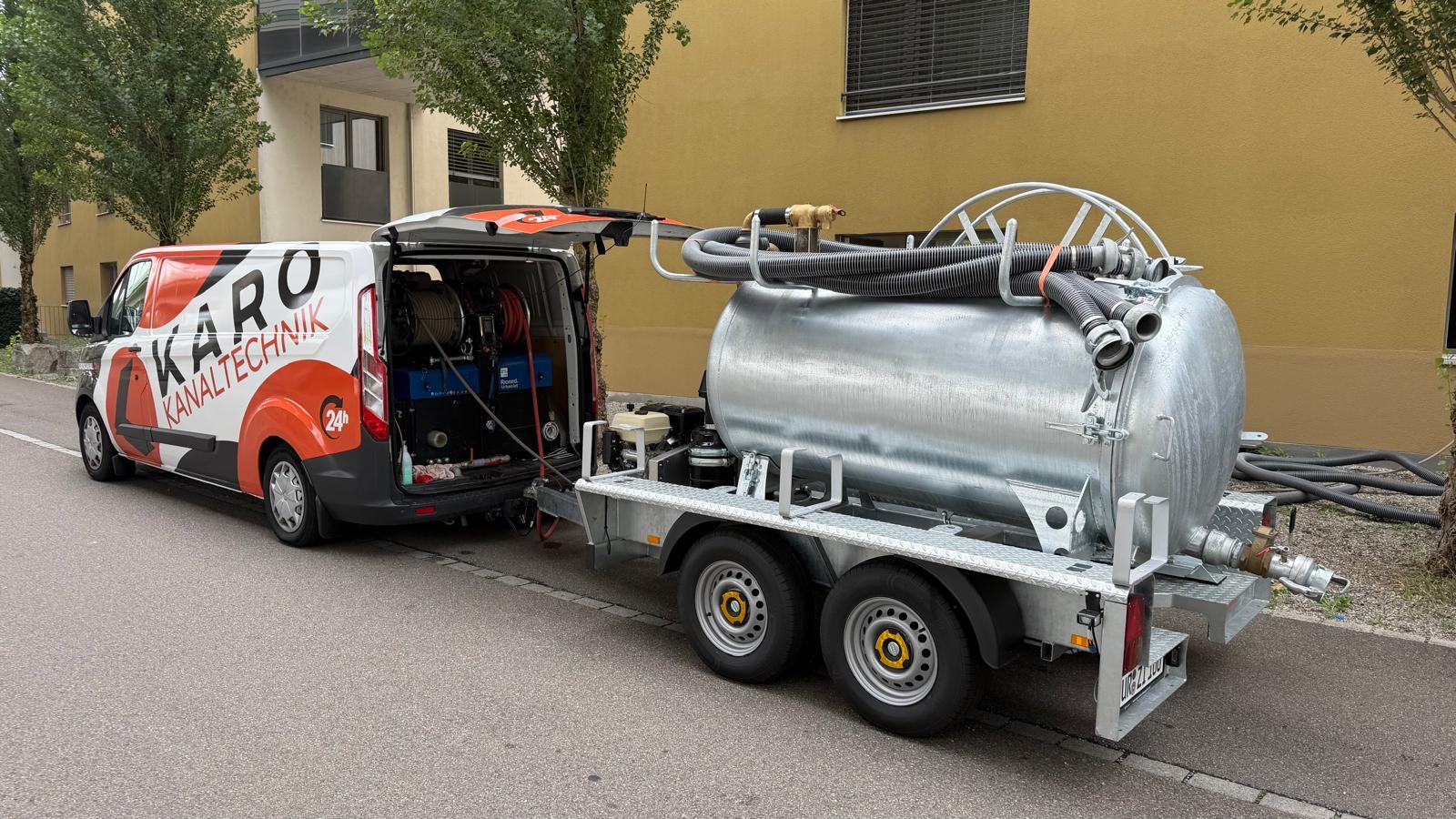
Do you suspect damage in your drain or need a documented condition check? Karo Kanaltechnik carries out CCTV drain surveys with modern technology throughout the region and is there for you around the clock in an emergency. Call us on +41 43 588 12 08; our 24/7 emergency service is available to you at any time.