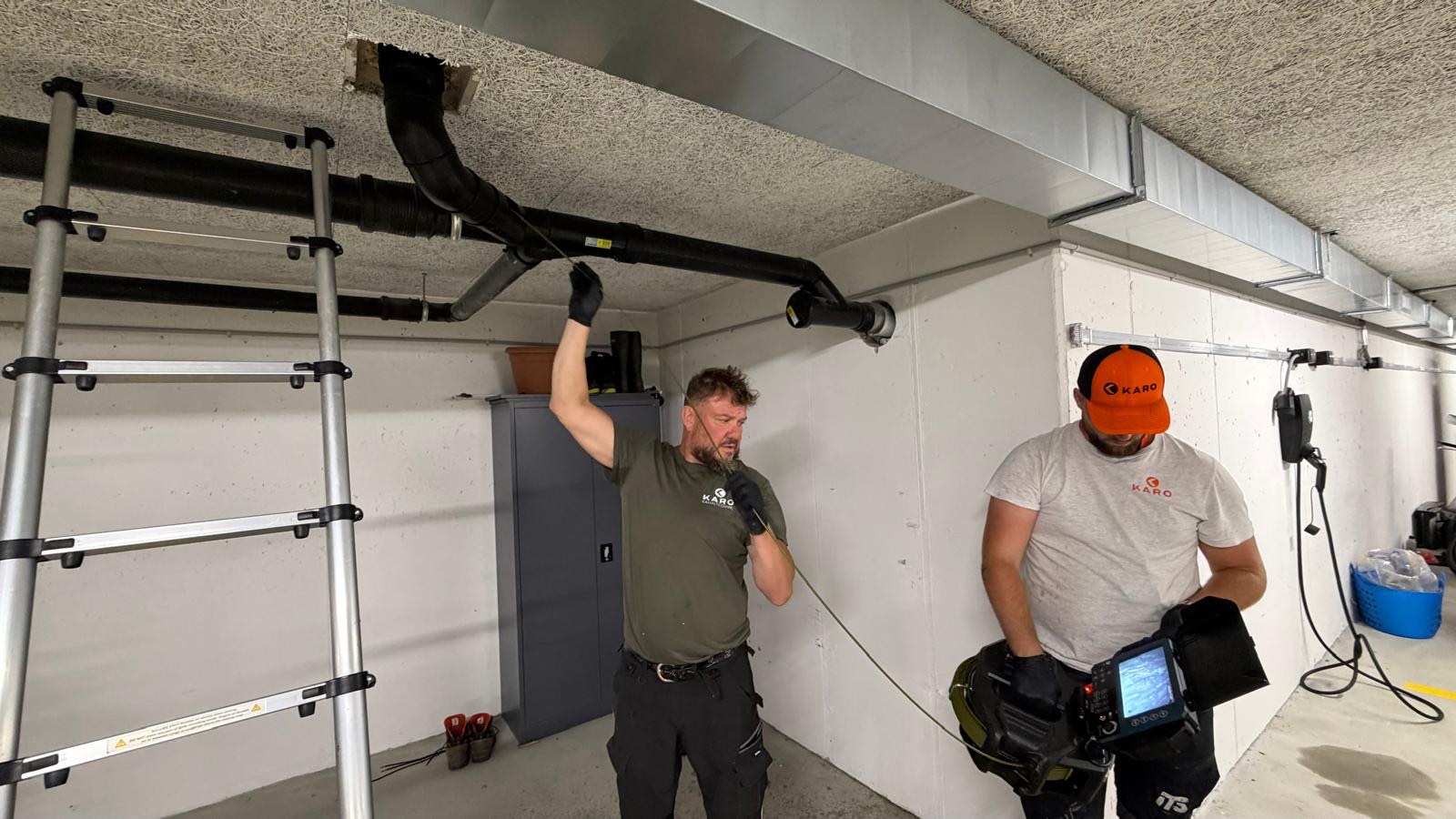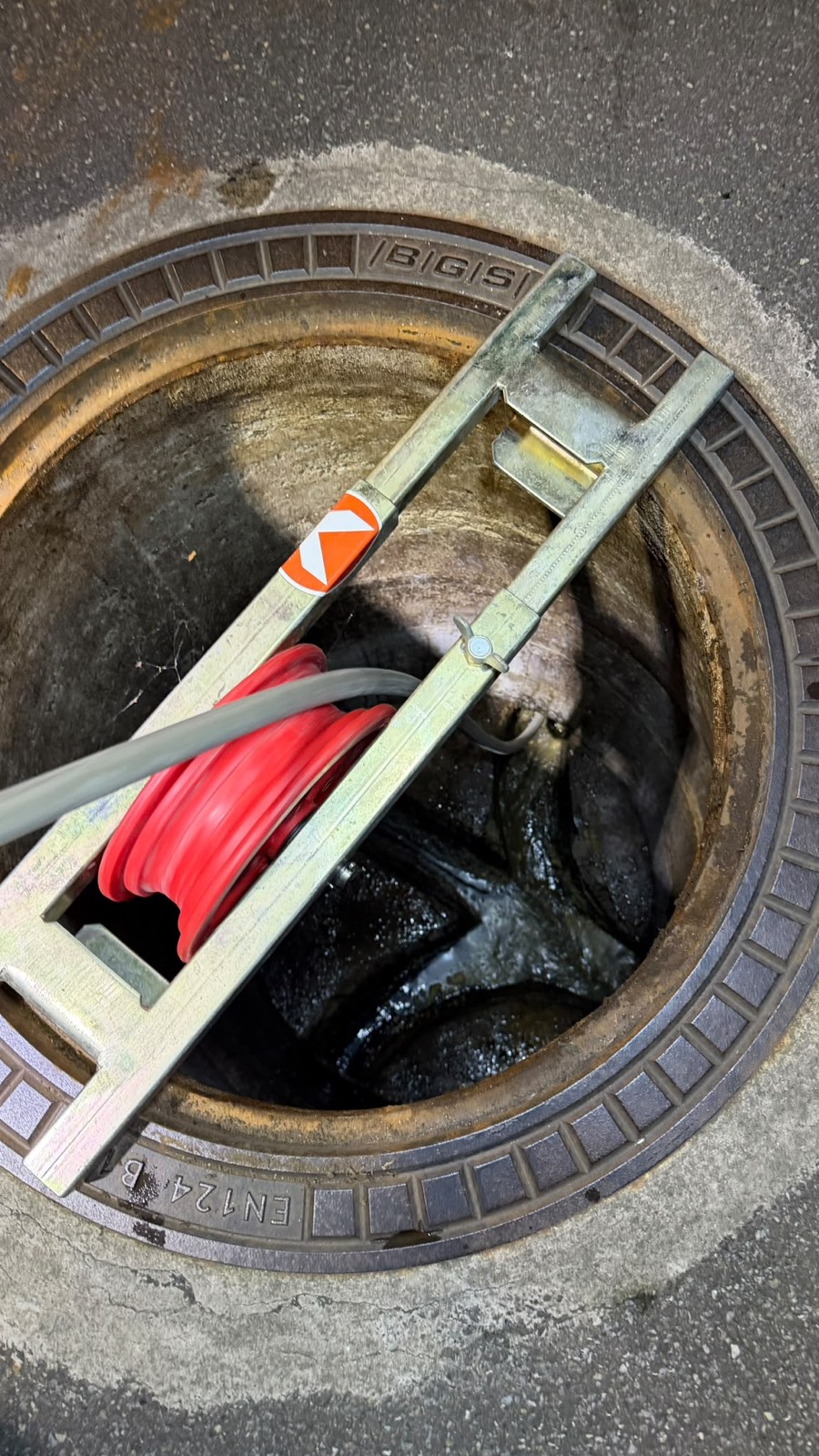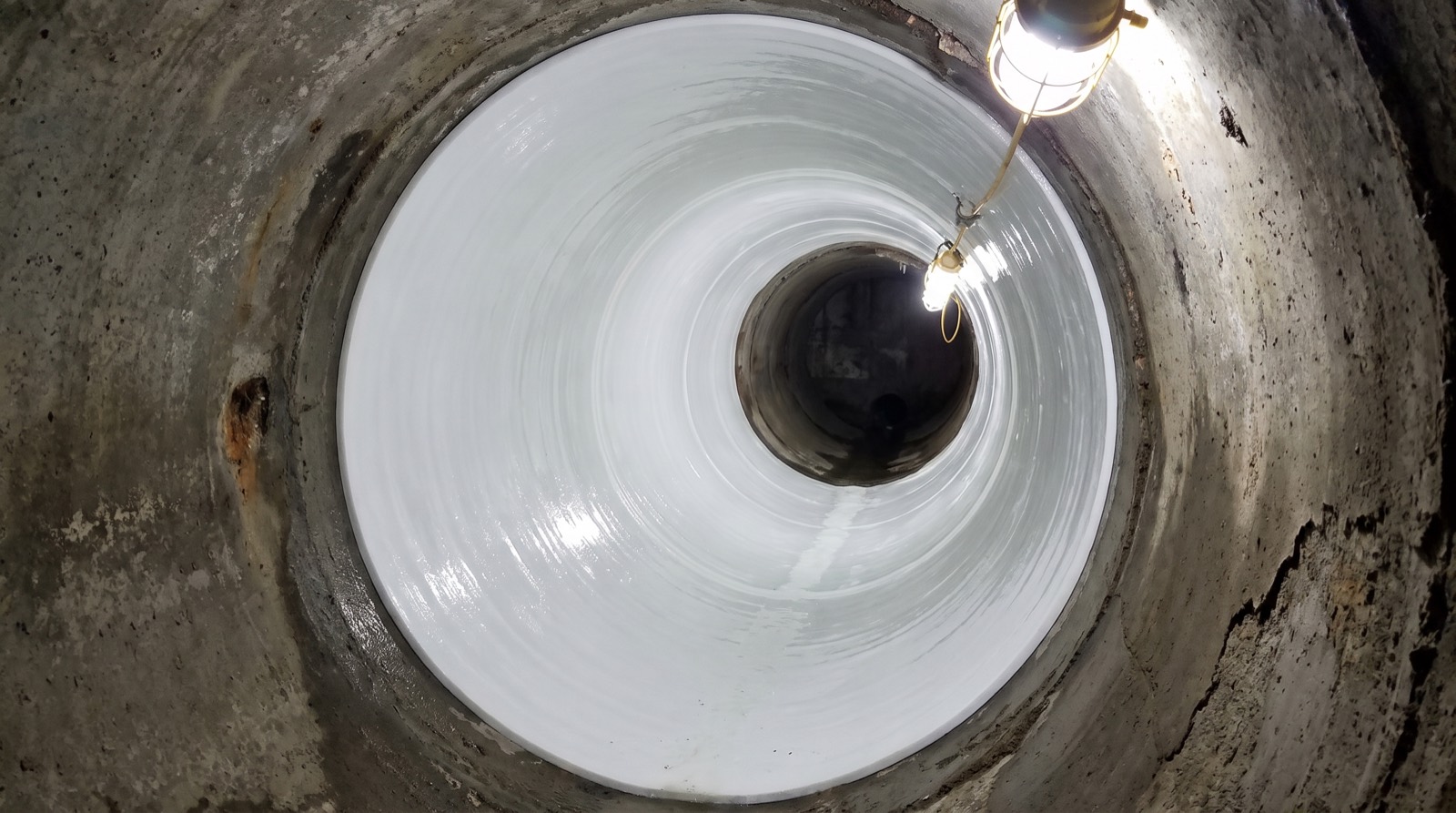
In trenchless drain rehabilitation there are three main methods to choose from: the CIPP liner rehabilitates an entire pipe, the patch liner (Pointliner) repairs a single damaged spot, and spray lining coats the pipe wall with special resin. Which method is suitable depends on the damage: a lot of damage along the length calls for a CIPP liner, an isolated spot for a patch liner, and thin-walled sealing or complex geometries speak in favour of spray lining. The CCTV drain survey always provides the basis for the decision.
All three methods have one thing in common: they do not require digging and thus save the expensive earthworks and surfacing of open-cut construction. In detail, however, they differ considerably in application, effort and cost – if you know the differences, you can make the best economic choice.
The CIPP liner: rehabilitating the entire pipe
In CIPP lining, a resin-impregnated liner is pulled in over the entire length of the pipe and cured – a new pipe inside the old pipe. The method is suitable when several defects are spread along the stretch or when the pipe needs renewing because of its age. Advantage: watertight throughout, root-proof, smooth surface, a service life of around 50 years. Guide price: CHF 250 to CHF 600 per metre. It is structurally the strongest of the three solutions.
The patch liner: localised repair
The patch liner (Pointliner) treats only a single damaged spot – such as a crack or a leaking joint. A short, impregnated repair section is positioned precisely using a packer and cured. Advantage: fast, inexpensive, targeted. It is the right choice when the rest of the pipe is intact. Guide price: from CHF 800 per damaged spot. With a lot of damage, however, the total of several patch liners quickly becomes more expensive than a continuous CIPP liner.
Spray lining: coating from the inside
In the spray lining method, a special resin or mortar is applied evenly to the cleaned pipe wall by means of a rotating nozzle. This creates a protective, sealing coating. Spray lining is particularly suitable for complex geometries, bends, branches and manholes, where a rigid CIPP liner reaches its limits. It seals and protects against corrosion, but where structural requirements are higher it does not always replace a fully load-bearing liner.
Direct comparison of the methods
In summary: the CIPP liner is the choice for continuous rehabilitation of entire pipes with a high structural effect. The patch liner is the economical spot solution for individual defects. Spray lining comes into its own with angled geometries and coatings over larger surfaces. None of the methods is fundamentally better – what matters is how well it matches the specific damage and the structural condition of the pipe.
Which factors decide?
The choice depends on the number and distribution of defects, the pipe diameter, the pipe geometry (straight or angled), the structural requirements and the budget. The condition of the old pipe also plays a role: if the basic structure is still load-bearing, a partially load-bearing solution is often enough; if it is badly weakened, a fully load-bearing liner is needed. This assessment is made on the basis of the CCTV drain survey, which provides all the relevant data.
What do the methods cost by comparison?
Guide prices in Switzerland are: CIPP liner CHF 250 to CHF 600 per metre, patch liner from CHF 800 per damaged spot, spray lining individually depending on area and effort. With all methods, there are also the CCTV drain survey (from CHF 50, ±15%), cleaning (CHF 160 per hour) and the call-out (CHF 60). All prices are guide prices – we prepare the final quote after the CCTV drain survey, when the exact condition is known.
Combining the methods
In practice, the methods can also be combined: for example, a pipe can be given a continuous CIPP liner and a particularly complex branch point additionally sealed with spray lining or a top-hat profile. This tailor-made combination ensures that every spot is rehabilitated with the appropriate technique – and that you end up with a pipe that is watertight throughout and long-lasting.
Conclusion: it depends on the damage
A single crack does not call for a continuous liner, and a pipe weakened by age is not helped permanently by a spot repair. The key to the right and economical decision is a sound diagnosis by camera. On this basis, we recommend the method that fits technically and is kind to your budget – neutrally and without selling you more than is actually needed.
A common misconception is the assumption that the most expensive method is automatically the best. That is not true: a continuous CIPP liner for a single damaged spot is just as uneconomical as mere spray lining at a spot that actually needs load-bearing rehabilitation. The art lies in matching the method exactly to the damage. This is precisely why the preliminary CCTV drain survey is indispensable – it replaces assumptions with precise facts and protects you from bad investments.
The time perspective also belongs in the decision. If you only fix the acute damaged spot with a patch liner today, even though the pipe as a whole is weakened by age, you may have to rehabilitate again in a few years. Conversely, a continuous liner is not worthwhile if the pipe is otherwise in good condition. Good advice therefore takes into account not only the current findings but also the probable age and remaining service life of the entire pipe – so that your investment lasts as long as possible.
Regardless of the method chosen: quality stands or falls with preparation. Thorough cleaning, the removal of roots and deposits and a precise CCTV drain survey are the basis for a lasting result with all three methods. Anyone who cuts corners here risks a rehabilitation that does not last. That is why, on every job, we attach importance to a clean starting point and document the result with an acceptance survey – so you have it in black and white that the chosen solution has been implemented professionally.
Are you unsure which method is right for your pipe? We advise you neutrally and, after a CCTV drain survey, prepare a binding quote. Our guide price configurator gives you an initial idea. Karo Kanaltechnik can be reached via its 24/7 emergency service – call us on +41 43 588 12 08.