What is a gully?
A gully (Dole) is a chamber or channel through which water drains into the sewer system – usually the inlet chamber with a grate on the forecourt, in the courtyard or at the roadside. The term is a typical Helvetism and is used in German-speaking Switzerland for very different parts of the drainage system.
Originally, the word referred to a covered drainage ditch or channel. Today it can mean the sewer system itself («the water runs into the gully»), a road gully with a grate or an inspection chamber with a closed cover.
The word rarely appears in construction drawings, standards and quotes. There, the components are called inlet chamber, road gully, silt trap, inspection chamber or chamber cover. But anyone who calls a specialist company and talks about a blocked gully will be understood immediately – the decisive question then is where the gully is located and what water it takes in.
Gully, inlet chamber, road gully: terms in Switzerland
Several words are in circulation for the same component, depending on whether laypeople, planners or civil engineering offices are speaking. The everyday word in German-speaking Switzerland is gully (Dole). Inlet chamber (Einlaufschacht) is the technical term used in drawings and quotes: a chamber into which surface water runs from above. Road gully or street gully (Strassenablauf, Strassensammler) is what civil engineers call the inlets at the edge of the carriageway. «Gully» comes from English, is mainly used in Germany and is also understood in Switzerland.
In practice, the function matters more than the word: an inlet chamber takes in water, an inspection chamber provides access to the pipe, and a silt trap holds back solids. Many gullies on forecourts are an inlet chamber and silt trap in one. The following overview helps to correctly classify quotes, drawings and conversations with the municipality.
| Term | Who uses it | What is meant |
|---|---|---|
| Swiss everyday word (Dole) | Everyday language in German-speaking Switzerland | Collective term for inlet chamber, road gully, manhole or sewer |
| Inlet chamber (Einlaufschacht) | Planners, quotes, construction drawings | Chamber with a grate into which rainwater runs from above |
| Road gully / street gully | Civil engineering, municipality | Inlet chamber at the edge of the carriageway in the public road space |
| Gully | Germany, also understood in Switzerland | The same as a road gully or inlet chamber |
| Silt trap (Schlammsammler) | Technical language | Chamber with a sump that holds back sand, leaves and grit |
| Inspection chamber | Technical language | Closed chamber for access, cleaning and inspection of the pipe |
| Gully cover (Dolendeckel) | Everyday language | Grate or cover on the chamber (technical term: chamber cover) |
How an inlet chamber is built
An inlet chamber has a simple design, and that is precisely why it is worth knowing its individual parts: each of them can be the reason why the water no longer drains away or why it smells.
Grate and top section
At the top is the grate, usually made of cast iron, in a frame set into the surfacing. It lets water through and holds back coarse items such as branches or stones. If the grate sits too high, the water flows past it; if it sits too low or has subsided, a puddle and a trip edge form.
Sump
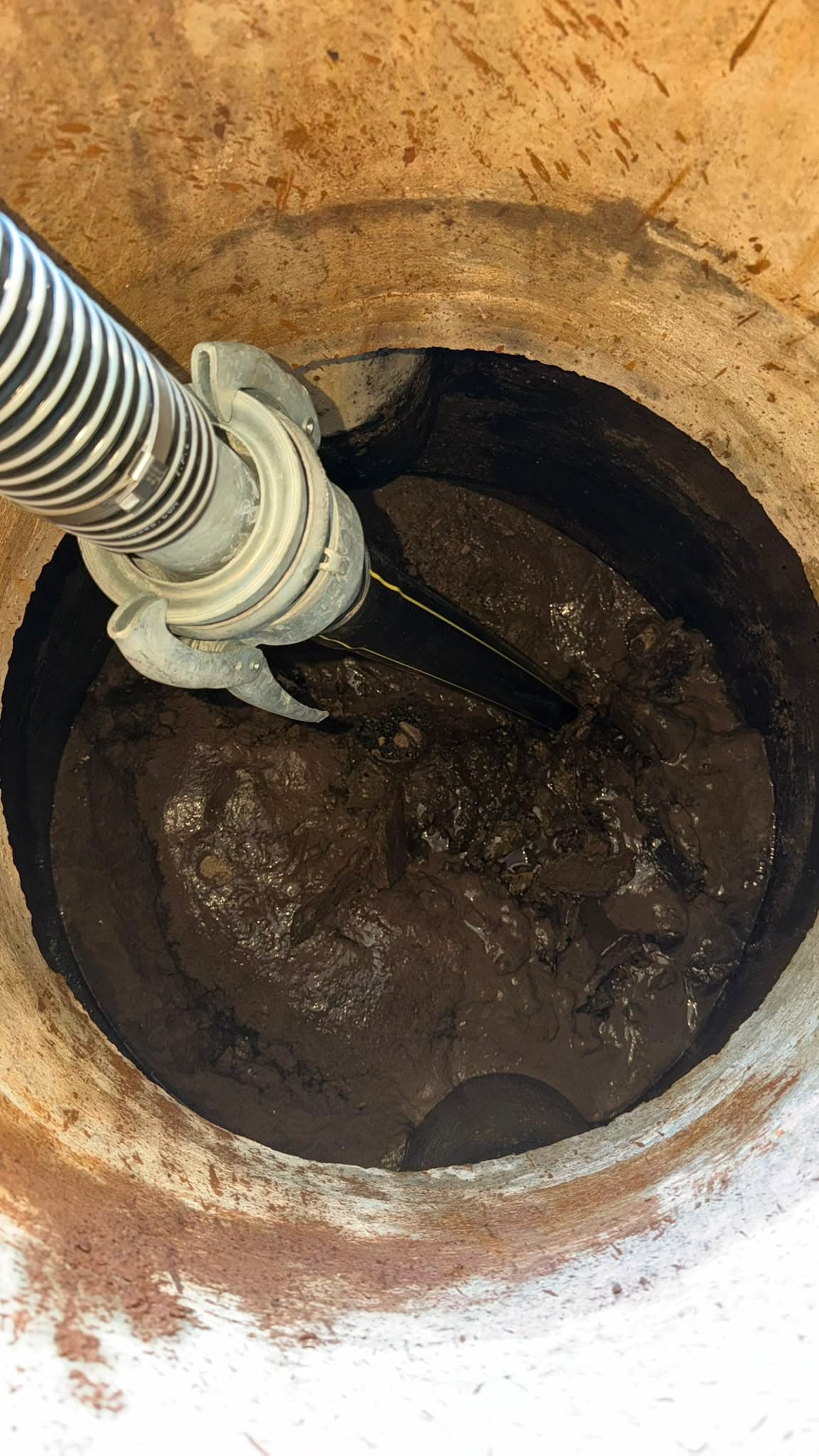
Beneath the grate is a space in which sand, leaves and grit settle before the water flows on. This sump is the heart of the gully: it protects the pipe that follows. If it is full, the protection is gone.
Outlet and water seal trap
The water leaves the chamber at the side via an outlet, often with a dip pipe or a baffle. This water seal trap stays filled with water, holds back sewer gases and makes it harder for rats to get up. If it dries out or is missing, the gully smells.
Connecting pipe
From the chamber, a pipe leads to the underground drain, the rainwater pipe, an infiltration system or the public sewer. Which variant applies depends on the property's drainage system: in a separate system, rainwater drains away separately from foul water, in a combined system together with it.
Gully cover and chamber cover
The gully cover closes off the chamber at the top. On inlet chambers it is designed as a grate so that rainwater can flow in; on inspection chambers it is closed so that neither water nor dirt can get in and no odours escape. Covers are usually made of cast iron, concrete or a combination and are designed for a specific load.
On driveways, car parks and roads, covers must withstand vehicle traffic; in the garden a lighter design is sufficient. The load classes are governed by the standard SN EN 124; more on this in the glossary entry on the manhole cover. A rattling, broken or subsided cover is not just a nuisance but a safety risk. It should be replaced or reset promptly, often as part of a manhole rehabilitation.
Who cleans the gully? Municipality vs. private land
Who has to clean a gully depends on where it is located. Private gullies on your own plot are the owner's responsibility – on the forecourt, in the courtyard, in front of the garage or in the car park of a housing development. Gullies in the public road space are maintained by the municipality.
The exact boundary between private and public drainage is set out in the drainage regulations of the respective municipality. As a rule, the inlet chambers on the plot and the pipes up to the connection to the public sewer belong to the property. If in doubt, the municipal building administration or the civil engineering office can provide information.
Ownership, tenancy and condominium ownership
In rented properties, the owner or the property management company organises the emptying; tenants should report an overflowing gully immediately. In condominium ownership, gullies on communal areas are generally the responsibility of the owners' association and are billed as communal costs – the association's regulations are decisive.
Gully in the street blocked
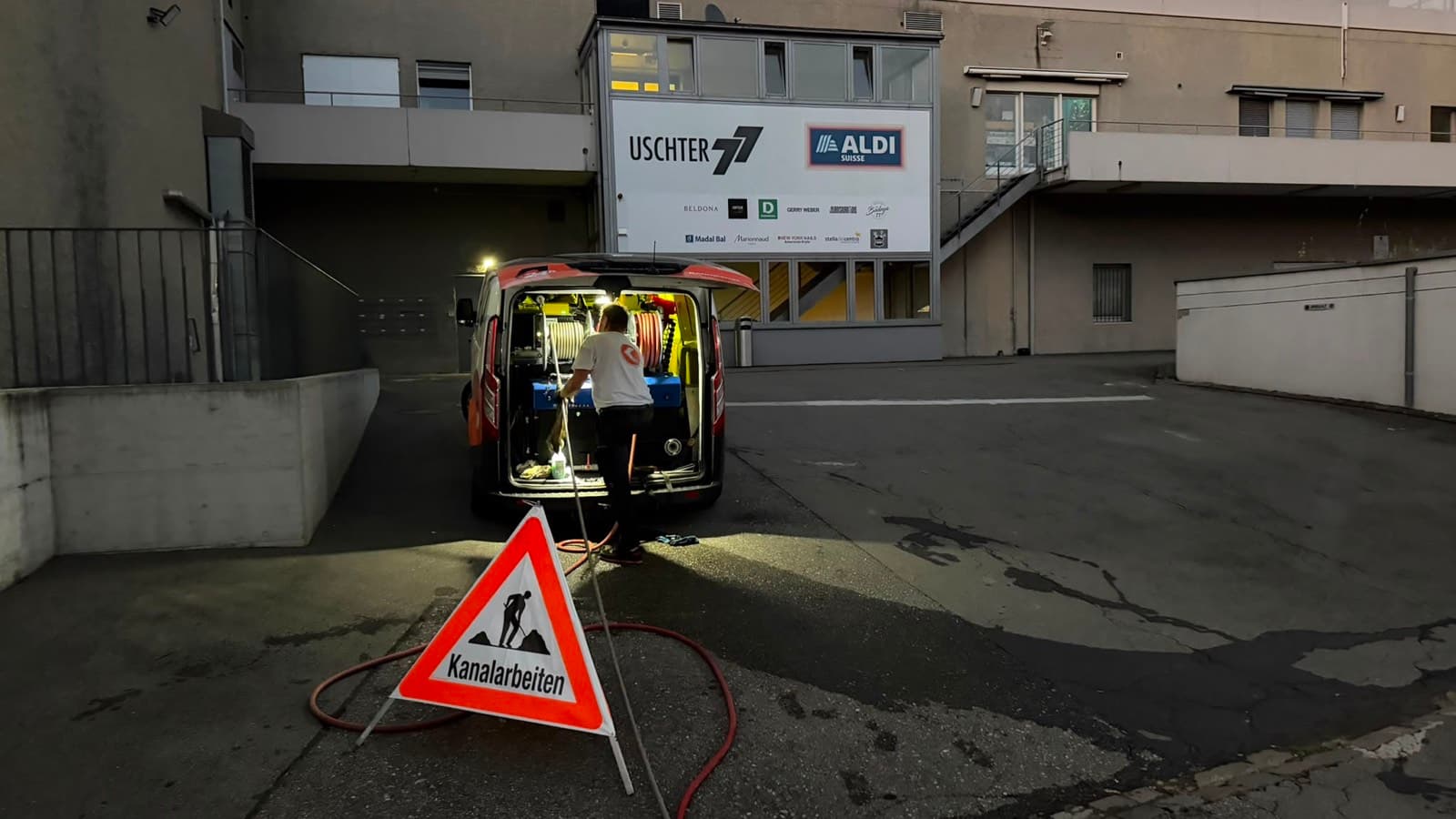
Anyone who notices a blocked gully, a missing grate or a rattling cover in a public area should report it to the municipal works depot or civil engineering office. Please do not open the cover yourself: street manholes are located in traffic, and opening them requires traffic signage.
Road gullies for municipalities
Municipalities with many road gullies often have them emptied in rounds by a specialist company, together with the cleaning of the collector pipes. Karo Kanaltechnik supports municipalities with suction and jetting work, CCTV drain surveys and documentation that fits into the general drainage plan (GEP).
Blocked gully: causes and consequences (flooded forecourt)
You usually only notice a blocked gully at the next thunderstorm: the water stays on the forecourt, runs towards the garage or the house entrance and collects in front of the underground car park entrance. The cause is almost always a full silt trap or a choked outlet pipe.
Causes
The most common problem is blockage. Leaves, sand, grit from winter gritting and abrasion from surfacing collect in the silt trap beneath the grate. Once it is full, the material gets into the connecting pipe, and during a thunderstorm the water backs up on the forecourt or in front of the garage entrance.
Then there is damage: broken edges, leaking pipe connections, a displaced pipe or roots growing into the chamber or the pipe. Cement slurry from building work, grass cuttings or gravel also choke pipes within a short time.
Consequences
A flooded forecourt is more than a nuisance. Water can run into the building via light wells, basement doors or the garage entrance and cause water damage. In winter, standing water freezes into black ice. And if the gully no longer drains, the water also backs up into connected channels and drains.
Odour and rats
Besides blockage, odour is the most common problem. If the water level in the silt trap dries out or a water seal trap is missing, sewer gases rise. Rotting sludge also smells. Rats use poorly covered gullies as a way into the sewer system.
Warning signs
You should take notice if water stands for longer than usual after rain, if the gully gurgles, if grass or moss grows in the grate or if, looking through the grate, you can no longer see the water level but only sludge.
Cleaning with a vacuum tanker: how it works
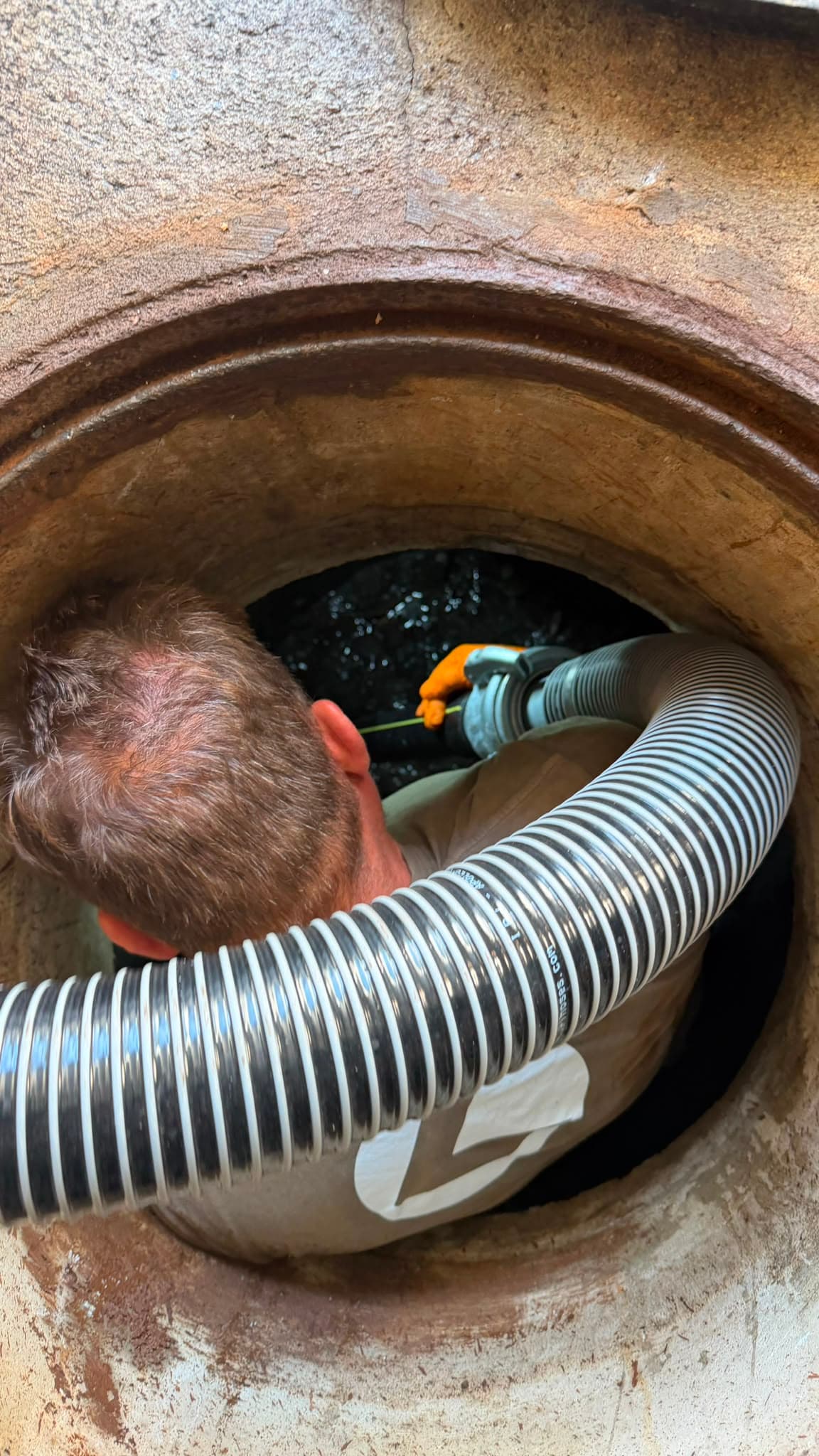
A gully is emptied with a vacuum tanker that sucks out sludge and water, followed by high-pressure water jetting of the outlet pipe. A job usually involves five steps.
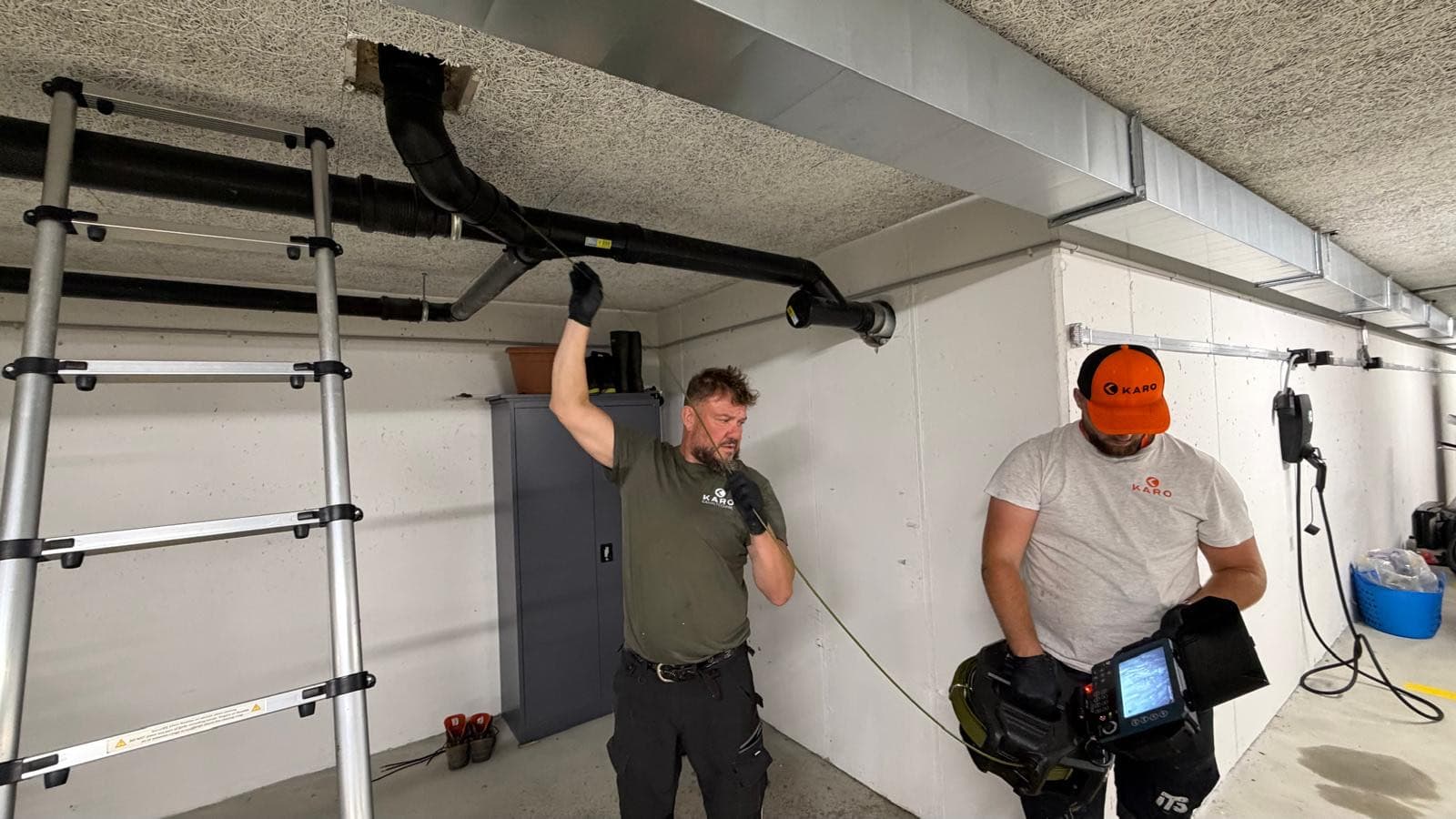
If blockages keep recurring, a CCTV drain survey of the pipe is worthwhile. It shows whether a displaced pipe, roots or an insufficient gradient are the cause.
1. Lift the grate and assess the chamber
The grate is lifted, coarse material is removed and the fill level in the sump is checked. If the gully is in a traffic area, traffic signage is put up first.
2. Suck out the sump
The suction hose takes water, sludge, sand and leaves out of the chamber. This empties the sump completely, including the compacted material at the bottom that can hardly be removed by hand.
3. Jet the outlet pipe
The pipe is then jetted at high pressure from the chamber to the next collector pipe. Karo Kanaltechnik works chemical-free with high-pressure water jetting at up to 200 bar; the loosened dirt is flushed back into the chamber and sucked out again.
4. Camera check if needed
If the water still drains poorly afterwards or the gully has already been blocked several times, a CCTV drain survey follows. The findings are documented in accordance with SN EN 13508-2 so that it is clear whether cleaning is sufficient or a repair is needed.
5. Completion
The grate is put back in, the surroundings are cleaned and the extracted sludge is disposed of properly. On request, the gully is included in an annual maintenance plan.
How much does it cost to clean a gully?
Karo Kanaltechnik charges transparently by time and effort: CHF 160 per hour plus CHF 60 call-out fee, each excl. VAT. One hour of work including call-out therefore costs CHF 220 excl. VAT or CHF 237.82 incl. 8.1% VAT. A job at a single-family home usually costs between CHF 150 and CHF 400. If a camera is also used, a surcharge from CHF 50 is added.
If you have several gullies, channels and manholes on one property cleaned in the same appointment, you pay the call-out fee only once. You can get a guide price for your situation via the online enquiry.
| Item | Karo Kanaltechnik guide price |
|---|---|
| Working hour | CHF 160 (excl. VAT) |
| Call-out | CHF 60 (excl. VAT) |
| 1 hour incl. call-out | CHF 220 excl. / CHF 237.82 incl. 8.1% VAT |
| CCTV survey surcharge | from CHF 50 |
| Typical job, single-family home | usually CHF 150 to 400 |
How often should a gully be emptied?
As a rule of thumb: at least once a year, ideally after the leaves fall in autumn. Gullies under large trees, next to gravel areas and flower beds, in car parks with heavy winter gritting and after building or garden work nearby should be emptied more often.
A simple test in between: lift the grate and see how much space remains between the surface of the sludge and the outlet. If the sludge reaches to just below the outlet, it is time for emptying – not only when the forecourt is under water.
Clean it yourself or call a specialist?
Any owner can remove leaves and branches from the grate and keep it clear themselves – that is the best prevention. Scooping out a little sludge with a trowel and bucket is also possible with a small courtyard gully.
DIY reaches its limits with compacted sludge at the bottom, with the outlet pipe and with deep chambers. Never climb into a manhole without safety equipment, because sewer gases can collect at the bottom. If the water rises above the outlet even though the sump is empty, or if it hardly drains at all, the blockage is in the pipe – and then jetting and possibly a camera are needed.
What does not belong in a gully
Depending on the drainage system, inlet chambers for rainwater lead directly into a watercourse or into an infiltration system. That is why neither cleaning water with detergents, oil, paint residues, cement slurry nor water from washing cars may be poured into them. What gets into a rainwater gully is often not treated.
Green waste, grass cuttings or gravel have no place in the chamber either, because they choke the pipe. Anyone working on the forecourt is best advised to cover the gully. Commercial businesses with wash bays or petrol stations also need a separator so that oil and dirt are held back.
At an apartment building in Winterthur, water stood ankle-deep in front of the underground car park entrance after every heavy rainfall. The property management company suspected a faulty pump. In fact, the gully in front of the entrance was filled with sand and leaves right up to the grate, and the outlet pipe was choked over several metres. Karo Kanaltechnik sucked out the silt trap, jetted the pipe at high pressure and then checked it with the camera. Since then, the gully has been emptied as part of the annual maintenance plan.