Professional manhole rehabilitation

We rehabilitate leaking or damaged inspection chambers with modern coating methods – without digging and without a long interruption.

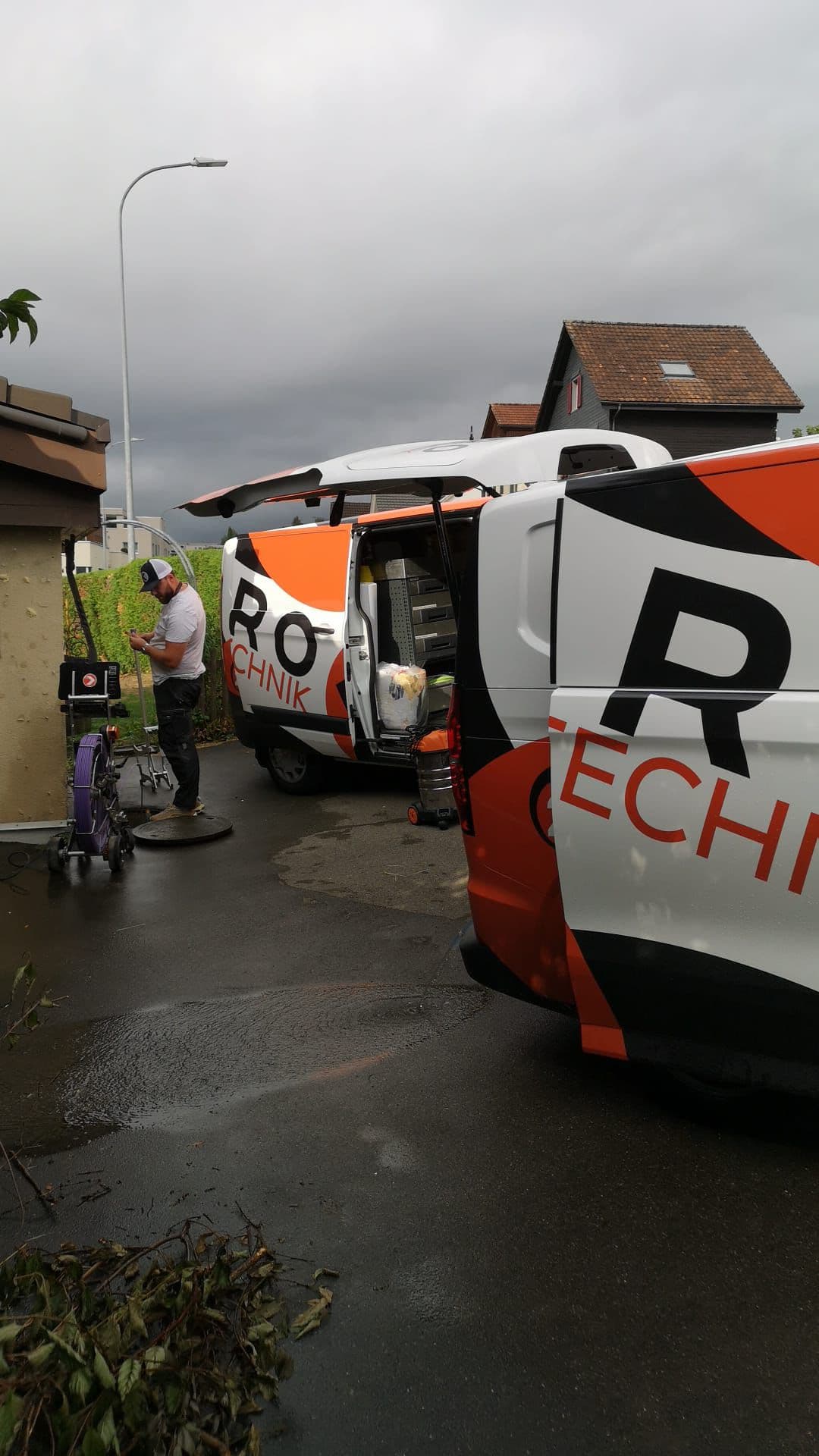
Two Karo vehicles on a manhole job at a property

In brief

Manhole rehabilitation restores tightness and load-bearing capacity in damaged manholes, usually without digging. Infiltration, exfiltration, corrosion or material loss from traffic loads and groundwater pressure make it necessary. After a CCTV condition survey to SN EN 13508-2, Karo Kanaltechnik sprays on epoxy resin or polymer mortar, briefly diverting wastewater, with 5 to 10 years' warranty depending on the method.

Manhole rehabilitation – leak-tightness and structural integrity

Manhole rehabilitation means that a leaking, corroded or mechanically damaged manhole is made leak-tight and structurally sound again from the inside – usually without digging and without rebuilding the manhole. It mainly concerns inspection chambers on the underground drain of a property, but also access, pump and special manholes.

Manholes are exposed to heavy loads: traffic loads above the cover, groundwater pressure from outside, aggressive gases and wastewater from inside, plus frost and changes in temperature. Over the years, the joints between the manhole rings come loose, the concrete corrodes and roots grow through leaking points. If groundwater gets in (infiltration), it puts a strain on the pipes and the wastewater treatment plant as infiltration water; if wastewater escapes (exfiltration), it endangers the soil and groundwater.

We rehabilitate with spray coatings of epoxy resin or polymer mortar, seal joints and connections, and renew the channel, benching and manhole base. If manhole rings or the cone can no longer be saved, or the cover is not at the right height, we replace and adjust them as part of our civil works.

The basis is always a condition survey: we clean the manhole, record the damage and, if necessary, survey the adjoining pipes with the camera – documented to SN EN 13508-2. From these findings we work out whether individual joints need sealing, the wall needs coating or parts need replacing, and only then do we give a quote. During the work, the wastewater is briefly diverted or held back so that the coating bonds properly and can cure; the drainage of the property largely stays in operation.

Finally, we check the manhole by visual inspection and camera, with a leak-tightness test on request, and hand over a rehabilitation report. Depending on the method, we give 5 to 10 years' warranty.

Our services at a glance

  • Condition survey with cleaning, photo documentation and, if needed, a CCTV drain survey of the connections
  • Spray coating with epoxy resin or polymer mortar
  • Sealing of infiltration and exfiltration points
  • Sealing of leaking ring joints and pipe connections
  • Rehabilitation of manhole rings, cone and channel
  • Renewal of manhole bases and benching
  • Corrosion protection for concrete and masonry manholes
  • Installation of seals and internal sealing sleeves
  • Replacement of manhole rings and adjusting the manhole cover to height
  • Rehabilitation of all common manhole types and sizes
  • Quality check by visual inspection and camera inspection
  • Comprehensive documentation and rehabilitation report

Pricing

per hour
CHF 160
call-out
CHF 60
CCTV survey
from CHF 50

Guide prices for cleaning and camera survey, excl. VAT. We quote the rehabilitation itself based on the findings.

We give a binding quote for the rehabilitation after the condition survey – the price depends on the manhole depth, diameter, type of damage and method. Cleaning and the condition survey beforehand are charged by time and effort: CHF 160 per hour plus CHF 60 call-out, camera inspection as a surcharge from CHF 50 (excl. VAT).

Areas of application

  • Inspection chambers made of concrete and masonry
  • Access and inspection manholes
  • Pump manholes and special structures
  • Manhole covers and manhole necks
  • Channels, benching and manhole bases
  • Properties, housing developments and commercial sites

24/7 emergency service

You can reach us around the clock – including weekends and public holidays.

+41 43 588 12 08

Process

How it works

From enquiry to completion – transparent and structured.

1

Condition survey

We clean the manhole, photograph cracks, joints and corrosion and, if necessary, survey the adjoining pipes with the camera (findings to SN EN 13508-2).

2

Method & quote

From the type of damage we work out the right method – coating, sealing or replacing individual parts – and give a binding quote.

3

Preparation & rehabilitation

Exposing the substrate, removing loose parts and growth, sealing joints, then applying the coating or lining. The inflow is briefly diverted or held back for this.

4

Inspection & handover

Final check by visual inspection and camera, with a leak-tightness test on request. You receive the rehabilitation report for your records.

Advantages

Why Karo Kanaltechnik?

A range of methods

From spray coating to lining – we choose the method according to the type of damage, material and load.

5 to 10 years' warranty

Depending on the method and scope – with a final check and a documented rehabilitation report.

No excavation

The rehabilitation is carried out from the inside – without digging and without having to reinstate the surface.

Findings before the quote

Condition survey first, then the method: you pay for what the manhole really needs.

FAQ

Frequently asked questions

Typical signs are visible water ingress, cracks and spalling in the concrete, crumbling joints, heavy corrosion, unstable or displaced manhole rings and a rocking manhole cover. Groundwater standing in the manhole after rain also points to a leak. A condition survey gives precise information: we clean the manhole, record the defects and recommend the right method.

First we clean the manhole with high-pressure jetting and record the defects; if necessary we survey the adjoining pipes with a camera and document them in accordance with SN EN 13508-2. The substrate is then prepared and a spray coating of epoxy resin or polymer mortar is applied. Leaking connections are sealed. Finally we check the result and hand over a rehabilitation report.

Only temporarily. Rehabilitation is usually carried out while the system remains in operation; the wastewater is briefly diverted or held back during the work so that the coating can be applied cleanly and cure. Most manhole rehabilitations are completed within a day, so residents or the business hardly notice anything.

Depending on the method and scope, we give 5 to 10 years' warranty on our manhole rehabilitations. It is based on the condition survey before work starts, the final check and a documented rehabilitation report, which you receive after handover. This means the property management company, municipality or buyers can also see later on what was repaired on the manhole, when and with which method.

In most cases, yes. A new manhole requires excavation, demolition of the old manhole and reinstatement of the surface, often with a permit and traffic management. Rehabilitation from the inside saves this work and is much quicker to carry out. If the manhole can no longer be saved structurally, we build a new one with our own civil works and quote for both options.

Inspection chambers on private land are part of the property drainage and are the responsibility of the property owner, who also pays for the rehabilitation. Public manholes in the road are maintained by the municipality. Where the boundary lies is set out in the municipality's drainage regulations. For property management companies and municipalities we also rehabilitate several manholes in one contract.

Enquire without obligation

Fill in the form – we will get back to you within 24 hours.

Subject / service *

Need help fast?

Our emergency team is ready around the clock – including Sundays and public holidays.

Types of damage

Typical manhole damage

A manhole needs rehabilitating when it is no longer leak-tight or no longer structurally sound. Most damage can be seen when you look into the opened manhole – how far it extends only becomes clear from the condition survey after cleaning.

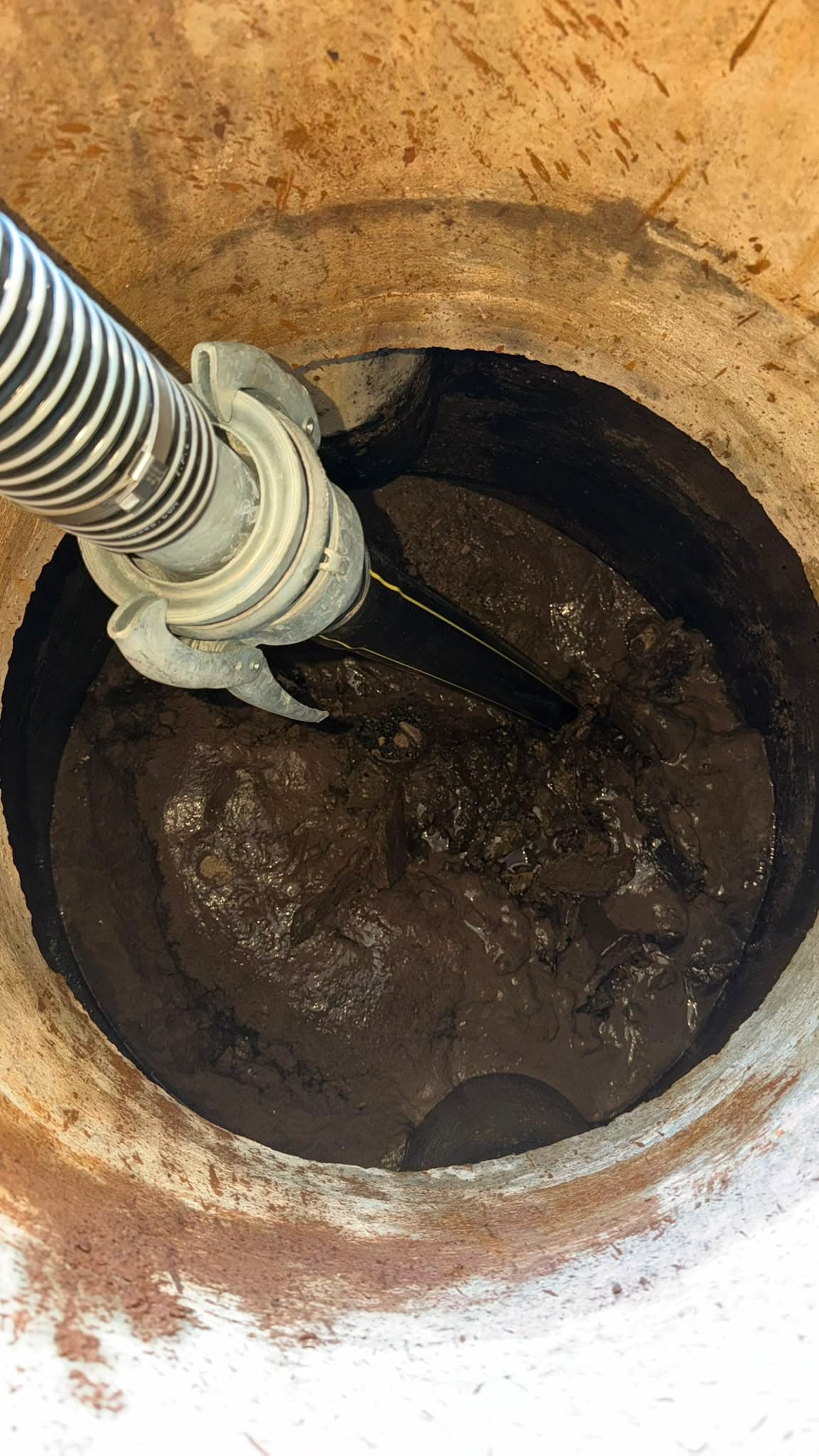
View into a silted-up inspection chamber made of concrete rings that is being emptied by suction
A manhole can only be assessed once it is clean: concrete rings of an inspection chamber during suction.
  • Leaking ring and pipe joints

    SignsDamp patches, limescale streaks or washed-out mortar between the manhole rings and at the pipe connections.

    EffectGroundwater gets in (infiltration) and flows to the wastewater treatment plant as infiltration water – or wastewater seeps into the ground (exfiltration).

  • Corrosion of the concrete

    SignsRough, powdery concrete, exposed aggregate or reinforcement, spalling especially above the water level.

    EffectA common cause is biogenic sulphuric acid corrosion: bacteria convert hydrogen sulphide from the wastewater into sulphuric acid on the damp wall, which wears away the concrete layer by layer and weakens its load-bearing capacity.

  • Roots in the manhole

    SignsFine root masses at joints and connections, often combined with deposits in the channel.

    EffectRoot ingress widens the joints, restricts the flow and leads to blockages. The roots are removed, then the point is sealed permanently.

  • Damage to rings, cone and cover

    SignsDisplaced or cracked manhole rings, a rattling or sunken cover, a step between cover and surface.

    EffectTraffic loads act unevenly on the manhole ring – the damage grows. A manhole cover that sits crooked is also a tripping and accident hazard.

  • Washed-out channel and benching

    SignsBreakouts in the base, hollows in the channel, standing water and deposits on the benching.

    EffectThe wastewater no longer flows through cleanly, solids settle, and odours and blockages increase.

Methods

Which method suits which damage?

There is no single manhole rehabilitation. A single leaking connection needs a different solution from a wall corroded over a wide area or a cracked manhole ring. We choose the method according to the type of damage, material and load – and combine methods where necessary.

01

Spray coating with epoxy resin

Suitable for: Corrosion over a wide area, chemically stressed manholes

After thorough preparation, a coating of epoxy resin is applied. It forms a new, leak-tight and chemically resistant inner skin and protects the concrete from further attack.

02

Coating with polymer mortar

Suitable for: Material loss, washed-out walls

Polymer mortar replaces material that has worn away and restores the wall thickness. It is suitable when a manhole must not only be sealed but also rebuilt.

03

Sealing joints and connections

Suitable for: Local leaks, water entering at joints

Leaking ring joints and pipe connections are sealed in a targeted way, if necessary with seals or internal sealing sleeves. This stops infiltration and exfiltration without coating the whole manhole.

04

Renewing the channel, benching and base

Suitable for: Breakouts and hollows in the manhole floor

The channel is reprofiled and the benching and base are renewed so that the wastewater flows through the manhole without obstruction again.

05

Replacing a manhole ring, cover to height

Suitable for: Cracked rings, sunken cover

What can no longer be rehabilitated, we replace: individual manhole rings, the cone or manhole neck, and we set the cover back to the level of the surface. We carry out this work as part of our civil works.

Rehabilitation or new build?

As long as the basic structure is sound, rehabilitation from the inside is usually the cheaper and faster solution: no excavation, no reinstating of surfaces and garden. If a manhole can no longer be saved structurally, we build a new one.

Have the condition assessed
Costs

How much does manhole rehabilitation cost?

A reliable figure is only possible after looking into the manhole. That is why we give a binding quote for the rehabilitation based on the condition survey – you know what it costs before work starts.

We charge for cleaning and the prior condition survey at our guide prices: CHF 160 per hour plus CHF 60 call-out, a camera inspection of the adjoining pipes as a surcharge from CHF 50, all excl. VAT.

What determines the price

  • Depth and diameter of the manhole – in other words the area to be coated
  • Type of damage: individual joints or corrosion over a wide area, material loss, roots
  • The method chosen and whether parts such as rings, cone or cover are replaced
  • Access and location: garden, courtyard entrance or road with traffic signage
  • Flow control: whether the inflow has to be diverted during the work

Warranty

5 to 10 years' warranty

We give 5 to 10 years' warranty on our manhole rehabilitation work, depending on the method and scope. The period that applies to your manhole is stated in the quote – before you place the order.

  • Final checkVisual inspection and camera, with a leak-tightness test on request.
  • Rehabilitation reportFindings beforehand, work carried out and result – for your records, the property management company or the municipality.
  • Standard-compliant findingsWe document camera findings of the pipes to SN EN 13508-2.
+41 43 588 12 08