What is an infiltration system?
An infiltration system is a structure that collects rainwater – i.e. rain and meltwater – and lets it seep slowly into the ground. Instead of reaching a watercourse via pipes and the treatment plant, the water replenishes the groundwater directly. At the same time, the sewer system is under less strain during heavy rain.
Only water that is unpolluted or only slightly polluted may be infiltrated. Foul water from the kitchen, bathroom or WC never belongs in an infiltration system. Surface water from heavily used areas or work yards also often needs pre-treatment or has to be discharged into the sewer system.
At a single-family home, the system typically consists of three parts: the roof water pipe that brings the water down from the roof, a pre-treatment stage such as a silt trap or filter chamber, and the actual infiltration in the garden. If one of these links fails, the whole system stops working – even if all you can see from the outside is the manhole cover in the lawn.
What types of infiltration system are there?
The preferred form is infiltration through a biologically active, vegetated soil layer, for example in a shallow swale in the garden. The topsoil retains pollutants before the water goes deeper. Where space is lacking, underground trenches made of gravel or plastic crates are used, which store the water temporarily and release it over a wider area.
Another design is the soakaway chamber, a chamber with a permeable base or perforated wall that channels water at one point into deeper layers. Because this bypasses the cleansing soil layer, soakaway chambers are now only permitted to a limited extent in many places. The modern infiltration system should not be confused with the old soakaway pit for wastewater.
Which form is suitable depends on the area to be drained, the space available, the ground and the groundwater level. The forms are often combined, for example a swale for yard water and a gravel trench for roof water.
Soakaway chamber: construction with concrete rings and gravel
A soakaway chamber needs little space and is therefore used, where permitted, especially on smaller plots. At its core it consists of concrete manhole rings stacked on top of each other, with walls that are perforated or slotted so that water can escape sideways.
Around the rings lies a jacket of washed gravel, which increases the infiltration area and distributes the water evenly into the surrounding soil. A filter fleece between the gravel and the natural ground prevents fine material from the soil being washed into the gravel. The base of the chamber also usually consists of a gravel or sand filter layer through which the water drains downwards.
At the top, a manhole cover suitable for foot or vehicle traffic closes off the soakaway chamber. The water arrives via an inlet pipe, which ideally runs through a silt trap first. There, sand, leaves and roof abrasion settle before they can clog the gravel layer.
Sizing a soakaway chamber: what the size depends on
How large a soakaway chamber needs to be depends on the connected roof and yard area, the design rainfall at the location and the permeability of the soil. Permeability cannot be estimated; it is determined by an on-site percolation test. Online calculators only give a first rough idea. The actual sizing belongs in the hands of a specialist who works to the VSA guideline on rainwater management and SN 592 000 and prepares the documents for the permit.
Building a soakaway chamber yourself?
Technically, a soakaway chamber is not a complicated structure. Even so, building one yourself is rarely a good idea: in many cantons, underground infiltration systems need a water protection permit, and a chamber that is wrongly sized or built too close to the groundwater can cause damage to your own house or to the groundwater. Any construction should therefore be preceded by a check with the municipality.
Infiltration system, soakaway chamber and soakaway pit: the difference
Infiltration system is the umbrella term for all structures that release clean rainwater into the ground – from swales and gravel trenches to soakaway chambers. The soakaway chamber is one of these designs.
The soakaway pit is something else. In the past, domestic wastewater – water from kitchens, bathrooms and WCs – was also infiltrated in soakaway pits. For water protection reasons, this is no longer permitted where a sewer system is available. In everyday language, ‘soakaway pit’ (Sickergrube) is often also used for a rainwater soakaway chamber. What matters, though, is not the name but what flows into it: only unpolluted rainwater belongs in an infiltration system.
Anyone taking over an older property should therefore have it checked which pipes actually lead into the chamber in the garden. A camera survey quickly shows whether, besides the roof water, a wash bay, a garage drain or even a foul water pipe is connected.
Requirements and permits in Switzerland
The basis is the Water Protection Act, which aims to have unpolluted wastewater infiltrated wherever possible. The cantons put this into practice with water protection maps and information sheets, and the municipalities with an infiltration map in the general drainage plan (GEP). These show whether a plot is suitable for infiltration and which types of system are permitted.
For planning, specialists rely on the VSA guideline ‘Wastewater management in wet weather’ and SN 592 000. Stricter rules or bans apply in groundwater protection zones or on contaminated sites. An infiltration system generally needs a permit, often as part of the building permit.
Example: canton of Zurich
According to its page ‘Building rules on infiltration’, the canton of Zurich requires a water protection permit for, among other things, underground infiltration systems – including soakaway chambers and gravel trenches – and for above-ground systems whose infiltration area is less than 20% of the drained area. For roof and yard areas of up to 20 m², the page states a de minimis threshold. The application is submitted together with the planning application.
The municipality is generally responsible for the infiltration of unpolluted rainwater. The cantonal Office for Waste, Water, Energy and Air (AWEL) is responsible, among other things, for environmentally relevant businesses, contaminated sites, groundwater protection areas and provisional groundwater protection zones. The canton states that protecting groundwater takes priority when infiltrating rainwater. Source: canton of Zurich, ‘Building rules on infiltration’, zh.ch, accessed on 14 October 2026. Other cantons have their own rules; the information from the municipality is always decisive.
Typical problems: silting up and backflow
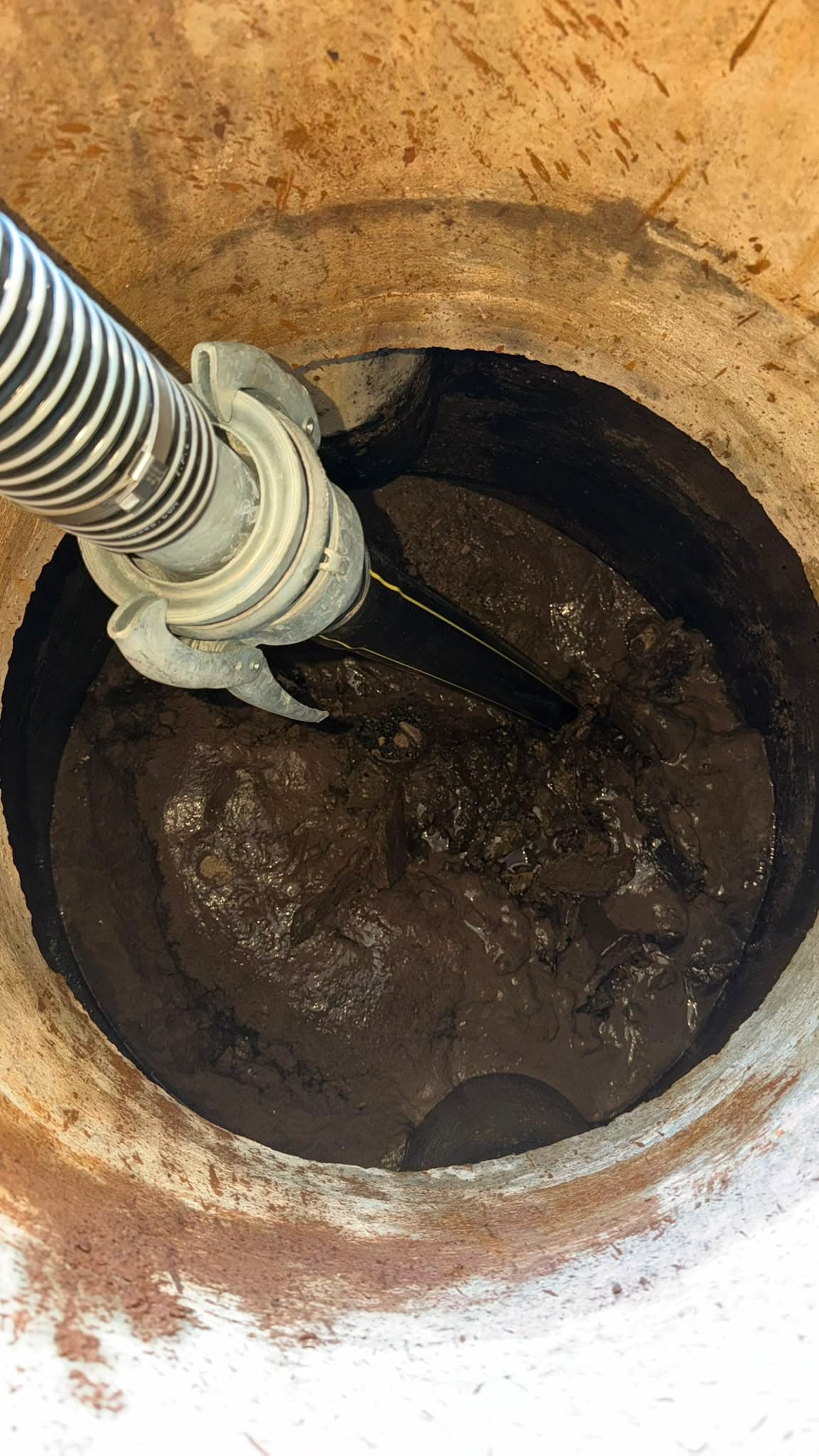
The most common defect is colmation, the gradual blocking of the pores by fine material, leaves, moss and roof abrasion. The system then absorbs less and less water; in heavy rain the water backs up, the garden floods or gutters overflow. A silted-up system can often be brought back into service by vacuuming and jetting.
An upstream silt trap or filter chamber, which holds back sand and suspended solids, acts as a preventive measure. This pre-treatment stage must be emptied regularly. The inlet pipes should also be clear: roots and deposits in the rainwater pipe mean the water never even reaches the system.
When does a soakaway chamber stop draining?
A soakaway chamber that has worked without problems for years rarely fails from one day to the next. Its performance usually declines gradually: after rain, the water stands in the chamber for longer and longer, until during a thunderstorm it finally rises to the inlet and backs up. Typical signs are overflowing gutters, gurgling downpipes, wet patches in the lawn around the manhole cover and water that is still standing in the chamber days after the rain.
The causes fall into four groups. First, sludge on the base: without pre-treatment, fine material collects on the chamber floor and seals it. Second, a blocked gravel layer: if the gravel jacket itself is filled with fine material, vacuuming alone no longer helps. Third, problems in the inlet pipe such as roots, plugs of leaves or a collapsed pipe. Fourth, changes to the plot, such as an additional roof or yard area that was connected later and overloads the chamber.
Less often, the ground itself is the problem, for example when the groundwater table is high after long periods of rain. Then even a clean chamber may temporarily be able to release hardly any water. Which cause applies becomes clear when the chamber is vacuumed out and the inlet pipe is jetted and checked with the camera.
Cleaning a soakaway chamber: how it works
Maintenance includes checks after heavy rainfall, emptying silt traps and pre-filters, jetting the inlet pipes and, for soakaway chambers, vacuuming out the sludge from the base. With swales, looking after the vegetation is important; leaves and clippings should not be left lying.
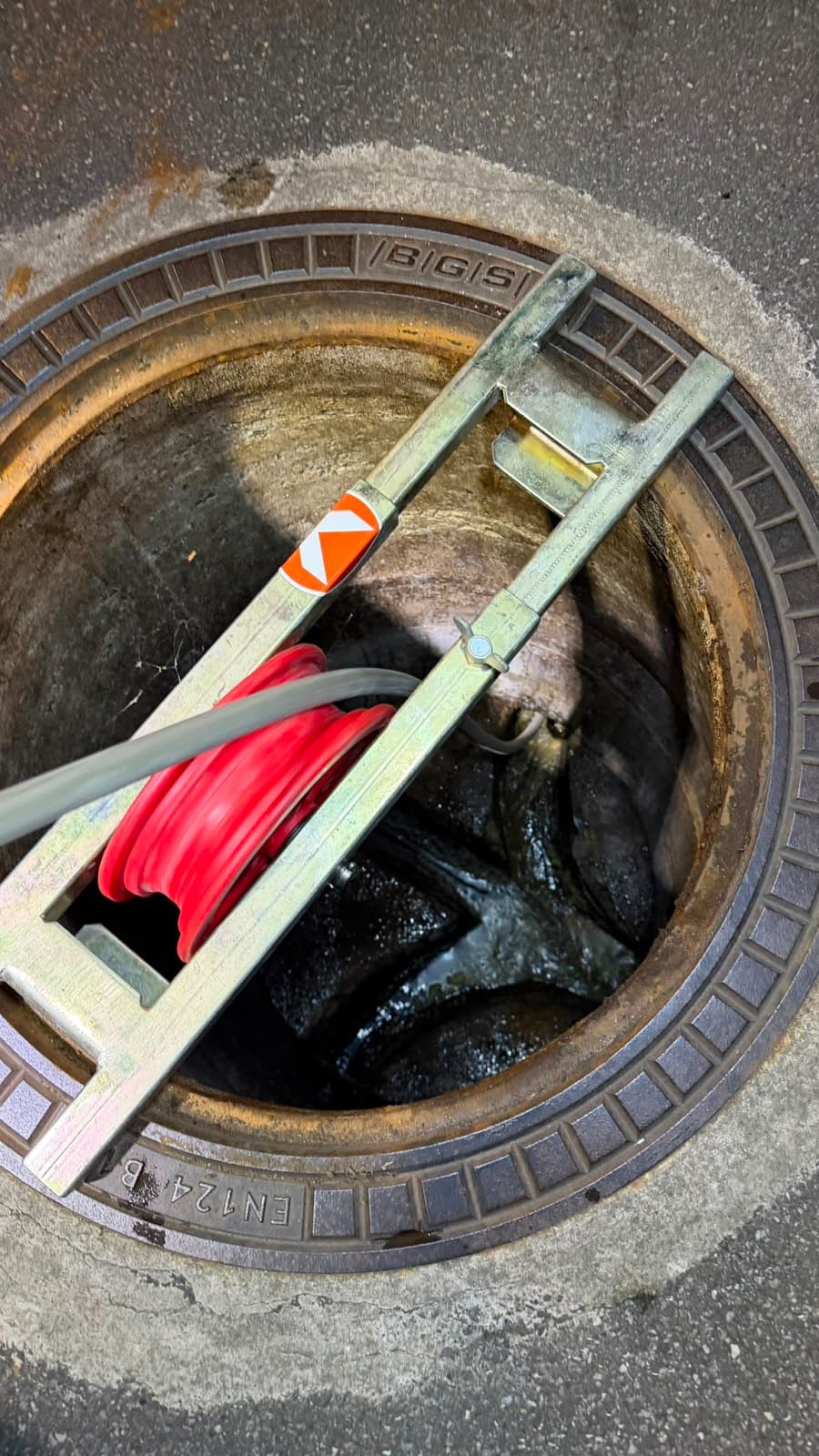
If you are unsure about location and condition, a camera survey of the inlet pipes helps. It shows whether pipes are root-infested, displaced or silted up, and whether there are misconnections, for example a wash bay or garage drain that wrongly drains into the infiltration system.
How Karo carries out cleaning
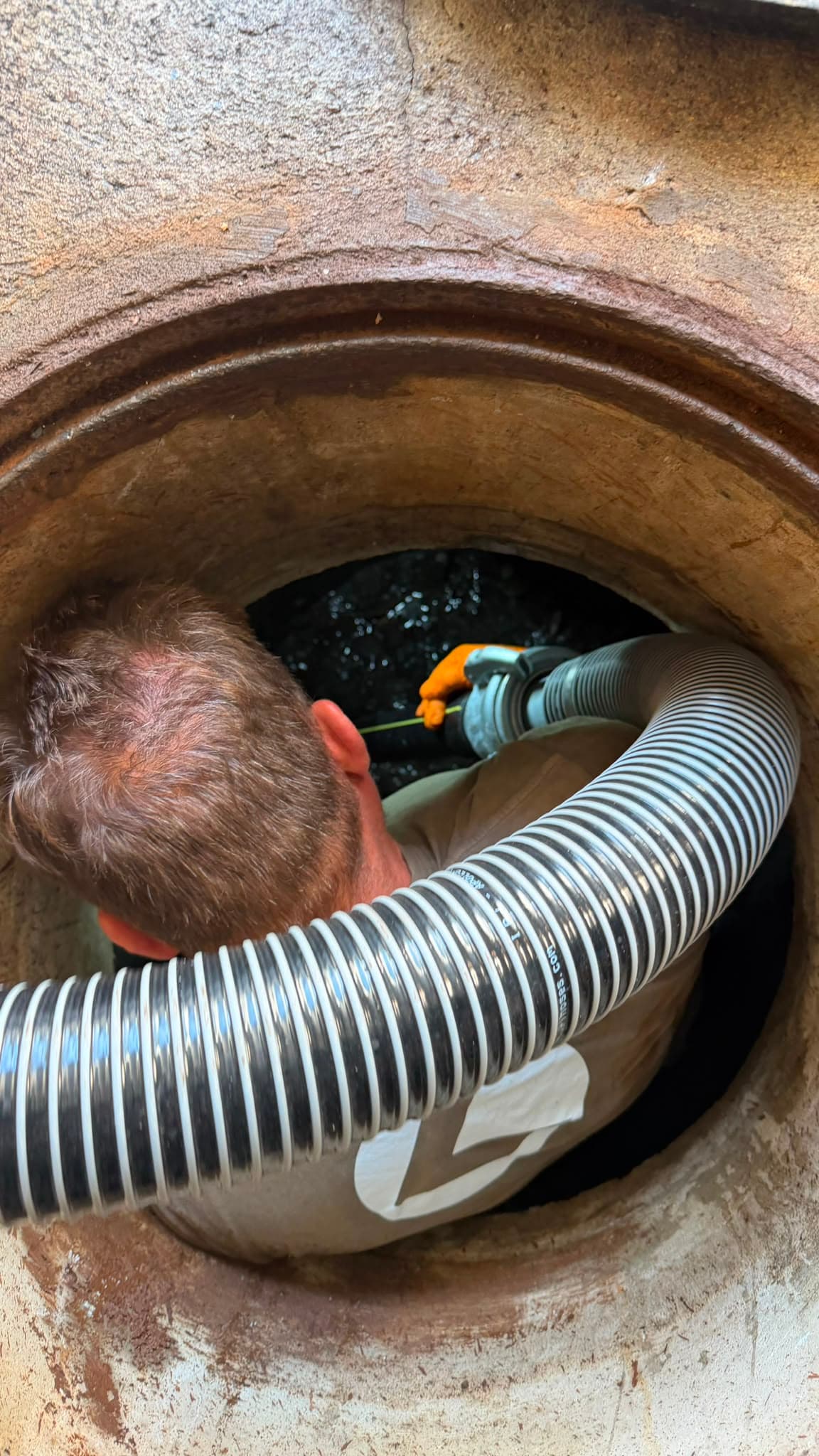
First, the manhole cover is opened and the water level assessed. The team then vacuums out standing water and settled sludge with the suction hose until the base is visible again. The inlet pipe is then cleaned with chemical-free high-pressure water jetting so that leaves and sand do not immediately slide back in. If there is an upstream silt trap, it is emptied during the same visit.
Finally, a camera survey shows whether the inlet pipe is clear and watertight; the recordings are documented in accordance with SN EN 13508-2. If the gravel layer itself is blocked, cleaning is no longer enough. The filter material then has to be replaced or the chamber renewed, which is more construction work than cleaning.
How often should it be cleaned?
There is no fixed interval. The interval depends on how much leaf litter and sand comes off the roof and yard and whether there is a pre-treatment stage. A proven approach is to check the silt trap and chamber every year after leaf fall and to empty them as soon as sludge has visibly accumulated.
How much does it cost to clean an infiltration system?
There is no flat rate for building a new infiltration system, because sizing, ground conditions, design and access vary greatly; here it is worth getting a quote after planning. For cleaning and inspecting existing systems, Karo charges by time: CHF 160 per working hour plus a CHF 60 call-out fee, excl. VAT. One hour including call-out therefore costs CHF 220 excl. VAT or CHF 237.82 incl. 8.1% VAT.
The camera inspection of the inlet pipe costs a surcharge from CHF 50. A typical job at a single-family home usually comes to around CHF 150 to CHF 400, excl. VAT and materials. If a lot of sludge has to be vacuumed out and disposed of, the effort increases accordingly.
At a single-family home in Lyss, the gutter overflowed in every thunderstorm even though the downpipe was clear. The camera survey showed that the rainwater pipe to the soakaway chamber in the garden was intact, but the chamber itself was filled almost up to the inlet with fine sludge and leaf debris. There was no pre-filter. The team vacuumed out the chamber, jetted the inlet pipe and recommended a silt trap upstream of the chamber. Since then the water has been draining away reliably again.