
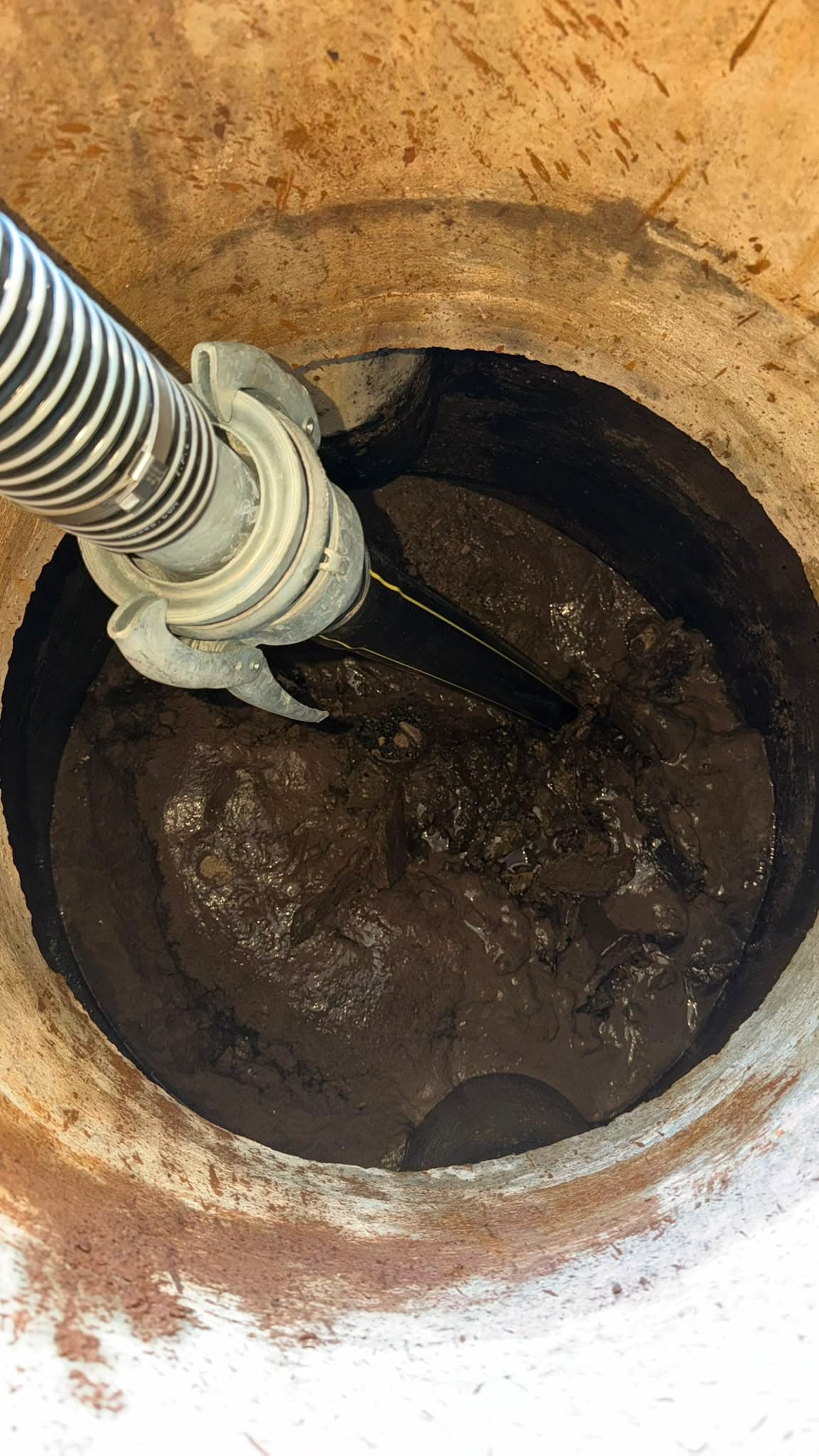
What is a manhole ring?
A manhole ring is a ring-shaped precast element made of concrete or reinforced concrete that is cast at the factory and stacked on site to form a manhole. Several rings on top of each other form the vertical shaft, known as the manhole riser. The rings come in various diameters and heights so that any manhole depth can be built up.
The term concrete manhole describes the result: a wastewater manhole whose walls consist of such precast concrete elements. In Switzerland, this is a widespread type of construction for manholes in property drainage and the public sewer system. There are also manholes made of plastic and, in older properties, masonry manholes built of brick or natural stone.
In Europe, the product standard SN EN 1917 applies to concrete access manholes and inspection chambers. It sets out the requirements the precast elements must meet in terms of strength, dimensional accuracy and tightness. Where and how many manholes a property needs, on the other hand, is governed by drainage planning according to SN 592 000 and the municipality's drainage regulations.
Structure of a concrete manhole: from the base to the cover
At the very bottom is the manhole base, also called the manhole bottom section. It contains the connections for the incoming and outgoing pipes and the channel, an open gutter in which the wastewater flows through the manhole. To the side of it, the benching rises slightly so that solids do not settle and workers have a foothold during work. Today the manhole base is often precast in one piece; in older manholes it was cast on site and the channel shaped by hand.
The manhole rings follow on top of the base. How many are needed depends on the depth of the pipe: for a shallow underground drain in the garden a few are enough, while a deep connection to the public sewer requires correspondingly more. Access manholes have step irons or step rungs built in, which are used to climb down into the manhole.
The top of the shaft is formed by the cone, a transition ring that tapers the large manhole diameter down to the smaller access opening. It is often eccentric in shape so that the step irons run vertically up one side. Where there is no room for a cone, for example in very shallow manholes, a cover slab with an opening is laid on instead.
At the very top are the adjusting ring and the cover. Adjusting or levelling rings are used to set the height of the cover exactly to the level of the lawn, paving or road. On top of this sits the frame with the manhole cover made of cast iron or concrete, whose load class must suit the location – a cover in the driveway has to carry vehicles, one in the garden does not.
Joints and seals: the weak point of every manhole
A concrete manhole is only as tight as the joints between its sections. The rings interlock with a rebate or a socket, and the seal sits in this connection. In modern manholes, this is an elastic sealing ring made of elastomer, which is compressed when the next ring is placed on top and can absorb small movements.
Older manholes, by contrast, were assembled with cement mortar. Mortar joints are rigid: if the ground settles, heavy traffic regularly drives over the cover or frost and damp alternate, the mortar cracks over time and washes out. The manhole is then open at precisely the points where it should be tight.
The pipe connections in the manhole base are just as important. If the connection between the pipe and the manhole wall is rigidly mortared in, it can tear off when the ground settles. Properly made connections therefore use flexible connection seals that mediate between the manhole and the pipe.
Typical damage to manhole rings and concrete manholes
The most common finding is leaking ring joints. Through them, groundwater or seepage water gets into the manhole as infiltration water and puts a load on the treatment plant, or wastewater escapes and pollutes the subsoil. During inspection, such joints often show up as damp edges, lime efflorescence or rust marks below the step irons.
Roots also grow into the manhole through open joints. Fine root hairs find the moisture, thicken into tangled masses inside the manhole and can obstruct the flow in the channel or grow on into the connected pipes.
A second damage pattern affects the concrete itself. Septic wastewater releases hydrogen sulphide, which condenses on the damp manhole wall and is converted by bacteria into sulphuric acid. This biogenic sulphuric acid corrosion breaks down the hardened cement paste: the surface becomes sandy and soft and crumbles away. Mainly affected are the upper part of the manhole and the cone, where the gases collect, and manholes downstream of pressure pipes or pumping stations.
Other typical findings are rings displaced against each other after settlement, a broken or washed-out channel, corroded step irons and a loose adjusting ring. The latter is often noticed first by a rattling cover when a car drives over it.
Rehabilitate instead of replacing: what is possible with an old concrete manhole
A damaged concrete manhole only rarely has to be dug out and reset. As long as the rings are structurally sound, it can be repaired from the inside. This saves excavation, spares the garden, paving or driveway and is in many cases cheaper than a new manhole.
It always starts with cleaning: the manhole is jetted at high pressure, deposits are sucked out and loose concrete is removed. Sealants and coatings only adhere to a clean, sound surface. Then leaking ring joints and pipe connections are sealed, for example by injection or with new jointing mortar. Roots are removed beforehand.
Where corrosion is extensive, the entire manhole wall is then coated, either with a mineral mortar system or with a synthetic resin coating that protects the concrete from further acid attack. The broken channel is reshaped, corroded step irons are replaced and a loose adjusting ring and cover are reset.
If a manhole is so badly damaged that it can no longer be made tight, a precast internal liner can be installed. Replacing individual rings or the entire manhole with excavation is reserved for cases where structural stability is no longer ensured or the manhole has to be moved anyway.
Manhole ring, concrete manhole or inspection chamber – what is the difference?
The three terms are often mixed up, but they describe different things. The manhole ring is a single component. The concrete manhole is the type of construction: a manhole assembled from precast concrete elements such as the manhole base, manhole rings and cone.
The inspection chamber, on the other hand, describes the function: an access point to the wastewater pipe via which cleaning, camera inspection and leak-tightness testing are carried out. An inspection chamber can consist of concrete rings, but just as well of plastic or masonry. Conversely, silt traps, soakaways or pump chambers are also often built from manhole rings, even though they have a completely different task.
For owners, this means: if you want to have a manhole ring replaced or sealed, you are really talking about the building fabric of a manhole. What this manhole has to do and how often it is serviced follows from its function in the property's drainage system.
Inspection: how to recognise the condition of a concrete manhole
Much of the damage to concrete manholes only becomes visible when the manhole is empty and clean. During manhole cleaning or drain jetting, it is therefore worth taking a close look at the joints, walls, channel and connections. For a reliable assessment, the manhole and adjoining pipes are recorded with the camera, and the condition is coded and documented in accordance with SN EN 13508-2.
If a leak is suspected, a leak-tightness test provides clarity. It shows whether the manhole is only damp on the surface or is actually losing or taking in water. On this basis, it can be decided whether sealing the joints is enough, whether a coating is needed or whether more extensive manhole rehabilitation makes sense.
A typical case from our service area in the cantons of Zurich and Aargau: at an older apartment building, during jetting of the underground drain, it becomes apparent that clear water is constantly flowing into the inspection chamber in front of the street connection, even though nobody in the building is using water. After cleaning, the reason becomes clear: the mortar joints between the manhole rings have washed out, roots from a hedge are growing through one of them, and the concrete on the cone has been attacked and turned sandy. Instead of digging out the manhole, the roots are removed, the ring joints sealed, the manhole wall coated and the channel reshaped. A final check confirms that the manhole is tight again.