What is sewer cleaning?
Sewer cleaning is the cleaning of the wastewater pipes and sewers that carry wastewater away from buildings, open spaces and roads: foul water to the wastewater treatment plant (WWTP, ARA), and rainwater either there too or into a watercourse, depending on the system. Sand, sludge, grease, limescale, roots and anything else that does not belong in the pipe are removed. In everyday language, «sewer cleaning» largely means the same as drain cleaning: it is the same work, except that the term emphasises the whole network, from the house connection to the main sewer.
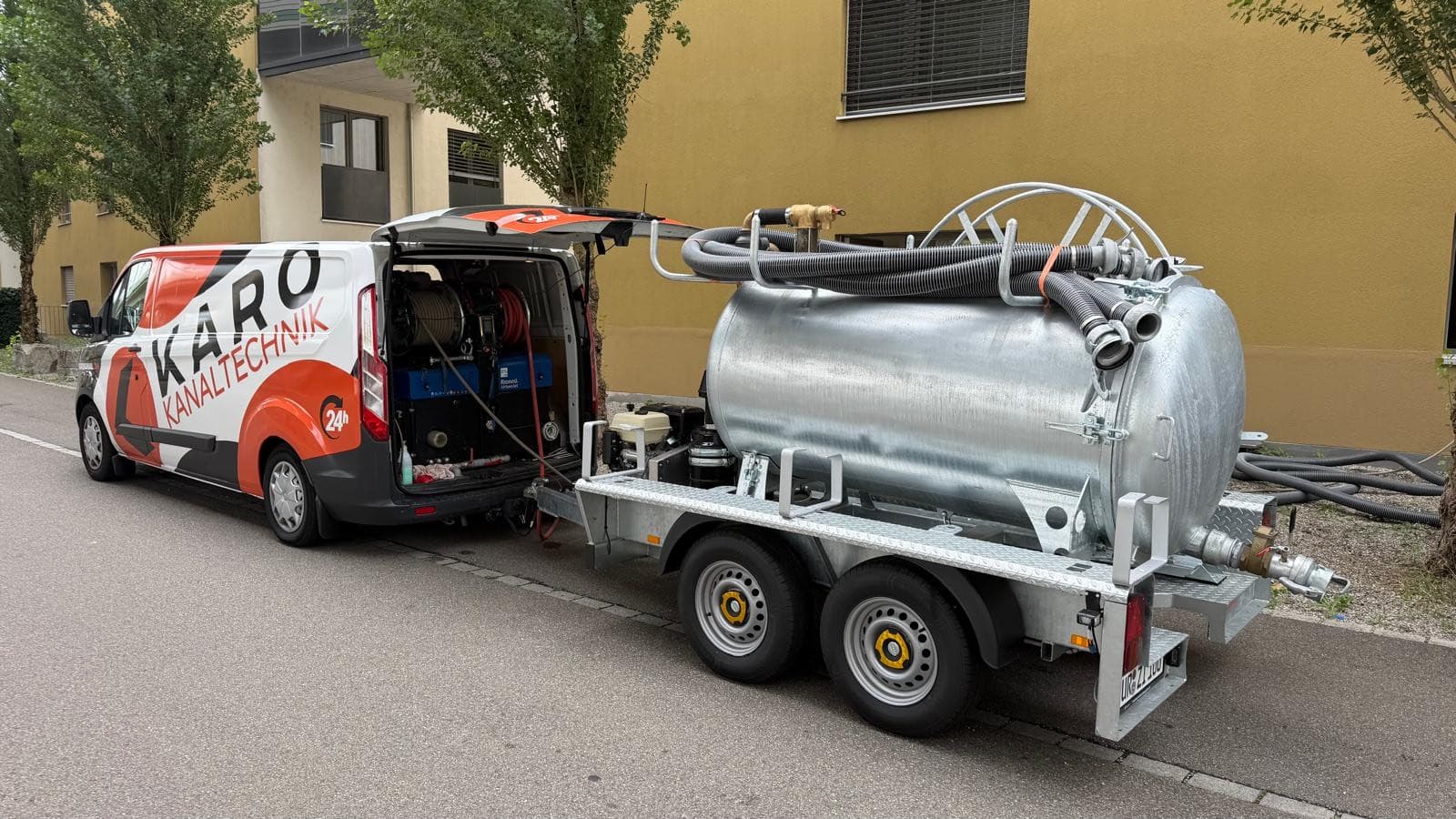
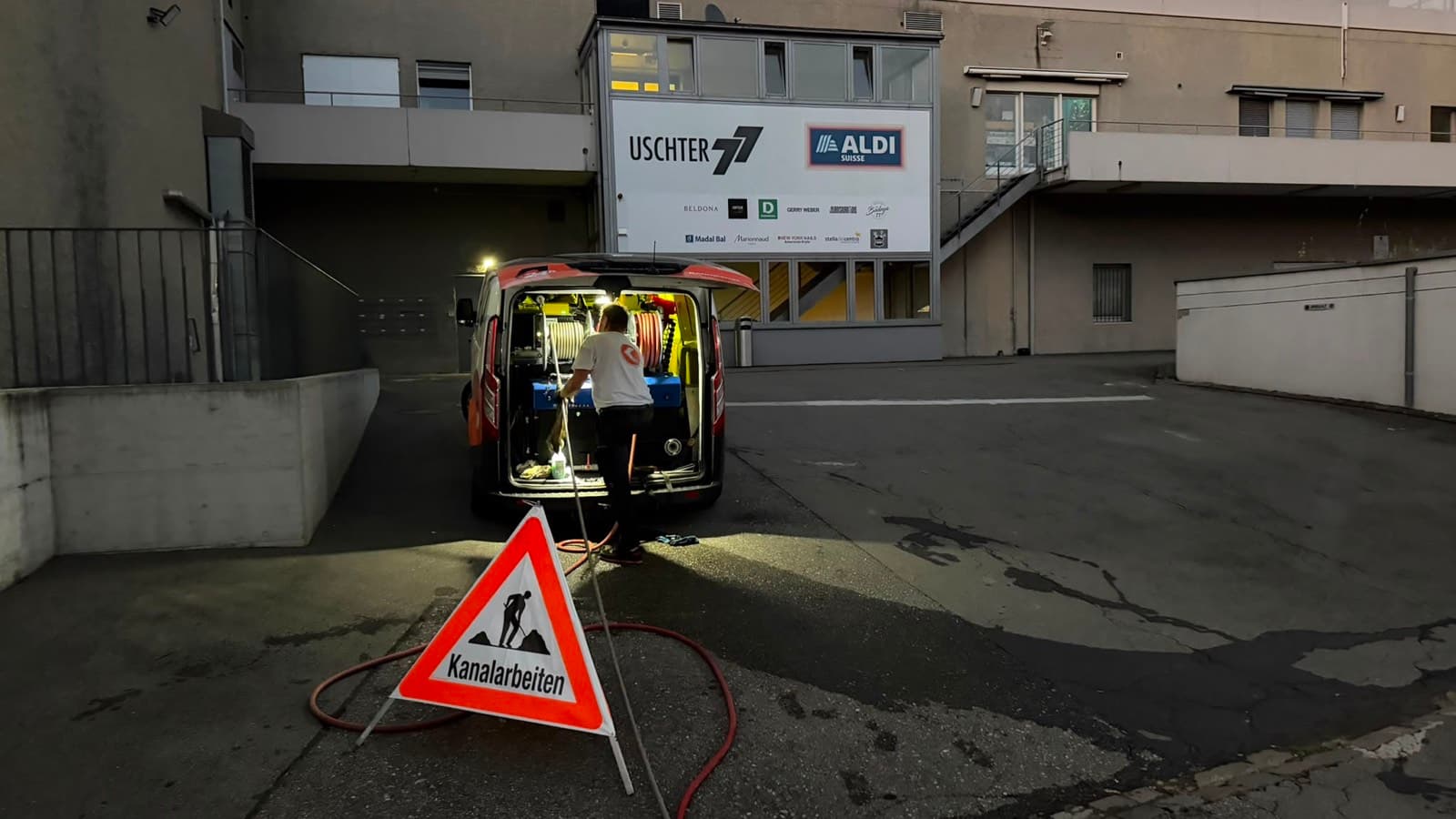
The most important tool is high-pressure water jetting with the jetting vehicle. Karo Kanaltechnik jets chemical-free at up to 200 bar and vacuums out the loosened material at the manhole. The cleaned section can then be checked with the camera.
Sewer system and sewer cleaning: what is what?
The sewer system is the structure: the network of pipes, manholes and special structures that collects and carries away wastewater, together with rainwater in the combined system or separately in the separate system. Sewer cleaning is one of the maintenance tasks on this network. Anyone who wants to understand how the sewer system is structured and who is responsible for what will find this in the glossary entry «Sewer system»; here the focus is on how the network is kept clean.
To distinguish it from related work: pipe cleaning usually concerns the smaller pipes inside the building, such as the washbasin, shower, kitchen or soil stack. Sewer cleaning begins where the wastewater leaves the house, i.e. at the underground drain, the house connection and the drains in the ground. Manhole cleaning empties the manholes through which these drains are accessed.
How does sewer cleaning work?
The most common method is high-pressure water jetting. Water at high pressure is fed into the sewer through a nozzle; the backward-facing jets pull the hose forward and at the same time loosen deposits from the pipe walls. The loosened dirt is carried to the manhole and vacuumed out there.
For stubborn blockages, rotating cutting heads or special nozzles are also used, for example to remove roots or encrusted layers of grease.
Step 1: Establish the location and secure the site
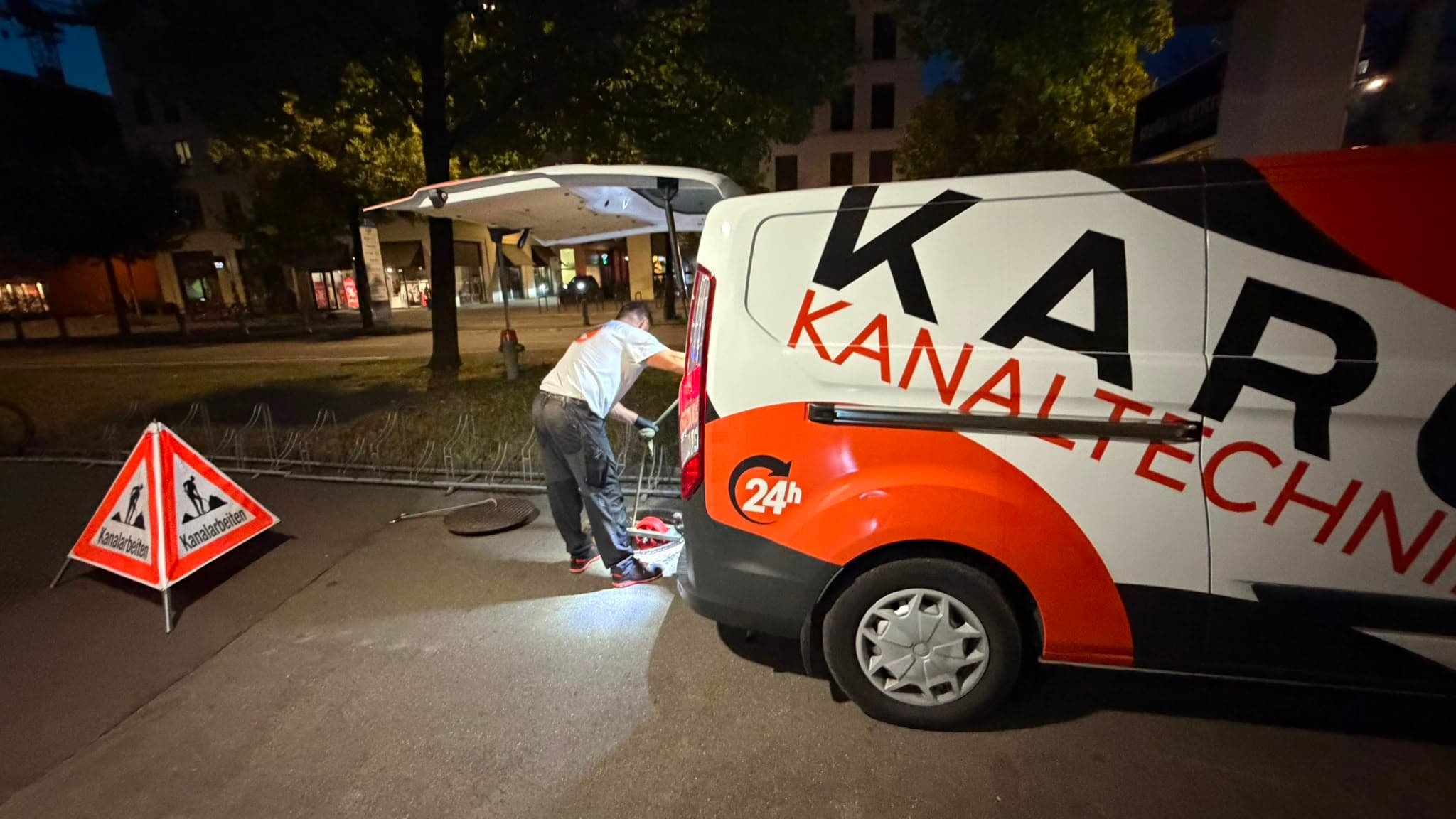
First, we establish which pipe is affected and from which manhole it can be reached. If the manhole is in a traffic area, the site is signposted before the cover is opened.
Step 2: Jetting against the direction of flow
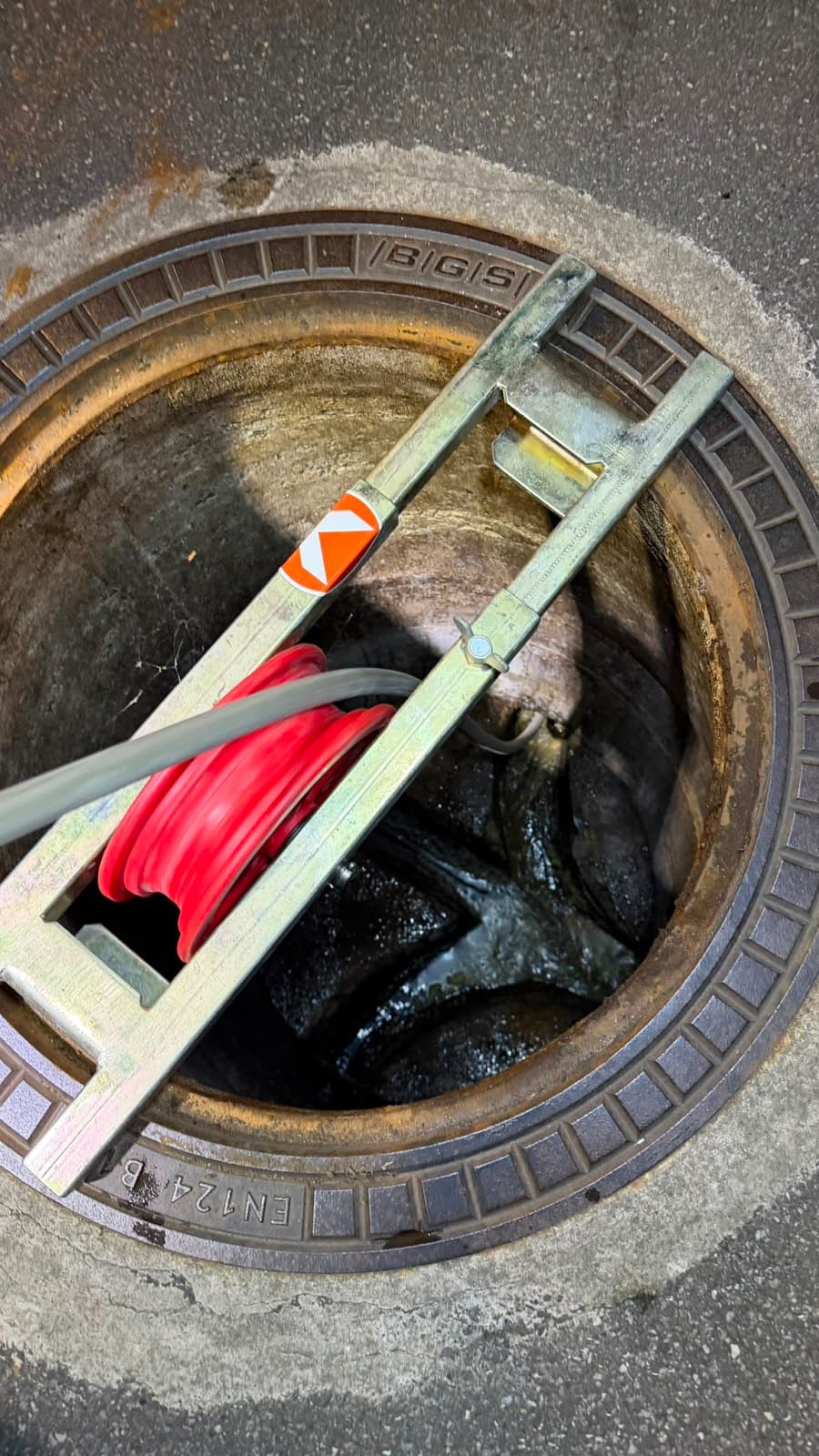
The jetting hose is usually inserted against the direction of flow. As it is pulled back, the nozzle flushes the loosened material to the starting manhole, where it is vacuumed out. Pressure and nozzle are matched to the pipe material, diameter and condition.
Step 3: Loosening roots and crusts mechanically
Where water alone is not enough, for example with ingrown roots, hard layers of grease and limescale or foreign objects, cutters or chain flails are used. Depending on the equipment, they are driven by water pressure or mechanically.
Step 4: Vacuuming, inspection, documentation
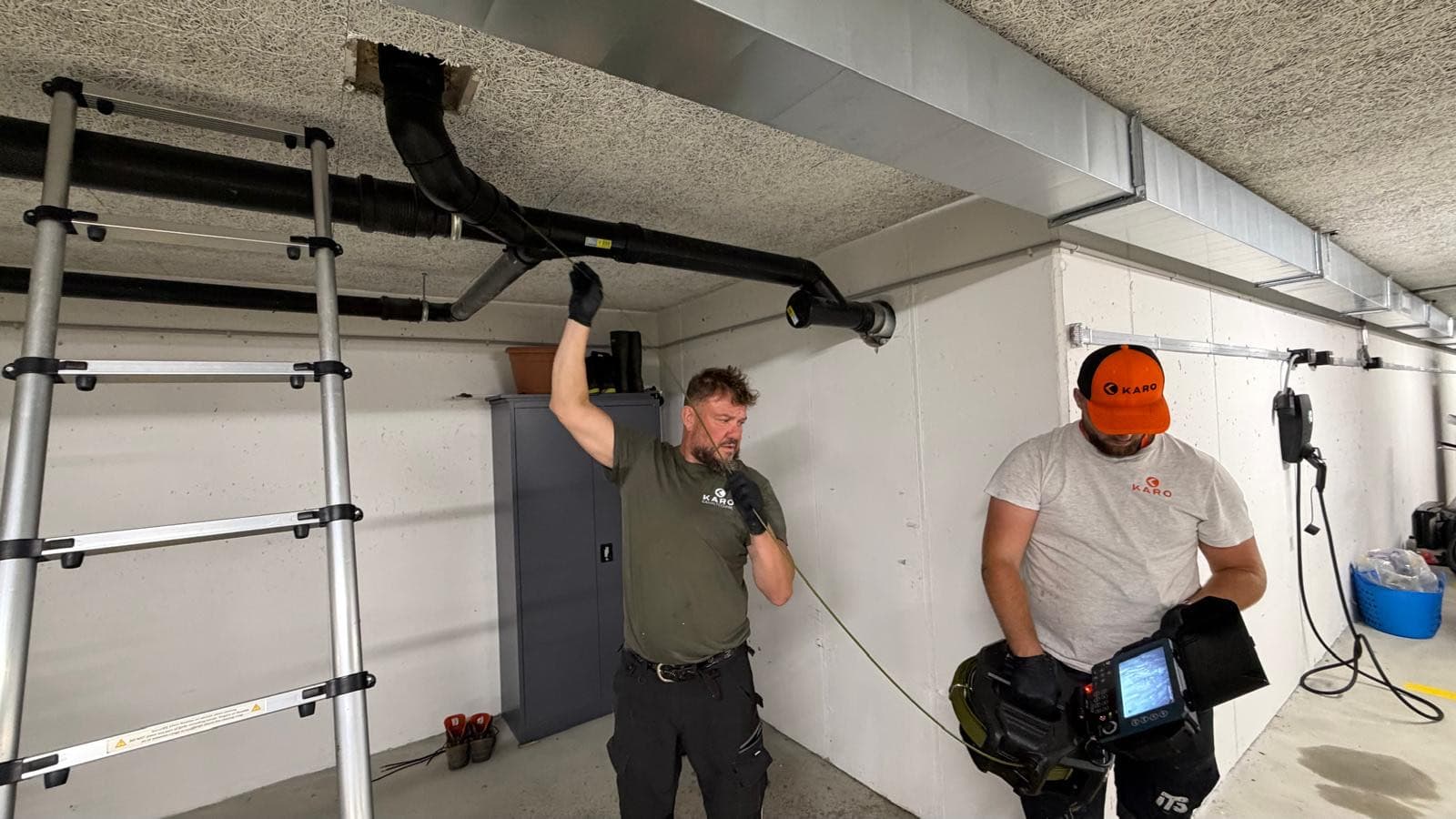
The extracted material is collected in the vehicle's tank and disposed of properly. The section can then be surveyed by camera; defects are coded and documented to SN EN 13508-2. This tells the owner or municipality whether a repair or rehabilitation is due after the cleaning.
When is sewer cleaning needed?
Regular cleaning intervals are part of preventive drain maintenance. Action is needed urgently if the flow is decreasing, odours are rising, there are gurgling noises or backflow occurs.
Municipalities clean their sewer network on a fixed cycle, property owners and businesses depending on the load. Kitchens, car washes and industrial businesses need more frequent intervals than purely residential properties.
Other occasions are a change of ownership, planned rehabilitation (the pipe must be clean before any CIPP liner or coating), a camera inspection, and building work nearby during which sand or cement slurry may have got into the pipe.
Municipalities and private owners: who cleans which part?
The sewer system has two owners. The public network with main sewers, road gullies and special structures belongs to the municipality or the wastewater association; it plans the maintenance, often on the basis of the GEP (general drainage plan, Genereller Entwässerungsplan), and contracts cleaning and camera inspection out to specialist firms.
The private property drainage, i.e. underground drains, inspection chambers and the house connection up to the public sewer, is the responsibility of the owner. Exactly where the boundary lies and which obligations apply is set out in the drainage regulations of the municipality concerned. For condominium ownership and rented properties, the property management usually organises the maintenance.
For the cleaning itself this makes little difference: the methods and technology are the same. What differs is the scope, planning and documentation. Municipalities have entire pipe runs cleaned and inspected on a cycle, while private owners usually have individual pipes done as needed or at a fixed interval.
What does not belong in the sewer system
Many cleaning jobs could be avoided. The most common causes of deposits and blockages do not come from outside, but from inside the house: cooking fat and frying oil, which cools in the pipe and coats the wall; wet wipes, cotton buds and hygiene products, which do not dissolve and combine with the grease to form solid plugs; food scraps, coffee grounds and cat litter.
Outdoors, leaves, sand and grit get into the pipes via gullies (Dolen) and channels, and on building sites also cement slurry and mortar residue, which harden in the pipe. And where roots find a leaking joint, they grow into the pipe and catch everything that passes by.
Disposing of grease with the rubbish, not throwing wet wipes into the toilet and having silt traps emptied regularly considerably extends the time between two cleanings. In restaurants, the grease separator takes on this task; it in turn must be emptied regularly.
Advantages of regular cleaning
A sewer system that is kept clean carries wastewater away reliably and prevents costly emergencies. Exposed pipe walls can also be inspected better by camera, so that damage is detected early.
Experience shows that preventive maintenance is considerably cheaper than repairing water damage after a sudden blockage.
Cost of sewer cleaning
Cleaning is charged by time, with a guide figure of around CHF 160 per hour plus a call-out fee of CHF 60. The total effort depends on the length, diameter and degree of soiling of the pipe.
A typical job in a single-family home usually costs between CHF 150 and 400 at Karo. Larger networks, pipes with heavy root growth or jobs involving several manholes take correspondingly longer. The guide prices at a glance (excl. VAT):
| Item | Karo Kanaltechnik guide price |
|---|---|
| Working hour | CHF 160 |
| Call-out (flat rate) | CHF 60 |
| CCTV inspection (surcharge) | From CHF 50 |
| Example: 1 hour incl. call-out | CHF 220 excl. or CHF 237.82 incl. 8.1% VAT |
| Typical job in a single-family home | Usually CHF 150–400 |
A residential development in Wallisellen has its underground drains cleaned preventively every two years. Karo Kanaltechnik jets the network with high pressure, vacuums out the loosened deposits and checks critical sections by camera. With the fixed interval, deposits are removed before they turn into a blockage. For the property management, this has a second benefit: every two years, the camera images show how the pipes are developing, so that any rehabilitation can be budgeted for at an early stage instead of arising as an emergency.